WILLOW revolutionising offshore wind farm control
Guest/partner contributor
Posted on: 28 November 2025
The WILLOW project develops integrated, data-driven tools for offshore wind farms, combining SCADA, physical and virtual sensors and machine learning.

WILLOW, 'Wholistic and Integrated Digital Tools for Extended Lifetime and Profitability of Offshore Wind Farms', aims to achieve an integrated system that will provide an open source, data-driven health aware curtailment strategy to the offshore wind farm operators.
With a €5.8 million budget granted within the framework of the Horizon Europe programme, it is expected to contribute to a 50% reduction on the inspection costs, a five-year lifetime extension of offshore wind farms, a 4% reduction in noise pollution and up to 10% reduction of LCOE (levelised cost of energy), between 3.5 and 4.5 €/MWh.
As wind energy gains ground on the energy market, wind farms will play an increasingly important role in the stability of the electric system. Nowadays, wind farms must deliver commanded output power following the needs of grid operators, as electricity generation has to match demand in real time, which implies producing less power than available. Today this is done either by shutting down a few turbines and letting others produce maximum power, or by down regulating each turbine by the same amount.
Although these strategies may negatively affect the fatigue life of the turbine, the optimisation of these decision-making schemes is extremely complex due to the need to better understand and include many factors such as component degradation, the particular complexity of grid integration, or specific offshore issues like corrosion or the additional loads from waves, tides and currents.
In order to solve all these challenges, WILLOW aims to achieve the following objectives:
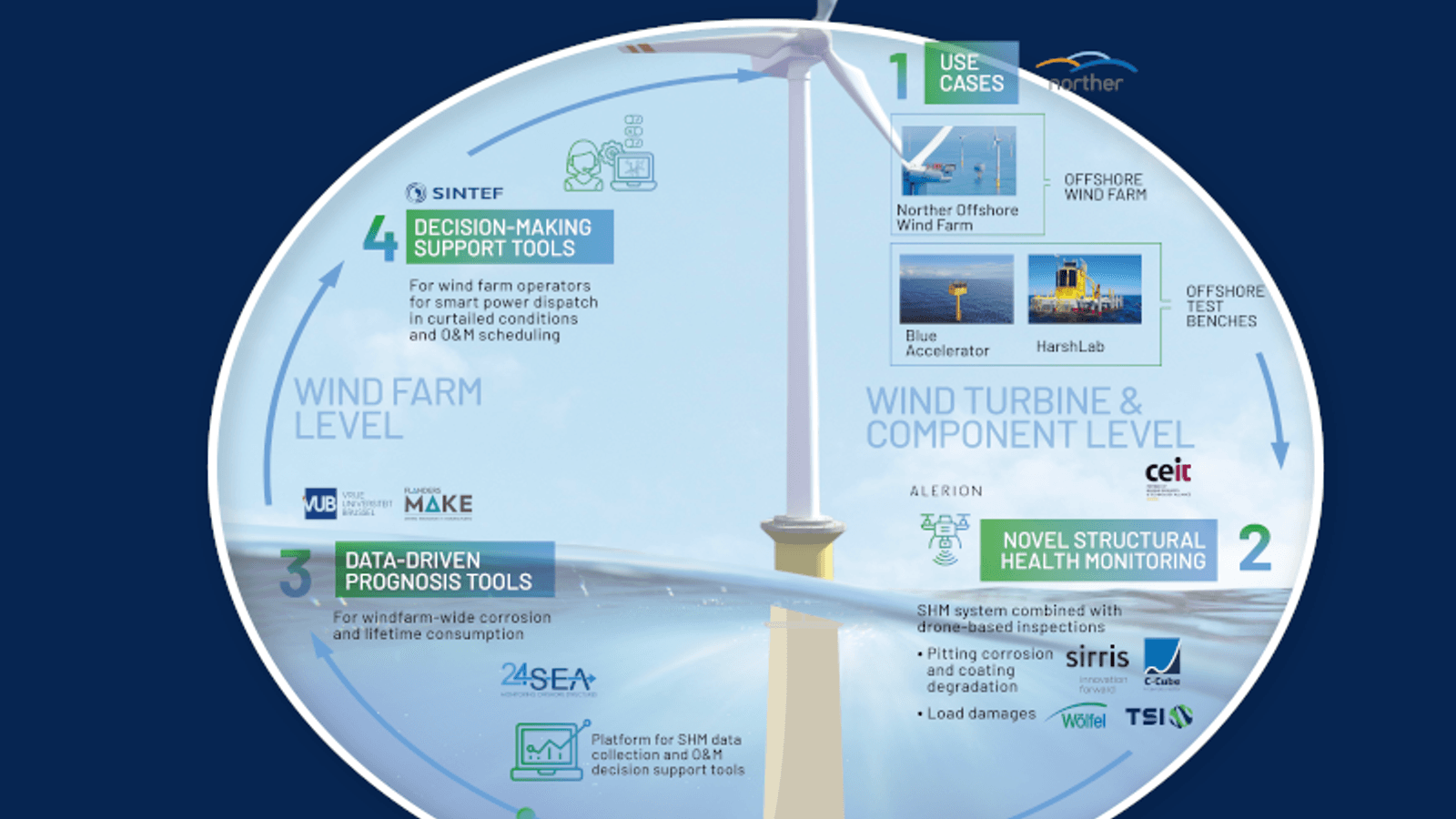
- Development of a global structural health monitoring based on loads, accelerations, images and thickness losses, considering fatigue progression, pitting corrosion and coating degradation by using physical and virtual sensors combined with machine learning techniques.
- Development of prognosis tools by combining SCADA and structural health monitoring data, using physical models and machine learning methods to predict the consumed lifetime and the remaining useful life.
- Development of a decision-making support tool for smart power dispatch in curtailed conditions and O&M scheduling.
WILLOW methodology
The project brings together 12 partners from Spain, Belgium, The Netherlands, Norway and German including: CEIT (coordinator), 24Sea, Alerion, Basquenergy Cluster, C-Cube, Flanders Make, Norther, SIRRIS, SINTEF, TSI, VUB and Wölfel.
WILLOW uses SCADA and other measurements as well as design information provided by Northern Offshore Wind Farm, which consists of 44 turbines with a maximum capacity of 370MW and is located in the Belgian North Sea. Furthermore, WILLOW is using two offshore test facilities in order to obtain other necessary data and measurements.
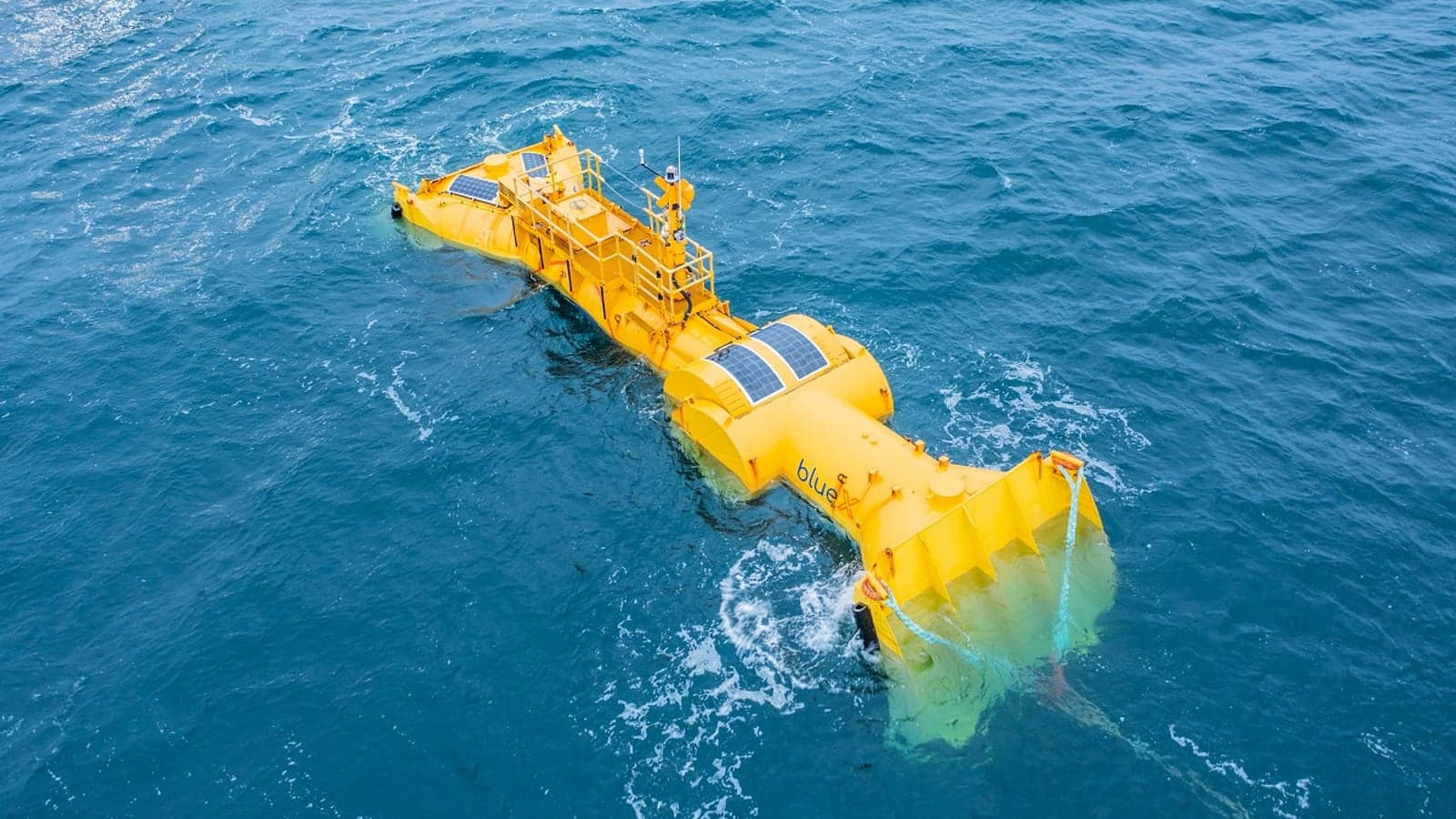
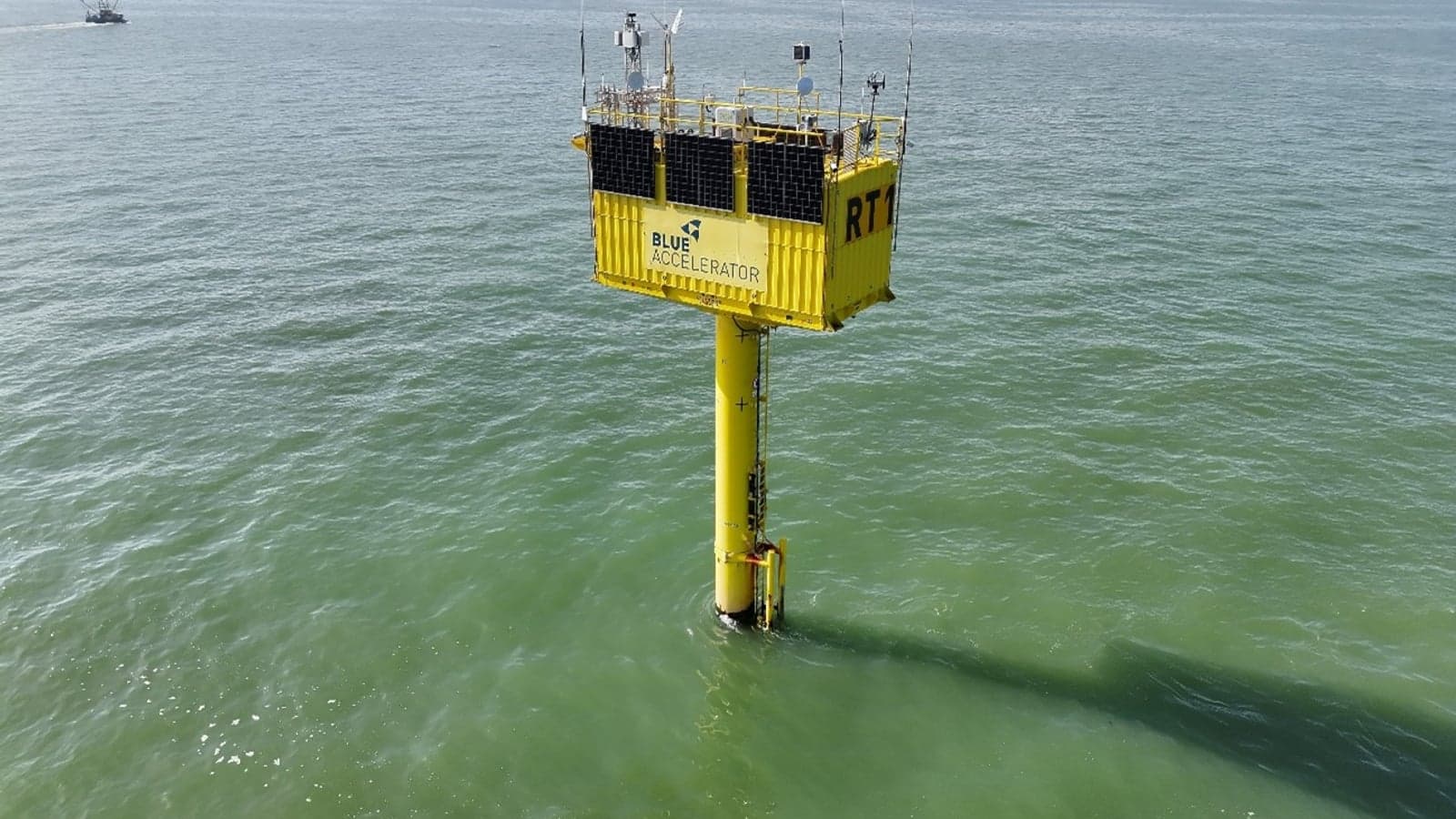
On the one hand, there is the Blue Accelerator, a maritime innovation and development platform and a test site for research new coatings and monitoring solutions, which is located at 500m off the port of Ostend in Belgium.
On the other hand, there is the HarshLab, the largest floating laboratory for the offshore industry. Equipment, new materials and coatings can be evaluated in a wide variety of conditions ranging from atmospheric to seabed in the lab, which is moored in the Biscay Marine Energy Platform (BiMEP) in the Gulf of Biscay, north of Spain.

Project results
As mentioned above, a key use case of the project is the Blue Accelerator platform in Ostend, Belgium, coordinated by POM West-Vlaanderen. The project aims to use electrochemical measurements led by SIRRIS to detect pitting corrosion – an aggressive form affecting offshore structure fatigue – due to the lack of suitable commercial sensors.
Another goal is to better understand offshore corrosion and coating degradation to support forecasting models. For this, commercial MetriCorr sensors and new C-Cube electrochemical sensors were installed across the splash, tidal and submerged zones of the monopile. Corrosion and coating coupons were also deployed in these zones to study environmental effects. Early results show severe pitting in the splash zone, more advanced corrosion in tidal and external submerged areas, and mainly uniform corrosion in the submerged zone.
Another key experiment is the mudline corrosion test, located 20–30m from the Blue Accelerator. This critical yet hard-to-inspect zone, where the monopile enters the seabed, faces structural loads and possible microbiologically induced corrosion (MIC) or coating degradation. With Antwerp Underwater Solutions, a 193.7mm, 2.5m-long pipe was installed in April 2025, buried 30–40cm under the seabed. After the successful trial without sensors, a second pipe with corrosion sensors – including one specially developed by C-Cube – was installed in September 2025 to monitor corrosion beneath the mudline.
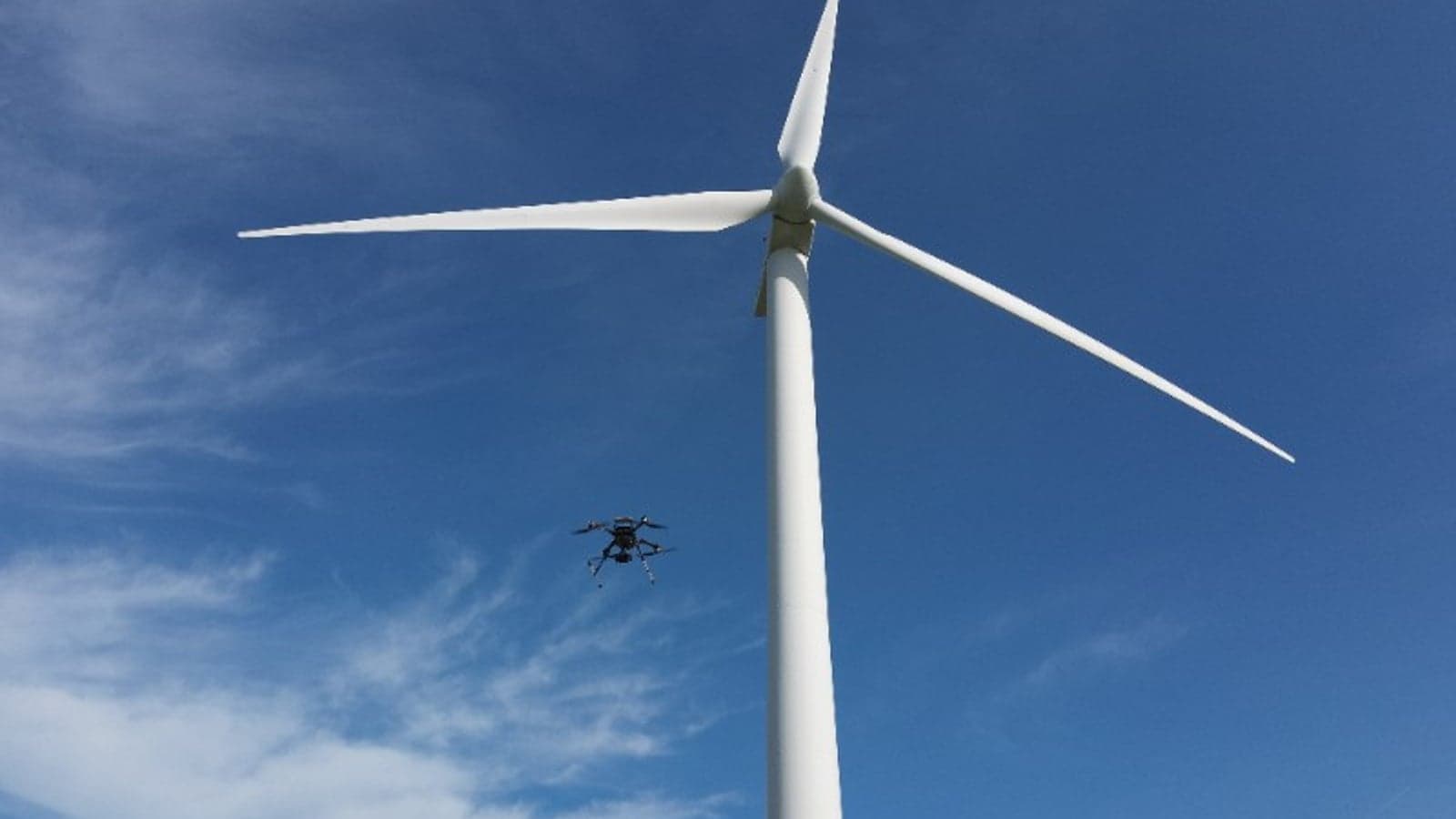
In late June, Alerion conducted flight tests with its Hyperion drone, newly equipped with a thermal camera, to collect thermographic data for AI-based corrosion detection. At the Blue Accelerator, two inspection types were performed – vertical and spiral flights from sea level to the top of the pole – successfully capturing both thermal and RGB images.
At the end of September 2025, three sensor nodes and a UWB–4G gateway were successfully deployed at HARSHLAB. This marks the beginning of a one-year experimental campaign designed with two main objectives. First, the trial aims to validate the robustness and autonomy of Ceit’s ad-hoc ultrasonic monitoring system, including its electronics, wireless communication capabilities, and measurement performance. Second, it seeks to analyse the evolution of artificially induced corrosion pits.
We are now in the last year of the project, focusing on consolidating results, validating methods and preparing the outcomes for dissemination and practical implementation.
For more information about the project, visit the website, follow on LinkedIn and watch the video of the project.
About the author
Marcos Suárez is Wind Energy Director at the BASQUENERGY Cluster. He holds a MSc in Industrial Engineering from the University of the Basque Country and an MBAfrom IESE and Haas School of Business (UC Berkeley). He has over 15 years of international experience in consulting, both in the strategic area and in M&A processes or activities related to R&D in the energy sector.
Related tags
Most popular
Join the community for freeAnd get access to all content
Related projects
WILLOW
1 October 2023 - 30 September 2026
View project