Five projects that make you fired up for fusion
Jonathan Spencer Jones
Posted on: 22 January 2024
Jonathan Spencer Jones spotlights five energy fusion projects we think you should be watching.
Jonathan Spencer Jones spotlights five energy fusion projects we think you should be watching.
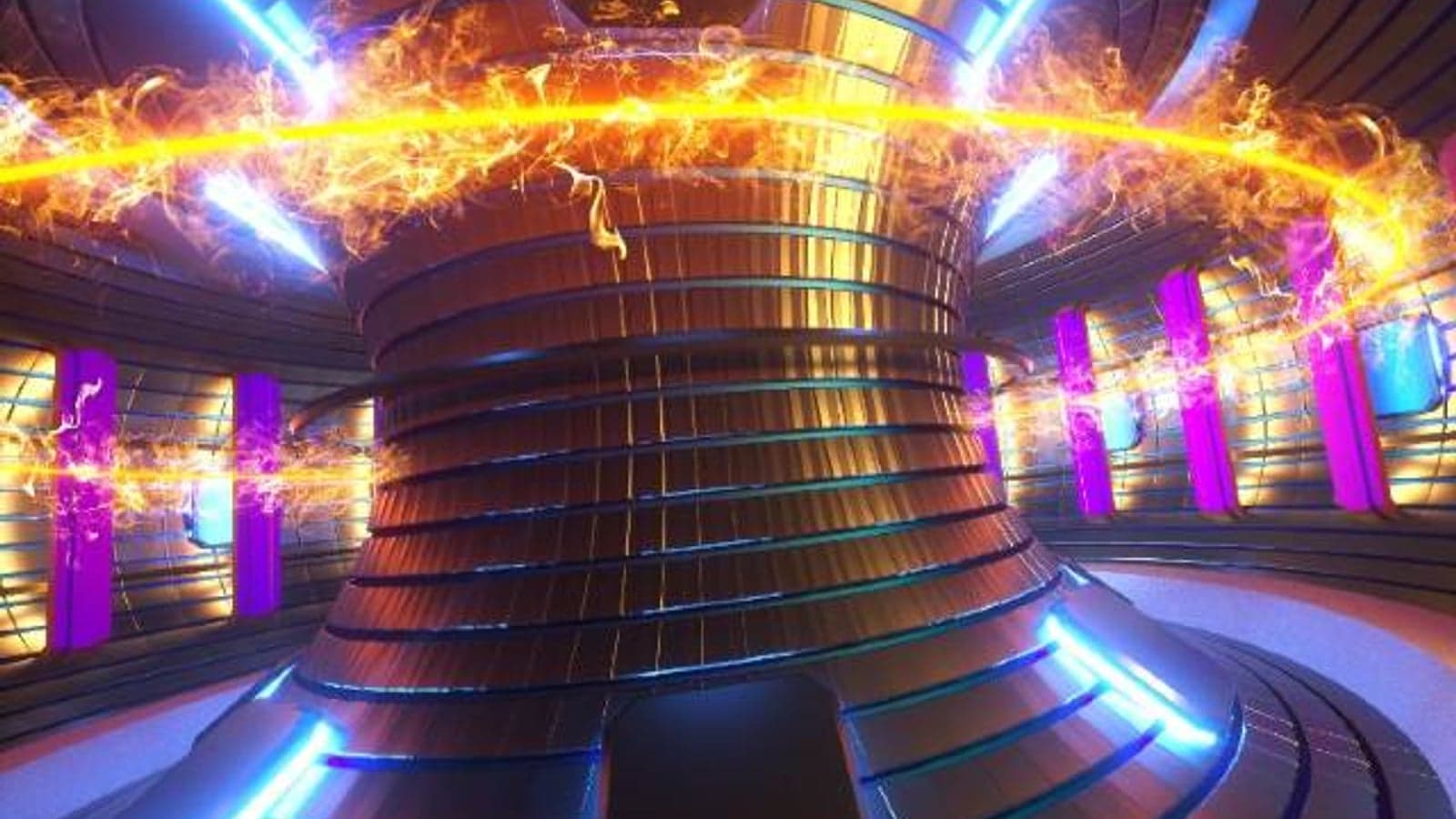
Nuclear fusion is arguably one of the hottest topics currently in the energy generation arena.
After more than half a century of dedicated research — and over a century since Arthur Eddington suggested fusion as the energy source of the Sun and other stars — its potential for delivering energy to the system on a scale that can be commercialised finally appears to be within reach, with numerous initiatives targeting the early 2030s.
The Fusion Industry Association’s latest survey found that as of early 2023, there were no less than 43 companies active across the globe — 13 up on the previous year’s survey. Moreover, they are extremely technologically diverse, with few examples of companies competing in the same technology.
Further indicative of the potential, the Association found that the fusion industry has attracted over $6.2 billion in investment — $1.4 billion up on the previous year — while at the same time also there has been notable progress on the policy and regulatory fronts.
Nevertheless and despite this outlook, multiple challenges, technical, scientific, engineering and financial, remain to be solved before fusion energy is ready to enter the grid.
Podcast recommendations:
Energy Transitions Podcast: Why fusion energy is the ‘vaccine of climate change’
Energy Transitions Podcast: Digitalising nuclear power for enhanced grid stability
Against this background, we offer in no particular order, five projects recommended to keep an eye on.
LLNL National Ignition Facility — a fusion breakthrough
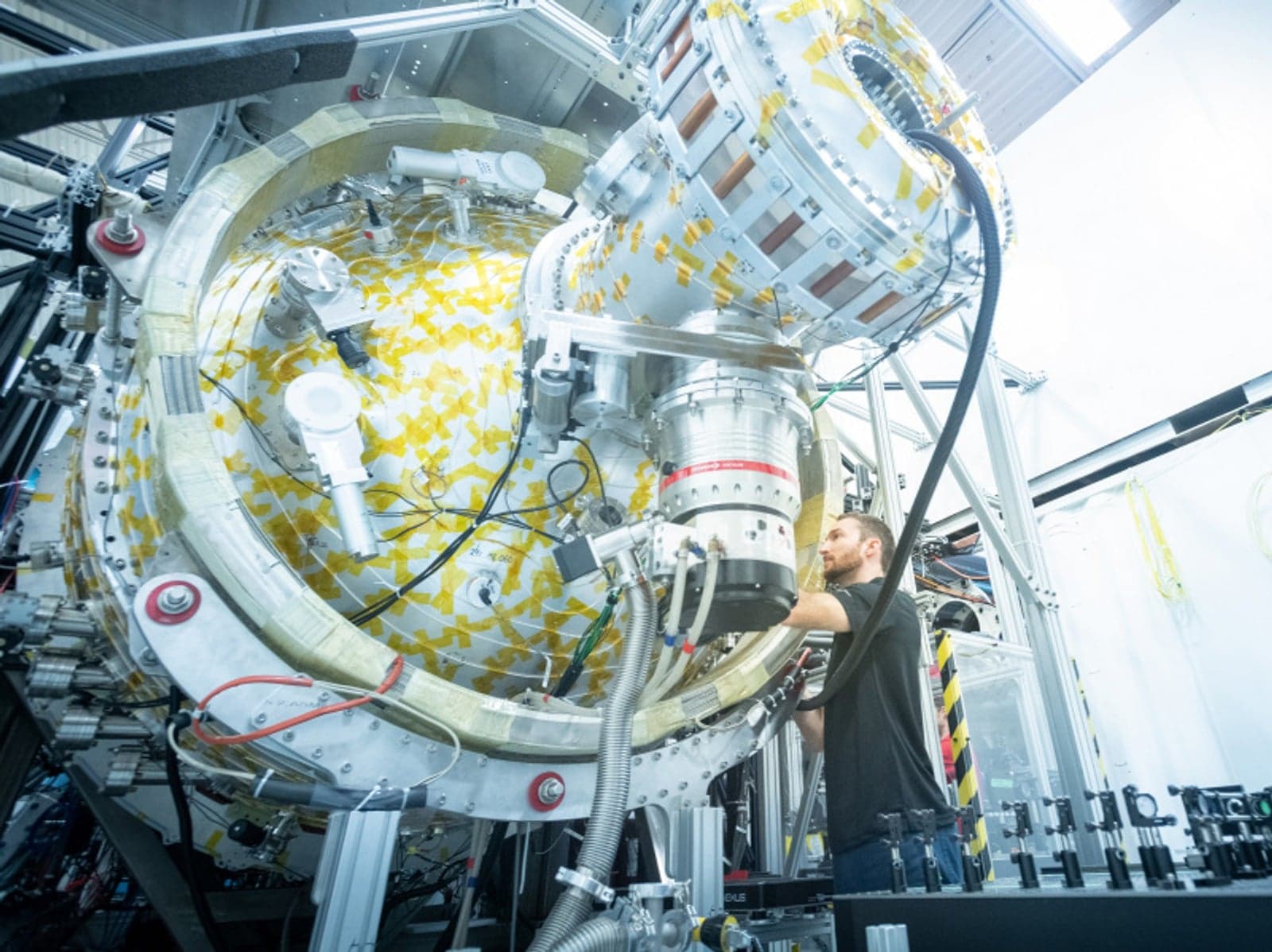
The US Lawrence Livermore National Laboratory (LLNL) National Ignition Facility, a laser-based inertial confinement facility, is not only the largest of its type but also has made history.
In something of a 2022 Christmas present to the fusion industry the device was the first to achieve ‘scientific energy breakeven’, i.e., an energy production greater than the input energy.
In a December 2022 announcement, the NIF was reported to have delivered a fusion energy output of 3.15MJ from an input energy of 2.05MJ — a more than 50% gain.
“The pursuit of fusion ignition in the laboratory is one of the most significant scientific challenges ever tackled by humanity, and achieving it is a triumph of science, engineering, and most of all, people,” said LLNL Director Dr Kim Budil of this achievement.
LLNL was a pioneer of the inertial confinement approach to fusion, which is based on compressing and heating fuel pellet targets made up of a mixture of deuterium and tritium with advanced lasers.
Subsequently, the researchers have repeated the ‘breakeven’, while another outcome is the US Department of Energy has indicated the restarting of a coordinated inertial confinement fusion programme.
General Fusion — ‘most cost-effective and practical’
Vancouver, Canada-based General Fusion is developing magnetised target fusion, which combines concepts from both magnetic confinement fusion and inertial confinement fusion.
In General Fusion’s approach a hydrogen plasma is injected from a magnetised ‘gun’ into a vessel lined with liquid metal, which is then rapidly compressed mechanically to increase the plasma to fusion temperatures — the intent being to avoid the complexities and costs of either full magnetic confinement or inertial compression.
General Fusion believes that its approach is the most practical and fastest to market and claims to be on track with recent milestones of energy confinement times and system performance to meeting its 10keV - 100 million oC target in the demonstration currently under development at the UKAEA’s site near Oxford and due to become operational in early 2027.
“Magnetised target fusion sits in the middle of [magnetic confinement and inertial confinement fusion], making it a much more cost-effective and practical technology to commercialise,” asserts General Fusion Founder and Chief Science Officer, Dr Michel Laberge.
The company aims to have a commercial plant under construction and potentially in operation by 2030.
TAE Technologies — ‘most abundant fuel source’
TAE Technologies headquartered in California has achieved the first-ever measurements of hydrogen-boron (p-B11) fusion in a magnetically confined fusion plasma, giving impetus to the potential of p-B11 as a viable fuel for fusion energy.
While the challenges of producing the fusion core are greater for p-B11 than for the deuterium-tritium approach, the engineering of the reactor should be far simpler — and, state TAE Technologies, the approach is based on what is the cleanest, most abundant fusion fuel cycle on Earth.
“This experiment offers us a wealth of data to work with and shows that hydrogen-boron has a place in utility-scale fusion power,” said Michl Binderbauer, chief executive of TAE Technologies, one of several companies advancing the p-B11 approach.
TAE Technologies has adopted a compact linear and modular design using an advanced accelerator beam driven field-reversed configuration to sustain the plasma, which should be able to accommodate not only p-B11 but also other fusion fuel cycles, including deuterium-tritium and deuterium-helium-3.
Two further machines are under development, with the aims respectively to demonstrate net energy around mid-decade and to start delivering power to the grid in the early 2030s.
Have you read?
Emerging nuclear tech highlighted at Enlit Europe conference
Nuclear Start-up Spotlight: Marvel Fusion
Pulsar Fusion — powering deep space travel
While fusion is being developed for delivering power on Earth, it also is being considered as a viable option for powering rockets deep into the solar system and beyond.
UK-based Pulsar Fusion working with the field reversed-configuration concept has started to build what is claimed as the largest practical nuclear fusion rocket engine.
“We believe that nuclear fusion is the only technology with the exhaust speeds and the thrust that could give us the ability to leave our solar system within a human lifetime,” says founder and CEO, Richard Dinan, who also believes that fusion will be demonstrated for propulsion in space before it can be harnessed for energy on Earth.
The idea of establishing a human base on the Moon is fast gathering ground, but NASA also is already looking beyond to Mars and a direct fusion drive would open up the possibility of more than halving the travel time to about four months, while beyond to Jupiter and Saturn would take one and two years respectively instead of the decade with conventional engines.
Proxima Fusion — newest kid on the block
Munich-based Proxima Fusion formed in 2023 as a spin-out from the Max Planck Institute for Plasma Physics is the newest company in the fusion race and joins Marvel Fusion founded in 2019 and Gauss Fusion in 2022 to reflect the fast-growing interest at public and private levels in fusion in Germany.
Proxima Fusion is developing a quasi-isodynamic stellarator technology, i.e., a plasma device with a surrounding magnetic coil, where the toroidal currents cancel to zero and the precession is poloidal rather than helical.
With the absence of plasma currents and hence the current-driven instabilities that result in disruptions in other concepts, stellarators, while harder to design should be easier to operate.
“Stellarators are now feasible design and build, leading us into a new era,” the company asserts, saying that its QI stellarator approach with high-temperature superconducting magnets offers “the clearest path to putting fusion on the grid.”
Proxima Fusion aims to demonstrate scientific and technological milestones in the early 2030s, prior to commercialising with a 750MW facility within that decade.
Latest content
+1
DOE to fund $42M inertial fusion hub programme
The hubs will be led by researchers at Colorado State University| the University of Rochester| and Lawrence Livermore National Laboratory| where last year a team successfully achieved fusion ignition for the first time| proving that creating energy from fusion is possible.
- Power Engineering International
- 18/12/2023