Clean Industrial Deal gets reality check at European decarbonisation summit
Kelvin Ross
Posted on: 12 March 2025
The European Commission’s Clean Industrial Deal was delivered a reality check today by the former Director General of the Swedish Energy Agency.
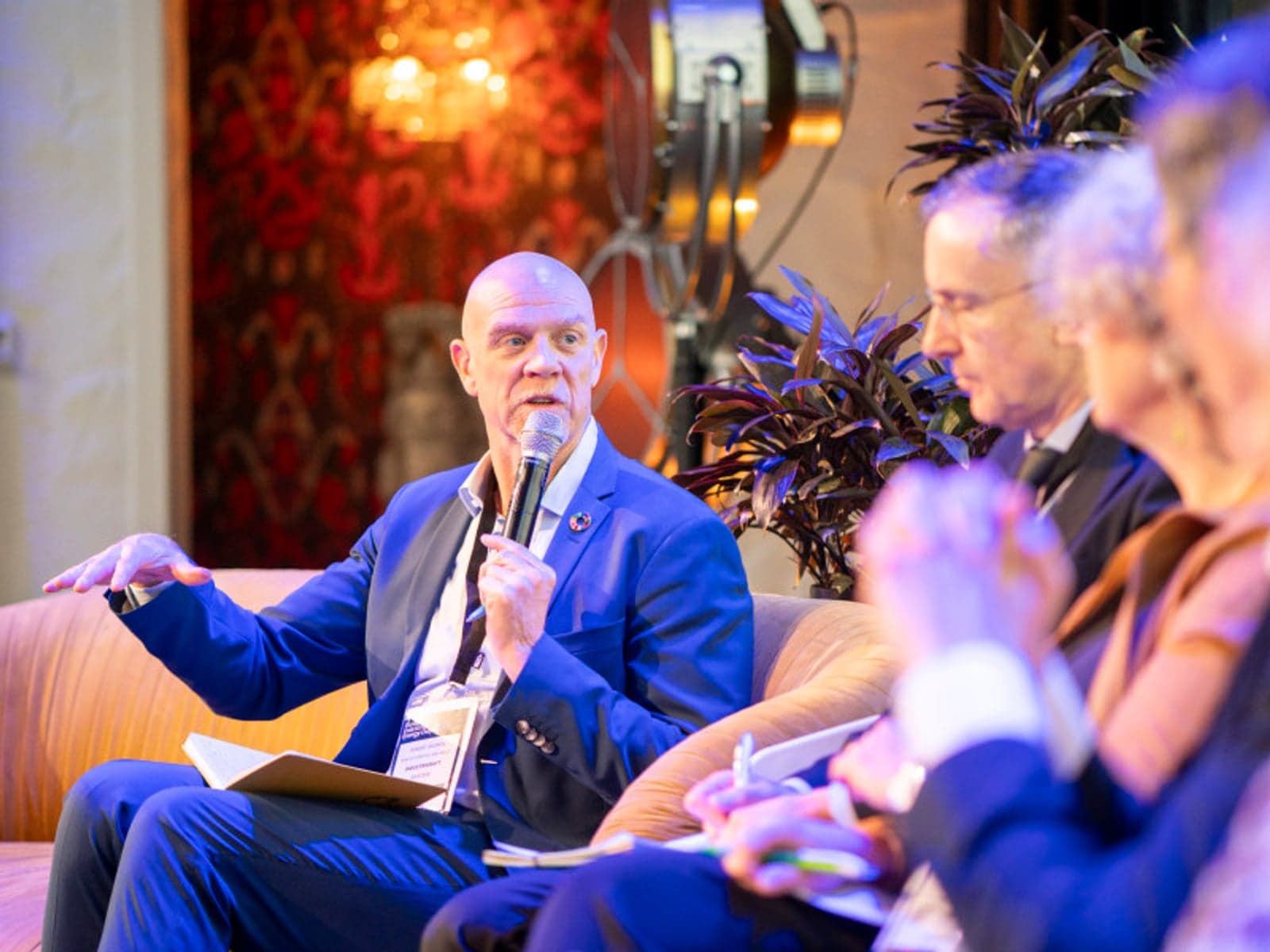
The European Commission’s Clean Industrial Deal was delivered a reality check today by the former Director General of the Swedish Energy Agency.
Robert Andrén, now Head of Strategy and Policy at Industrikraft – a consortium of 17 Swedish industrial companies formed because “industry wanted skin in the game” – welcomed the Deal, but said “it will not solve everything”.
Speaking in a panel discussion at European Industrial Energy Days in Amsterdam, he said what was now needed in relation to the Deal was “dialogue to translate it into what is the point of departure.”
And dialogue, he stressed, was critical: “Industry and the energy sector need to talk to each other much more: it’s all about engagement and it cannot all be left to the Commission.”
He also warned that too often the Commission ends up with a “one-size-fits-all” solution, and this would be wholly unsuitable for tackling the decarbonisation and competitiveness of European industries.
“We talk about industry as if it is one homogeneous thing: it is not.”
Also of interest
A Swedish formula for European industrial competitiveness
Clean Industrial Deal: a plan to accelerate Europe’s industrial decarbonisation
Different industries have different challenges and needs, he said, adding that as such it was vital to “find a balance… because if we do not keep our balance, I am afraid that it becomes a competitive issue among member states and not the rest of the world”.
He said European industry was “a very delicate and complex system” and this means that boosting competitiveness and decarbonisation must become “a question of a systems perspective”.
However, asked if he was optimistic about the effect of the Clean Industrial Deal, Andrén said: “If it leads to security of supply and a build-up of supply and value chains, then yes… I’m optimistic.”
His fellow panelists were also optimistic, some albeit cautiously.
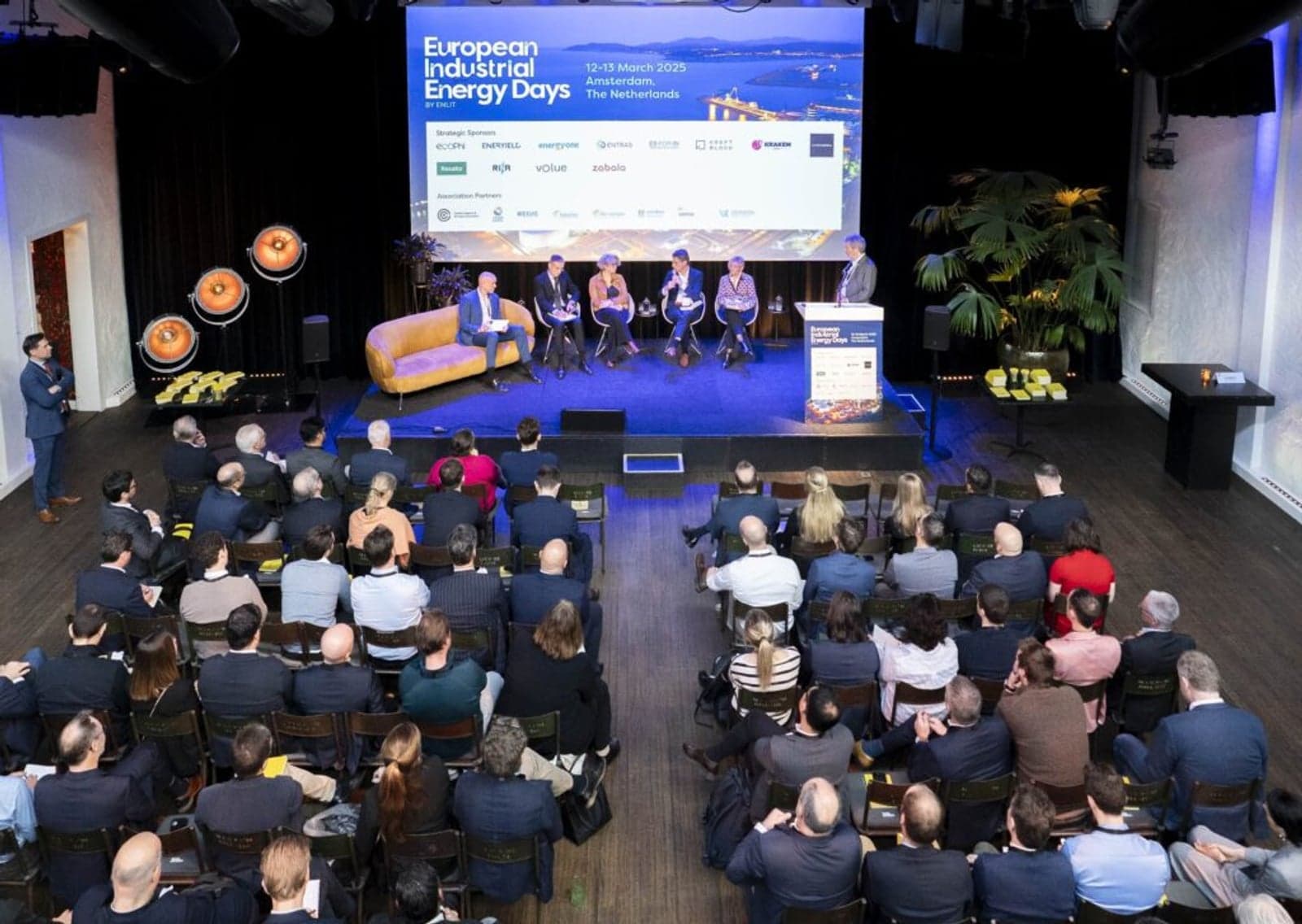
Caroline Kollau, Director Energy Market and Deputy DG Climate and Energy - Ministry of Economic Affairs & Climate Policy of the Netherlands, highlighted that member states are managing 10 or 11 different pieces of EU legislation, and are having to adapt some of them already before they have actually entered law.
She also said that “competitiveness of the EU internal market is in the end where our welfare comes from”.
“We need to address competitiveness if we want to be part of a global partnership.”
Anne Bolle, Vice President EU Affairs at Statkraft, said that she did not believe the EU could ever reduce its energy costs to US levels. However, she said there was considerable progress that could be made to accelerate the further deployment of renewables.
And Guido Janssen, chief executive of metals and minerals company Nyrstar, said Europe must learn from the way China has maximised the potential of its natural resources. “Then you can play with the globe.”
Competitiveness tops EU agenda
European Industrial Energy Days – part of Enlit Europe – was opened by Vincent Berrutto, Head of Unit Research, Innovation, Competitiveness and Digitalisation at DG ENER in the European Commission.
He said industry “is facing an existential challenges”, which was why competitiveness is “at the very top of the European Commission’s agenda”.
However, he stressed that Europe “can’t act on our own: we need reliable global partners for mutually beneficial deals”.
He said the Commission would soon launch action plans for the automotive, steel and chemical sectors and added that the Clean Industrial Deal was a “joint roadmap for competitiveness and decarbonisation, because decarbonisation is a driver of competitiveness”.
But he stressed that “a strategy like the Clean Industrial Deal is only as good as its implementation”, and as such, the Commission would painstakingly ensure every measure in the deal was accelerated to ensure that it delivers “economically, environmentally and socially”.
Later in the day, Nick Keramidas, General Manager for European Affairs & Regulatory Advocacy at Greek-headquartered METLEN Energy & Metals, said he had been “thrilled" at the prospect of the Clean Industrial Deal and had been looking forward to praising the European Commission.
But, he said, “the Clean Industrial Deal did not pan out as expected.” He added that “the notion of energy efficiency has been massacred in Europe. My first ask would be to rectify the definition of energy efficiency.”
He added that “we can’t discuss industrial competitiveness without the stuff that’s needed for it” – and that meant energy efficiency and flexibility. But he said “the understanding of flexibility is distorted in the Brussels’ bubble”.
Latest content
+4
EU Energy Projects Podcast: The €100 billion question: Is the Clean Industrial Deal enough?
When the European Commission announced its Clean Industrial Deal, accompanied by a hefty €100 billion investment in clean manufacturing, it sounded like a step in the right direction.
- Areti Ntaradimou
- 13/03/2025