A Swedish formula for European industrial competitiveness
Pamela Largue
Posted on: 26 February 2025
A Swedish consortium is replacing traditional industrial rivalry with strategic partnerships focused on decarbonisation, a strategy that could help foster competitive longevity across Europe.
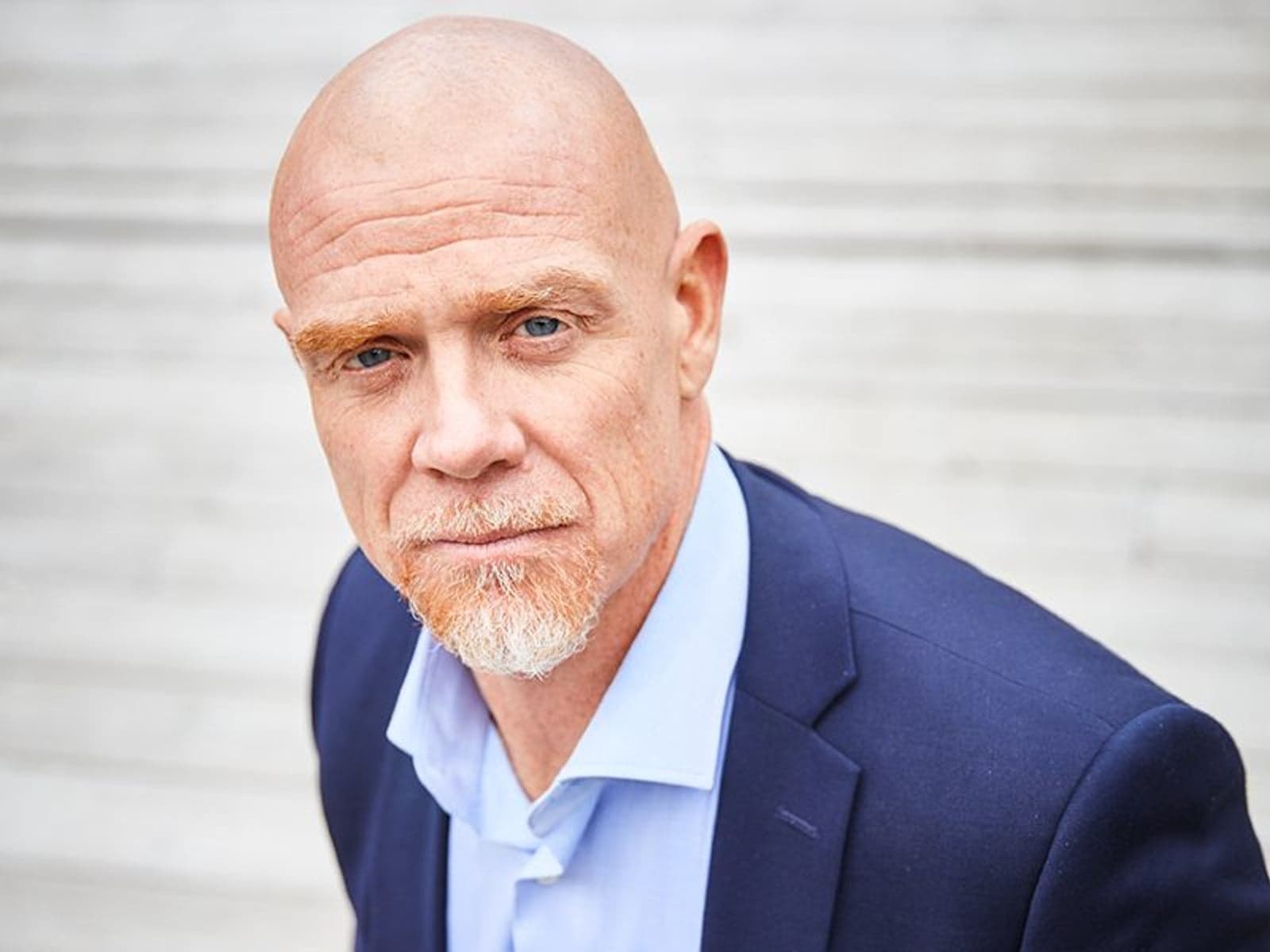
As industrial decarbonisation becomes increasingly central to European competitiveness, one Swedish consortium is replacing traditional industrial rivalry with strategic partnerships focused on decarbonisation, a strategy that could help foster competitive longevity across Europe.
That consortium is Industrikraft. Owned by 17 Swedish industrial companies including ABB, Hitachi Energy and Alfa Laval, it works to ensure the long-term supply of fossil-free electricity for Swedish industry.
To learn more about Industrikraft and its formula for industrial decarbonisation, Pamela Largue spoke to Robert Andrén, former Director General at the Swedish Energy Agency and now Head of Strategy and Policy at Industrikraft, who highlights why the critical work they are doing could provide valuable lessons for the rest of Europe.
Industrikraft’s mission
“When it comes to the energy transition, you could say that, in short, it's about industry wanting to get skin into the game,” says Andrén, and Industrikraft is about making that happen in a way that is sustainable, both environmentally and economically.
Industrikraft is what Andrén refers to as a “think and do tank” (with the emphasis on do) and is geared to forming industrial partnerships to drive decarbonisation and ensure security of supply to meet energy needs in the short, medium and long term.
Also of interest:
Energy Transitions podcast: Bringing industrial flexibility to market
Fatih Birol and Ignacio Galán reveal actions for European competitiveness
It’s about ensuring competitive prices, he explains, and supporting industries to navigate the complexities of the twin digitalisation and energy transitions.
Andrén believes industries have an essential role to play in decarbonisation, which will be achieved mainly through electrification - hence a secure supply of clean energy will be needed.
“I believe that Sweden has a very good starting position since our electricity system is almost 100% fossil free, while many other European Member states still rely on fossil-based electricity.”
Andrén suggests Sweden’s unique private-public collaborative and industrial experience, coupled with a green electricity supply, means the country has a success story to share with the rest of Europe and could help spur the region’s progress towards a greener energy system.
A green energy system is “where the future lies”, he says.
“That means that you will be less dependent on the rest of the world when it comes to securing your energy demands... but this needs to be achieved at a competitive price level while also contributing to reach the climate ambitions.
“The competitiveness of European industry is at stake here.”
Competitiveness is keeping industry awake at night
According to Andrén, one of the main concerns facing industries within Sweden and across Europe is how to maintain competitiveness within a global context.
It’s a price and cost issue, says Andrén, explaining that European industries are challenged from the start due to high energy prices compared to other regions.
Besides addressing the cost of energy, Andrén suggested the question of volume be addressed too.
“We need to ensure that we, in particular the industry, have the green energy we need today, tomorrow and two decades from now, not only in Sweden but also the rest of Europe. We need to address this from a system perspective, both in time and space throughout Europe. It's a cross-border issue and concern."
Andrén adds that these concerns are coupled with tackling the intricacies of transitioning to a fossil-free system, a challenging situation facing industries indeed.
Addressing policy risk
According to Andrén, political risk is the largest risk that industry is currently facing.
“In my view, you can't have too many very rapid changes in policy, and we should avoid energy becoming a political issue.”
Energy as a political issue can create what Andrén refers to as a pendulum, a factor used by governments in election campaigns to cause division.
And besides the polarising effect of politicising energy, there is also the risk associated with putting too many legislative packages on the table.
He explains: “The energy system is quite complex. Industry doesn't always have the time and understanding to dig into the details of all these packages and different changes and what they mean for the energy system.
“You have the infrastructure both for transmission and production, you have the consumer's perspective, you have energy efficiency, you have storage and flexibility, you have many new innovative technological components brought into the system.
"I argue that it's a very complex system and with too many new or amended regulatory packages and policies it becomes too confusing, and you risk slowing down the green energy transition rather than speeding it up."
Andrén calls for consolidation from an EU policy perspective, allowing for a clear, easy to understand and easy to adhere to regulatory framework on the EU-level.
He also recommends industry, agencies and energy sector actors start working together more actively, more than they have done so far, for a stronger and more competitive Europe.
Have you read?
Clean tech at heart of Europe’s competitiveness strategy
Mission Possible: Tracking Europe’s industrial decarbonisation
The importance of a risk sharing model
When asked about which technologies could make the biggest impact in the industrial decarbonisation space, Andrén answers: “I love this question, because it’s actually trying to address the issue from a concrete point of view.”
Rather than highlighting one specific technology, Andrén suggests the biggest impact will come from a new way of addressing public-private risk sharing, as a way to speed up decarbonising, while maximising competitiveness and minimising costs.
“It's not an easy question, but we need a system that will foster and promote new business models and allow bigger and more rapid technological breakthroughs.
“It’s also about better answering the question, how cheap can a system that is reliable actually be?”
Andrén highlights that nuclear energy holds some promise for Sweden’s industrial landscape, although it is costly. In terms of renewables coupled with storage, Andrén refers to this solution as “fantastic and an important part of the future energy system”, although it still requires development to meet the volume that industry needs.
He explains that it’s about weighing various factors such as cost, functionality and stability and whether it will meet the demands of industry.
It’s also about ensuring industries are energy smart, avoiding wasting valuable energy through the use of outdated processes and systems.
Becoming energy smart
For industries to become energy smart, Andrén believes it will require a mind shift.
“I think the biggest shift needed is perhaps not on the political level, although that is a very important one. I think it's the lack of understanding and dialogue between the traditional industrial sector such as paper or steel and the 'energy industry' sector."
He recommends bringing these sectors together much more closely to discuss production, distribution and consumption.
Read more: Eurelectric calls for clean electrification-based European Energy Security Strategy
“I realised I need to get our 17 companies to sit down together with the grid owners and the producers of electrons and/or gas molecules to better understand each other’s point of departure.
“In Sweden, up until now, most of industry has mainly been an end consumer. You plug in or you plug out at a low cost. That is not the case anymore and that is a mind shift.”
Sweden’s model is a partnership model
Andrén explains that Sweden has a lot to share in terms of going green but also in terms of collaborating.
“The country has a history of getting the relevant actors working together, sitting down with those who hold opposing views to find a way forward.”
“Let’s face it, industrial partnerships and commitment are imperative for decarbonization, for a fossil free and robust European energy system and for a competitive European industry.”
Competitors should consider partnerships, he says, because the challenges facing industry are too large to tackle individually.
“If they don’t work together to solve some of the problems there won’t be a future for them to compete in.
“Partnership is the new leadership," said Andrén, adding: “It's ambitious, yes. Impossible, no.”
Robert Andrén will be speaking at European Industrial Energy Days on the topic: Decarbonising while safeguarding Industrial competitiveness in Europe.