Home
/
Techno-economic assessment: Jet fuels production from carbon dioxide and renewable hydrogen
Techno-economic assessment: Jet fuels production from carbon dioxide and renewable hydrogen
Guest/partner contributor
Posted on: 17 September 2024
The TAKE-OFF project will quantify the economic and environmental performance of SAF produced from CO2 and H2 via the light olefins route.
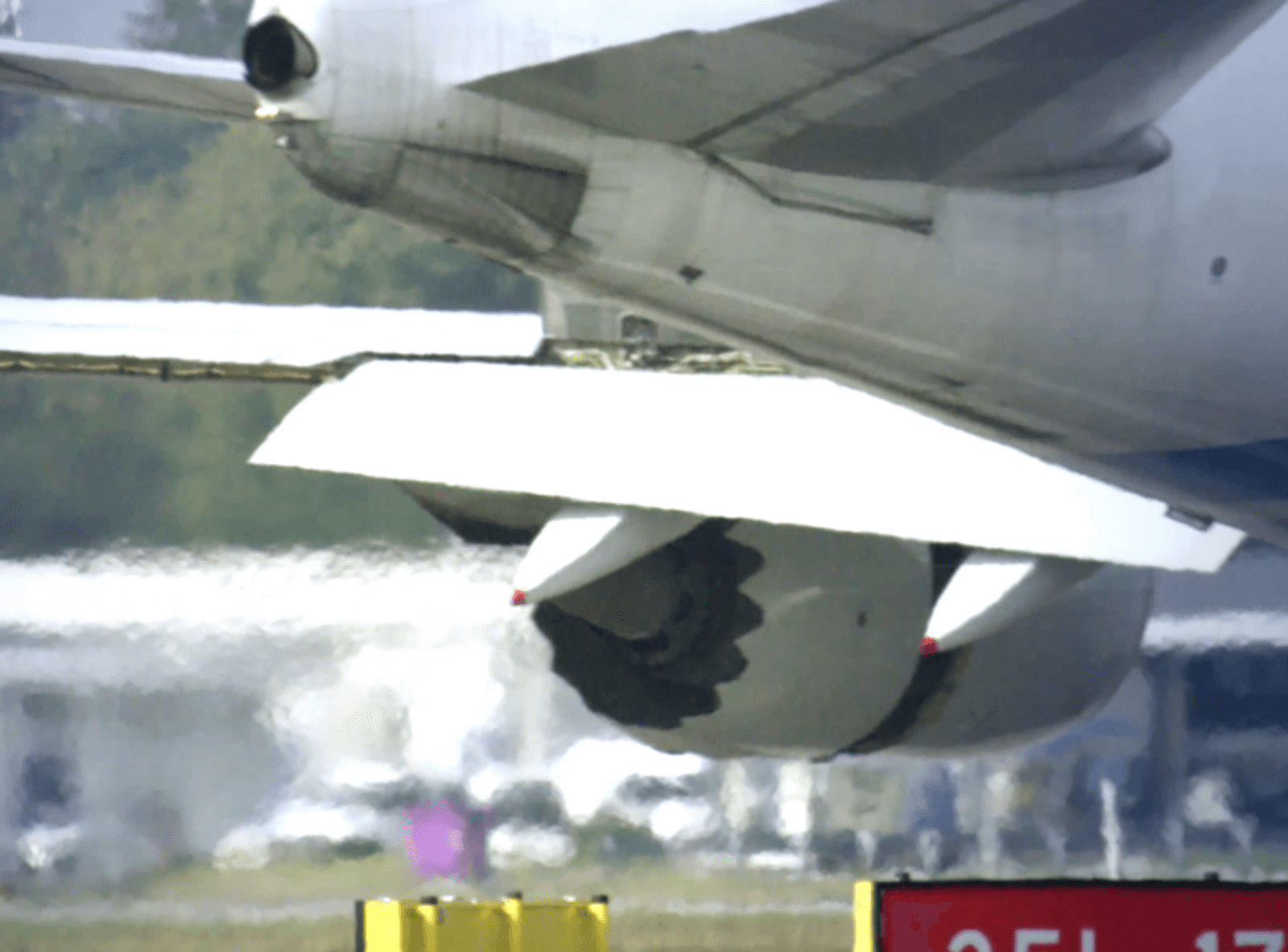
The TAKE-OFF project will quantify the economic and environmental performance of sustainable aviation fuel produced from carbon dioxide and renewable hydrogen via the light olefins route and competing production routes.
The project is exploring the development of a unique technology, which aims to deliver a highly innovative process that produces sustainable aviation fuel (SAF) at lower costs and higher energy efficiency compared to other power-to-liquid alternatives currently available.
The technoeconomic and environmental assessment of jet fuels production from CO2 and H2.
By Hadis Marami, Benyamin Khoshnevisan, Morten Birkved,
Department of Chemical Engineering, Biotechnology and Environmental Technology,
University of Southern Denmark
In 2017, European aviation contributed 163 million tonnes of CO2, about 3.6% of Europe’s total, with a projected 21% increase to 198 Mt by 2040, making it crucial to reduce its CO2, and other greenhouse gas emissions.
SAF from renewable sources can significantly lower the carbon footprint compared to fossil-based aviation fuels.
Launched in 2021, the European funded project TAKE-OFF - Production of Synthetic Renewable Aviation Fuel from CO2 and H2 - is developing next-generation technology to produce SAF from CO2 and H2. TAKE-OFF is an industrially-driven project that will be a game-changer in the cost-effective production of SAF.
Find out more about:
EU-funded energy projects
Improving the efficiency of the SAF production
Building Milan’s net zero airport of the future
Conceptual models and benchmarking
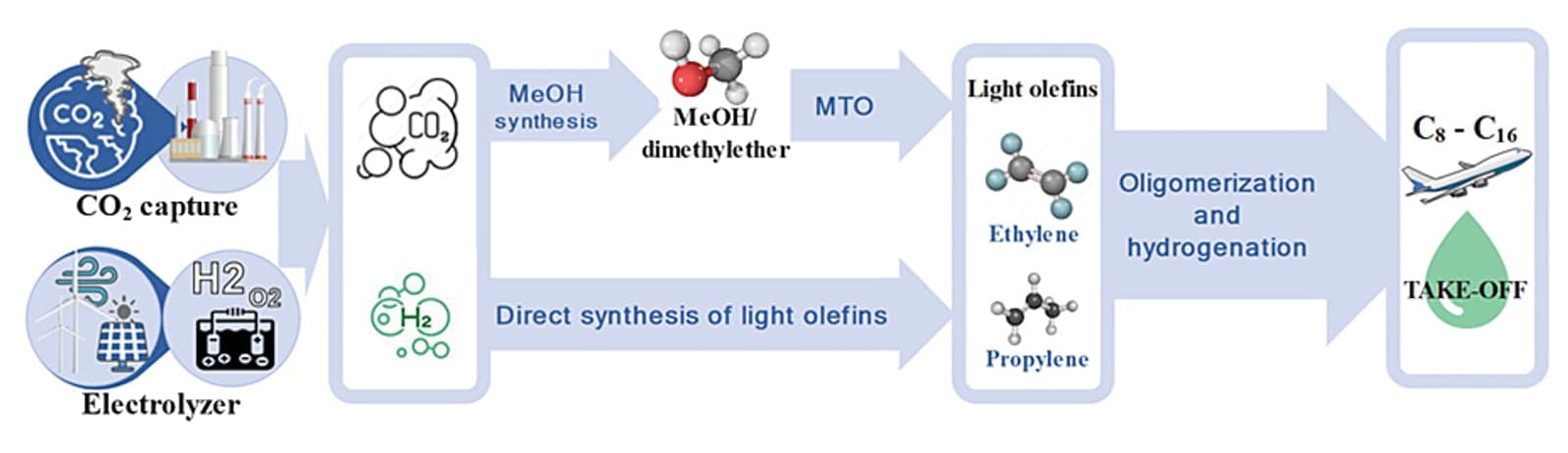
Currently, Fischer-Tropsch (FT), a certified method for producing SAF, is considered a benchmark for TAKE-OFF. Both TAKE-OFF and FT are competitive pathways for largescale SAF production using similar feedstocks. TAKE-OFF's technology involves two process lines (Figure 1):
- Line 1: Captured CO2 and H2 are first converted to Methanol (MeOH)/ dimethyl ether (DME), then to light olefins, reflecting the current state-of-the-art technology.
- Line 2: Directly converts H2 and CO2 to light olefins with process improvements from TAKE-OFF's research.
Both lines convert light olefins to jet fuel through oligomerization and hydrogenation. In the FT pathway, feedstocks are converted to syngas via reverse gas shift and then to syncrude, with final fuels influenced by catalysts, conditions, and refinery processes.
The TAKE-OFF pathways: Multiple scenarios
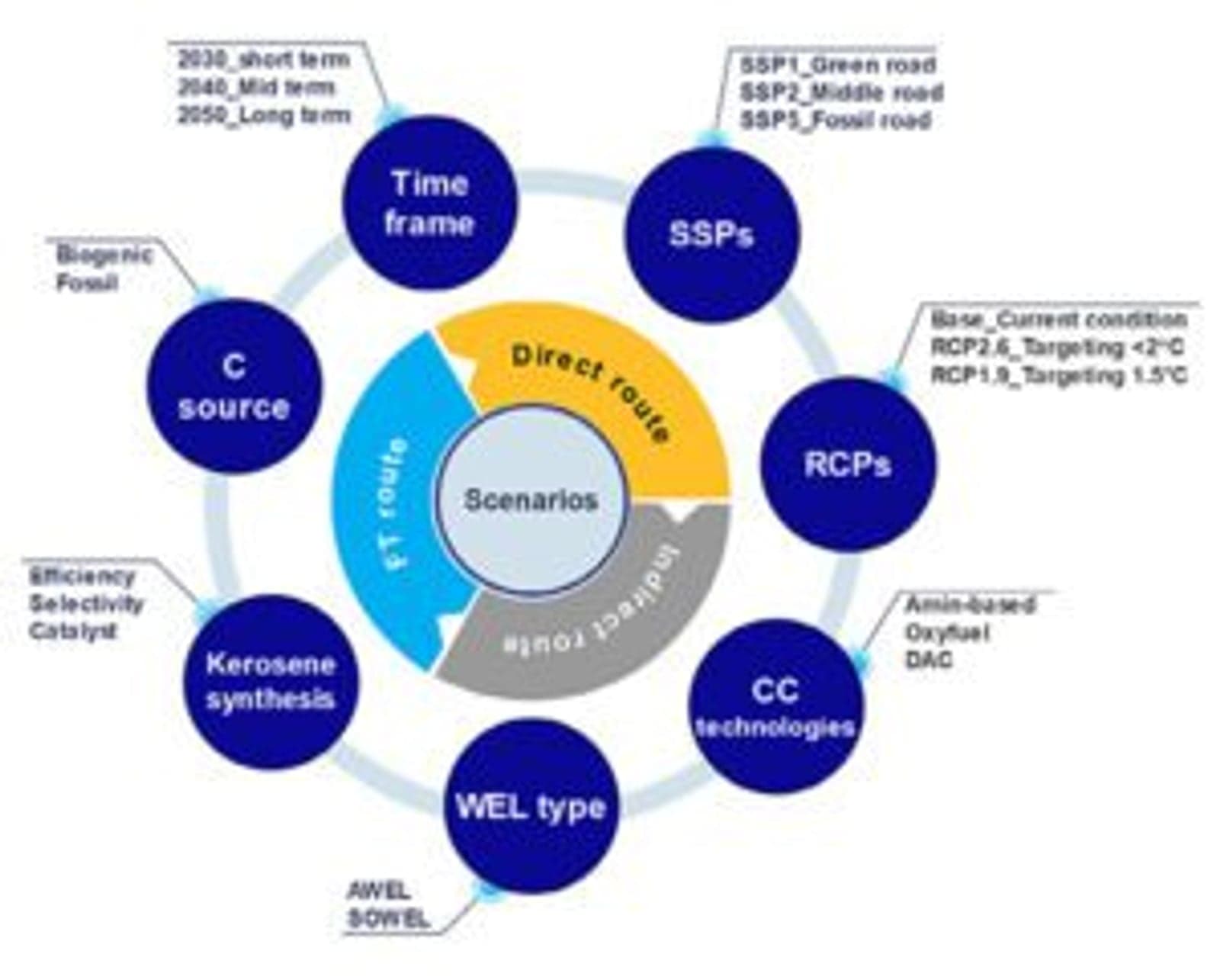
The TAKE-OFF pathways for producing SAF from CO2 and H2 are currently at a low technology readiness level (TRL~3-4) and are expected to reach TRL 5 by the project's end. To include sustainability aspects in the early stages of design and production, all three technology lines are assessed in terms of sustainability using Life Cycle Assessment (LCA) and Technoeconomic Analysis (TEA). Multiple scenarios in terms of carbon capture, hydrogen production technology, energy sources, etc. are developed and system models for each scenario are created and simulated using experimental data (Figure 2).
LCA results explored in this project can be used for decision-making purposes, determining whether large-scale SAF production via olefin pathways (direct and/or indirect) should be prioritized over FT pathways in the medium to long term.
The sustainability assessment is enhanced by using IPCC’s Shared Socio-economic Pathways (SSPs) to ensure sustainability goals will be reached regardless of future socioeconomic changes.
This approach considers future changes, policy implications, and socio-economic aspects. Additionally, our LCA assessment evaluates environmental impacts under three climate scenarios: the base scenario, RCP2.6, and RCP1.9. This comprehensive framework ensures a robust comparison of the sustainability of SAF production pathways.
TEA integrates technical evaluation and economic analysis to assess a technology’s economic viability. It has two primary stages: process design and economic analysis. Process design evaluates plant components, efficiencies, chemical consumption, utilities, mass and energy flow, plant capacity, and products are assessed.
Economic analysis investigates capital expenditure, fixed and variable operating expenses, loan interest, salvage value, selling price, payback period, return on investment, gross profit, and net present value.

The TAKE-OFF "Production of synthetic renewable aviation fuel from CO2 and H2" project, has received funding from the European Union’s Horizon 2020 research and innovation programme under grant agreement No. 101006799.
Most popular
Join the community for freeAnd get access to all content
Related projects
TAKE-OFF
1 January 2021 - 31 December 2026
View project