Partner content
Accelerating the energy transition: the power of the 3Ds
Enlit Editorial Team
Posted on: 18 October 2024
Several key factors that play a critical role in accelerating the energy transition and the importance of active community participation.
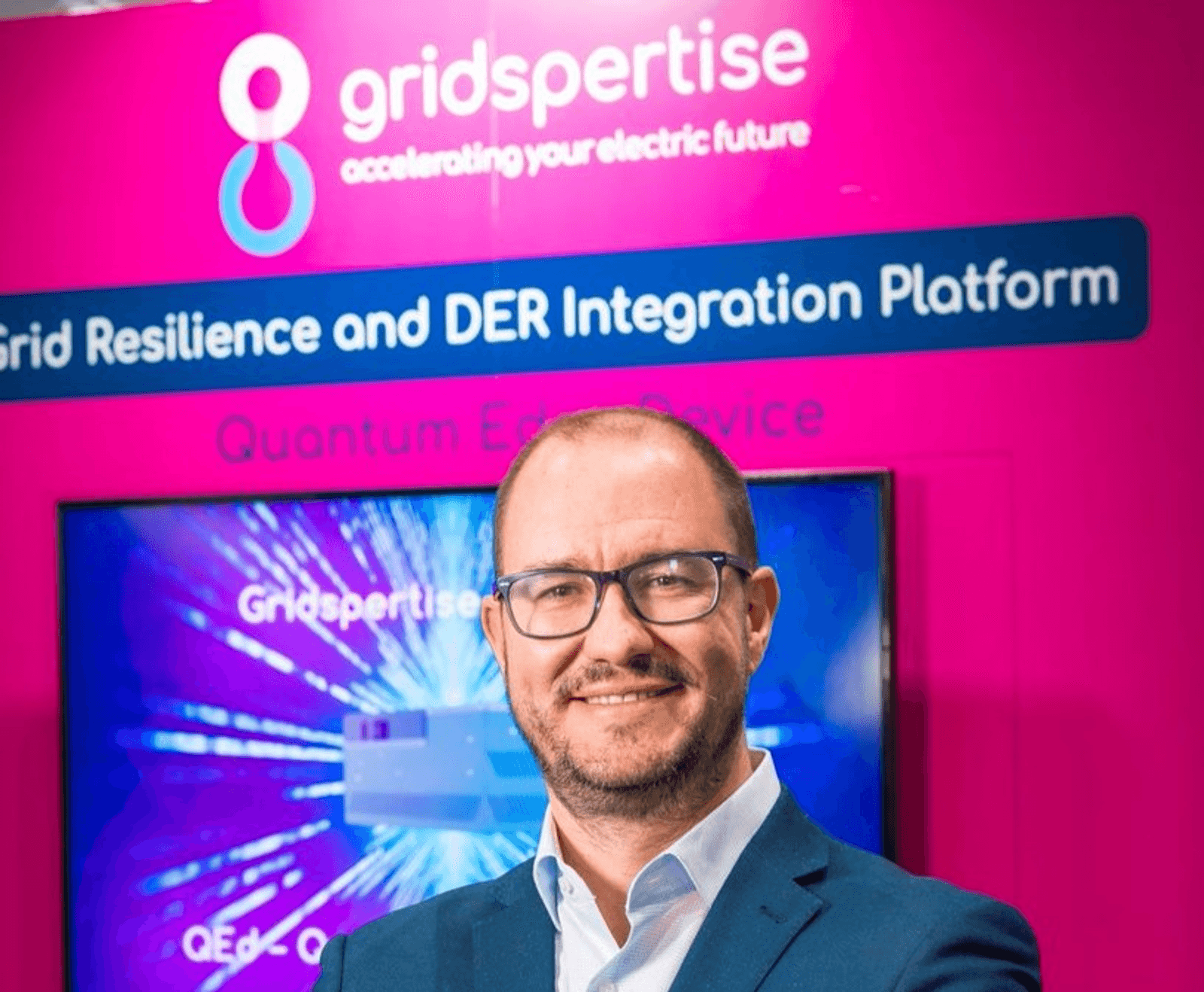
Decarbonisation, Decentralisation and Digitalisation: addressing the ‘3 Ds’ driving the transformation towards a more sustainable and resilient energy future is key according to Santiago Cascante, Chief Strategy Officer at Gridspertise.
In an Enlit exclusive, Cascante touches on several key factors that play a critical role in accelerating and achieving the '3 Ds', which are dependent on public and private efforts, and active community participation.
What role will AI have in accelerating the energy transition?
AI is already contributing to our daily lives with 75% of people using it, with around 40% starting in the last six months. AI can be found throughout a company's entire value chain, making it difficult to assess the acceleration it could bring.
Focusing on electrical distribution systems, AI could contribute to solving the four main challenges of the DSO of the future: integrating DERS great capacity, security of supply increasing automation, deploying demand management services and creating new digital service channels for customers.
There are four main AI innovations focused on optimising and integrating renewable energy sources into the existing grid to meet growing demand while reducing the impact on the quality of supply:
- AI algorithms can analyse historical data and real-time information on weather patterns, energy consumption and generation capacity to anticipate fluctuations in renewable energy production and predict and balance supply and demand.
- AI algorithms can analyse sensor data from grid components like transformers, transmission lines, and generators to predict potential failures before they occur. This enables proactive predictive maintenance and prevents costly and disruptive outages.
- AI can analyse grid topology and data such as meter or feeder information and adjust and reconfigure power flow in real-time, minimising the impact of outages and ensuring continuous energy delivery.
- AI algorithms can analyse patterns in energy usage and identify unusual deviations that could detect anomalies or prevent outages, such as fraudulent activities like meter tampering or energy theft.
Europe needs a strong industrial strategy to ensure its global competitiveness. What role must the energy sector play in this strategy?
We need to address the '3 Ds' driving the transformation towards a more sustainable and resilient energy future: Decarbonisation, Decentralisation and Digitalisation.
- Decarbonisation is directly linked to industrial innovation, leadership and competitiveness. Industries that adopt decarbonisation technologies, such as carbon capture, renewable energy integration, and electrification processes, can become global leaders in green technology.
- Decentralisation brings industrial flexibility, resilience and energy independence. Decentralised energy systems, such as localised solar and wind and microgrids, reduce dependency on large, centralised power plants and fossil fuel imports while creating collaborative local ecosystems within industrial clusters.
- Digitalisation boosts operational efficiency. Optimised processes through automation and the integration of advanced digital technologies, such as smart grids, sensors, AI, and the Internet of Things enable industries to optimise their energy usage in real time.
In summary, by integrating decarbonisation, decentralisation, and digitalisation into their energy strategies, industries can significantly reduce costs, improve resilience, and align with global sustainability trends. This creates a more competitive position globally, driving innovation, growth, and leadership in emerging green markets.
You might be interested in:
European Industrial Energy Days
How important is community buy-in in accelerating the European energy transition?
Public support and local engagement are crucial for the energy transition, which involves a fundamental shift in how energy is generated, distributed, and consumed. Without broad-based community support, achieving widespread adoption is challenging, as highlighted by the Clean Energy for All Europeans Package of 2019.
- Public acceptance and participation are necessary for the success of new energy policies and infrastructure projects, such as renewable energy installations and grid expansions. Without strong community support, local opposition can create delays or even halt progress. Utilities and energy business operators must highlight the positive externalities of large green energy projects. At Gridspertise, we are committed to delivering the best technologies and top-notch products capable of complying with this mission. Our grid management suite offers a higher quality of service, reinforcing electricity access and improving community life.
- Engaging communities promotes the long-term sustainability of energy initiatives. Active involvement and visible benefits encourage energy-efficient behaviours and embrace new technologies, vital for achieving decarbonisation goals. Smart metering rollouts, though contested in some areas, benefit the local communities by improving the electricity supply, clarifying energy bills, and empowering customers to choose suitable energy retailers. Co-creation programmes like the ones Gridspertise is promoting, with the communities and publicly owned small DSOs, ensure projects align with community needs, reducing opposition and increasing success.
- Effective implementation of energy policies relies on community support, helping governments and companies overcome legal or bureaucratic challenges, and allowing faster deployment of green energy solutions. Public consultations help convey the positive impact of policies on communities, creating trust and tailoring regulations to benefit end consumers and local communities.
Community buy-in is the foundation of a successful energy transition tied to the 3 Ds. Engaging, informing, and showing communities the tangible benefits of decarbonisation, decentralisation, and digitalisation efforts is essential for long-term success. A transition that is inclusive, transparent, and responsive to local needs will accelerate the shift to a low-carbon economy and build a stronger, more resilient, and equitable energy system.
"Active involvement and visible benefits encourage energy-efficient behaviours and embrace new technologies, vital for achieving decarbonisation goals."
COP28 committed to tripling global renewables by 2030. What are the top three challenges for Europe to achieve this goal?
The top three challenges Europe faces in achieving a full energy transition by the end of the decade are:
- Infrastructure and Grid Expansion: Large-scale investments in Europe’s energy infrastructure are essential, especially for modernising and expanding electricity grids to integrate more renewable energy. The European Investment Bank estimates that €400 billion annually is required for energy investments, including €120 billion for renewables and electricity grids. This is critical because renewables like wind and solar are intermittent, necessitating stronger, smarter grids to balance supply and demand efficiently.
- Investment and Financing: While Europe has made progress in funding green projects, significantly more financial resources are needed. The IEA reports that global energy investments need to triple by 2030 to meet climate targets. Europe requires substantial additional financing for energy efficiency and renewable projects to reduce its dependence on fossil fuels, especially considering the REPower EU plan. Mobilising this level of capital, especially from the private sector, remains a hurdle as rising inflation and interest rates put pressure on investment flows.
- Permitting and Regulatory Barriers: One of the most significant hurdles to accelerating the renewable energy rollout in Europe is the complex and lengthy permitting process. According to Bloomberg New Energy Forum, the regulatory landscape across European nations often involves multi-year delays for approvals, particularly for wind and solar projects.
These delays are driven by a combination of environmental assessments, land use conflicts, and inconsistent permitting frameworks across countries.
The 2024 World Energy Investment report by the IEA2 also highlights the need for regulatory reforms to expedite approvals, streamline permitting, and reduce administrative bottlenecks. Without significant reforms in this area, Europe risks falling short of its renewable energy targets.
How will Gridspertise address these challenges at Enlit Europe in Milan?
During Enlit Europe we will share experiences tackling the challenges facing the distribution grid. The debate will focus on three main areas of expertise:
- Virtual Protection Automation and Control as an alternative to traditional technologies for grid digitalisation.
- LV Grid Monitoring and Control for understanding the behaviour of bidirectional flow on the distribution grid.
- Status of Metering Domain Rollouts, from countries already in their second massive rollout to those in their starting phase.
Together with our group companies, Aidon and Neugemach, we will showcase end-to-end solutions at our booth for these areas:
- Our all-in-one vPAC platform, the Quantum Edge® device, enables grid operators to run key functionalities directly on edge, minimising substation equipment. This year, we will unveil flagship projects from various regions. Grid automation devices are also backed up by advanced software solutions that offer enhanced monitoring and control capabilities, and quicker response times.
- We will discuss the smaller version of our QEd, ideal for a seamless integrated solution for low-voltage management. This device continuously monitors LV feeders and MV/LV transformers and integrates with Gridspertise's Low Voltage SCADA, showcased by our developers at our booth.
- Our innovative approach includes partnering with small medium DSOs to provide Metering-as-a-Service. We offer a customisable, comprehensive end-to-end metering platform encompassing hardware, software, and managed services. We will showcase meters and accessories compatible with various communication technologies and a suite of services for managing operations. Our cloud platform integrates all applications, including our HES and MDMS, and workforce management services that can be integrated with any GIS.
Gridspertise’s differentiation advantage lies in our expertise in the MV/LV distribution Grid, leveraging our knowledge in both metering and grid technologies, offering an ecosystem of end-to-end solutions, and shifting from more traditional business models towards a service business model.
Is the European power and energy sector focusing enough on the workforce of tomorrow?
Grid modernisation initiatives, clean energy mandates, and cybersecurity compliance not only require enough staff to implement, but also demand staff trained in the concepts, tools, and technologies essential to analyse, protect, and control the grid of the future. While traditional hiring tactics can help, moving more quickly to the desired future state requires new approaches, especially for small medium-sized utilities.
New business models like Metering as a Service (MaaS) can play a significant role in addressing the workforce challenges faced by the power and energy sector. By outsourcing metering operations, utilities can focus on their core competencies, such as energy generation, distribution, and customer service, without the need to maintain a large team of in-house experts. This focus can lead to greater innovation and efficiency in the core business, benefiting both utilities and their customers.
To meet the changing needs of DSOs, Gridspertise’s metering offerings are being further structured by combining the Software as a Service (SaaS) model, in which Gridspertise hosts the metering and data monitoring software on its cloud while DSOs retain management of the software, with the Metering as a Service model, where Gridspertise manages all operational activities for the DSO. We can therefore offer a wide range of services, from simple SaaS solutions to full project management, and tailor our services to meet the specific needs of each customer.
Join the Gridspertise team onsite in Milan from 22-24 October 2024 and attend the following sessions:
- Evolving our Distribution Grid System - Summit Session with Gridspertise CEO, Robert Denda
- LV Grid and Smart Metering Solutions - Digital Technology - Knowledge Hub with Paolo Bassani, Head of Smart Meter and Accessories
- New Tech for the Distribution Network - Grid Innovation - Knowledge Hub with Francesco Marini, Director of the QEd Program

Related tags
Latest content
+6
The energy sector must lead Europe's industrial strategy says head of Enel Grids
"The energy sector is not just another industry within Europe’s industrial strategy; it is the enabler that underpins the entire European economy," says Gianni Vittorio Armani, Head of Enel Grids and Innovability.
- Enlit Editorial Team
- 15/10/2024
+1
Project TradeRES – New market designs for green European power system: preliminary findings
TradeRES is an EU-finded project with the objective of developing and testing an innovative electricity market design that can meet society’s needs in a near 100% renewable power system.
- Guest/partner contributor
- 15/05/2024