How Greg Jackson's vision for Octopus Energy is coming true
Jonathan Spencer Jones
Posted on: 7 November 2023
Octopus Energy’s chief executive, Greg Jackson talks about his passion for renewables and a sustainable, low-cost energy world.
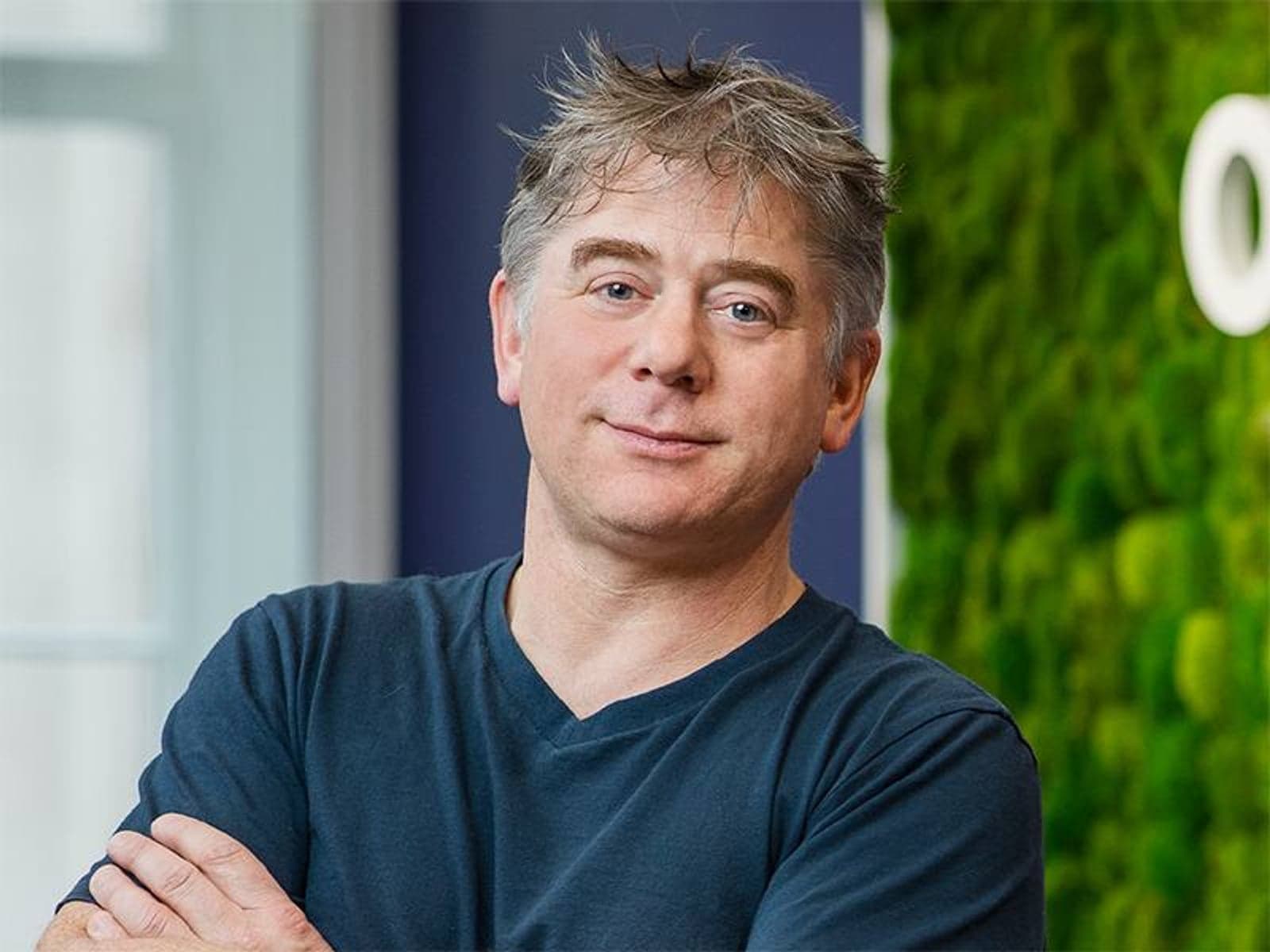
Octopus Energy’s entrepreneurial chief executive Greg Jackson talks about his passion for renewables and a sustainable, low-cost energy world with Jonathan Spencer Jones.
That a successful entrepreneur with a tech bent should land in the energy sector is surely an inevitability particularly when the sector is being radically transformed by cutting-edge innovations.
In the eight years since its founding, Octopus Energy, notwithstanding economic and social conditions virtually unprecedented at that time, has grown from a new entrant energy supplier to a major player as a supplier, generator, infrastructure funder and technology provider with an international footprint in 14 countries beyond its UK-based home.
“I could see there was an opportunity to use technology to improve services and to help tackle climate change,” says chief executive Greg Jackson, whose interest stretches back to having signed up as a teenager to Greenpeace. Moreover, it also had a strong personal element, having grown up in a household where literally pennies had to be counted to budget energy use.
From the outset, Octopus Energy has stood out, with its bright pink logo and the sought after octopus plushies — now in this time of high energy prices complemented by free electric blankets for vulnerable customers — but perhaps more significantly, its exclusive focus on supplying green energy at a time when others were just starting to offer it as an option.
Have you read?
‘Utilities aren’t selling energy anymore, they’re in customer service’: Kraken Global Director
‘We need to keep going hell-for-leather on renewables’ says Octopus Energy boss
Fossil fuel addiction – the biggest threat to energy transition says Octopus Energy CEO
Jackson, speaking from his pink and purple office in London’s West End, ascribes its early success to a “big global vision” and “solid investment”, and particularly the view that it could make energy cheaper and at the same time cleaner.
“We had a vision that was big enough that we could attract a lot of investment and then deploy that investment to build the technology that would make the vision come true,” he says. “Many of the companies that have failed had smaller visions or were just trading entities.”
With their failure — and Octopus Energy has been named as ‘supplier of last resort’ by regulator Ofgem, taking on hundreds of thousands of customers of several, such as Bulb — the “importance and validity” of the vision has been demonstrated, Jackson says.
“If the world had more renewables and used technology to be able to make the most of them when they’re abundant, the energy crisis would have been far less bad. So, I would say Octopus has acted as a totem for a lot of the changes that are needed in energy."
Focus on consumers
Still, continuing to gather customers is the challenge for new entrants, particularly with the UK market having long been dominated by the so-called ‘Big Six’ largest suppliers (British Gas, EDF Energy, E. ON, Npower, Scottish Power and SSE).
Jackson says that when starting out, he was asked how Octopus would compete — he responded “by becoming one of them. And now I think we are number two and I’d say the distinguishing thing is the focus we put on customers.”
That includes a review every Monday morning of some 200 pages of customer metrics, with Jackson and other members of the management team personally assisting customers on a day-to-day basis.
Octopus’ customer focus is also made possible with the company’s Kraken platform — developed by drawing on the founders’ enterprise software expertise as an all-in-one energy and consumer management system.
Subsequently, Kraken has been licensed to other energy companies and now counts over 30 million and growing accounts worldwide. “This means we can run with lower operating costs whilst delivering better service and we’ve been able to really help customers not only to be served by us but also to be served by others.”
“It’s like an operating system for energy”, Jackson says, pointing to the high degree of automation, but also the potential for innovation with new products and services such as smart electric vehicle charging.
And the original vision — of lowering the energy costs — is coming to fruition, he asserts. Hundreds of thousands of customers are on smart, dynamic tariffs, enabled by Kraken, and are paying up to one-third less than other customers by using energy when renewables are most abundant and avoiding demand ‘peaks’. “So yeah, it’s working,” says Jackson.
"People think of energy as being very different by country because of regulation, but the laws of physics are the same everywhere and consumers are surprisingly similar."
The energy transition
Turning to the broader challenges within the energy sector, and the energy transition in particular, Jackson says the single biggest thing to do is to deploy more renewable energy infrastructure. “We need to build onshore wind turbines, solar, long distance interconnectors such as the Xlinks Morocco-UK link we are supporting,” says Jackson.
“We also need to electrify everything we can — transport, heating and industrial processes where possible. And we need to digitise our grids and provide price signals everywhere so that we can optimise our usage.”
But to achieve this will require changes in regulation and Jackson draws a parallel with areas such as the internet and space travel, where the private sector has been able to innovate on earlier government regulated developments.
“Similarly in energy, building on the regulations that have brought us more renewables, we now need to unleash the power of the private sector to create services and products and the infrastructure”, he says.
“Regulation needs to enable that, not hold it back,” with particular examples in the renewable world including permitting and grid connections, which must be sped up. Underlying all of this is technology, and Jackson says that the deployment of smart grid technology will drive costs down to the lowest ever, whereas without it prices would rise.
As an example, he quotes the increasing curtailment of renewables at times of high generation to avoid congestion, despite under-supply at other times, which leads to high costs when it comes to delivering electricity at peak times. With smart technology consumption can be shifted to better match supply and demand, such as charging EVs when renewables are abundant.
"If we can learn something in Munich that’s applicable in Manchester, it will help us speed up the energy transition."
“Going one step further, it can be forecast for example, for customers with EVs how much battery capacity they are going to need each day and mix that with the forecasts on the pricing on the grid, and it helps to optimise the system and to drive costs down.” A key element of the energy transition is the switch from a ‘consumer’ to a ‘prosumer’ model, and Jackson believes this will happen naturally as a reaction to the price signals and incentives.
For example, with the recent increase in energy prices, more consumers are installing solar panels and adding batteries. “We shouldn’t want to try to change who people are. If customers wanted to be power stations, they would be, but if their energy consumption can be made cheaper through different infrastructure, then people will adopt it and our job is to make it easy to do so.”
He also notes that there has been a noticeable uptick among customers with smart meters keeping a closer eye on their energy consumption, with real-time displays that also relay the data to smartphones, again thanks to Kraken.
Like all energy sector players, Octopus is confined to work within existing regulatory frameworks, but what services might it offer if unfettered? The first thing the company would do, Jackson says, is to be able to build renewable generation where people want it — “let us build a solar farm near where you live to deliver cheaper power — the supermarkets can do it for a cheap supermarket and we should be able to do the same,” he says.
Electrifying homes
The second thing he mentions would be to help electrify homes, with customers getting an electric vehicle, EV charging, solar panels, battery etc. “Turn off the gas and go all electric, all clean, and drive costs down through the optimisation we can provide through technology. If we can do these things, then we are well on the way.”
That also leads on to the concept of the smart home and the potential of the large energy consuming appliances to deliver flexibility to the network. “Using AI, a heat pump can learn the thermodynamics of your home and it knows how long the home will hold its heat so it can prepare itself to switch off for a few hours at peak energy price times, and you won’t even notice.”
The electrification of heat also forms a key part of Octopus’ research agenda, from designing heat pumps that are easier to retrofit and creating more efficient heating in the home, to building the necessary controls for optimising energy use.
“We’re even looking at the way the equipment is carried in vans to get the cost of installation lower. The cross-over from that is zero-bills homes — working with builders on homes where we specify the heat pump, smart battery, solar panels and if we can optimise it that guarantees you won’t have an energy bill for five or ten years, if ever.”
“It’s about the desire to deliver cheaper clean energy,” he says, pointing to the conflict that would arise if ‘going green’ meant increased costs. “Our job is to relentlessly fix both together.”
"Octopus has acted as a totem for a lot of the changes that are needed in energy."
France - the new market
Octopus Energy’s ambition has seen an expansion of activities across the globe, with the most recent move to neighbouring France, where the company has opened a subsidiary and is developing a ‘technology hub’ to adapt the technologies for the entire EU region.
“France is blessed with great electricity resources with more capacity for grid connections than other European countries and we have found a great entrepreneurial team to manage and grow our business there,” Jackson comments.
Whether or not there are other prospects on the horizon for Octopus and Kraken, Jackson wouldn’t be drawn — although subsequent to this interview, the company announced its agreement to purchase Shell Energy in the UK and Germany, adding a further two million energy and broadband customers to the mix.
In addition, Jackson launched the ‘Cosy Octopus’ heating system at the WIRED & Octopus Energy Tech Summit in London. Consisting of the ‘Cosy 6’, Octopus’ new heat pump, the ‘Cosy Hub’ home control system, ‘Cosy Pods’ room sensors and a bespoke smart tariff, it will be available from December.
“We’re looking all the time. It’s an interesting feature of energy that people think of it as being very different by country because of regulation.
But the reality is the laws of physics are the same everywhere in the world and consumers also are surprisingly similar.” Jackson ultimately shines a spotlight on an unprecedented “global opportunity” to build a new energy system and develop “products and services that consumers will love.”
“If we can learn something in Munich that’s applicable in Manchester, it will help us speed up the energy transition.”
Greg Jackson is participating in the keynote session 'Energizing a quantum leap to an integrated decarbonised energy system' at Enlit Europe on 28 November.
Kraken will take part in many exciting hub sessions at Enlit Europe in Paris, 28-30 November 2023, covering topics such as:
- Digital trends and strategies
- Market design
- Future-proofing the grid
- Heating and cooling
You can join Kraken experts at booth 7.2.F70, where they will walk you through their operating system and the latest product offering that Kraken has to offer.