Europe Energy Briefs – the emerging quantum computing world and energy
Jonathan Spencer Jones
Posted on: 25 April 2025
Quantum computing and quantum communication is emerging in Europe and globally with benefits for the energy sector.
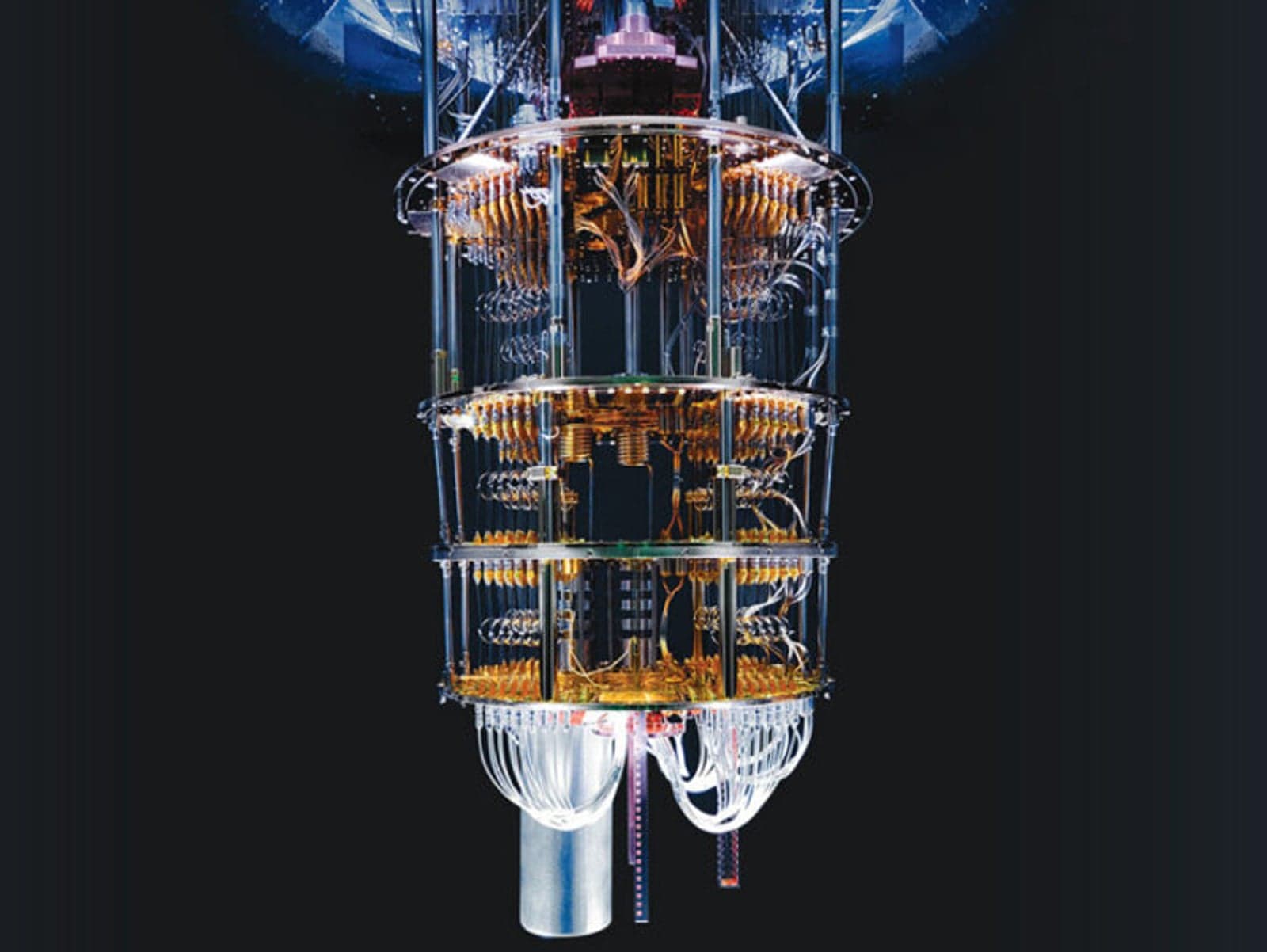
Quantum computing and quantum communication is emerging in Europe and globally with benefits for the energy sector.
For many people the last April 14 was likely to have been largely uneventful. But for those involved with quantum technologies it was significant as World Quantum Day 2025.
And this year in particular even more so, as 2025 marks the 100th anniversary of what is considered the foundation of modern quantum theory.
To start with some context and why April 14? Straightforwardly, the date was selected as referencing Planck’s constant, with the first digits rounded as 4.14 (in electronvolt-second units).
Also of interest
How quantum computing is disrupting power utilities
Planck’s constant, generally referenced as ‘h’ and numerically 0.000 000 000 000 004 1357…, is simply the factor that relates the energy of a photon of light to the frequency (or wavelength) of the light and is a fundamental constant governing quantum theory.
Such quantum theory didn’t of course emerge overnight – Planck postulated the constant that came to take his name in 1900 – but as part of an evolution of physics theory on the behaviour of light and matter that started in the late 19th century and continues to this day.
1925 was significant as the year the Austrian physicist Erwin Schrödinger formulated a quantum mechanical system mathematically – for which ultimately he was awarded a Nobel Prize – and which opened the way for the subsequent advances.
So why the interest in quantum issues today? There are essentially two reasons, one the emerging availability of quantum computing and the other the emergence of quantum cryptography, which is set to be the focus of future cybersecurity approaches.
Interestingly a survey conducted in Europe for World Quantum Day 2025 revealed growing public awareness and excitement about quantum science and technology, particularly in France and Germany.
And almost half cited energy – just behind top cited healthcare by just over half – for which they felt quantum computing has potential to solve major challenges.
Quantum computing in the energy sector
The wide growing interest in quantum computing, not least in the energy sector, is due to its suitability for emerging challenges, such as large scale optimisations and scheduling, that are beyond the capacity of current classical computers.
Indeed Google in a commentary for World Quantum Day cited three challenges that it believes quantum computing could solve, of which two are in energy – the availability of better batteries through the design of new materials such as lithium nickel oxide, and the emergence of new energy sources, particularly fusion energy.
Proponents of quantum computing in the energy sector have included E.ON in Germany, very much the pioneer investigating several use cases including peer-to-peer energy trading, Iberdrola in Spain focussed on optimising the installation of grid-scale batteries and EDF in France on EV smart charging optimisation.
But activity has been limited, in part by internal skills and resources, but also with the limited availability of quantum machines, which are in the hands of tech giants such as IBM.
But that is set to change. A recent survey of quantum professionals by Economist Impact found overwhelming agreement that ‘quantum utility’ – the point at which quantum computers provide practical utility over classical computers – will arrive within the next decade and some believe even within the next five years.
In Europe quantum computing forms an essential component of the region’s digital transformation strategy and through its ‘Digital Decade’ initiative aims to be “at the cutting edge of quantum capabilities by 2030”.
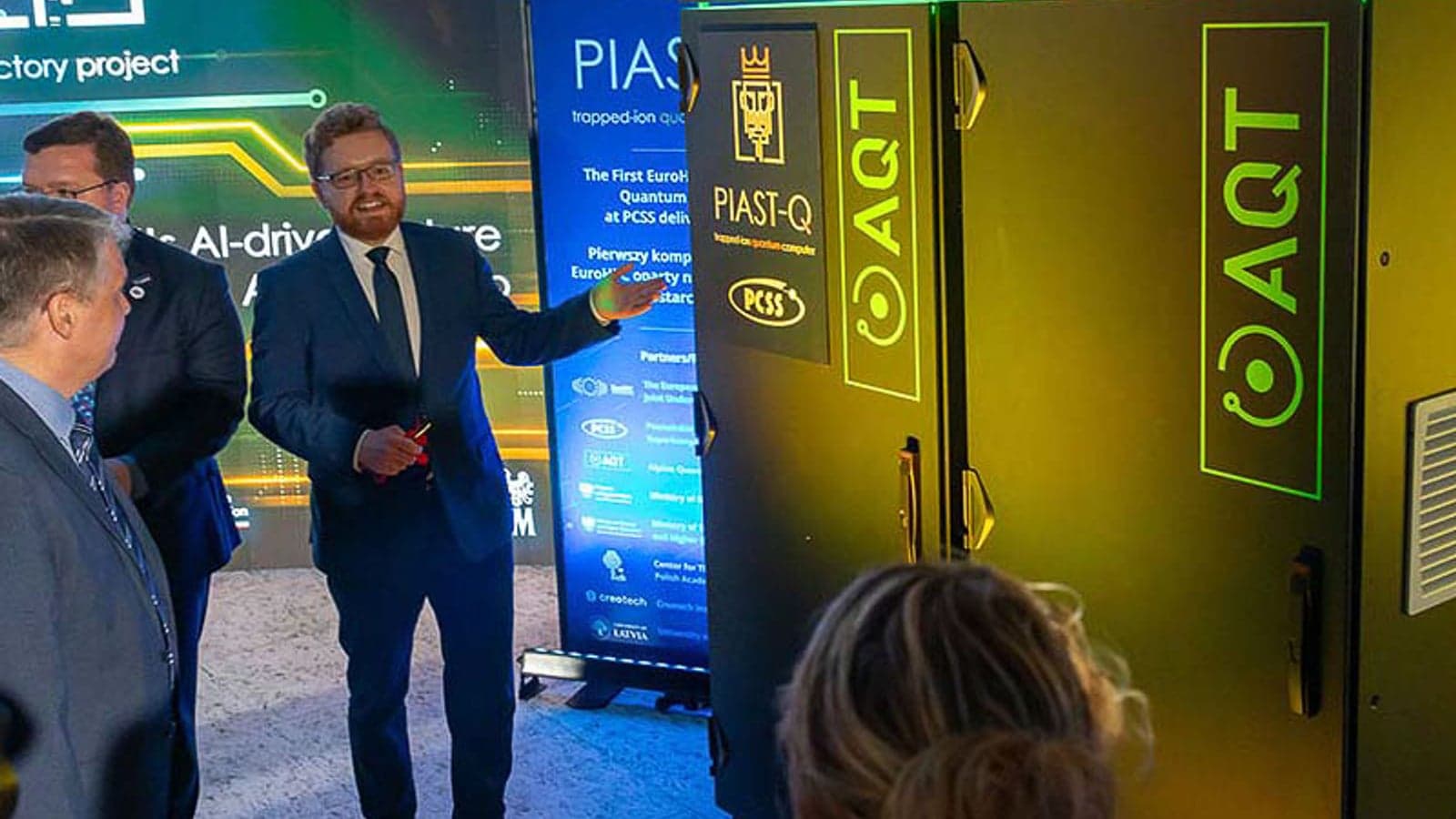
As part of these activities the EU is supporting the development of quantum computers that will be integrated into supercomputers at six sites – in Ostrava in Czechia, Bruyères-le-Châtel in France, Garching in Germany, Bologna in Italy, Poznan in Poland and Barcelona in Spain – with the first expected to come on line later in 2025.
Forming a wide network, these should improve the availability of quantum computing and make it more accessible to a wider group of users.
Quantum cryptography and communication
The other key area of interest for quantum computing is associated to cybersecurity, with its computing power requiring new cryptographic techniques for data and systems to remain secure – and ideally as soon as possible.
Apart from being able to break current levels of encryption with quantum computing, concerns have been raised that its arrival could be awaited by hackers with data that has already been 'harvested'.
Another key thrust of the EU’s quantum activities is focussed on quantum communication and the EuroQCI initiative is aimed at developing and deploying a terrestrial and space-based quantum secure infrastructure for communication between government institutions and critical infrastructures.
Quantum communication – with a similar approach offering the potential to teleport energy – should deliver ultra-secure networks, with the terrestrial segment relying on fibre communication and the space segment on satellites to link national quantum communication networks across the EU, including its overseas territories.
EuroQCI is targeted to be operational by 2027 and technologies to make it a reality are under development, including the development of the first prototype satellite, Eagle-1, due to be launched either in late 2025 or early 2026.
Overall, a space to watch!