Hydrogen and wind – low carbon options for shipping
Jonathan Spencer Jones
Posted on: 22 December 2021
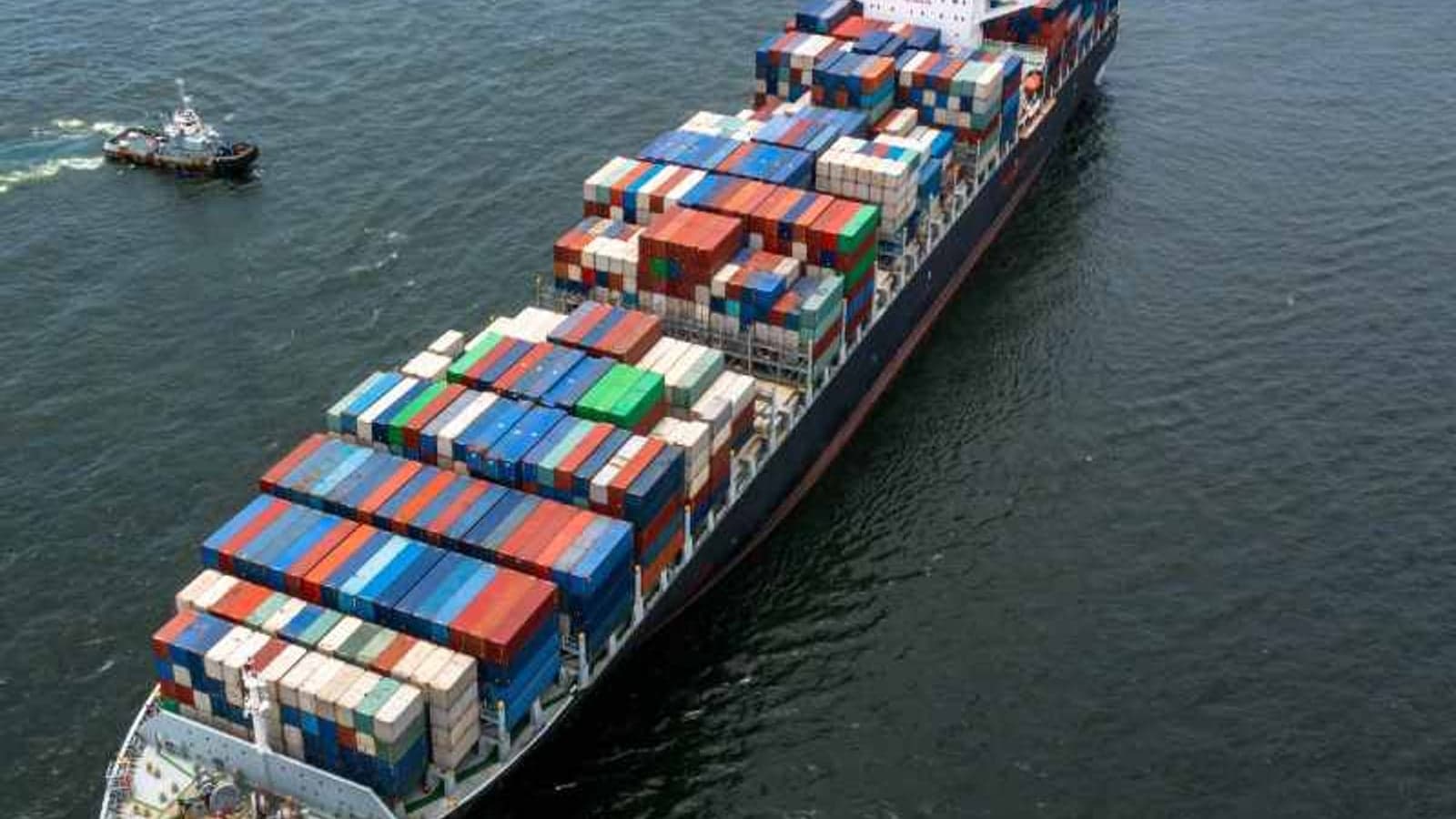
Shipping companies are looking at hydrogen and wind as two options to decarbonise a relatively small but still significant contributor to transport sector CO2 emissions.
Shipping companies are looking at hydrogen and wind as two options to decarbonise a relatively small but still significant contributor to transport sector CO2 emissions.
One of the more advanced appears to be the Dutch shipping company Future Proof Shipping, which according to its website has “taken on the challenge to prove that zero emission shipping is not only possible but it’s achievable at a reasonable cost”.
The company aims to have ten zero emissions ship projects kickstarted within the next five years.
Future Proof Shipping is currently in the process of retrofitting its inland container vessel ‘FPS Maas’ to be fuelled by low carbon hydrogen.
The hydrogen is to be supplied by Air Liquide under a long term agreement, with delivery via specially designed multi-modal hydrogen storage suited for inland barges.
On the current schedule the retrofit is due to be completed in Q3 of 2022. The ‘FPS Maas’, which transports containers between the Netherlands and Belgium, is expected to achieve CO2 emissions reductions of 2,000t/year.
With this project well under way, the company has acquired a further two vessels for its inland shipping fleet, which will be similarly retrofitted to zero carbon in 2023 and 2024 respectively.
The 110m FPS Maas will be powered by a 825kW polymer electrolyte membrane (PEM) fuel cell system converting the hydrogen to electricity – the system installed in the cargo space of the vessel, with the hydrogen placed above the fuel cell in two 12m containers.
It also includes a 504kWh lithium-ion battery pack for peak shaving and secondary power.
Fleet of zero carbon cruise ships
While Future Proof Shipping is targeting its container vessel traffic, the Norwegian shipping company Northern Xplorer is eyeing the boutique cruise ship sector, with plans for no less than 14 hydrogen powered vessels.
The relatively small ships, 130m in length, are designed for 250 to 300 passengers and approximately 100 crew for cruising in inland waterways around Europe, such as the Norwegian fjords. The proposal is to deliver a more sustainable approach not only to the transportation but the tourism experience as a whole.
“As part of the allure of Northern Xplorer is its commitment to sustainability, the whole value chain should be as green as possible”, the company states on its website.
Few details of the ships have been made available so far apart from that they are designed by Scandinavian naval architects with expertise in developing low emission and energy efficient vessels and that the company has applied for patents on the concept with zero emission technologies including fully electric propulsion and batteries charged at land-based charging stations and at sea by wind and solar.
With zero emission requirements for the Norwegian fjords set to take effect in 2026, the first vessels should be operational before then in the 2024/25 timeframe.
Kite power
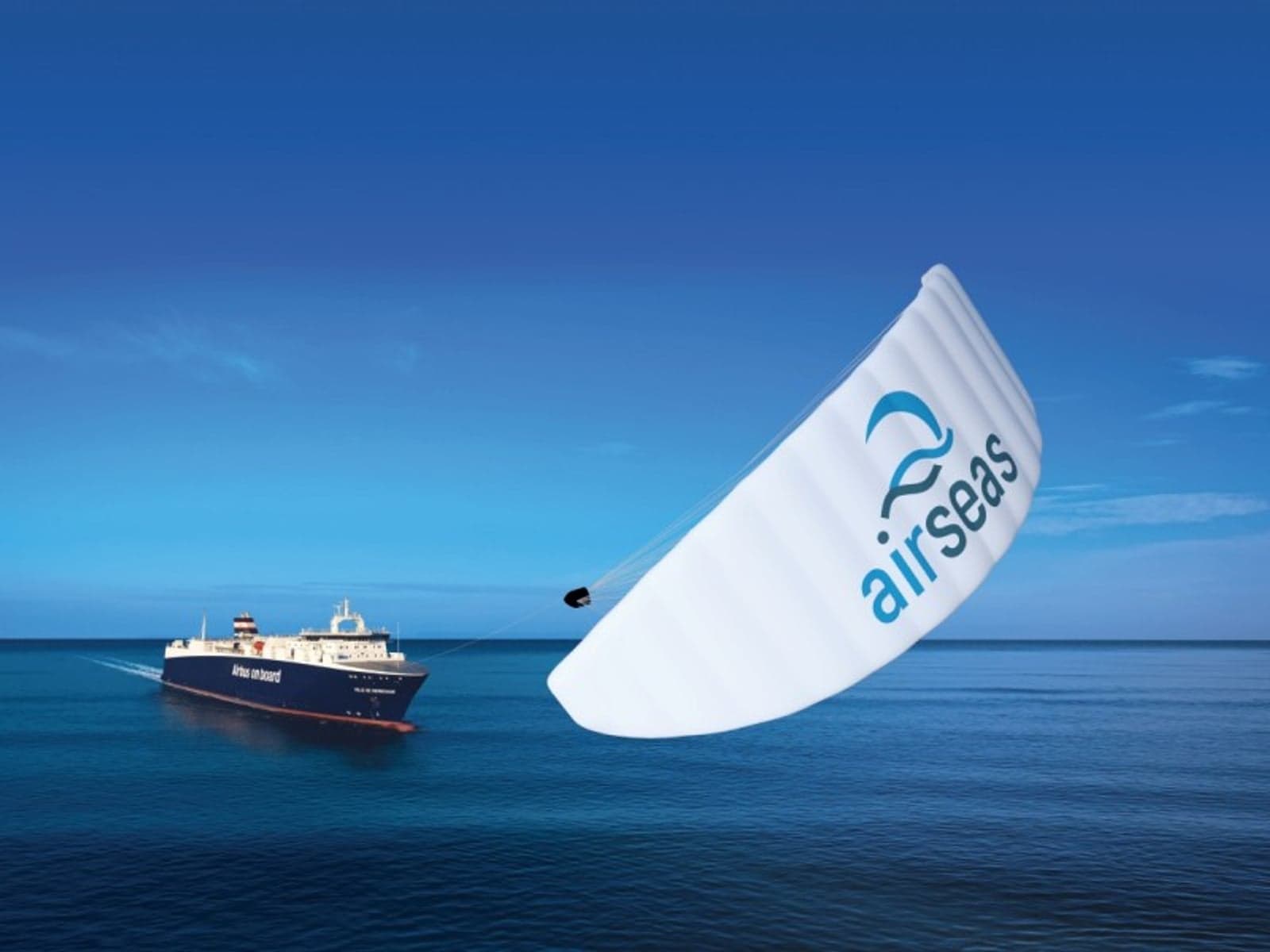
Meanwhile the French startup Airseas is pioneering what it calls Seawing technology to harness the wind as a supplementary power source for shipping.
The Seawing comprises a large parafoil kite or wing flying in a rapid figure-of-8 trajectory at altitudes of over 200m, guided by a flight control pod based on information including weather forecasting to optimise the routing and fuel saving opportunities.
The company claims ready installation with minimal deck space requirements on most ship types, with deployment and operation of the wing automated at the touch of a button and monitoring with digital twin technology from the bridge.
Airseas estimates the potential fuel and emissions savings of the order of 20% for the technology, which was incubated within Airbus.
The first deep sea tests are due to take place with a 500m2 kite on the 154m ro-ro vessel ‘Ville de Bordeaux’ over six months in 2022. The ‘Ville de Bordeaux’ is on long lease to Airbus and used for transporting parts of the Airbus A380.
Subsequent tests envisage a kite of double that size, 1,000m2, on a larger vessel from Japan’s K Line. With the technology demonstrated on one ship, K Line could be in line to purchase up to 50 additional Seawings.
Shipping is estimated to account for between 2-3% of the total greenhouse gas emissions and about one eighth of those from the transport sector.
Related tags
Latest content
+1
Advancing sustainability: The EU's drive for cleaner maritime operations
This article highlights the strategies of the European Union (EU) aimed at achieving decarbonization within the maritime industry| primarily through the widespread adoption of onshore power supply (OPS) systems.
- Guest/partner contributor
- 28/08/2023