Artificial intelligence as an ally of the energy transition
Guest/partner contributor
Posted on: 11 January 2024
The entire energy value chain can benefit from the implementation of artificial intelligence, writes Sandra Cuadrado Ares of Minsait.

The entire energy value chain can benefit from the implementation of artificial intelligence, writes Sandra Cuadrado Ares of Minsait
Friedrich Nietzsche once said: "The world is beautiful, but has a disease called man".
Activities such as burning fossil fuels, deforestation or poor industrial, livestock and agricultural practices contribute to carbon dioxide emissions, which reached a new global record of over 40 billion metric tons in 2022.
Consequently, global warming continues to intensify. The surface of the oceans is warming 24% faster than a few decades ago, resulting in coastal erosion and more severe storms.
The last seven years have been the hottest since 1940, reducing the amount of land available for agriculture, making access to water more difficult, and increasing the risk of wildfires, which are becoming increasingly devastating.
All of this has a social and global economic impact, such as food shortages and the resulting increase in prices, mass population movements caused by natural disasters and increasing poverty in countries that are less able to adapt to the effects of climate change.
The role of AI in energy transition
Achieving carbon neutrality in Europe by 2050 to combat climate change requires societies, governments and businesses to commit, with energy companies playing a key role in meeting this challenge. Energy transition, as a vector of decarbonisation, implies a profound transformation of the energy model and technology. Artificial intelligence is a great ally along the entire energy value chain to help tackle this challenge.
In power generation, AI optimizes renewable energy production, avoids outages thanks to predictive monitoring and can even paralyze a wind farm to avoid harming protected species passing through it.
In industrial facilities, it identifies areas for energy efficiency improvement and helps to plan more effective production strategies and prevent environmental risks by detecting abnormal behaviour patterns in real time.
It opens up the electricity markets to an increasing number of players, providing flexibility to the electricity system and helping it to become more sustainable.
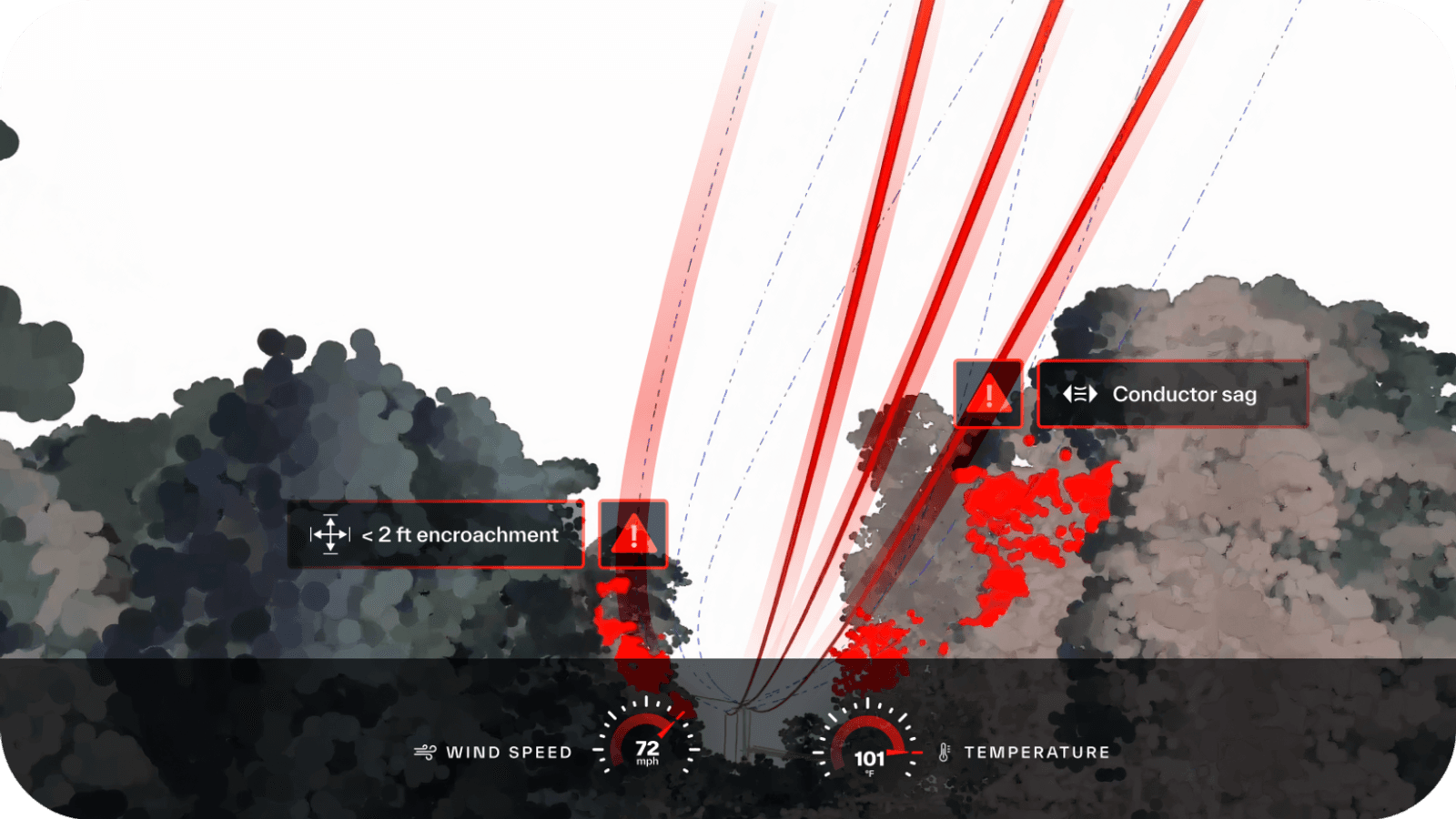
And it helps to optimize grid management by streamlining its extension demands, predicting demand, contributing to the early detection of faults, optimising the management of distributed energy resources and storage, and even protecting the grid environment by highlighting risks such as fire outbreaks and raising alarms that trigger actions to mitigate them.
Challenges of implementing AI
However, there are also challenges associated with implementing AI globally, because if AI systems are trained on biased or insufficient data, they could make unethical or unsustainable decisions.
Furthermore, the automation of tasks could lead to a reduced demand for certain jobs. An over-reliance on AI could result in system vulnerability in the event of technological failures or cyber-attacks, and the implementation of this technology can be costly, potentially creating inequalities when it comes to its adoption.
Environmentally, its implementation requires large servers that may call for the intensive extraction of natural resources. Operating AI models is energy demanding and the rapid evolution of technology can lead to rapid obsolescence of equipment, thereby increasing e-waste.
Strategic measures for implementing AI
Maximising the benefits of AI while mitigating potential risks involves collecting relevant and quality data, ethical training of algorithms, implementing cybersecurity measures, and maintaining active and constant human oversight to make ethical and responsible decisions.
Additionally, a collaborative and regulatory framework must be established that enables R&D to ensure more comprehensive approaches, the recruitment and training of expert professionals, as well as the responsible adoption of AI.
And finally, powering infrastructure with renewable energy, encouraging the R&D of more energy efficient models, implementing recycling programs and conducting life cycle assessments of AI solutions to lessen their environmental impact.
Companies must be committed to exploiting all the possibilities offered by AI, being accountable for how they use it and establishing the mechanisms that allow them to scale and evaluate its true impact. Therefore, it is essential to have a comprehensive governance framework that helps align the AI strategy with the corporate strategy and that covers the entire AI lifecycle.
Companies must also build trust among their customers based on explainability while adapting to new regulations that will ensure safe, secure, impartial, ethical and transparent AI.
About the author:
Sandra Cuadrado Ares is the Head of Utilities Spain at Minsait.
Related tags
Latest content
+2
Why a proactive data strategy is the key to grid resilience
Christian Wirth explains how a shift towards remote work environments alongside evolving customer preferences have combined to create an environment rife with uncertainty and unpredictability for utilities
- Guest/partner contributor
- 18/07/2022