How Elia is using AI to optimise its transmission operations
Jonathan Spencer Jones
Posted on: 27 March 2024
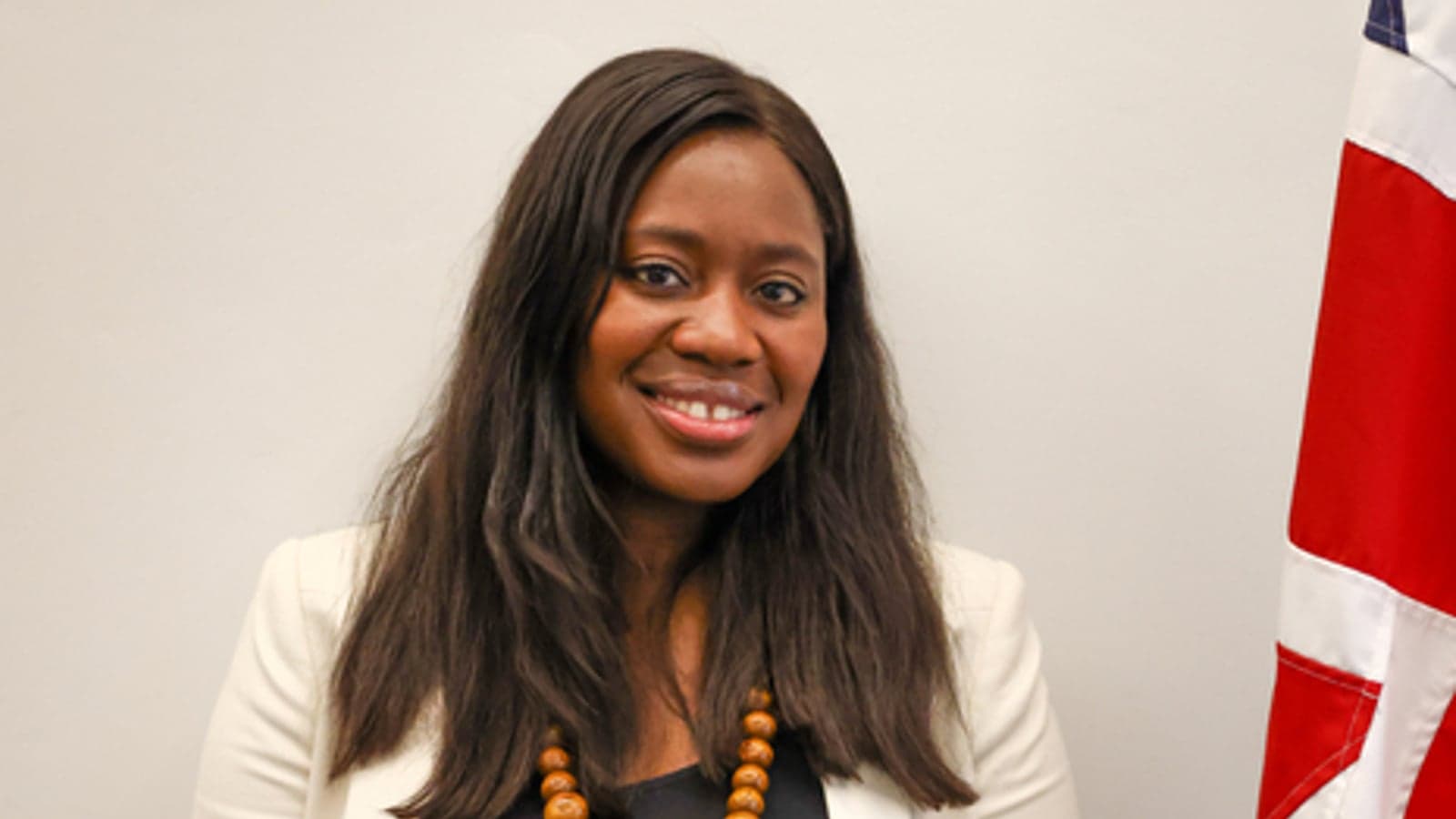
Belgian and German TSO Elia Group has been a pioneer in the use of AI in its operations, Rachel Berryman, Group Strategy Manager Digital, explains in an interview.
Belgian and German TSO Elia Group has been a pioneer in the use of AI in its operations, Rachel Berryman, Group Strategy Manager Digital, explains in an interview.
While Elia Group’s use of AI and machine learning dates back many years and primarily for forecasting, since about four years ago the company has adopted a more structured approach based on use cases – and that is the key to its success, says Berryman, who has very much led that development.
“Our digitalisation strategy is very use case focused and that’s what we try to focus on in the AI team with business use cases and understanding where AI can actually be applied.”
That is important from several aspects of which one is the ‘training’ of the AI algorithms. Elia Group does the majority of this work in-house with open-source packages and company-specific data, tapping external support when needed.
Have you read?
How artificial intelligence can enable a secure and decarbonised grid
Streamlining new nuclear projects with digital solutions and AI
How digitalisation can solve grid challenges for TSOs
As an analogy, she likens the process to the use of a kitchen mixer, which anyone can use, but the ingredients that make up the recipe, i.e. the datasets, vary from one user to another as does the outcome or ‘dish’.
Another aspect, a critical one that also has proven to be a significant challenge, is the data that is used.
“One can collect all the data one wants but without a use case in mind one may collect either the wrong data or it is in the wrong format,” Berryman says.
The particular challenge that has emerged is the extent of available data and its cleanliness and completeness, she comments.
“For training a machine learning model one always need data from the past, but for energy data in particular, this can be tricky as often that past data is not in the same form that the model eventually has when it makes predictions in real time.”
It also can be inaccurate with some data, especially market data, being updated at a later date after the market settlement.
“One uses the past data to train the model, and then at some point, one ‘freezes’ it to apply on the new data. But oftentimes, we have to make new pipelines of data to save the real data as the model would see it and then use that.”
AI use cases
Turning to the use cases that Elia has implemented, Berryman mentions traditional forecasting such as for in-feed on the grid and system imbalance, which utilises weather data among other datasets.
Another is predictive maintenance, which draws on IoT sensor-based data and for example drone-based imagery. That, she says is a “big area” common to many electricity utilities, and includes further use cases such as SF6 gas leakage at the gas insulated substation.
Then a third newer area that is starting to be explored is decision support tools for grid operators with recommendations for grid actions.
“We look as much as possible to use cases that are applicable in both Belgium and Germany as we have basically the same business model in both countries,” Berryman says, with Elia headquartered in Belgium and 50Hertz in Germany.
However, an interesting point she notes is that due to differences in the markets in the two countries, some of the input datasets, such as for the system imbalance use case, must be different.
“Even if we're predicting the same thing at the end, the data that we would use to train that model is different in the two places depending on their particularities.”
Generative AI
Generative AI as the latest and most accessible form of AI has introduced a new set for challenges for Elia.
“It was one of the first times we had people in the company coming in and saying they had experimented with it on their own, having gone to ChatGPT and used it in their work and then telling us afterwards,” says Berryman.
“So we had to rein them in a bit. It’s interesting but I think it’s probably going to have less disruptive potential in our field of energy transmission – but again its use should be driven by concrete use cases and where it makes sense to use it.”
In Elia the main potential use cases are in software development, where developers could use ChatGPT to generate basic code faster than they could individually and which can be improved further later, as well as in corporate functions like HR, where it is being used to get ideas rather than to produce a final product.
Skills and IT challenges
While skills gaps have emerged as a major challenge in the energy industry, particularly around digitalisation, Berryman says that perhaps surprisingly hasn’t arisen in her experience.
“Data science is an interesting field for people to enter from different backgrounds and not as strictly technical as some other areas like software development. And we have very interesting problems for them to work on. For example, one of the data scientists we hired commented having been interviewing with food delivery companies and the like and just not getting as excited about that sort of work compared to the work we are doing to accelerate the energy transition.”
Interestingly, what could have been a challenge – and is in many cases with new technologies in the sector – is convincing the senior management and wider business of the benefits versus the cost.
“But that wasn’t the case and I think we are lucky there as the company has many technical people and once they understood the methods and what AI can do they are all for it.”
But she adds that what did prove more surprising was the need for upskilling of technical personnel such as the traditional software engineers and IT security personnel, who although technical by nature had not had any experience with data-based applications.
From that perspective, the introduction of AI and digitalisation more generally has been a big change for Elia Group with the shift from a primarily mechanical OT approach to IT.
“A lot of applications are no longer purely hardware but digital so we have to work much more with the business and IT together to introduce the solutions, and that is a new challenge we haven’t managed before.”
Looking ahead
Berryman says she expects AI to continue to evolve along two tracks – the traditional machine learning side, which is the “bread and butter” of Elia’s use of it and the generative AI track, which will continue to grow.
“One trend we are seeing is towards automation with automatically trained models that retrain themselves to get better and better outputs and I think that will continue.”
And for utilities that are starting to take tentative steps into using AI, she says do it and don’t wait, particularly for perfection in data.
“I’ve heard a lot of people in the energy space saying they can’t do AI as their data isn’t good enough. But if one starts to do some use cases, then one quickly starts to understand the specific data that is needed and there also is a customer for that data.
“So I say start and try it and make the mistakes!”