Financing Europe’s decarbonised heating and cooling sector
Yusuf Latief
Posted on: 6 June 2024
Yusuf Latief reports on financing insights from the LIFE Platform Meeting in Brescia, Italy, about decarbonising the heating and cooling sector in the EU.
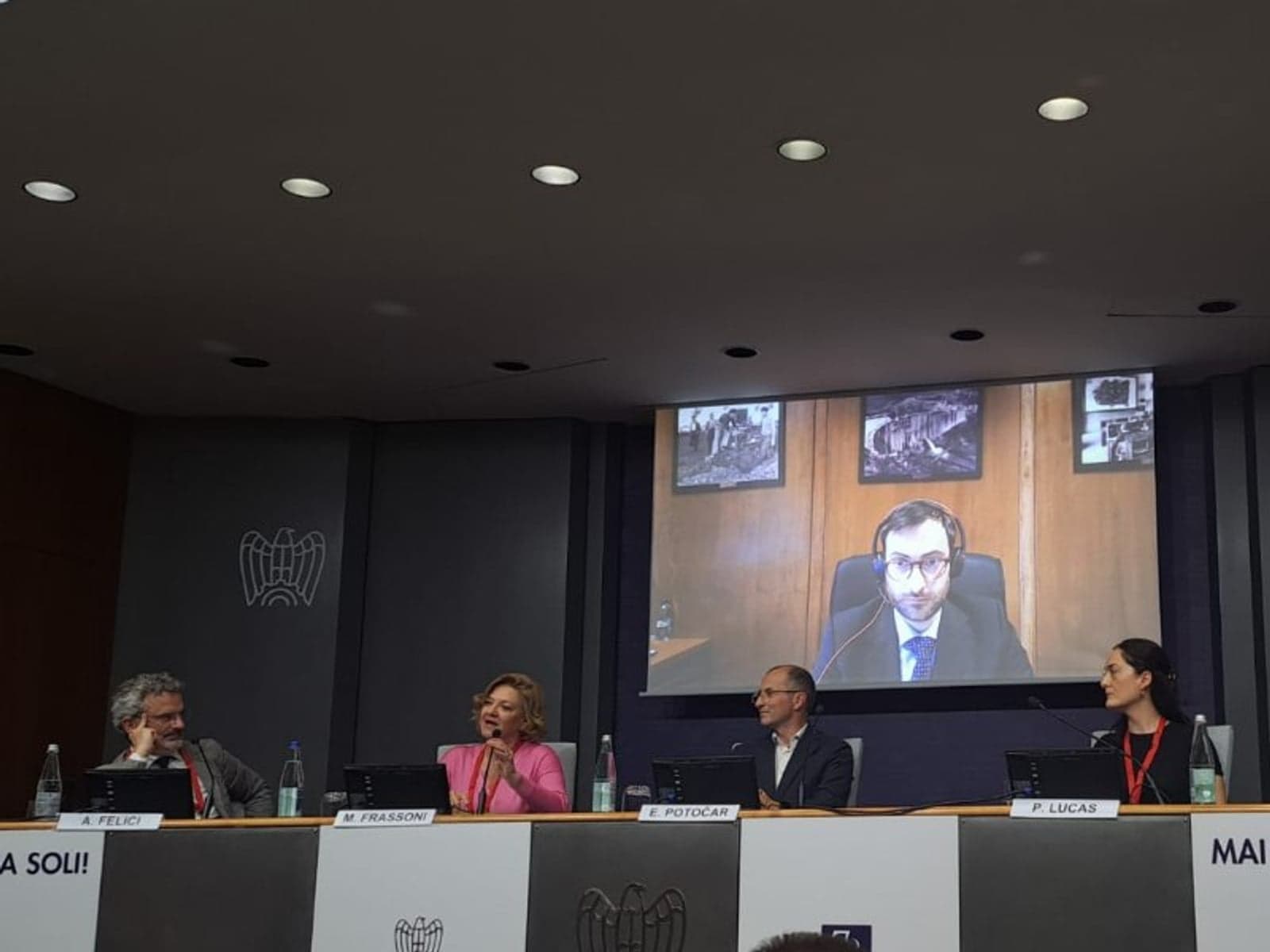
In mid-May the industrial city of Brescia played host to the LIFE Meeting, where sector experts and executives discussed heating and cooling solutions for net zero in light of the REPowerEU Plan, which was initiated in 2022 to wean Europe off Russian gas in the wake of the energy crisis.
Part of the discussion revolved around the imperative for accessing financial resources in this sector, which is one of the most polluting; the EU’s building sector is responsible for 40% of the Union’s total energy consumption and 36% of CO2 emissions.
One point of course punctuated the discussion: heating and cooling decarbonisation is an imperative.
The tone of the speakers was that more work is needed to place heating and cooling higher on the political agenda of industry, further evidenced by March 2024’s call for action on heating and cooling in Europe, as well as January’s controversial move in Italian politics that threatened to derail the EU’s energy performance of buildings directive (EBPD).
And the finances are available to prioritise heating and cooling.
The Investors Dialogue Financial Instruments for heating and cooling lays out the numbers: EU leaders, they state, have agreed on a comprehensive package of €1.8 trillion ($2 trillion) for the sector. The large sum combines the €1,1 trillion ($1.2 trillion) long-term budget for the period 2021-2027, known as the multiannual financial framework (MFF), with €750 billion ($813.6 billion) in NextGenerationEU funding.
This is aside from the programmes that avail funding for projects related to climate action, among which opportunities can be found for heating and cooling, such as the innovation fund, modernisation fund and the LIFE Climate Change Mitigation and Adaptation fund, to name a few.
So, what should the priorities be for this financing?
Also of interest:
Why size matters for decarbonising the heating and cooling sector
Decarbonising industrial heat through thermal energy storage
From insurance schemes to feasibility backing
According to EuroHeat & Power’s Pauline Lucas, a Policy Director, there are areas of focus that should be prioritsed.
Lucas said: “…We need to roll out a heating infrastructure. We're talking a lot about sector integration and the electricity grid and that's not mutually exclusive, but there are other grids also, such as the heat grid. It's a huge infrastructure and this will require investments.
“So on the side of infrastructure, on the side of the renewable heating and cooling projects and waste heat projects, we will need insurance schemes…”
Indeed, according to the coalition Clean Heat Europe’s report, How can Europe Fill the Clean Heat Gap?, recommendations are made in various ways for EU-level financial support, including for insurance schemes to “support heat recovery from industry and tertiary activities, and also for geothermal energy projects in case of failed drilling to guarantee short-term … as well as the long-term risk of total or partial depletion of the resource during 15 years of operation.”
Said Lucas: “There are already examples, mostly attached to geothermal. But that should also come for other types of projects. For waste heat, we know that, and also there are interesting things happening on the side of member states…”
Referencing schemes in France, the Netherlands and Italy to assist with the roll out of technologies such as heat pumps, Lucas added, “I think an interesting point here would also be how to connect national funding to the existing EU funding and how to streamline all of this money that is available and to direct it towards the heating and cooling sector - that will be an important point.”
Finally, commented Lucas, more resources need to be dedicated towards project's development phase and feasibility studies, pain points that sometimes lead to a project falling out.
“When we are financing, we're talking about CAPEX, OPEX, but there is another of those which is direct costs - the full development costs that intervene in the development phase of the project.
“Most of the time, this is a risk that smaller or larger companies are taking, and sometimes the projects do not go ahead. This will also be a crucial aspect to enable. Oftentimes, it's also a risk taken by municipalities.”
Volere è potere
Whereas Lucas touched on project specifics, other elements of the conversation revolved around the political agenda and how “the first thing to do is to find the willingness.”
So said Monica Frassoni, president of the European Alliance to Save Energy.
“We have an Italian saying, which goes volere è potere - where there is a will there is a way”, literally translating to “wanting is being able to”.
“This is, at least in (Italy), the main problem…The first thing to do is to find the willingness to make sure that the building renovation and the implementation of the EPBD [is carried out], but also [of] the Energy Efficiency Directive.
“When this will be done, and thanks to initiatives like this one and to the voice of companies in the industrial sector, that … understand that this is a very competitive business for them too - then we will also be able to find the money. Before that it’s going to be tough.”
Yusuf Latief travelled to Brescia, Italy, for the LIFE Platform meeting during Enlit on the Road, Italy.