Achieving energy security through an integrated European gas market
Guest/partner contributor
Posted on: 20 December 2023
The Russia-Ukraine conflict has renewed interest in the South-East European Gas Initiative to boost energy security and cross-border trading.
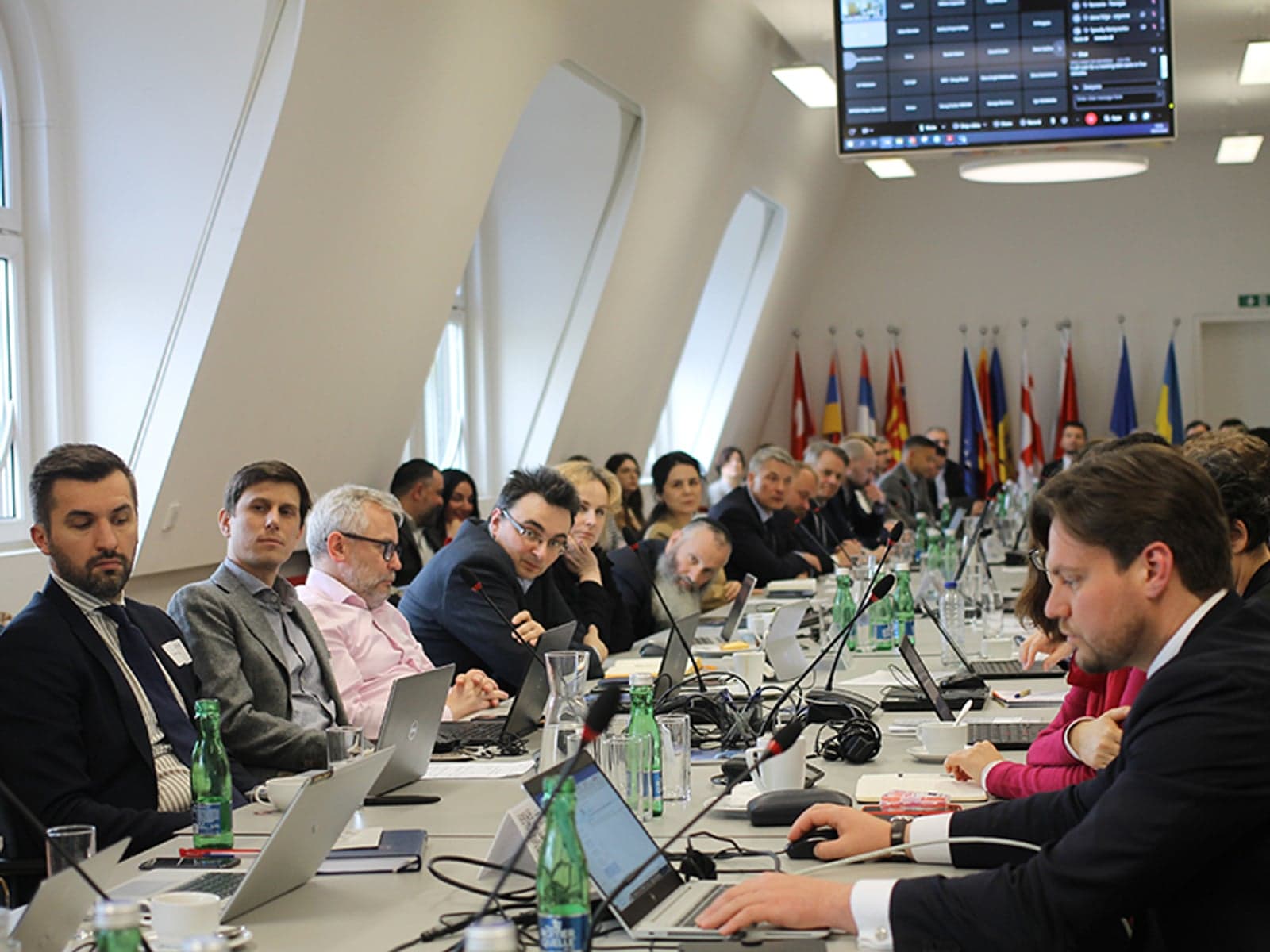
The Russia-Ukraine war has sparked renewed interest in the South-East European Gas Initiative (SEEGAS), writes Gregor Weinzettel, as Europe seeks to boost energy security and improve cross-border gas trading.
SEEGAS was launched on 15 December 2020, as a joint project of ten EU countries and contracting parties of the region as a response to stakeholders’ increasing interest in establishing organised gas exchanges.
As suggested by the Energy Community Secretariat (ECS), the aim of the initiative is to foster closer cooperation between gas exchanges and TSOs in the region for the development of natural gas cross-border trade in an open, liquid, and competitive market that would ultimately benefit end-consumers.
While actively involved in the establishment of a gas exchange in Ukraine, the Energy Community Secretariat acknowledged the interest of many regional gas market stakeholders to participate in the process.
Consequently, the Secretariat decided to gather interest from the stakeholders and initiate an open dialogue to assess further collective efforts towards the completion of an integrated South-East European gas market.
SEEGAS aspires to efficiently integrate the gas markets of Ukraine, Moldova and North Macedonia’s gas with their neighbouring EU countries. To this end, they provide capacity, knowledge, and expertise to prevent SEE countries from independently developing gas trading systems without collaboration, as gas markets require interconnectedness and aligned stakeholder actions can prevent costly mistakes.
As a result of SEEGAS’s initiative and dedicated efforts, on 21 July 2021, a Memorandum of Understanding (MoU) about trans-regional cooperation on the development of an integrated SEEGAS market was signed. The MoU was signed by the ECS, energy exchanges and trading service providers UEEX, BRM, TGE, CEEGEX and ECG as well as transmission system operators Moldovatransgaz, gas transmission system operator of Ukraine (GTSOU), FGSZ and GAZ-SYSTEM.
In addition, HEnEx, DESFA, SNTGN Transgaz and Balkans Gas Hub joined the initiative in September 2021, as the Memorandum remains open to any exchange or transmission system operator active in the SEEGAS region wishing to join the initiative at a later stage.
Also of interest
Why the ‘reactive power’ of gas turbines is vital for the energy transition
Green growing pains: What happens when renewables ‘grow up’?
The signatories aim to cooperate on the development of cross-border natural gas trading, such as on exchange platforms, and introduce transparent and competitive interregional market-based pricing mechanisms and efficient cross-border gas transmission and interoperability.
Additionally, the Memorandum aims to create the prerequisites for ensuring unhindered access to the respective natural gas markets for all market participants and service providers on a non-discriminatory basis and equal terms in accordance with the EU acquis.
Furthermore, it aims to facilitate cooperation on the implementation of an effective commodity clearing system for natural gas transactions that is in line with best European practices.
The intention is to look at what kind of barriers still exist, with the goal of having a more integrated gas market where one common language is spoken.
The SEEGAS initiative continually holds stakeholder meetings and public consultations to gain a firmer understanding of stakeholders’ views and share best practices in pursuit of enhancing connectivity, optimal use of existing capacity, competition, and market integration.
As a consequence of the Russian invasion to Ukraine, three Extraordinary Crisis Response Meetings were held to coordinate efforts to support Ukraine’s energy system and secure functioning and well-supplied gas markets in Europe.
Other topics discussed ranged from concerns about regulatory uncertainties and monopoly risks to the monitoring of SEEGAS goals.
Breaking barriers
Finally, the publication of two SEEGAS reports with data provided by market operators, TSOs and other relevant institutions is a key step on the identification and resolution of barriers impeding gas exchange (2021 report) and infrastructure integration (2022 report) in the region.
In particular, the second report was framed as an ad-hoc response to the gas crisis derived from the war on Ukraine and as an ECS in-house initiative to provide practical information on import and transmission capacity availability in the region and recommend solutions to barriers causing bottlenecks and preventing further regional cooperation.
Although the prospects of a war in Ukraine and the consequent accelerated European decoupling from Russian gas were impossible to foresee when SEEGAS was launched, the significance of the initiative is becoming strikingly evident now that the region’s energy security is reliant on enhanced cooperation and coordination of gas exchanges.
"The situation in the region is changing and gas trading is emerging."
Therefore, SEEGAS efforts to ensuring bidirectional flows on the Trans-Balkan Corridor (a project envisaged by the European Commission under the CESEC initiative since 2015) are currently of key importance for the region both from commercial and geopolitical aspects.
The European Commission warned that central and eastern European countries would be the most exposed to an eventual Russian gas supply curtailment and identified two main weaknesses after performing a stress test in the region.
Security of supply
The first one was related to the lack of strategic gas infrastructure and interconnection in the region, and the second one highlighted that many national strategies are insufficiently coordinated, resulting in a sub-optimal level of efficiency when dealing with the security of supply in the region.
Now, the situation in the region is changing and gas trading is emerging. Many projects are being developed in parallel to further improve interconnectivity, competition, and security of supply.
Through the SEEGAS initiative, the Secretariat aims now to facilitate increased security of supply in the region and encourage closed markets to open up and diversify their supply sources towards a better integrated regional market.
Especially after the experience of the recent gas crisis, such improvements in the region have become imperative, those targeting the most readily achievable objectives.
Behind all these efforts lies the assumption that a proper business environment in an interconnected gas market can add an extra safety layer to gas markets at a moment when security of supply is currently an important issue under discussion.
Boosted by recent events, the SEEGAS initiative has now a renewed window of opportunities for gathering stakeholders’ efforts toward an integrated gas market in the region.
Historical supply routes used by Gazprom have changed, allowing for market development and new business models, such as the reversing of the Trans-Balkan Corridor flows.
Contractual conditions make it possible to operationalise the Trans-Balkan corridor, but improvements are still needed as identified in the second report.
Thus, LNG from Greece could be theoretically delivered northwards as far as Moldova or to Ukraine, for instance.
Another interesting line of action for the future development of SEEGAS would be the fostering of regional cooperation and the implementation of a harmonised trading and commodity clearing system for natural gas transactions in line with best European practices.
In light of recent events, stakeholders participating in the SEEGAS initiative have recently signed various MoU aimed at bolstering interconnectivity and aligning gas trading and clearing services to streamline cross-border operations between Poland and Ukraine as well as between Romania and Ukraine.
This upward trend of signatures is expected to persist, further enhancing and expanding clearing cooperation efforts in the region.
However, the ECS is aware that in order to overcome barriers and obstacles to the development and integration of gas markets in the region, effective stakeholder engagement will be essential to explain to all stakeholders involved — including consumers — why an integrated gas market based on competition, transparency, and free cross-border training would be beneficial for them.
ABOUT THE AUTHOR

Gregor Weinzettel is a gas expert at the Energy Community Secretariat.
Related tags
Latest content
+5
EU energy ministers address gas supply cuts in Europe
The meeting of the Transport, Telecommunications and Energy Council was organised in the wake of cuts by Russia’s state owned energy supplier Gazprom to Bulgaria and Poland following their refusal to pay for gas supplies in roubles.
- Jonathan Spencer Jones
- 05/05/2022