‘Spot’ the robotic dog goes inside JET
Jonathan Spencer Jones
Posted on: 20 September 2024
Spot the autonomous robotic ‘dog’ has become the first to inspect the inside of a fusion energy facility| paving the way for future fusion maintenance.
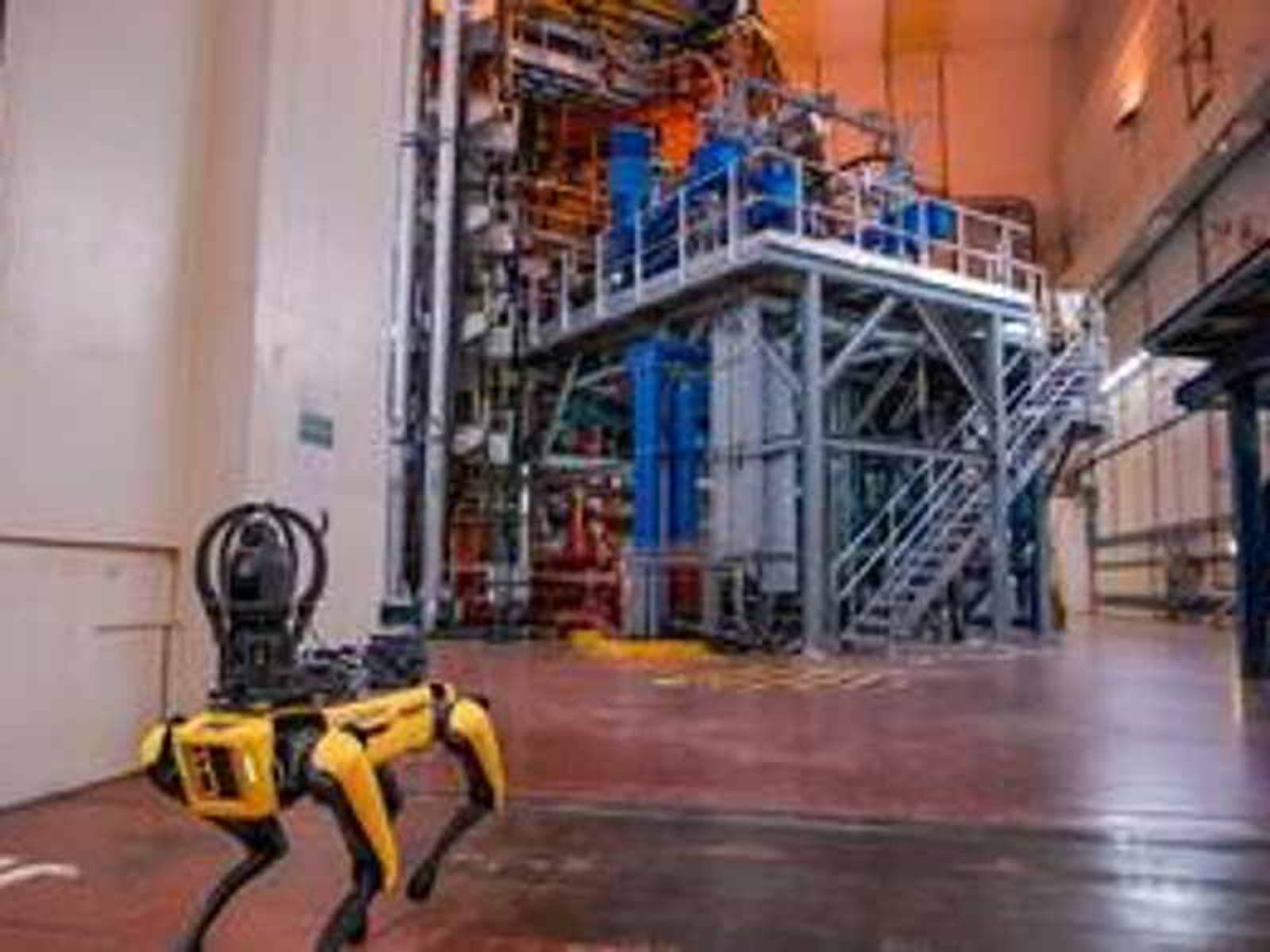
Spot the autonomous robotic ‘dog’ has become the first to inspect the inside of a fusion energy facility, paving the way for future fusion maintenance.
The trial, which was undertaken by the United Kingdom Atomic Energy Authority (UKAEA) and the Oxford Robotics Institute, took place over 35 days at the Joint European Torus (JET) facility at Culham, near to Oxford.
With this, another step towards the commercial viability of fusion is marked as fusion powerplants will need regular maintenance and carried out by an autonomous robot makes such work safer for humans and more cost efficient for operators.
“The project aimed to validate the reliability of autonomous robotic technology and instil trust and confidence in its use for safe and efficient inspections in fusion facilities over extended periods,” commented Dr Robert Skilton, head of research at UKAEA’s Remote Applications in Challenging Environments division.
“This deployment demonstrates that autonomous robots can enhance safety and cut costs. These ‘next generation’ solutions are becoming ready to be used in other industrial facilities such as nuclear decommissioning, environmental clean-up and disaster relief.”
Have you read?
UKAEA’s JET fusion site set to be opened up for AI data centres
Energy Transitions Podcast: Why fusion energy is the ‘vaccine of climate change’
Until its closure at the end of 2023, the JET was one of the largest fusion research machines in the world and is currently being decommissioned.
In the trial Oxford Robotics’ ‘AutoInspect’ autonomy platform was tested for controlling the Boston Dynamics Spot quadruped robot in what is a still hazardous environment.
The inspection tasks within JET involved mapping the entire facility, taking sensor readings of its environment and avoiding obstacles and personnel involved in the decommissioning process.
To address these challenges, UKAEA’s inspection payload was integrated with Oxford Robotics’ localisation and mission autonomy solutions.
This setup was combined with Boston Dynamics’ hardware and collision avoidance technology to enhance the robot’s capabilities.
This integrated robotic system then collected the data on JET’s environment and overall status twice a day.
Nick Hawes, Professor of AI & Robotics at the University of Oxford, said of the project: “Projects like this demonstrate the value of autonomous robots. They also ground our science in real use cases and provide requirements and constraints that drive us to invent new AI and robotics algorithms.”