Andris Piebalgs: Setting the foundation for Europe’s energy transition
Jonathan Spencer Jones
Posted on: 22 June 2026
Twenty years ago Europe’s energy transition was just starting to take shape and at its centre was Andris Piebalgs, Energy Commissioner from 2004 to 2010.
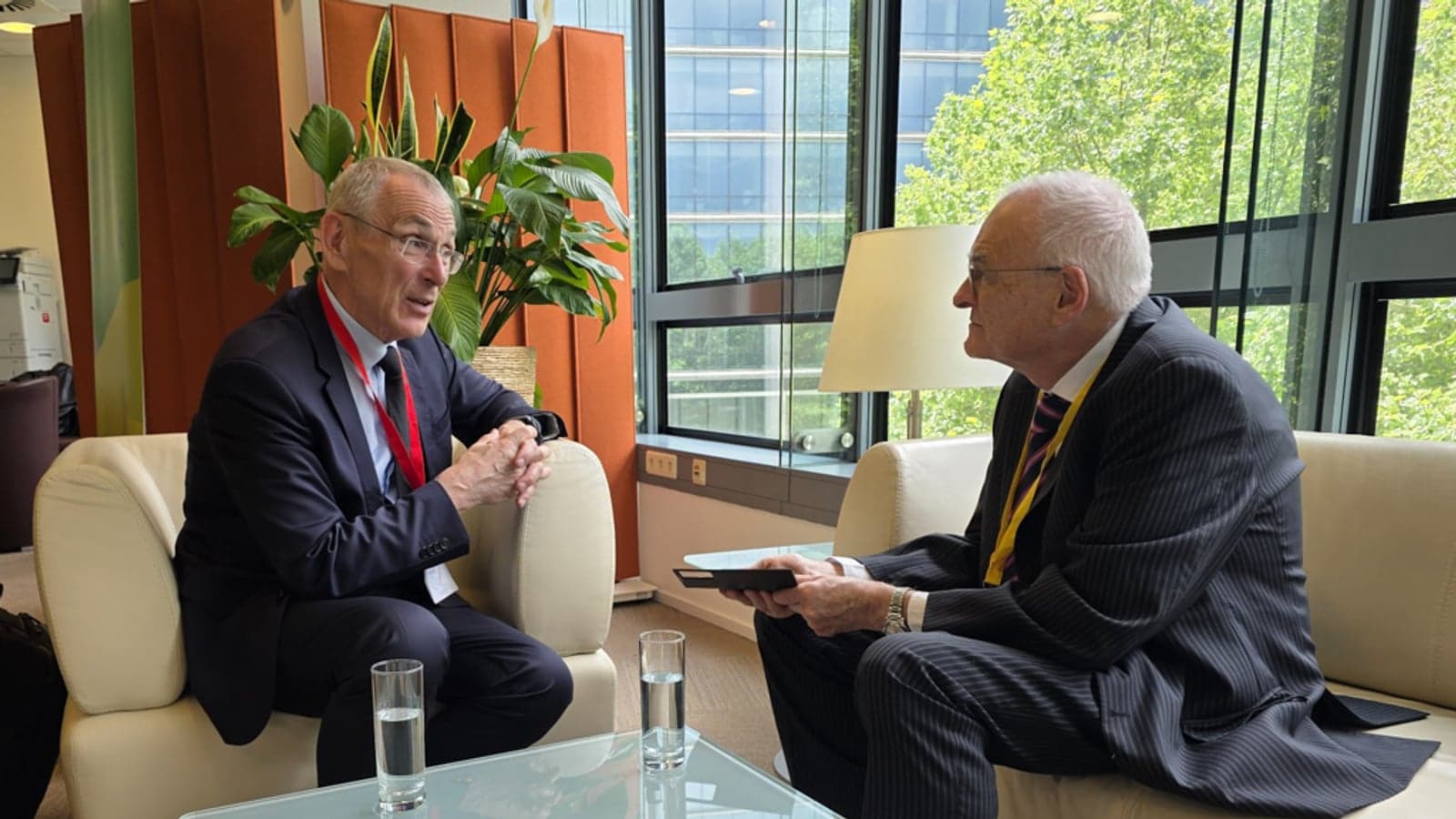
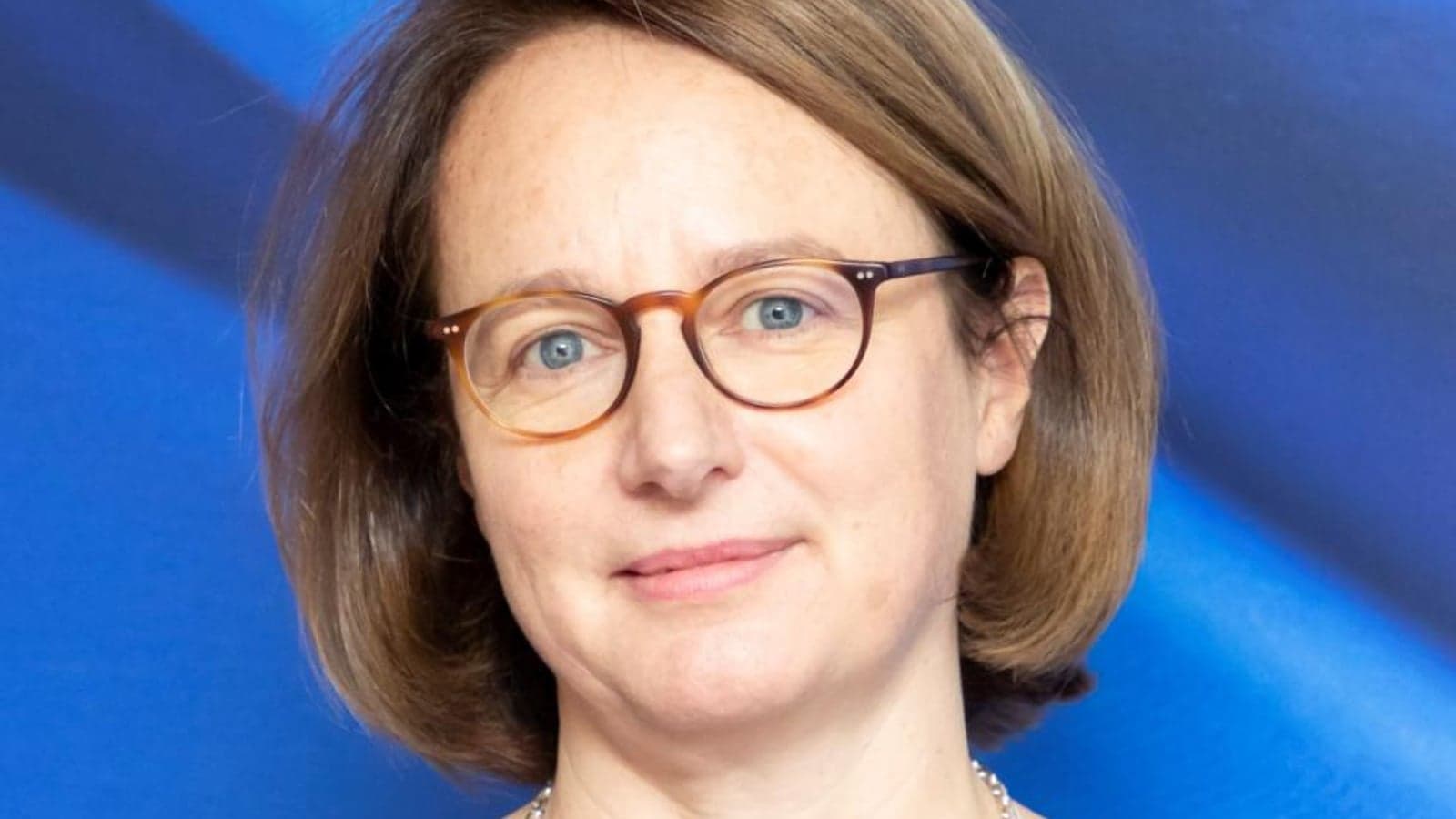
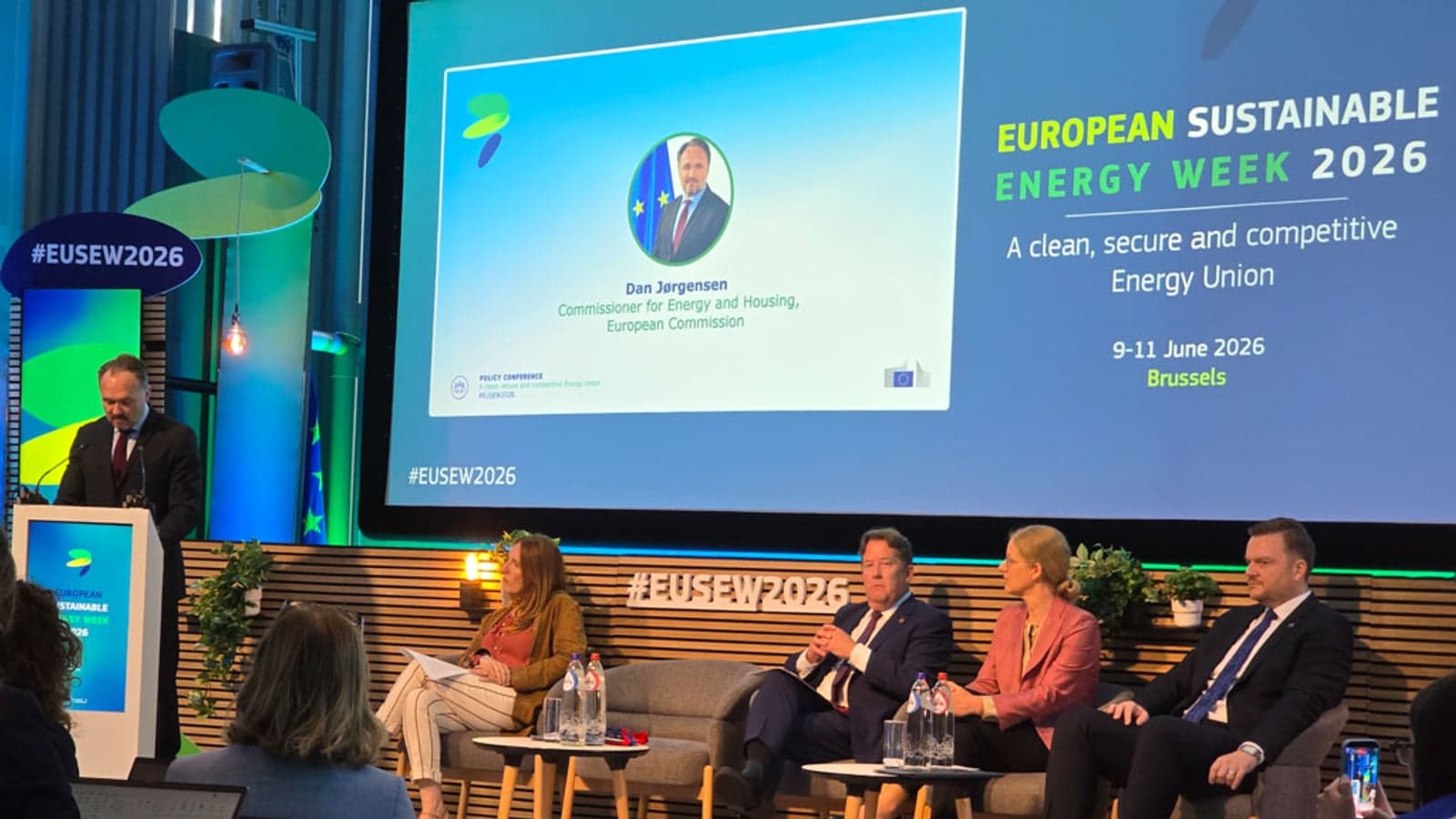
Speaking to Enlit Media on the sidelines of the European Sustainable Energy Week (EUSEW) 2026, Piebalgs reflected on the challenges and achievements of his term as Commissioner – the first person to hold this single dedicated portfolio – and the subsequent evolution of Europe’s energy sector.
What were the challenges facing the sector when you became Commissioner?
The beginning was rather peaceful. The main challenge and priority was the continuation of the liberalisation package and the establishment of the internal market – the second internal market package had been passed.
Then there were issues that were more with anticipation like renewable energy and energy efficiency and both I brought to the fore in my inaugural speech – at that time the president didn't describe as precisely as now what to deliver, so I had some freedom of action.
There also was a period of higher oil prices, which for whatever reason were wanted by the financial markets although there was no real supply demand imbalance, but these calmed down over time, but very slowly.
Also of interest
Kadri Simson: “We surprised the world with how strong Europe is”
What then were the highlights of this period?
I would say the number one highlight was the third energy package and the real internal market advancement.
Then there was the 20-20-20 by 2020 package, i.e. 20% renewables, 20% energy efficiency improvement and 20% CO2 emissions reduction by 2020, as a sustainability and energy transformation package.
And dealing with the 2006 and 2009 energy crises with Russia. These caused less perturbation than we have seen with the 2022 crisis but the 2009 crisis was very serious with negotiations with Russia at the highest level.
How did the 20-20-20 targets emerge?
It was a forecast and predictions and based on what we thought could be achieved realistically by 2020. We had some models that we distributed between member countries and then I negotiated with each of them the target.
In parallel there was the renewable energy directive, which was binding legislation.
There also was the start of the drive for smart metering during this period. This was related less to digitalisation and more to the energy efficiency actions as to be able to save, you need to know what you are consuming.
How do you view the evolution of the energy system in the years since?
I think there has definitely been a successful transformation. First, we can speak about the EU energy market, both for electricity and gas, and we have seen that we managed the crisis reasonably well and it is because not only the physical infrastructure is in place, but also the operational model is there.
We have the agency for cooperation of energy regulators (ACER, established in the third energy package), so we have not only a common legislative basis but an agency that really makes things work.
We have market transitions like the TTF (title transfer facility) gas price as a benchmark, showing there is good coherence in the market.
We also have made enormous breakthroughs with renewable energy. Globally by 2032 solar will be the main provider of electricity and it started with us.
When I negotiated, for example, with Finland, they said, “Well, Andris, we don't have sun or wind, so it's impossible” but today they are big producers from wind and solar and people have started becoming more experienced.
Energy efficiency is a very difficult regulatory area. There can be a difficulty sometimes to determine how much we are saving from energy efficiency measures as there also can be some demand reduction, but we are definitely one of the best performers in the energy efficiency world.
The failings are related mainly to the industrial side, because we have only 23% of electricity in final energy consumption but in China it is more than 30%. We also have lost a lot of manufacturing to China. In the further development of Europe, we have a dual task of moving towards electricity but also winning competitiveness against China and the way to do it is perhaps not with lower costs but with better services and adjustments that could make our products more competitive. It’s a huge challenge that is now being trying to be addressed.
How could the electrification challenge be addressed?
The companies have two problems, one that good enough technology exists, and mostly it does, but there is also a price risk and there needs to be some sort of risk sharing mechanisms or subsidies that would interest them to electrify.
I’m thinking of the large energy consumers, such as steel, aluminium and chemicals that are strategically important and facing unfair competition on the one side and high energy costs on the other and we need to help to electrify where possible.
Have you read?
When will Europe finally get serious about electrification?
New EU energy director general calls for electric revolution
With all the measures now announced and in place, it seems that it could go better but industry is going through a very painful period. But Europe is rich enough to accommodate these transformations so that we don't lose industrial production.
Another challenge is the transposition of EU regulation at national level. How how could this be overcome?
This was always a challenge and still is and countries can be slow in making strategic decisions for reasons such as elections or their internal coalitions.
The Commission has a critical role to accelerate the transition through infringement procedures and stated decisions. But it's now or never and otherwise, we will end up very dependent on other parts of the world and as we have seen, we can't rely too much.
If you were to suggest one message for Dan Jørgensen, what would it be?
I like what he's doing and I would say continue like this and support the electrification drive, because that's what we really need.
I understand he will come with a new message and one is very obvious, to decrease the taxation on electricity, because if you don't have this incentive, most consumers would never think about it. Norway moved on this strongly with e-mobility and it made people think completely differently. If you consistently miss taxes, people follow as it makes a huge impact in their minds and on their income.
To close, you have been much associated to academia and particularly the Florence School of Regulation. What does this involve?
We follow all the regulatory developments and there’s a lot of them. The latest is the action plan for digitalisation and AI in the energy sector and I’m studying that as it could bring a lot of changes.
There is really a lack of expertise because there is a lot of regulation and administrations are not large. We have now established the Florence Regulatory Academy, where we are trying to bring expertise to member countries. If one reads whole regulations they can be difficult to follow but if one knows the main targets and parts, it's always easier to act.
I wish regulations could be simpler, but because sovereignty is so close to the heart there is a limit to what we can do in streamlining. We are going slowly and it's heavy but I don't think it will change and don't see the shortcut here.
Most popular
Join the community for freeAnd get access to all content