Operational digital platforms: From data sharing to real-time coordination
Guest/partner contributor
Posted on: 19 June 2026
The BEGONIA project has contributed to the development of operational digital platforms designed to enable real-time coordination across sectors and borders.

Europe’s energy and transport systems are becoming increasingly interconnected, distributed and digitally driven.
Decarbonisation, renewable energy integration, transport electrification and the growing importance of data governance are changing how these systems are managed and coordinated. In this context, the challenge is no longer limited to digitising infrastructure, but also to enabling interoperability, coordination and secure data exchange across sectors and countries.
This is one of the challenges the BEGONIA project set out to address. BEGONIA, an EU-funded coordination and support action, was established to identify, analyse and prepare the deployment of operational digital platforms (ODPs) across Europe’s energy and transport sectors.
Through the assessment of cross-border and cross-sector use cases, alongside the preparation for implementation of three operational digital platform deployments, the project has contributed to a structured understanding of what these are, how they operate, and which technical, regulatory and governance conditions are required for their deployment.
This article previews the main findings of that work ahead of the publication of the full BEGONIA ODP reference document, which is intended as a practical resource for policymakers, platform developers, infrastructure operators and industry stakeholders interested in the role of operational digital platforms within Europe’s evolving digital infrastructure landscape.
What is an operational digital platform?
An operational digital platform is not simply another digital platform. operational digital platforms are digital infrastructures designed to transform data into operational value. They enable real-time coordination across systems, organisations and services operating across sectors and borders within an interoperable and governed framework.
Their role is not to replace existing systems, but to connect and orchestrate them. Importantly, operational digital platforms are not organisation-specific systems built around the interests of a single company or member state. They are conceived as strategic infrastructures supporting broader European objectives such as decarbonisation, resilience, energy security and digital sovereignty, making governance and interoperability central to their design.
Operational digital platforms are also adaptable by nature. Depending on the use case, they may operate locally or across multiple countries, within one sector or across several. What matters is their ability to coordinate independent actors while evolving alongside regulatory and technological developments.
The full definition, architecture and design principles of operational digital platforms will be presented in the forthcoming BEGONIA reference document. What is already clear, however, is that they point toward a new class of digital infrastructure for increasingly interconnected European systems.
Defining features of operational digital platforms
From a technical perspective, operational digital platforms are designed to support real-time operational coordination across increasingly interconnected infrastructures and are emerging within a broader European digital ecosystem shaped by developments such as data spaces, the digital spine and AI-enabled services.
Most operational digital platforms are structured around four interconnected layers. A perception layer collects real-time data from physical assets such as sensors, smart meters, charging points and grid components. A middleware layer harmonises data from heterogeneous sources and enables secure, governed exchange aligned with European data space standards. A service layer uses analytics and optimisation tools to transform data into operational decisions. Finally, a business layer delivers these outputs through dashboards, alerts and coordination tools while also supporting compliance and financial management functions.
Notably, operational digital platforms do not require ownership of the assets or services connected to them. Physical infrastructure remains under the control of operators, while software services may be provided by third parties. The role of the operational digital platform is to enable interoperability, governance and coordination across these actors.
One important distinction concerns the relationship between operational digital platforms and EU data spaces. A data space provides the trusted conditions necessary for secure and sovereign data sharing. An operational digital platform builds on this foundation by using data to support real-time operational coordination and service orchestration. The relationship is therefore complementary rather than competitive: data spaces enable trusted exchange, while operational digital platforms enable operational intelligence and coordinated services.
Operational digital platforms should also be seen as complementary to the emerging concept of the digital spine, understood as a broader enabling architecture for Europe’s digitalised energy system. While the digital spine provides the wider enabling environment, operational digital platforms represent purpose-built operational infrastructures delivering concrete services for specific sectors and use cases.
At the same time, advances in generative and agentic AI are expanding operational digital platform capabilities by improving interfaces, automating processes and supporting orchestration across increasingly complex systems.
Three BEGONIA use cases
The operational digital platform concept was not developed only at a theoretical level. BEGONIA grounded it through three proof-of-concept deployments designed to test ODP capabilities across different sectors, geographies and stakeholder configurations.
Use Case I — Electricity customer-centric operational digital platform
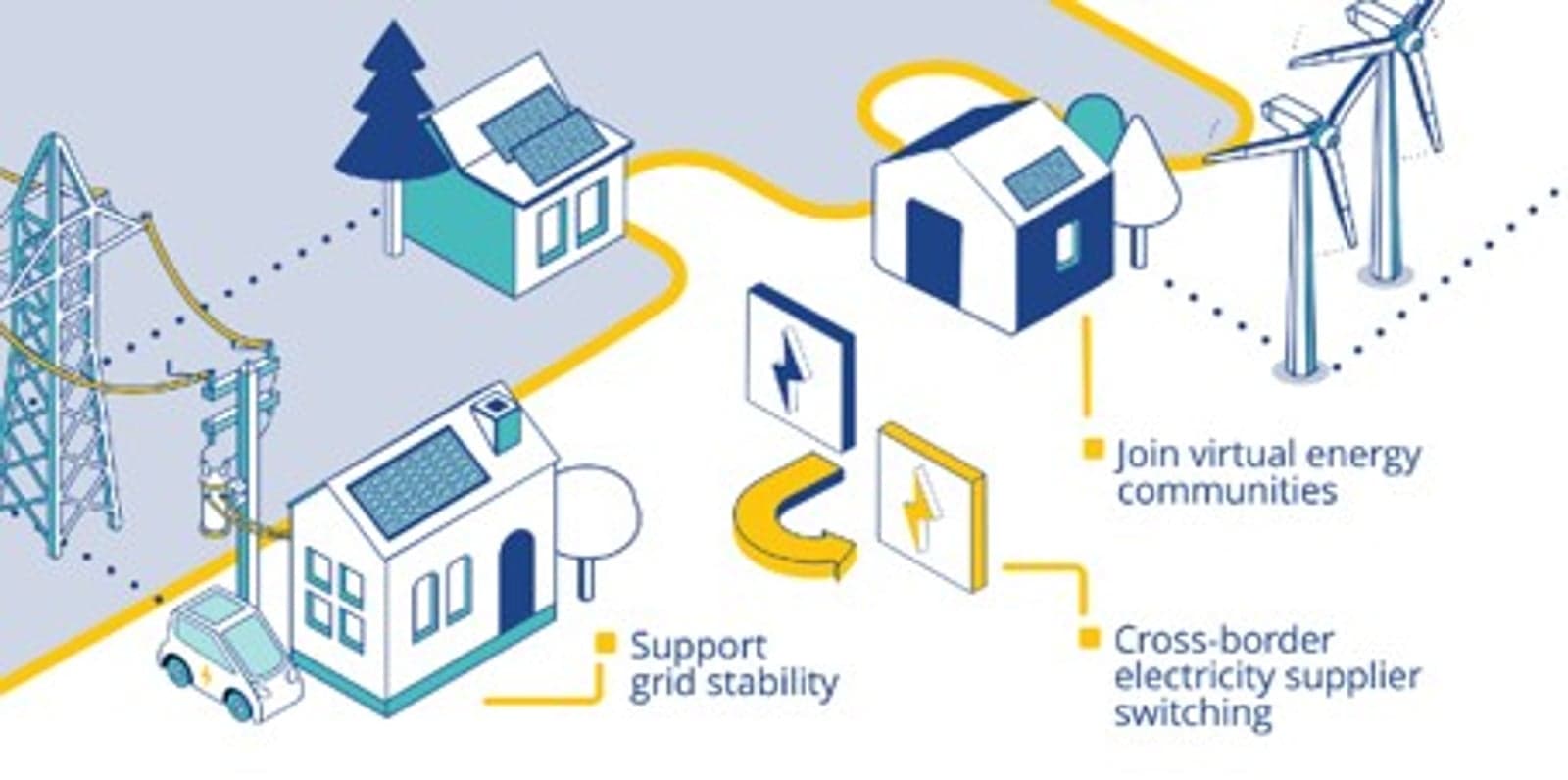
The electricity customer-centric operational digital platform places consumers at the centre of the energy system by enabling real-time demand side flexibility, participation in virtual energy communities, automated supplier switching and AI-based grid recommendations across EU member states.
It demonstrates how an operational digital platform can coordinate prosumers, grid operators and service providers within a single governed framework, while also highlighting existing regulatory limitations, particularly regarding cross-border flexibility markets.
Use case II — AI-driven operational digital platform for EV, electric truck, RES and grid
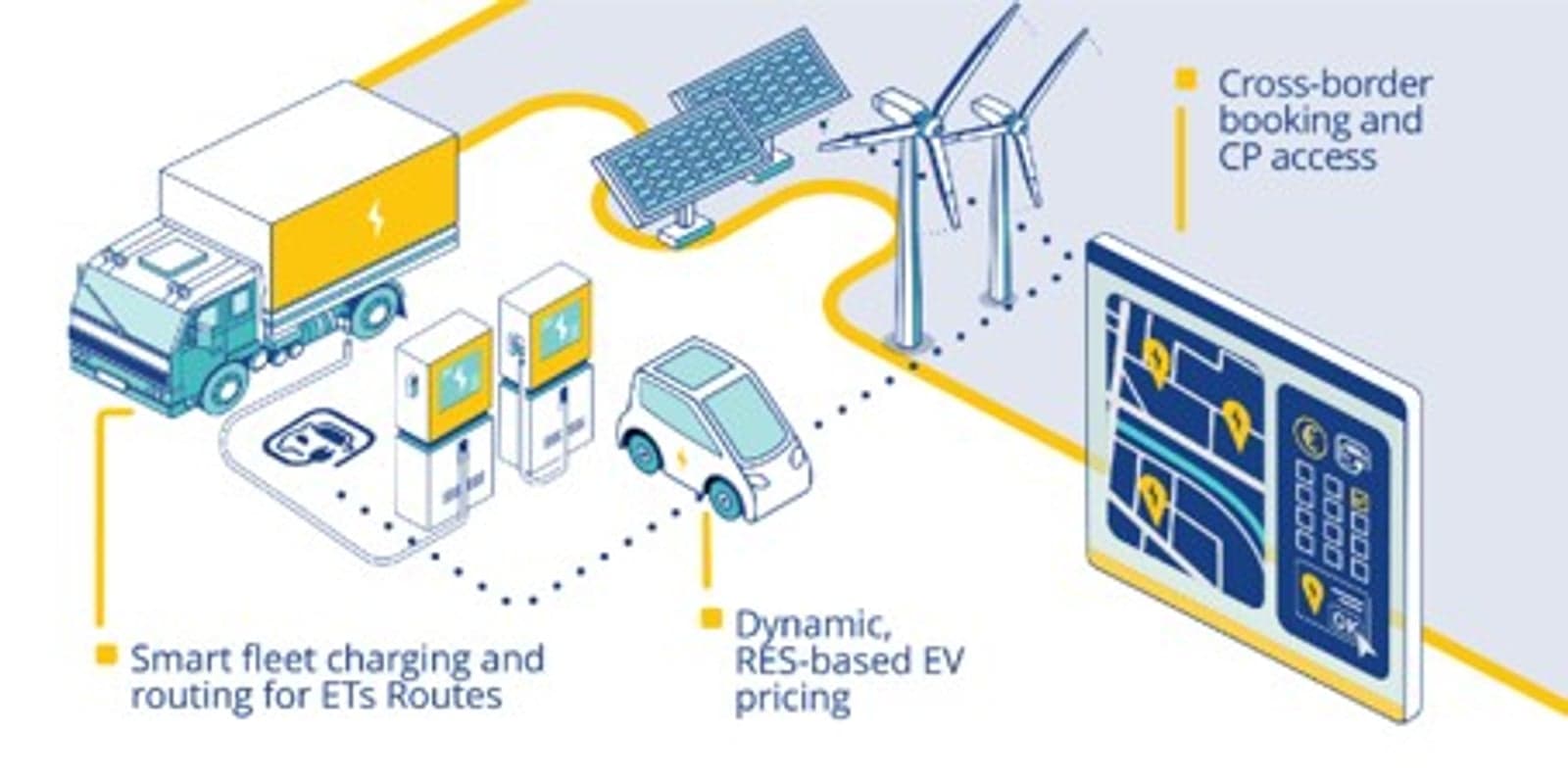
The EV/ET grid integration operational digital platform operates along the Austria–Hungary–Slovenia corridor, coordinating charging infrastructure, electric fleets, renewable generation and grid operations in real time.
It shows how distributed transport assets can become active flexibility resources capable of managing congestion, optimising routing and enabling cross-border data exchange in a sector traditionally affected by national fragmentation.
Use case III — Digitalisation of data centres
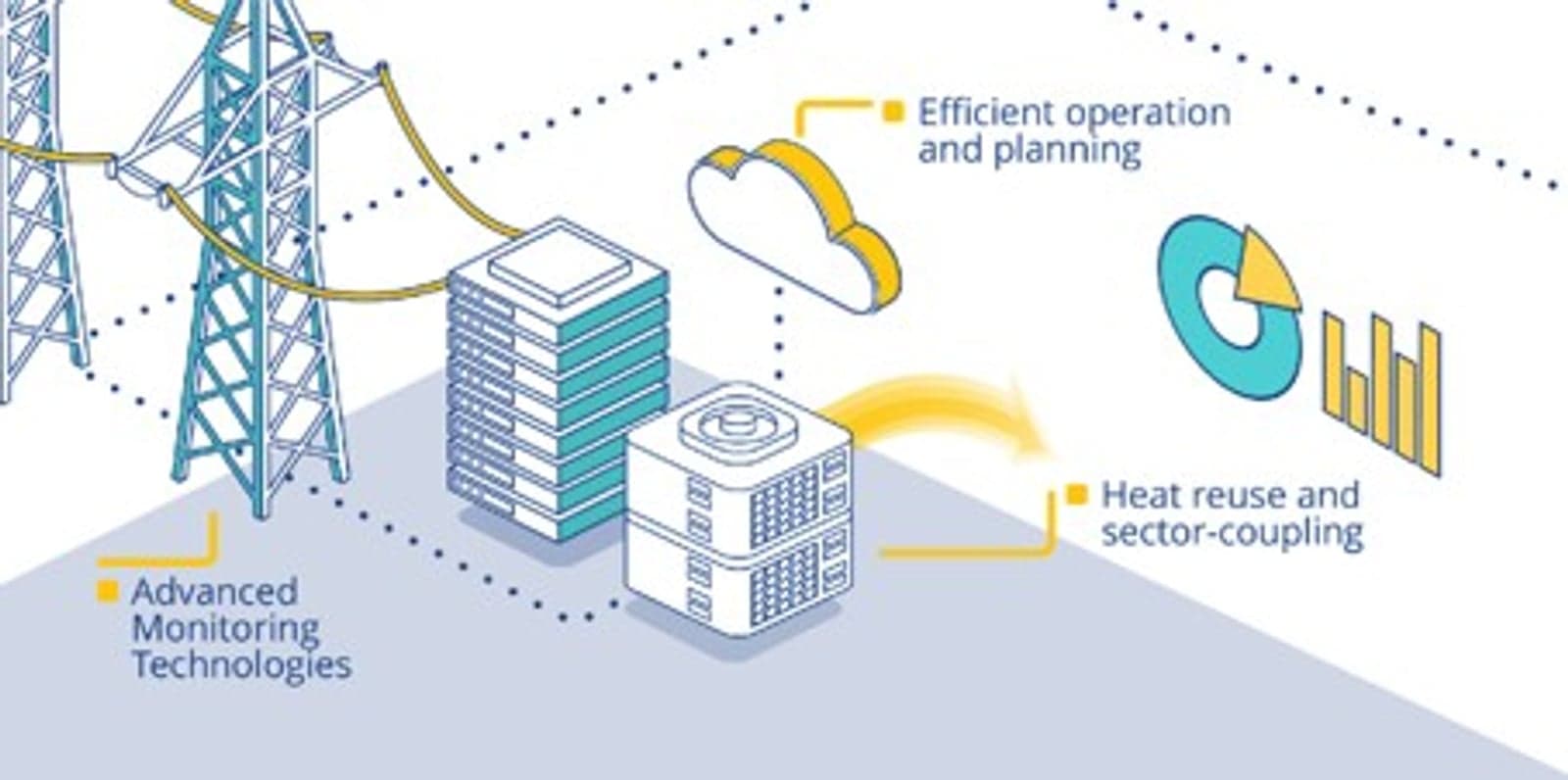
The digitalisation of data centres operational digital platform connects data centre operators, grid operators, renewable energy producers and district heating networks across Denmark, Germany, and Finland.
By enabling carbon-aware scheduling of computational workloads and coordinating waste heat recovery, it demonstrates that the operational digital platform concept extends beyond traditional energy and transport sectors into digital infrastructure itself.
Together, these three use cases demonstrate that operational digital platforms are not simply a conceptual framework, but an adaptable and deployable model capable of generating operational value across different contexts.
Conclusion
BEGONIA has shown that the operational digital platform concept is both technically viable and operationally relevant. Many of the necessary technological building blocks already exist within the European digital ecosystem. What still needs to evolve are the governance, regulatory and interoperability frameworks required to connect these elements effectively across sectors and borders.
Several challenges remain, including regulatory fragmentation across member states, legal complexity at sector boundaries, evolving data space standards, and the design of governance models that are trusted, interoperable and commercially sustainable. At the same time, as EU frameworks mature and interoperability initiatives advance, the conditions for broader operational digital platform deployment are likely to improve significantly.
Operational digital platforms provide a practical approach to coordinating complex and distributed systems across sectors and borders within a common interoperable framework. The full findings, including the formal operational digital platform definition, architectural principles, governance considerations, lessons learned and deployment guidance, will be presented in the forthcoming BEGONIA whitepaper and ODP reference document.
Rather than representing a single technological solution, operational digital platforms point toward a broader operational model for how Europe’s digital infrastructures may be coordinated across sectors, stakeholders and member states.
About the author
Niccolò Fattirolli is the Chief Operating Officer of olivoENERGY Strategy Consulting, where he leads the company’s internal operations and ensures the smooth delivery of projects. With a background in energy engineering from the Politecnico di Milano and the Università di Bologna, he has deep experience in the European and Spanish energy markets.
Most popular
Join the community for freeAnd get access to all content
Related projects
BEGONIA
+6
1 January 2024 - 1 May 2026
View projectLatest content
Partner content
+3
Power the new energy future with AI to secure a more resilient grid
Energy and security have always worked hand in hand – ensuring access to reliable, sustainable power while safeguarding critical infrastructure against a landscape of growing threats.
- Guest/partner contributor
- 17/12/2025