Brussels told Europe’s industries are ‘on the cliff edge’
Kelvin Ross
Posted on: 12 December 2025
Europe slammed as economically “naïve” as conference hears study of 20 sectors reveals only one is in a ‘healthy state’
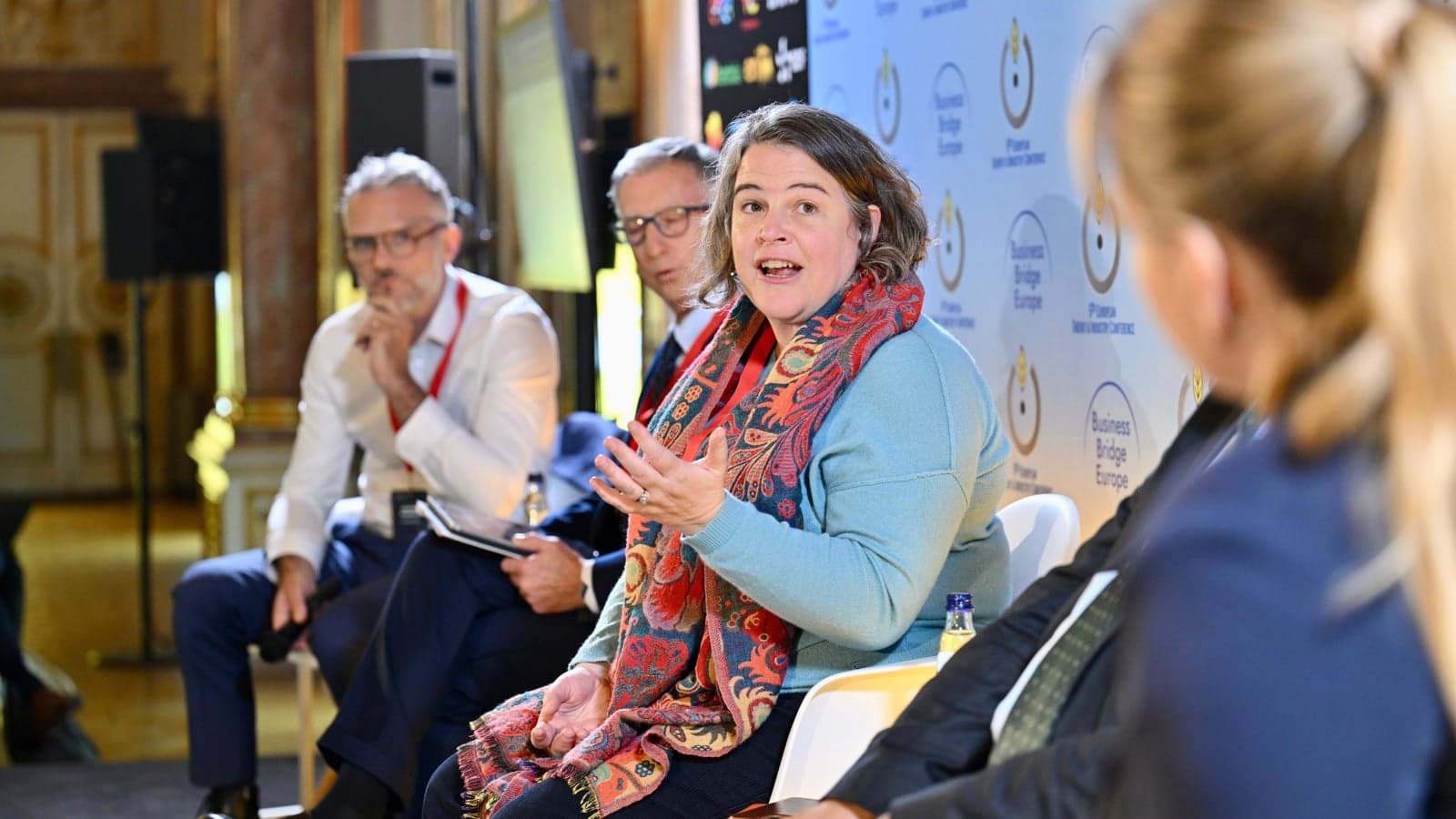
Europe’s competitiveness crisis was starkly spotlighted in Brussels this week by Judith Kirton-Darling, General Secretary of industriAll Europe.
industriAll Europe is an organisation representing manufacturing, mining and energy workers from 39 European countries and it has conducted a study of 20 European sectors, which Kirton-Darling said are “all interconnected”.
And she said the results of that survey were “terrifying”.
“In Europe today, only one of our industries is in a healthy state: that's the aeronautics and defence sector. All of the other sectors, whether upstream and energy intensive industries or downstream in product markets, are in very existential challenges.”
She said Europe was being “increasingly squeezed between the very proactive, assertive Chinese industrial model, which is based on massive subsidies, and a very assertive, proactive US industrial policy, which is based on trade protection and tariffs.”
Industrial energy headlines:
Landmark CCS plant at cement factory enters next phase
Policymakers must ‘get real’ over untapped potential of CHP
SMEs not tapping into electrification potential finds Schneider Electric
Speaking at the fifth European Energy and Industry Conference (EEIC), Kirton-Darling concluded that “in Europe we are completely naive in the current global geopolitical, geo-economic context about how to deal with economic transformation”.
She said “our tools are just not up to measure, and we need to get with the programme extremely quickly”.
And she warned that Europe’s industries were “on the edge of the cliff – some of our sectors already have a foot off the edge of the cliff, and we are all tied to each other by invisible industrial strings.
“Once one goes off the edge, the danger is that we see a rapid domino effect of the de-industrialisation in Europe. And the social, political, economic consequences of that are very, very dangerous for Europe as a continent.”
Proactive investment
On the eve of the launch of the EU’s Grids Package and with the Commission’s Industrial Accelerator Act still to come, Kirton-Darling called for “a strong proactive investment in industrial policy in Europe, which stimulates demand, deals with unfair trading practises and massive over capacities that are intentionally being created to squeeze our sectors out of the market”.
These unfair trading practises and massive over capacities, she said, were being “used as tools of an abusive relationship, in some ways”.
“We have to focus, on the one hand, in massive ramping up of investment in grids and energy production, but we also need to ensure that we don't kill industries which are energy intensive at the same time. And the current regulatory framework – the current ambition in Europe – is just not there to deliver that scale of change.”
Europe's industrial workers, she said, are “extremely anxious because they see what the reality is in their workplaces. They've seen that we are at historically low levels of private investment in Europe – unseen levels – and we need to change that.”
Internal levers
Kirton-Darling called for a hard pulling of “the levers of the internal market. We need to use active demand side measures to basically create a framework which ensures that we're drawing in investment, using the internal market to draw foreign direct investment… which really leads to the long-term transformation of our economy.”
She warned that the business models of today “won't be able to get us out of the hole we're in” and stressed that the geopolitical and economic landscape in Europe had, since the launch of the Green Deal targets, witnessed “crisis after crisis after crisis, which has radically shifted the overall setting”.
“It's also created massive social anxiety,” she added, highlighting the still highly potent effects of Europe’s cost of living crisis. “Real wages in half of European countries have not recovered to 2019 levels.”
The biggest challenge we face as a workforce is getting the political agreement before we lose the industrial fabric.
She said latest surveys revealed that 25% of European companies anticipate significant restructuring in the next few months and many sectors are running significantly under capacity utilisation.
“The speed of what's happening on the shop floor is much, much quicker than the speed of political decision making,” she said, and added that she believes “the penny has finally dropped at European level that we need an industrial policy base with that balance between open borders and trade and cooperation with partners internationally; and strategic autonomy and less naivety internally”.
“The biggest challenge we face as a workforce is getting the political agreement before we lose the industrial fabric.”