Car battery acid and plastic waste turned into clean hydrogen
Pamela Largue
Posted on: 12 April 2026
The method is known as solar‑powered acid photoreforming and the researchers hope it could help address the global plastic waste problem.
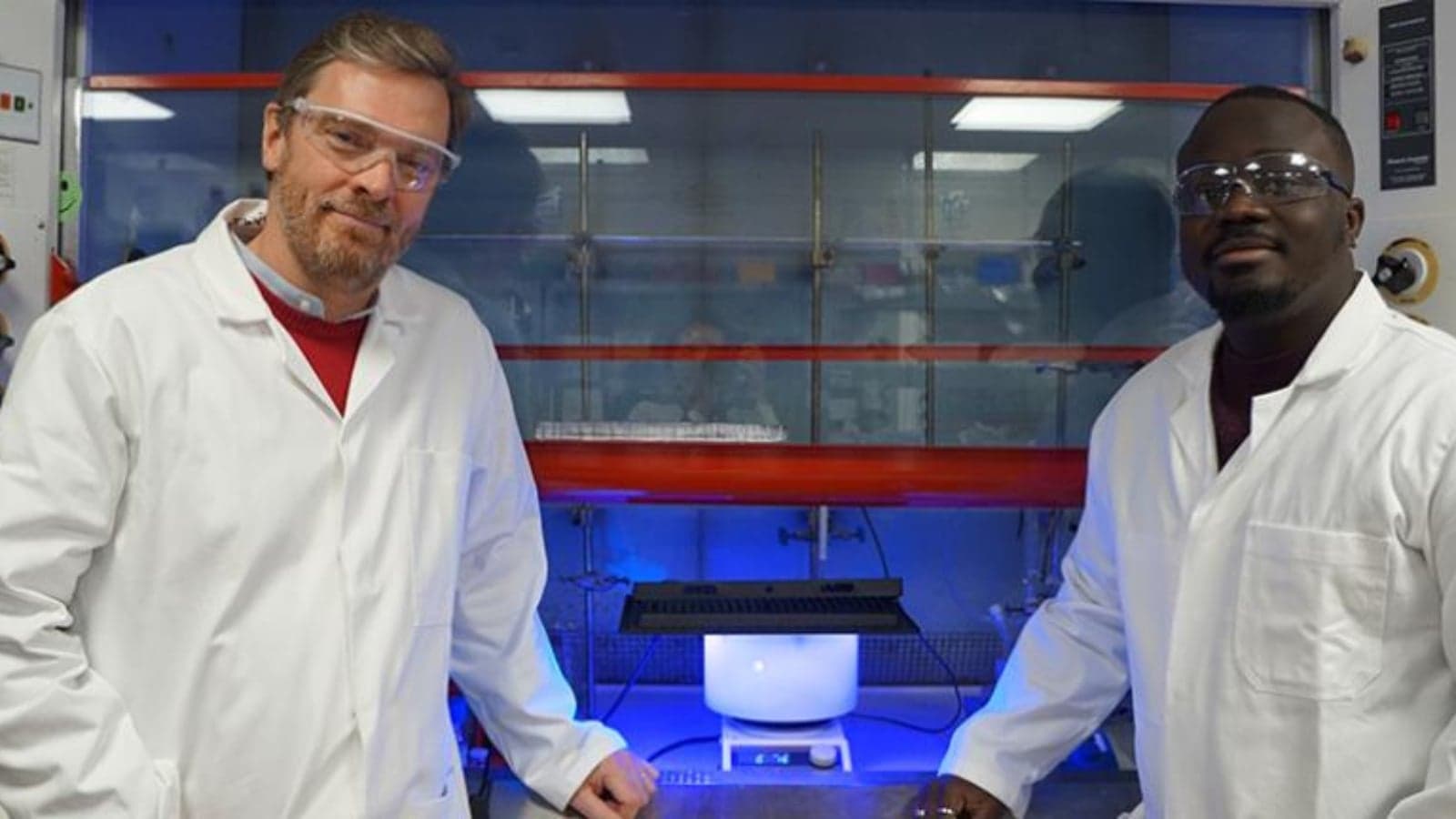
Researchers at the UK’s University of Cambridge have developed a solar-powered reactor to break down hard-to-recycle forms of plastic waste and convert it into clean hydrogen fuel.
The team developed a solar powered reactor that uses acid recovered from old car batteries to break down the likes of drinks bottles, nylon textiles and polyurethane foams.
The method is known as solar‑powered acid photoreforming and the researchers hope it could help address the global plastic waste problem.
According to the team, they engineered a photocatalyst that is robust enough to withstand the highly corrosive effects of acid. It also makes good use of acid from spent car batteries which is usually discarded.
Professor Erwin Reisner from Cambridge’s Yusuf Hamied Department of Chemistry, who led the research, said: “The discovery was almost accidental.
“We used to think acid was completely off limits in these solar-powered systems, because it would simply dissolve everything. But our catalyst developed didn’t – and suddenly a whole new world of reactions opened up.”
Have you read?
QUASAR building a circular economy for solar PV in Europe
How circularity projects could change European industries
This discovery could lead to a more cost-effective and more sustainable alternative to current chemical-based recycling methods.
Lead author Kay Kwarteng, a PhD candidate in Reisner’s research group, who developed the photocatalyst, hailed the circular nature of the project: “It’s an untapped resource.
“If we can collect the acid before it’s neutralised, we can use it again and again to break down plastics: it’s a real win-win, avoiding the environmental cost of neutralising the acid, while putting it to work generating clean hydrogen.”
The methodology
The university explains the process whereby the waste plastics are treated with the car battery waste acid, breaking the long polymer chains into chemical building blocks such as ethylene glycol.
The photocatalyst then converts this into hydrogen and acetic acid when exposed to sunlight.
In the lab, the reactor generated high hydrogen yields and was able to run for more than 260 hours without any loss in performance.
This is a solid first step suggests Kwarteng, although challenges remain. “The question now is engineering: how do we build reactors that can run continuously and handle real‑world waste?”
The team now plans to commercialise this process with the support of Cambridge Enterprise, and with a UKRI Impact Acceleration Account.
And while the process won’t replace conventional recycling, it can complement it by providing a circular solution for contaminated or mixed plastics that currently have no viable route to reuse.
“We’re not promising to fix the global plastics problem,” concluded Reisner. “But this shows how waste can become a resource. The fact we can create value from plastic waste using sunlight and discarded battery acid makes this a really promising process.”
The findings of the research were published in Joule.