Sustainable decommissioning planned for ageing Scottish wind farm
Pamela Largue
Posted on: 28 August 2024
Nadara| together with Reblade| has launched a sustainable decommissioning strategy for Beinn Ghlas Wind Farm in Argyll| Scotland.
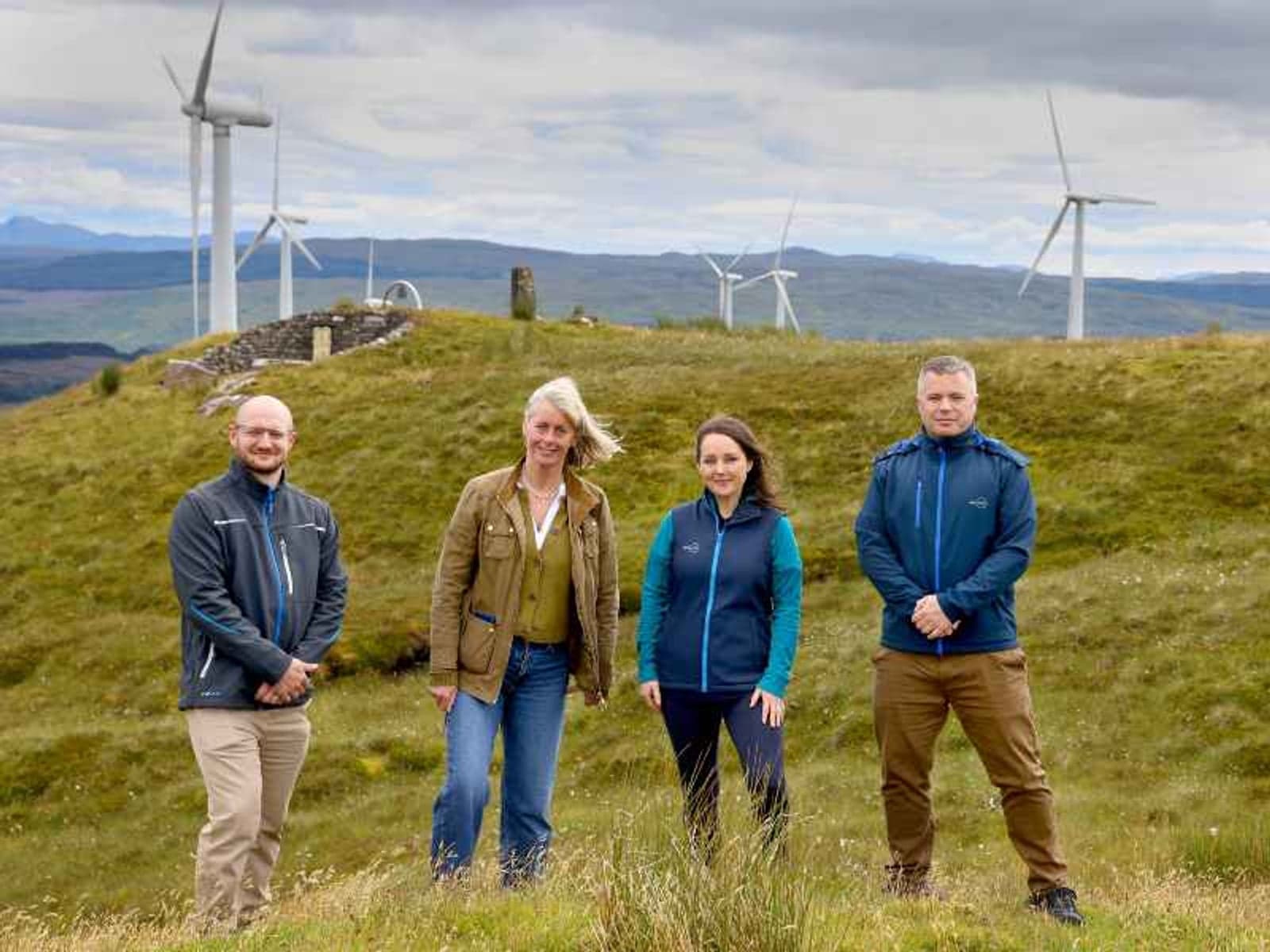
European independent power producer Nadara has launched a sustainable decommissioning strategy for Beinn Ghlas Wind Farm in Argyll, Scotland.
The strategy was developed in partnership with Reblade, a UK-based specialist wind turbine decommissioning service, and aims to explore circular destinations for the decommissioned material that will be removed from the wind farm site.
Beinn Ghlas is one of the oldest wind farms in the UK, having started operations in May 1999. The 25-year-old site comprises 14 600kW wind turbines, which provide 8.4MW.
To increase the generating capacity of the wind farm, Nadara plans to apply for consent to replace the existing turbines with new, larger and more efficient turbines.
Each new turbine is likely to have an installed capacity of approximately 5MW, with the installed capacity after the repowering totaling 50MW. According to Nadara, the new decommissioning strategy will form an important part the repowering planning application.
Have you read?
Fingrid to use recyclable steel in new substations
NREL study shows path to easier recycling of solar modules
Fiona Lindsay, managing director of Reblade, said: “As the first strategy of its kind in the UK, this initiative not only highlights Nadara’s forward-thinking approach but it also serves as an inspiring model for others in the industry to follow.
“As the onshore wind industry begins decommissioning the first generation of wind farms at scale, it is essential that leading companies take a proactive and responsible approach to material handling at every stage. We are delighted to be partnering with Nadara to develop this important piece of work and we look forward to seeing this approach become more commonplace in our industry.”
Turbine blade recycling
Most wind turbine blades end up in landfills once they reach end of life, with estimates suggesting there will be more than 40 million tonnes of blade waste worldwide by 2050. For this reason, maximising circularity within the industry is a priority.
One organisation working to improve circularity is the US Department of Energy’s National Renewable Energy Laboratory (NREL). Researchers have recently published findings that show a new bio-derivable resin could improve wind turbine blade recyclability. NREL researchers have nicknamed the biomass-derivable resin PECAN (PolyEster Covalently Adaptable Network) and have demonstrated its use in a 9-meter blade prototype.
Also in May this year, German wooden wind turbine blade manufacturer Voodin Blade Technology installed a prototype 19.3-meter wooden wind turbine blade.
The blade, installed on an existing wind turbine in Breuna, Germany, uses laminated veneer lumber (LVL), a more sustainable option than currently used composite materials.