CIRCWIND: Development of circular solutions for wind turbines
Guest/partner contributor
Posted on: 18 December 2025
In a context with a growing number of wind turbines reaching end of life, CIRCWIND aims to develop technologies and tools for use in future wind turbines.
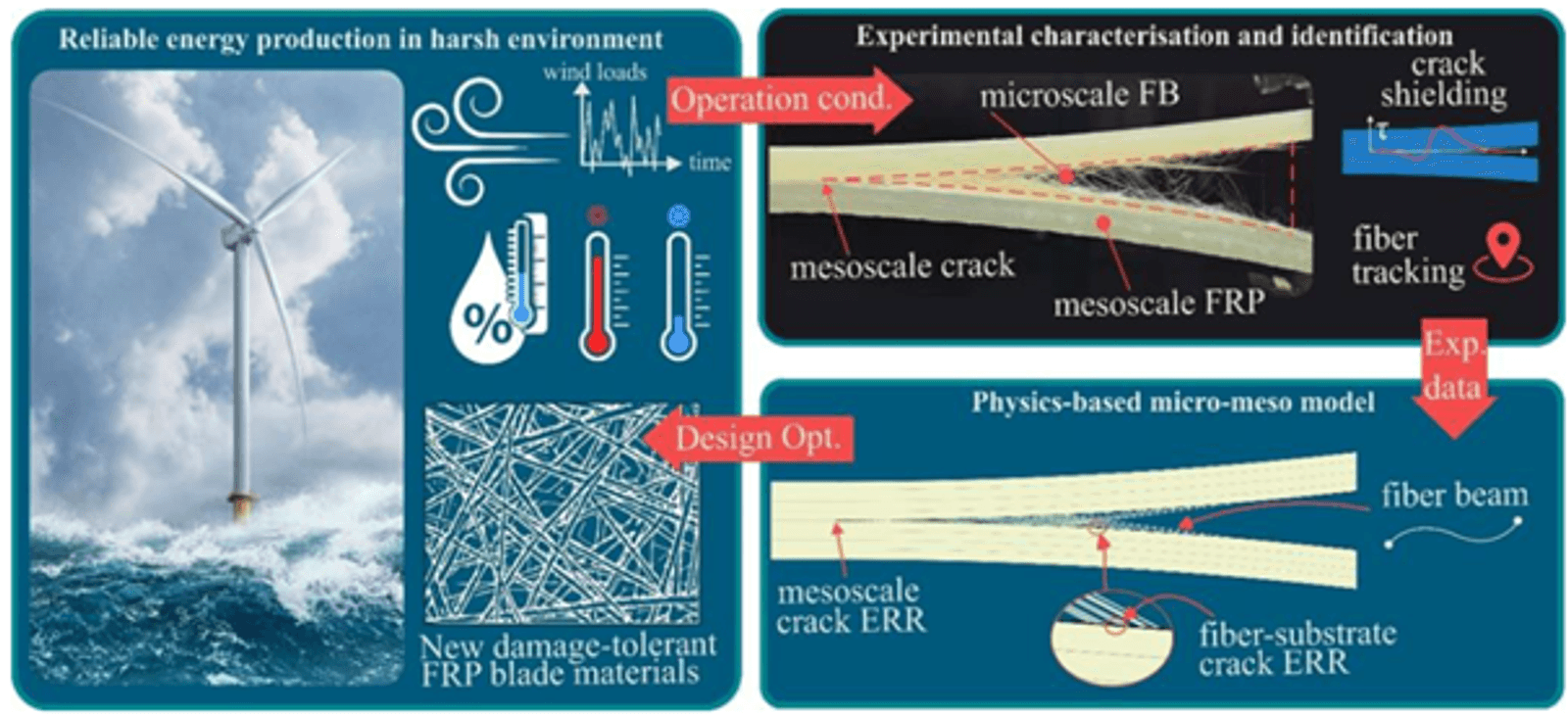
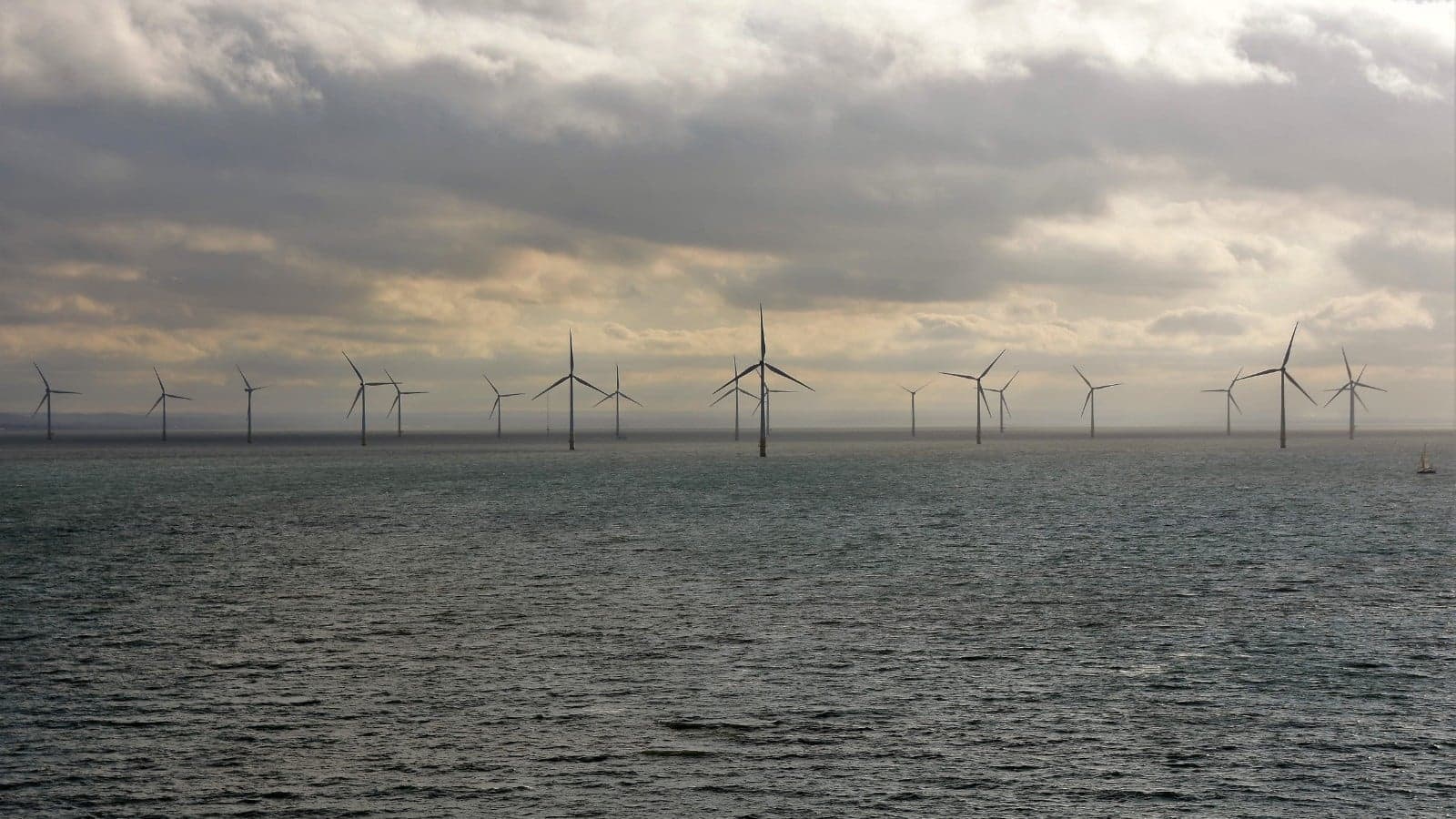
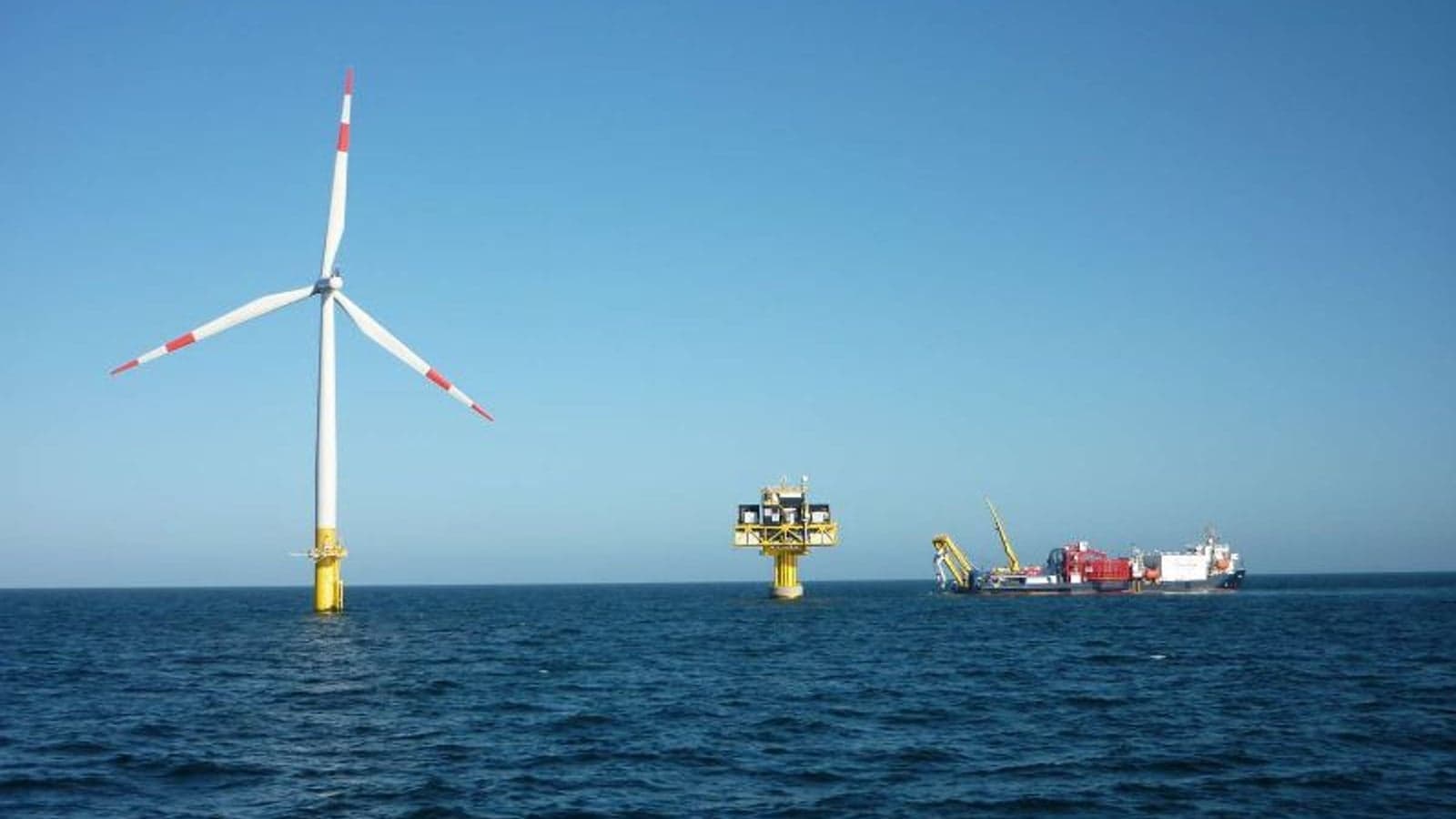
Recent trends towards larger offshore wind turbines are in large part driven by the aim to maximise efficiency in power output and wind capture while also reducing the levelized cost of energy (LCOE). However, their unprecedented scale introduces complex design, material and operational challenges that affect reliability, sustainability and cost-effectiveness.
In spite of advancements in efficiency, the accelerated pace of innovation paired with the pressures of global competition has also resulted in shortened development cycles and amplified risks of component failures. This has resulted in wind turbine blades, one of the costliest components, becoming increasingly prone to damage, transitioning from low maintenance parts to leading causes of operational problems.
Other key structures generating significant challenges are the concrete floaters supporting the massive structures of next generation wind turbines, which suffer from cracks and degradation under extreme loads that cannot optimally be mapped, predicted or solved with the limited knowledge available about their behaviour and durability using current modelling tools.
A transdisciplinary research project pooling together the expertise of stakeholders in academia and industry in offshore wind, advanced material sciences and circularity, CIRCWIND (CIRCular optimised material solutions for WIND) will develop and validate innovative wind turbine technologies with immediate and future applications including enhanced reliability and lifetime, performance, operability and maintainability, as well as cost-efficient pathways towards complete circularity as a growing number of existing wind turbines are approaching their end.
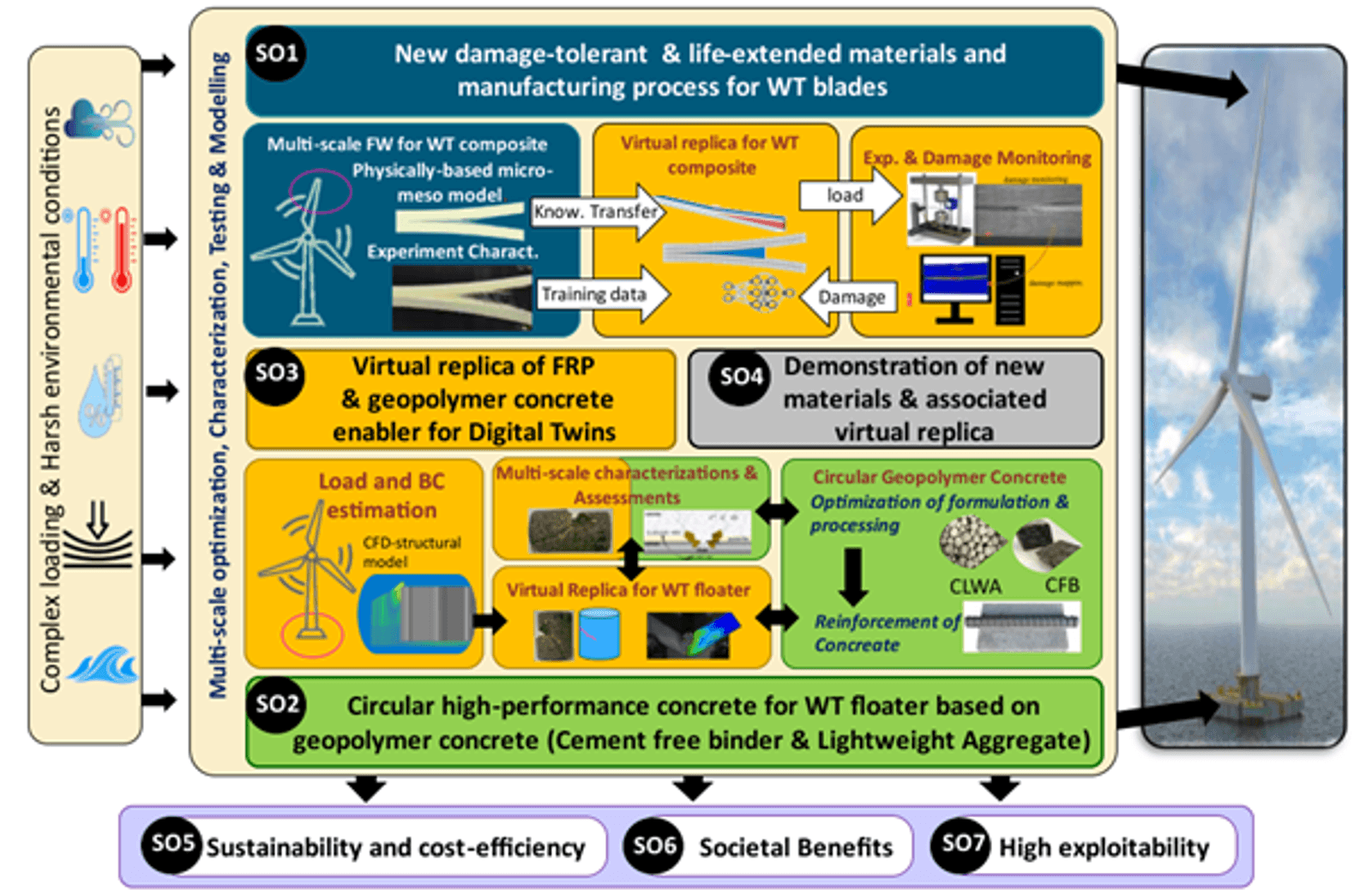
CIRCWIND methodology
Building upon three technology pillars – one for the development of damage-tolerant fibre-reinforced polymer materials and associated modelling tools, one for improved materials and recycling technologies for floating substructures, and one for the development of digital twins and virtual replicas of both blades and floaters, the project builds upon the existing knowledge of its partners to take the technologies developed from TRL 2-3 to TRL 5, paving the way for further development.
Pillar 1: Damage-tolerant fibre-reinforced polymer materials and modelling tools
CIRCWIND advances materials science for offshore wind turbine blades through a new generation of fibre-reinforced polymer composites. These materials are engineered to resist delamination and fatigue under variable offshore loads. Using multiscale, physics-based modelling and experimental characterisation, researchers analyse crack growth and fibre-bridging mechanisms to enhance out-of-plane strength and lifespan. The models are calibrated against laboratory data and operational conditions, enabling predictive design and digital validation of fibre-reinforced polymer metamaterials optimised for recyclability and repairability
Pillar 2: Geopolymer binders and recycling technologies for floating substructures
Targeting the concrete-based floaters of offshore platforms, this pillar develops geopolymer binder formulations as low carbon, durable alternatives to conventional cement. Designed to withstand harsh marine environments, these binders enable reduced clinker content and integrate circular lightweight aggregates derived from industrial byproducts. Laboratory and simulation studies address crack propagation, corrosion resistance and long-term durability. The work aims to create structurally sound, environmentally sustainable floaters that reduce CO₂ emissions and support secondary material recovery at end of life
Pillar 3: Digital twins and life-cycle assessment tools
CIRCWIND integrates digital twin technologies with life cycle assessment and circularity indicators to evaluate environmental, technical and economic performance throughout a component’s lifetime. AI-assisted models couple data from laboratory tests and real operational conditions, producing predictive insights for performance, maintenance and recycling potential. These digital frameworks ensure that material innovation translates into measurable sustainability and cost benefits, bridging simulation and real-world validation.
Milestones reached
During its first year, CIRCWIND achieved significant milestones across all three pillars.
For Pillar 1, a compact fatigue testing fixture and microscale experimental setup were developed, alongside the first implementation of a multi-scale finite element model describing crack initiation and propagation in fibre-reinforced polymer laminates.
Under Pillar 2, initial circularity and material requirements for geopolymer concrete were defined, focusing on durability, reusability and the inclusion of sustainable raw materials.
For Pillar 3, preparatory work on the digital twin architecture and life cycle data integration began, defining methodological frameworks for environmental and techno-economic assessments.
Together, these achievements mark steady progress towards TRL 5 validation, demonstrating the feasibility of circular material systems for large-scale offshore applications
In conclusion CIRCWIND contributes to Europe’s transition towards sustainable energy by rethinking the materials and digital tools underpinning offshore wind infrastructure. Through an integrated approach combining materials science, modelling and circularity, the project addresses key industry challenges in cost, durability and recyclability.
The outcomes will not only enhance the reliability and lifespan of next-generation offshore wind turbines but also provide evidence-based pathways for policy, standardisation and industrial uptake. By linking technological innovation with environmental responsibility, CIRCWIND sets a precedent for a more resilient, circular offshore wind sector.
Related tags
Most popular
Join the community for freeAnd get access to all content
Related projects
CIRCWIND
+1
1 October 2024 - 30 September 2028
View projectLatest in Digitalisation
All articlesPartner content
+1
Digital water management: Empowering utilities with scientific decision-making
As urban water distribution networks continue to expand and water resource management becomes increasingly complex, water utilities are facing growing operational challenges.
- Guest/partner contributor
- 03/07/2026