From sudden stops to long life confidence: Helping Europe's renewable fleets
Guest/partner contributor
Posted on: 10 March 2026
EPRI Europe is helping Europe’s renewable fleets operate more predictably with evidence based planning.
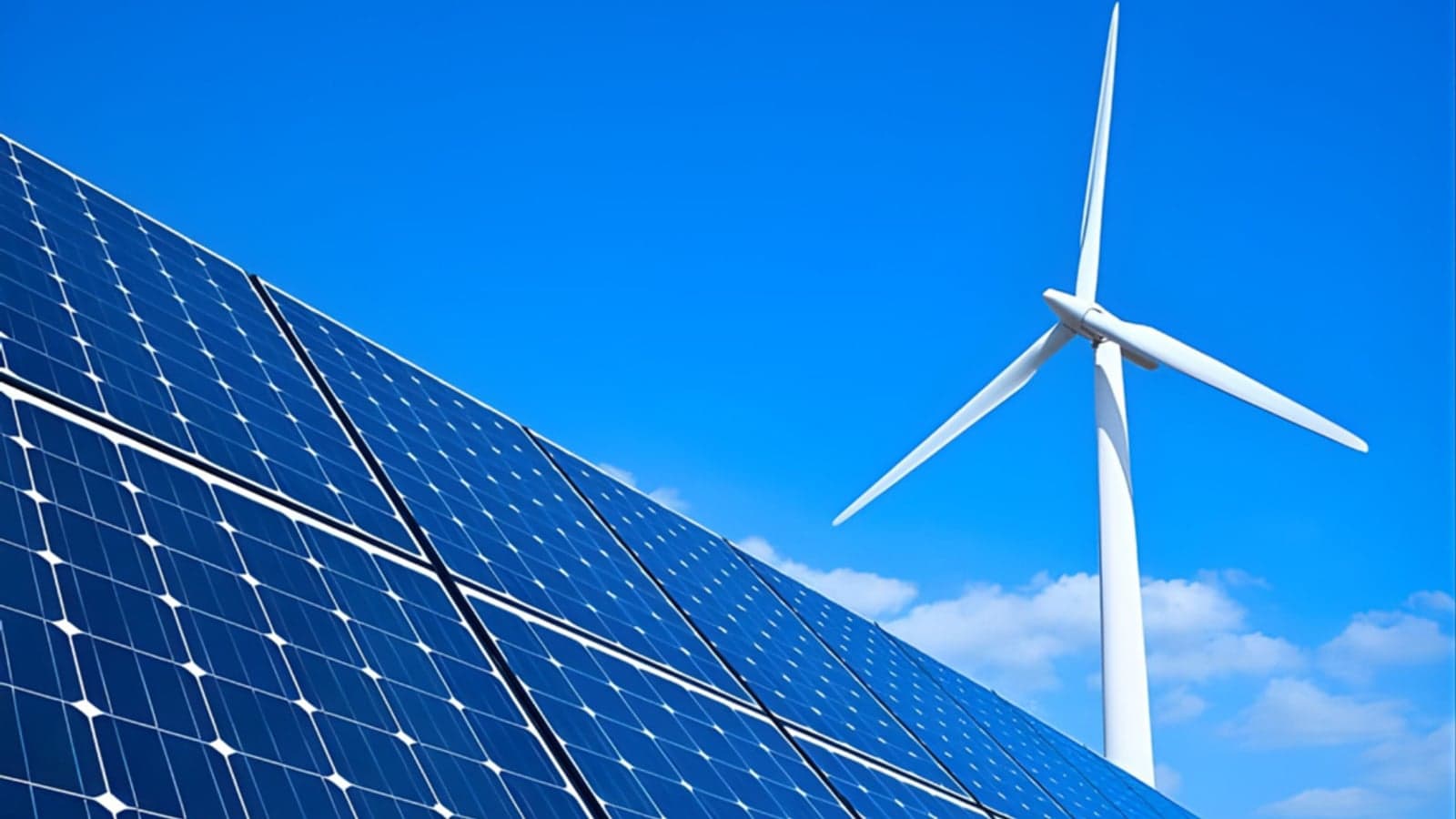
Europe’s energy transition is accelerating – and with it, the grid is being asked to do something unprecedented: rely on weather driven, power electronics based generation for system critical performance that used to come 'for free' from large synchronous machines.
As renewables like wind and solar move from supporting roles to backbone infrastructure, the challenge is no longer just building capacity. It’s operating reliably through disturbances, extremes and ageing while still meeting investor expectations and tightening grid requirements.
This is where EPRI Europe’s Renewables Team focuses: taking the complexity of real wind and solar fleets from field data, failure modes, grid behaviour, supply chains and economics and turning it into methods and tools that help utilities and independent power producers (IPPs) make decisions that hold up over decades.
The aim isn’t to sell a solution; it’s to reduce uncertainty with evidence, so operators can plan rather than react.
Reducing uncertainty in solar PV and wind
EPRI Europe’s work in QUASAR, a Horizon Europe project, tackles that challenge by aiming to make solar PV more circular. QUASAR combines digital twins, data management and decision tools to improve how end of life (EoL) modules are collected, sorted and processed. EPRI Europe leads work on product circularity and end of life digitalisation, including estimating decommissioning and repowering costs, compiling best practices, and developing data solutions that support end of life processing.
For owners, the point is practical: clearer options and fewer surprises when a plant approaches repowering or retirement.
Wind faces a different version of the same problem: uncertainty that becomes expensive. Offshore wind has proven it can scale; now the next gains come from shrinking the error bars embedded in design assumptions, maintenance strategies and financing premiums. In HIPERWIND, a Horizon 2020 project, partners work to reduce uncertainty across the modelling chain linking atmospheric conditions, turbine loading, reliability, degradation and cost. EPRI Europe contributes where grid realities meet mechanical life by assessing how grid events influence component lifetime and by translating technical improvements into cost‑of‑energy impacts.
If HIPERWIND is about design uncertainty, WinDTwin is about operational uncertainty. The project is developing an offshore wind farm digital twin intended to improve prediction of power production and energy demand and to provide decision makers access to models, scenarios, forecasts and visualisations. EPRI Europe’s role focuses on strategic maintenance planning and operational optimisation, plus modelling interconnection needs for grid requirements and ancillary services pushing the twin beyond description toward actionable choices.
Improving renewables field performance
Alongside these Horizon projects, EPRI Europe supports renewable owners with applied work grounded in field performance. In solar, one persistent issue is the gap between what equipment is assumed to do and what it actually does on site. Inverters are a prime example. They are a relatively small share of plant capex, yet they sit at the intersection of energy yield, availability and grid compliance. Small mismatches in derating behaviour or efficiency can accumulate into meaningful lifetime losses.
EPRI’s PV inverter field performance characterisation work targets a practical gap: while PV plant performance testing exists, the sector still lacks widely adopted protocols for characterising inverter performance on-site in real world conditions with lab‑like rigour. The goal is to develop a field test protocol that produces reliable onsite power curves, all critical inputs for forecasting and verification. Field examples compare OEM derating curves to recalculated derating based on observed ambient conditions, focusing on temperature derating, DC/AC voltage derating and conversion efficiency. The result is clearer attribution: what is the inverter doing versus what was expected to do?
Trackers are another area where early optimism can collide with long life reality. Single axis tracking can raise annual energy production, but it also introduces moving parts, control logic and weather response decisions that echo across decades. EPRI’s Solar PV trackers technology assessment quantifies tracker impacts on affordability and reliability using real world performance and cost data, examining technology options, typical failure modes and site‑specific design considerations. It also looks closely at stowing strategies for extreme events like high winds, hail and heavy snow because resilience is as much about operational strategy as it is about hardware.
In wind, reliability becomes a data problem as fleets age. Operators want to know not only what failed, but what is likely to fail next, how failure rates evolve with time, and how their fleet compares with broader industry experience. WinNER – the Wind Network for Enhanced Reliability – addresses this by enabling reliability benchmarking and forecasting using anonymised data with system and component level specificity. It supports data standardisation, benchmarking and OEM/supplier comparisons, O&M budgeting and forecasting, and total cost of ownership questions such as repowering versus life extension. Just as important, it is built around collaboration so lessons learned in one fleet can inform decisions across many.
Moving to 'operate predictably'
Across these efforts runs a common theme: renewables are moving from ‘build fast’ to ‘operate predictably.’ Grids are evolving expectations for inverter‑based resources and owners need equipment choices and maintenance strategies that remain robust as requirements change. None of this work promises a world without failures, storms or disturbances. What it enables is something more valuable: fewer surprises.
Circular end‑of‑life planning reduces repowering uncertainty. Better uncertainty quantification in offshore wind can reduce cost premiums without increasing risk. Field‑grounded inverter testing protocols can verify performance assumptions and pinpoint loss mechanisms before they become long‑term revenue leakage. Tracker reliability and stow strategy insights help owners plan for extreme events as operational realities, not rare exceptions. And wind benchmarking turns scattered experience into actionable intelligence.
In short, EPRI Europe’s Renewables Team helps utilities and IPPs move from reactive troubleshooting to evidence‑based planning so Europe’s renewable expansion becomes not only larger, but more dependable as infrastructure built to last.
About the author
Alberto Pico is a Senior Technical Leader at EPRI Europe, leading the Horizon QUASAR project and contributing to wind and solar programmes. With over a decade at Enel Green Power, he brings expertise in engineering, operations and grid integration. He holds advanced degrees in electrical engineering and renewable project management.
Related tags
Most popular
Join the community for freeAnd get access to all content
Related companies
EPRI Europe
Related projects
Quasar
+1
1 September 2023 - 30 November 2027
View project