Could trust be the secret to building Europe’s electrostates?
Pamela Largue
Posted on: 29 January 2026
Europe’s electrostates need to be built with steel, copper and electrons, as well as with something far harder to engineer: public confidence.
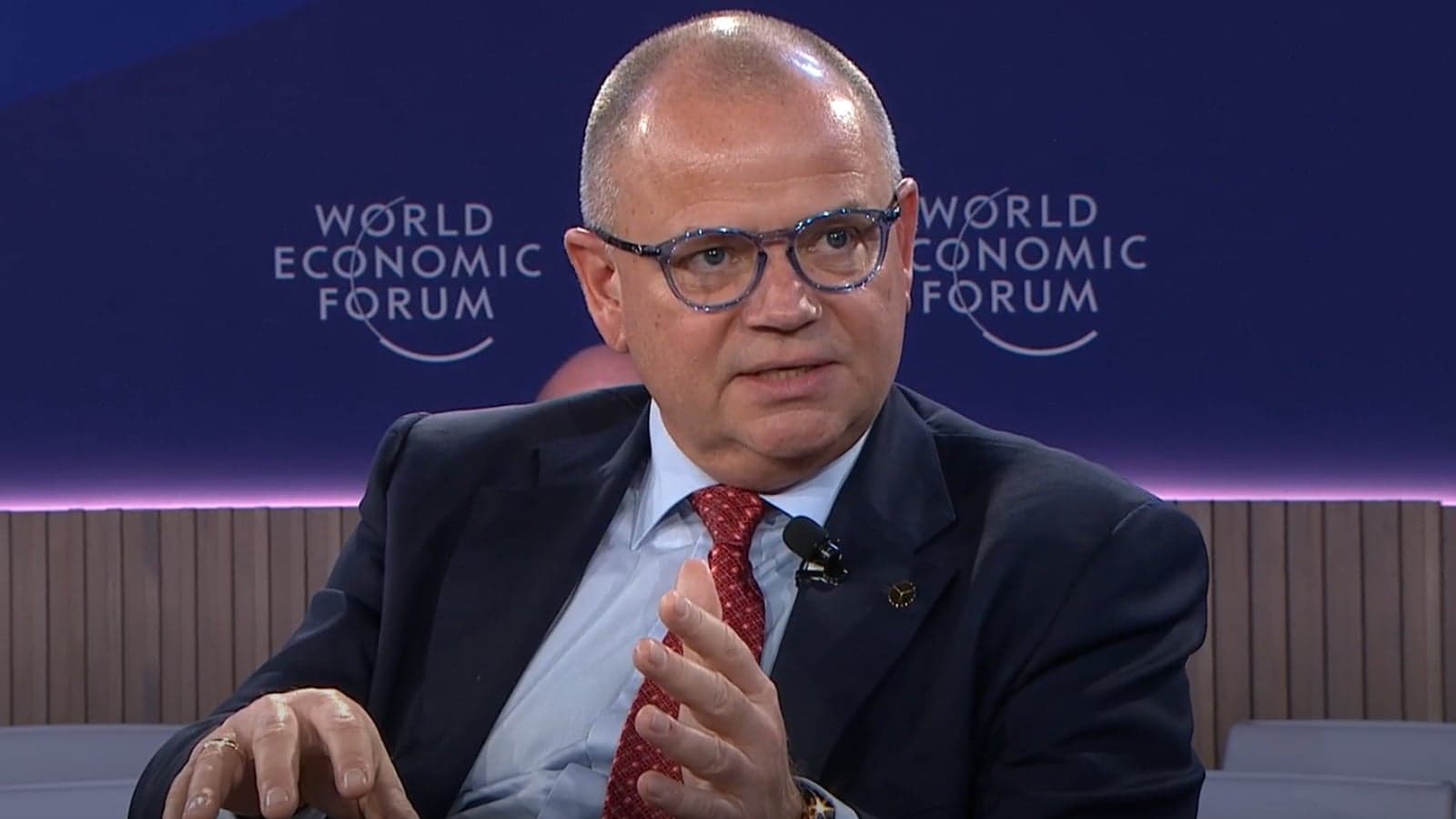
At this year’s World Economic Forum in Davos, electrification featured prominently in discussions on Europe’s energy future. The usual constraints were acknowledged — slow permitting processes, grid congestion, and increasingly polarised policy debates. Yet, it was the “soft” issues of leadership, societal acceptance and trust that repeatedly surfaced as the hardest barriers to overcome.
Henrik Andersen, President and CEO of Vestas, warned that electrification is often framed too narrowly as a technical or economic challenge, rather than a societal one.
“We are forgetting that this is part of society. We’ve got to engage and connect — electrification has to be adopted by society,” he said.
While Europe frequently laments slow electrification rates, Andersen argues that the underlying issue is a failure to communicate the benefits clearly to citizens.
“Electricity from new capacity typically comes at 30–40% of the existing cost. But you don’t see that from your meter, because it’s covered in taxes or penalties.”
This disconnect, he believes, erodes trust. When consumers see only high prices — often with up to 70% made up of VAT or taxes — they become emotionally detached from both the energy source and the value of the grid itself.
“That’s wrong. We need to talk to society about the true underlying cost,” Andersen said.
Trust as the foundation for participation
For Andersen, trust is the gateway to participation. Greater societal trust would unlock higher levels of prosumer engagement, expand decentralised storage, and ultimately support a broader and more resilient baseload across Europe.
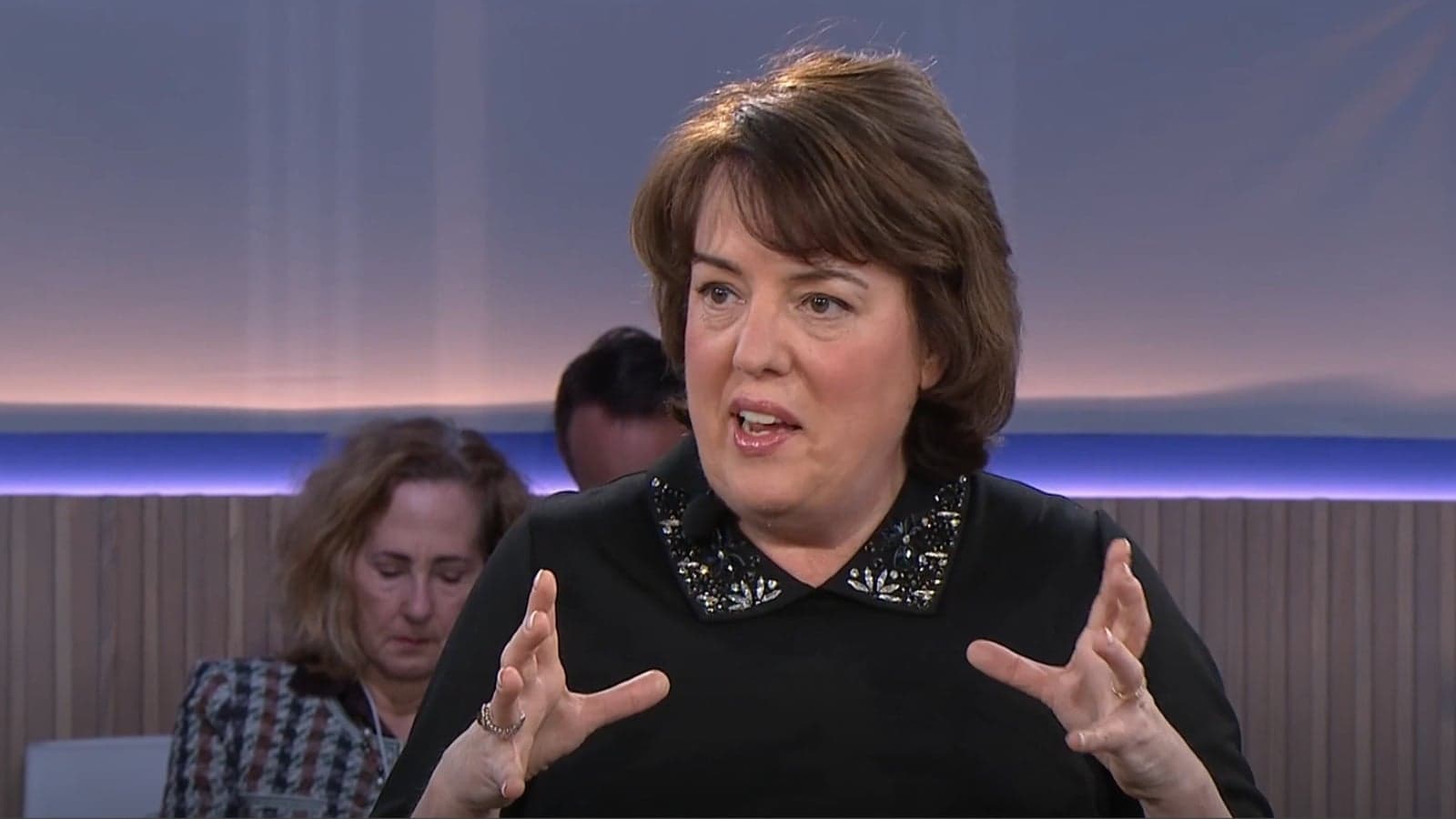
Manon van Beek, Chief Executive Officer and Chair of the Board at Dutch transmission system operator TenneT, echoed this sentiment. Drawing on her experience in the Netherlands, she pointed to societal resistance and a lack of acceptance as recurring obstacles to grid expansion.
“We talk about technology, politics and regulation, but in the end, trust is really important,” she said.
“People need to trust — and that requires leadership in capital letters from industry, grid companies and politicians.”
That “soft part”, she added, is “the hard nut to crack” when it comes to scaling electrification.
Preventing breaches of trust is particularly critical, Andersen stressed. While fears and downsides are inevitable in any transition, failing to address them openly can have severe consequences.
“The absolute breach of trust in the energy transition is a blackout,” he said. “When that happens, leadership becomes questionable.”
Leadership beyond policy
Both leaders emphasised that responsibility does not rest with governments alone. Andersen challenged private companies to move beyond blame and invest directly in enabling infrastructure.
“Private companies should invest in charging infrastructure and make it available for everyone to participate,” he said.
Such investments, he argued, would help deliver the decentralised storage and broader baseload Europe needs.
Despite the challenges, Andersen remains optimistic.
“We can always ask whether the glass is half full or half empty. I always say it’s more than half full.”
From his perspective, the technologies required to drive electrification already exist. What is needed now is balance and patience — particularly in a world accustomed to instant results.
“Developers can’t expect instant answers for grid connections,” he noted, suggesting a focus on regions where the grid is less constrained and electricity demand is highest.
Have you read?
Baker Hughes boss urges ‘rewriting of the energy equation’
Why China is leading the EV race
Policy, too, must strike the right balance. Getting the economics of electrification right means spurring investment rather than obstructing it.
“We need to be careful that political conventions don’t become polarising,” Andersen said.
“We are building assets that must last to the next generation, but policy cycles of three or four years often hinder the consistency that drives investment and lowers the cost of capital.”
Scaling the grid at unprecedented speed
For van Beek, the scale of the challenge facing grid operators is unprecedented. While the Netherlands is a frontrunner in offshore wind and solar deployment, progress is increasingly constrained by permitting and spatial limitations.
“In the next 10 to 15 years, we need to deliver 1,000 projects requiring the space of 11,000 football fields,” she said — no small task in one of Europe’s most space-constrained countries.
“It’s not that our democratic processes are failing,” she added.
“They are simply not designed for the speed and magnitude of the transition we are in.”
Societal debates and local opposition can further slow progress. Van Beek likened grid expansion to building a railway system: while responsibilities may sit at local, provincial and national levels, all actors must ultimately move in the same direction.
“Autonomy, alignment and coordination can go hand in hand rather than compete.”
Alongside trust and alignment, van Beek highlighted the growing role of flexibility as a new business model for the power system. Rather than building grids for peak demand, she argued, Europe must learn to use existing infrastructure more intelligently.
“You don’t want to build the grid for the peak,” she said.
Time-bound contractual innovations could help ease congestion and make flexibility “the new normal”, improving affordability in an increasingly electrified and resilient power system.
Finally, she underscored the importance of cross-border collaboration. A truly affordable and reliable European grid, she argued, cannot be achieved within national silos.