Europe’s industrial competitiveness depends on smarter energy systems
Yusuf Latief
Posted on: 26 November 2025
Europe’s industrial future hinges on smarter grid management, wider digitalisation and the scaling of electrified demand, said panellists at Enlit Europe.
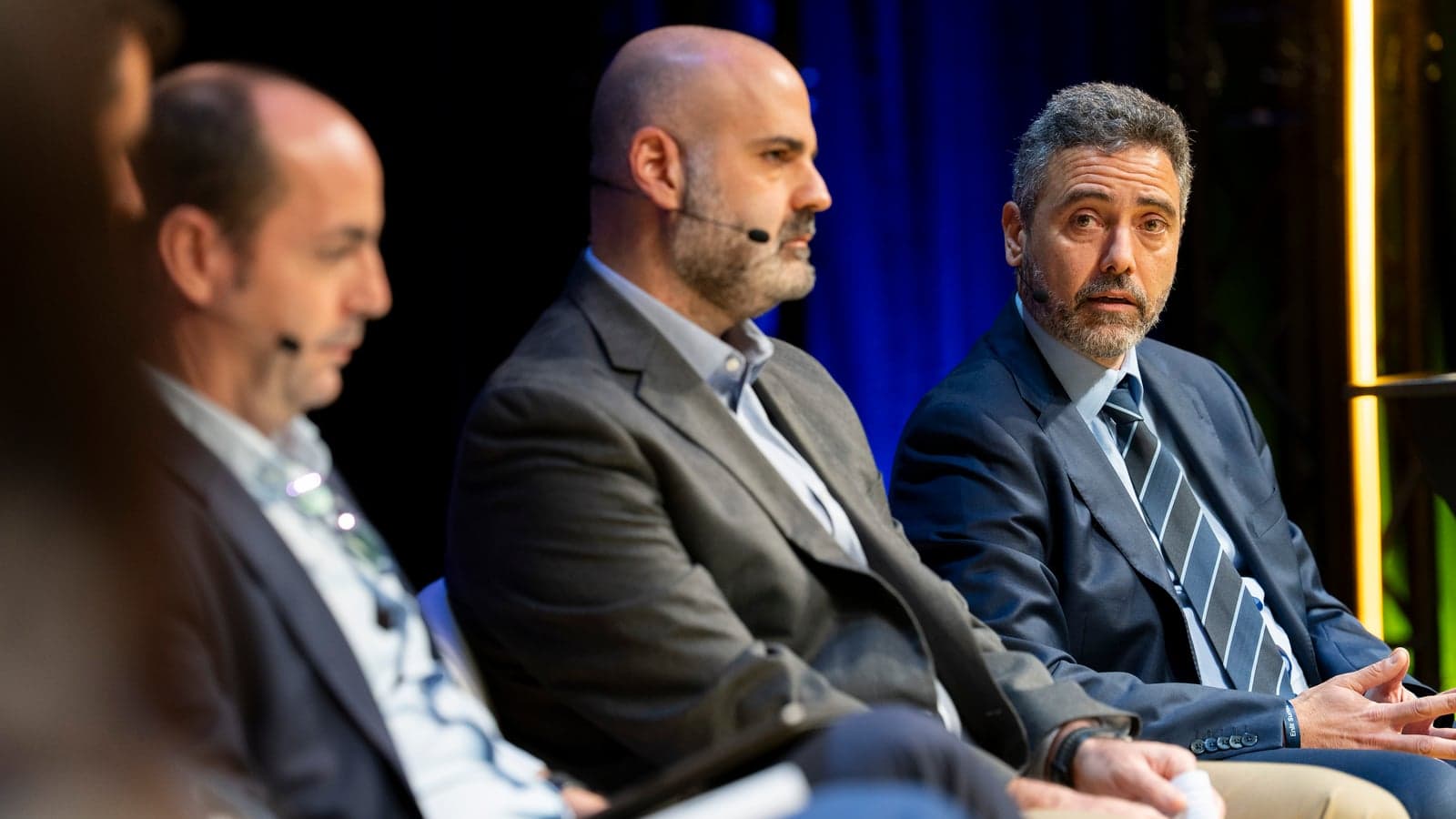
At Enlit Europe, panelists made it clear that, if the EU wants to be competitive industrially, it must accelerate the modernisation and digitalisation of its energy system.
This, they argued, boils down to improving the efficiency of grid operations, bringing in more real-time data and increasing the adoption of digital tools, namely AI.
For Stavros Stamatoukos of the European Commission's DG Energy, it all comes back to the grid.
The legacy equipment doesn't help, so we need to upgrade the assets on the grid and on top of that, use AI.
The Policy Officer for Digitalisation and AI in energy said: “There are a lot of efficiency gains in how we manage, operate, plan, and maintain our grid that can only be leveraged with digitalisation,” acknowledging progress by operators while warning it is insufficient.
“Observability isn't low, but it's not where we would like it to be, and indeed, the grid operators are doing tremendous efforts to digitalise the grids, but it's too little and too late.”
He highlighted the structural limitations of existing infrastructure: “The legacy equipment doesn't help, so we need to upgrade the assets on the grid and on top of that, use AI.”
Indeed, AI can become central to system monitoring, predictive maintenance, and balancing — a shift that would allow operators to respond more dynamically to demand swings, integrate renewables more efficiently, and reduce operational costs.
Stamatoukos also emphasised that the focus should extend beyond transmission and distribution systems.
“It's not just the grids. We should look at the demand centres as well,” he said, noting that Europe already has significant strengths on the industrial side. “Very importantly, the International Energy Agency highlights that Europe is the front runner worldwide in industrial automation.”
According to the IEA in its April 2025 report, Energy and AI, European companies do indeed hold more than half of the global market share for industrial automation solutions.
Stamatoukos argued that Europe should build on this advantage by scaling domestic companies — whether small, medium, or large — into global markets.
He also noted the potential of digital tools on the consumer side. “This [advantage] is very important, but also on the consumer side, on buildings, we see tremendous potential there for end consumers leveraging digital energy tools to cut down their bills.
“This is very important to see energy poverty in some part of Europe decreasing. This is something that we need to address. And we believe that digitalisation and AI are levers for that.”
The need for more real-time data
Antonis Papanikolaou, Que Technologies Strategy Lead, agreed with Stamatoukos on the importance of digitalisation and highlighted the persistent lack of data transparency in the system.
There's not much information about what's going on in the grid, apart from your long-term perspectives, 10-year planning and so on, which doesn't give you the real-time insights you need…
"Stavros just gave a very nice view from this, in the sense that we need more data from the systems. From a technology perspective, from the demand side, we'd also like to have more transparency on what's happening to the grid.
“There's not much information about what's going on in the grid, apart from your long-term perspectives, 10-year planning and so on, which doesn't give you the real-time insights you need to be able to support the grid, when and how it's actually needed.”
Although Papanikolau’s words ring true for a sector that is relatively slow in picking up new technologies, he also clarified that this is a “horizontal blunt picture” with the situation and uptake specific to each Member State.
“Some have much more advanced infrastructure. Some are behind,” he said.
But for companies looking to develop tools to support the grid, he says, the central challenge is consistent: “we need information about what's going on at the edge.”
Papanikolau warned that the scale of upcoming grid investment only makes this issue more pressing.
“All these costs will be socialised, and we need to work together sooner,” he said.
Rather than waiting for system operators to modernise networks in isolation, he suggested early coordination could help demand-side solutions support the system and reduce the need for overbuilt infrastructure.
“We can perhaps start planning together about how more active the demand side could potentially support and take that into account during this journey of modernising infrastructure.”
More from Enlit Europe:
Grids face new energy trilemma of security, resilience and adaptation
Is grid edge failing to deliver on its promise?
Addressing the million-dollar AI question for the energy workforce
Digitalising electrified demand
Echoing demand as a central theme was Mikel Amundarain Leibar, General Manager of the Basque Energy Agency (EVE).
When asked about the next step for the Basque region, specifically, to prioritise, it is clear he says: the electrification of demand, key to which is an analysis and understanding of how the power sector has changed.
“Some decades ago, the system consisted of a very big power plant, a very big transmission system, then the DSOs and then the consumers.
“But now the system has changed a lot, and now [there are] other elements, digitalisation, etc, to manage the new situation. But the planning has to be [done] in another way, because now we have prosumers, very small power plants… electrical vehicles, charge points with different capacity, etc.
“This change has introduced new complexity,” he explained, underscoring the need for a different planning approach for both transmission and distribution networks.
“We have to digitalise, we have to use different instruments, like artificial intelligence… We have to do the planning another way [both for] the transmission system and the distribution system.”
Doing so “in a good way”, emphasised Leibar, will be key.
“That is a very key point: to get a good electricity system that can help us in the decarbonisation; to do that in a good way, we then ensure the security, the probability and the development of the industry.”