Denmark’s first hydrogen pipeline gets go ahead
Jonathan Spencer Jones
Posted on: 3 September 2025
Denmark’s Minister for Climate, Energy and Utilities Lars Aagaard has approved investment in the Jutland hydrogen pipeline subject to hydrogen players making binding agreements to guarantee its use.
Denmark’s Minister for Climate, Energy and Utilities Lars Aagaard has approved investment in the Jutland hydrogen pipeline subject to hydrogen players making binding agreements to guarantee its use.
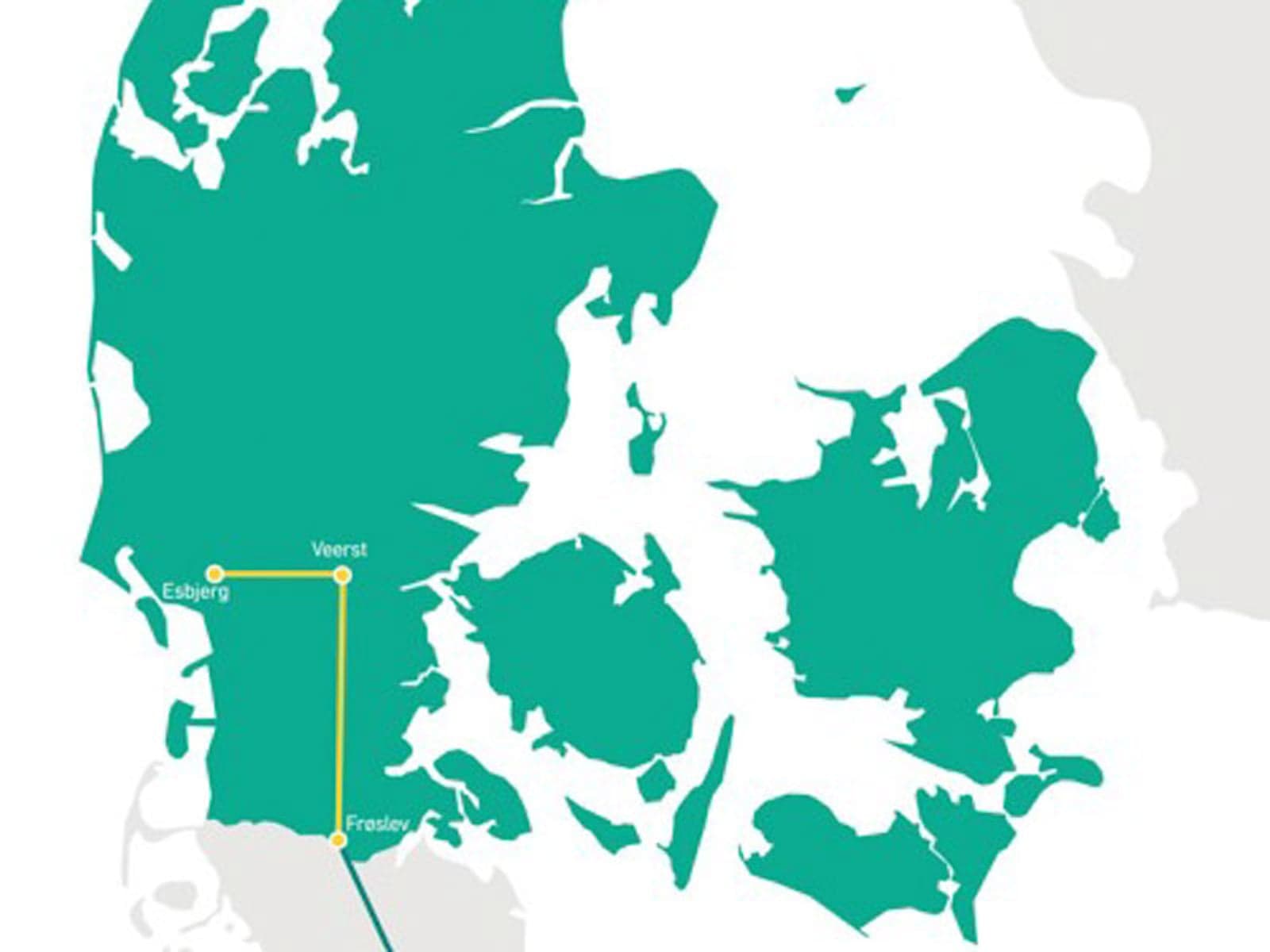
The approval is for the plan from the Danish TSO Energinet to build a new pipeline running from the Esbjerg area, where several hydrogen projects are under development, via Veerst by Vejen to Frøslev on the Danish-German border.
The approval comes in the wake of a February cross party parliamentary agreement to provide a loan of DKK7.4 billion ($1.2 billion) and operating subsidy of up to DKK8.3 billion ($1.3 billion) for the establishment of the pipeline, subject to producers committing to a minimum transport of 0.5GW from 2030 for export to Germany.
"This is an important and crucial milestone. The political agreement on a Danish hydrogen system has set 2030 as a target for when the hydrogen pipeline must be ready, and therefore we have a very tight schedule,” said Michael Linnemann Pedersen, area manager for hydrogen development in Energinet.
Have you read?
Air Liquide takes final investment decision on Dutch hydrogen project
HYDREAMS – is hydrogen the answer to decarbonise Europe’s steel industry?
“It is important that all approvals and regulatory processes come on an ongoing basis and do not drag on. Therefore, it is very gratifying that we now have the minister's approval."
Energinet’s plan envisages 45km of new underground pipes from near Esbjerg to Veerst near Vejen and 88km of repurposed gas piping from Veerst to Frøslev for the 133km pipeline, named ‘the number 7’ due to its shape on a map.
The total construction cost is estimated at DKK6.9 billion (in 2025 prices), while the socio-economic gain is estimated at DKK6.4 billion over the next 30 years.
The prerequisite for Energinet to implement the project is that hydrogen players book capacity in the pipeline in a future capacity sale potentially in 2026.
The Danish Utility Regulator also must at a later date approve the pricing of the gas pipeline that is to be transferred from Energinet Gastransmission to Energinet Hydrogen.
In addition, the German gas TSO Gasunie Deutschland needs to build a hydrogen pipeline up to the Danish border and the two TSOs anticipate an agreement, expected to be concluded in 2028, for the mutual construction of the pipelines to enable the export of the hydrogen to Germany.