EasyDC-FOS: Towards more efficient and sustainable HVDC transmission
Guest/partner contributor
Posted on: 10 November 2025
EasyDC-FOS addresses Europe’s urgent need for efficient and resilient electricity transmission by developing HVDC cables operating above 525kV.
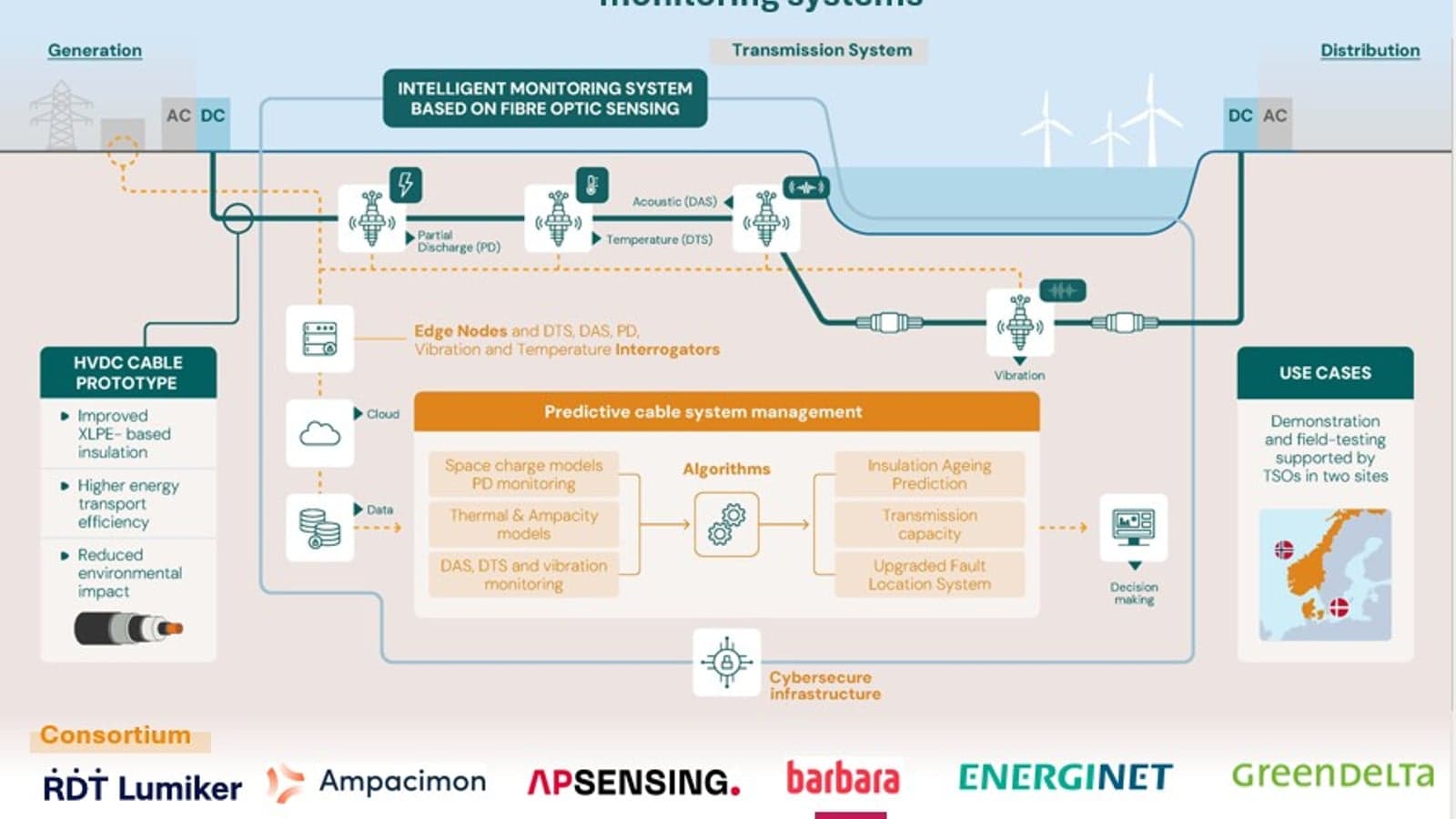
The EasyDC-FOS project emerges in a global geopolitical context marked by increasing uncertainty and volatility in energy supply, where reducing external dependence has become a strategic priority for Europe. By developing a new generation of high voltage direct current (HVDC) cabling technologies, EasyDC-FOS aims to reinforce the industrial capabilities of EU member states and consolidate the smart grids value chain, thereby positioning Europe at the forefront of large-scale power transmission.
The project also plays a central role in supporting the EU’s ambitious renewable energy targets under the European Green Deal. Since 2021, the European Commission has advanced an implementation plan for HVDC cabling as part of its climate neutrality strategy, recognising the need to upgrade electricity grids and enable the large-scale integration of renewable energy sources. In this context, EasyDC-FOS will serve as a key pillar for strengthening Europe’s energy infrastructure and enhancing its capacity to meet future demand securely, efficiently and sustainably.
EasyDC-FOS will contribute to this objective by developing a new generation of HVDC >525kV cable systems with optimised energy transport capability and reduced environmental impact, paired with fibre optic-based intelligent tools for ageing monitoring and efficient fault detection hosted in a cybersecure digital environment.
Main technological developments
The project will deliver and validate a full-scale HVDC cable prototype designed to operate at a minimum of 400kV and 90ºC, with reduced energy losses enabled by advanced insulating materials. Testing will be conducted to characterise material behaviour and extrapolate performance up to at least 640kV, paving the way for future deployment at higher voltages. The prototype will not only increase energy transmission efficiency but also incorporate design features aimed at minimising environmental impact.
A dedicated testing campaign will ensure that the cable meets the highest standards of performance, robustness and safety, guaranteeing its suitability for integration into Europe’s electricity grids.
In parallel, a life cycle sustainability assessment (LCSA) will evaluate the environmental, social and economic performance of the novel cable system compared to conventional alternatives. This assessment will provide input for optimising design and manufacturing choices, while also contributing to the development of a regulatory framework defining indicators, thresholds and eco-design criteria.
In this way, EasyDC-FOS ensures that innovation in HVDC technology is accompanied by sustainability, reducing the system’s footprint across its entire lifecycle.
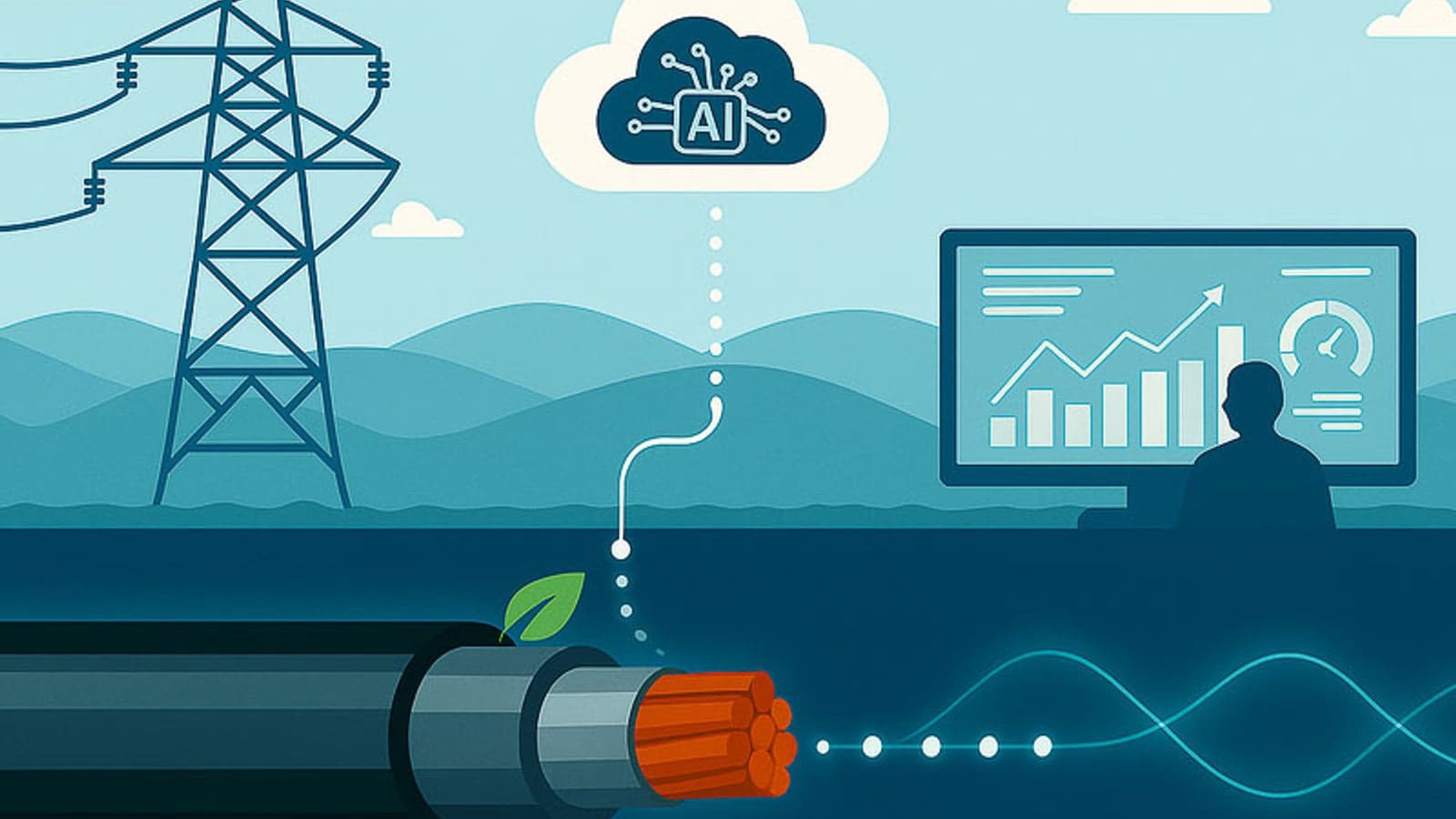
Fibre optic sensing technologies are central to EasyDC-FOS, enabling real-time and distributed monitoring of HVDC cable systems. The project is developing and validating innovative sensors for temperature, vibration, and partial discharge detection, designed to provide accurate and long-range monitoring under real operating conditions.
- Distributed temperature sensing measures the temperature profile along the entire length of the cable. By detecting hot spots and abnormal thermal patterns, it provides valuable information on thermal ageing and overheating risks under real operating conditions.
- Distributed acoustic sensing enables the detection of external mechanical disturbances, impacts, or unusual vibrations that may affect cable integrity.
- Point-based optical vibration sensors are being developed to monitor specific locations that are especially exposed to mechanical stress. Their architecture ensures high sensitivity and reliable detection even under varying environmental conditions.
- The partial discharge analyser collects and interprets signals from optical PD sensors installed along the cable. By detecting high-frequency electrical activity that precedes insulation failure it enables early identification of insulation degradation.
The comprehensive data collected by these advanced monitoring systems form the foundation for predictive modelling and algorithm development in EasyDC-FOS. Physics-based models are used to simulate key ageing and performance phenomena in HVDC cables, such as space charge accumulation within insulation materials and the thermal behaviour of cables and connectors under variable operating conditions. These models provide a scientific basis for prediction, validation and optimisation of cable design and operation.
Complementing these models, data-driven algorithms are being designed to support real-time decision-making. They include lifetime estimation tools that calculate the remaining health of the cable, real-time thermal rating algorithms that dynamically determine the maximum current the cable can safely carry, and fault location techniques that use acoustic and vibration data to accurately identify failure points.
By integrating fibre optic sensing with advanced models and predictive algorithms, EasyDC-FOS will enable reliable condition assessment, early fault detection and optimised operation of next-generation HVDC cable systems.
These technological innovations will be integrated into a distributed edge infrastructure that will significantly strengthen the cybersecurity of the entire monitoring system, ensuring robust protection and a fast and efficient response to potential threats or vulnerabilities.
The project outcomes will be demonstrated and validated with support from TSOs at two sites in Norway and Denmark in 2027. The performance of the new HVDC cables and monitoring technologies will be assessed under real operating conditions, thus laying the groundwork for future large-scale deployment in the EU.
A multidisciplinary European consortium
EasyDC-FOS is coordinated by RDT-Lumiker, a leading developer of passive photonic sensor technology, fibre optics and monitoring solutions.
The consortium is composed of a multidisciplinary team of 13 partners from four European countries: Nexans (leading HVDC cable manufacturer), Ampacimon (network monitoring solutions), AP Sensing (developer and manufacturer of distributed fibre optic sensing products), Energinet (Danish electricity and natural gas TSO), Statnett (Norwegian grid operator), Barbara (Edge computing platform for distributed and cybersecure device management), RDT Ingenieros (thermal and fluid dynamic simulation), GreenDelta (sustainability consultancy and software development), University of Cantabria (thermal modelling through finite element analysis and predictive maintenance of electrical assets), University of Valladolid (monitoring tools), Zabala (innovation consultants) and the BASQUENERGY Cluster (communication, dissemination and exploitation).
Follow EasyDC-FOS on LinkedIn.
This article has been prepared with contributions from all partners of the EasyDC-FOS project and coordinated by the BASQUENERGY Cluster, as leader of the project’s communication and dissemination activities.
Most popular
Join the community for freeAnd get access to all content
Related projects
EasyDC-FOS
1 September 2024 - 31 August 2027
View project