Energy crisis is resilience catalyst: Schneider’s Godemel
Guest/partner contributor
Posted on: 24 March 2026
What if we viewed the current volatility in the energy market as a springboard for change, asks Frédéric Godemel of Schneider Electric.

It is no secret that the world of energy has become increasingly volatile. Geopolitics and more frequent and more powerful extreme weather events, are just two contributors to rising and fluctuating energy prices.
At the same time, electrification across industry and homes has increased demand. Add power hungry artificial intelligence into the mix and demand threatens to outpace supply. Annual electricity demand growth over the next five years is forecast to be 50% higher on average than the previous decade.
The convergence of electricity demand increase, structural stain on existing energy system and grid modernization is the proof that we are entering an electricity supercycle.
As with any supercycle, there can be winners as well as losers. Higher prices, ongoing energy instability and an increased cost of living are set to become long-term issues that will challenge countries’ and companies’ ambitions for growth.
With decisive grid modernization, the electricity supercycle unlocks stalled clean energy investment.
This sustained disruption could provide the stimulus needed to re-build our energy systems quicker, for long term stability.
So how to use the electricity supercycle as a catalyst for energy security? Countries and companies must move on three priorities.
Grid modernization
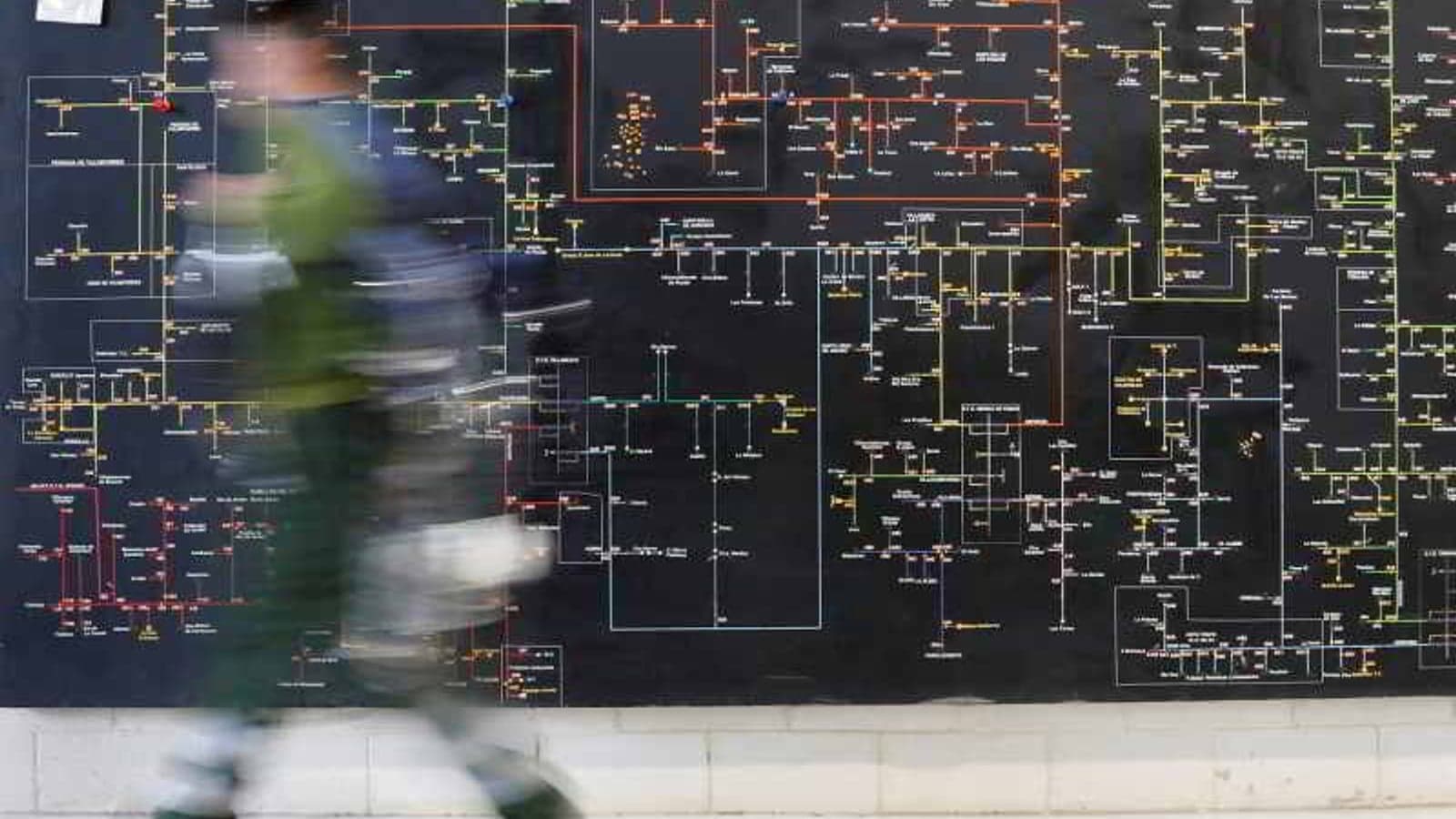
The electricity supercycle is exposing a simple truth: the grid is a limiting factor in global energy security. Around the world, transmission and interconnection systems that were designed for a slower, more centralized energy era are struggling to accommodate today’s rapid growth in renewables, electrification, and AI‑driven demand.
Whilst building a new wind or solar farm isn’t a quick fix, globally, there are an estimated 2,500 GW of queued projects. Between 1,200 to 1,600 GW could be unlocked with grid connections reform, deployment of digital grid-enhancement technologies and quicker grid expansion.
Grid modernization could be prioritized as follows:
- AI powered technologies, smart sensors, automation and grid‑edge intelligence allow operators to manage the energy congestion in real time, shift power flows, and increase usable capacity without building additional infrastructure.
- Cleaning the queue could reduce connection wait times by 60-70% as seen in the UK. Moving from the traditional ‘first come first served’ approach to ‘first ready first connected’ is already proving to be effective in some markets. It is eradicating the problem of ‘zombie projects’, speculative applications with no viable funding and prioritizing projects that are waiting to start supplying power to the grid. Longer-term, securing a strong pipeline of new renewable projects will be necessary to continue to feed economic growth, as our world becomes ever more electric.
- New high‑voltage lines are needed to bring remote renewable resources - offshore wind, desert solar, high‑quality wind basins - into urban and industrial centers. The IEA estimates that to meet national climate and security goals, over 80 million km of grid infrastructure must be added or refurbished by 2040 - equivalent to today’s entire global grid.
With decisive grid modernization, the electricity supercycle unlocks stalled clean energy investment, supporting AI‑driven growth, and securing more abundant, affordable power for decades to come.
Accelerate investment
As demand outpaces supply, countries and businesses that can move quickly to service that demand will have an advantage.
Increasing owned power generation and reducing reliance on volatile imports offers the greatest potential to permanently minimize the impact of externalities. For the majority of countries, that means using more renewable energy sources.
This is already happening with renewables overtaking coal, with solar reaching record deployments and renewables plus nuclear expected to provide 50% of the world’s electricity by 2030 - up from around 42% today.
The EU currently spends approximately €380 billion a year on imported energy. Replacing this with renewable sources could save up to €250 billion a year by 2040. It could also reduce the impact of fluctuating energy costs hitting the pockets of business and homeowners. In Europe last year, during peak gas hours prices were an average of 11% higher in 2025 than 2024, during hours where more clean power was used, prices only rose by 3%.
I believe the electricity supercycle combined with increased energy flexibility will be a catalyst for energy resilience.
Countries such as India are investing heavily in renewables and are already becoming more agile, reactive and future-proofed in terms of their economic growth as a result. India’s electrification rate currently sits at 20%, growing by 5% each decade.
To power this demand, solar plus storage costs almost half as much as new coal plants. If other countries follow this path, not only would emissions drastically reduce, but they would solidify, as India has seen, their competitive advantage in the global electro-tech market.
But the benefits of new clean energy projects cannot be realized without rapid upgrades to grid capacity and digital infrastructure.
Creating a flexible system
Traditionally, a shortfall of energy supply has been addressed by increasing the amount of energy produced and grid capacity to meet demand at peak times. However, simply adding more energy into the system is not the most efficient way to address the challenge.
The answer is a more flexible energy system. Energy efficiency in the way we use it is important but so is balancing the energy load in grid systems by shifting energy use during times of high renewable generation and reducing demand during evening peaks. Battery energy storage system (BESS) provides one of the key levers for reliable energy supply.
Storing excess energy reduces curtailment and enables more autonomy for governments, companies and homeowners over their energy use – particularly when combined with solar panels and microgrids. Large-scale battery deployment in the EU has already doubled from 2023 levels to exceed 10 GW in 2025, with similar success in Australia and California.
Combined with digitalization, battery storage enables operators and end-users alike to smooth the peaks and troughs in supply and demand as well as tackle price volatility delivering more intelligent, and resilient, energy distribution.
This digital orchestration transforms the grid from a rigid "pipe" into a dynamic network where autonomous microgrids and grid-edge intelligence can balance supply and demand at the millisecond level.
I believe the electricity supercycle combined with increased energy flexibility will be a catalyst for energy resilience. One that will deliver a smarter energy future. By harnessing the energy technologies available today we can unlock new efficiencies, deliver reliable energy and build resilient, competitive markets.
Frédéric Godemel is EVP of Energy Management at Schneider Electric.