Energy innovation funding going through transition says IEA
Yusuf Latief
Posted on: 18 February 2026
Despite a trillion dollar global market, public energy spending and VC investment for energy tech start-ups are starting to decline.
Public energy R&D spending and venture capital investment in energy tech start-ups both fell in 2025, marking a transitional phase for energy innovation funding, says the IEA in a new report.
According to the International Energy Agency in their latest State of Energy Innovation report, the current global markets for energy technologies such as batteries, transformers, turbines, motors and heat exchangers are worth trillions of dollars.
Spending on energy represents as much as 10% of global GDP and the energy sector is innovation-intensive: one in ten patents is related to energy – more than for chemicals, pharmaceuticals or transport.
However, when it comes to public spending and venture capital flowing into energy innovation, the story becomes one of slowing growth.
According to the report, public energy R&D spending in 2025 was estimated at $55 billion globally, down 2% from the previous year.
Venture capital (VC) investment in energy technology start-ups fell for the third consecutive year, to $27 billion in 2025.
According to the report, higher interest rates, macroeconomic uncertainty and strong competition from AI ventures have weighed on energy capital flows. The share of global VC funding directed to AI specifically rose to almost 30% in 2025, while energy’s share declined.
However, the report also notes new growth areas that are emerging.
Funding for fusion, nuclear fission, critical minerals, geothermal, carbon dioxide removal and low-emissions industry has expanded sharply since 2021, the report notes, offsetting much of the decline in electric mobility investment.
Public energy spending
Public spending on R&D is essential to energy innovation, says the IEA, funding projects that the private sector is unable or hesitant to support.
It also guides researchers towards scientific and technical challenges that are relevant to delivering policy priorities. In general, whether early-stage R&D or larger-scale demonstration projects, public funds target the projects with the highest-risk, most long-term payoffs. This makes governments central to the emergence of disruptive technologies that create new sectors of activity and drive faster economic growth.
According to the report, however, annual government spending on energy R&D globally has now faltered after seven years of sustained growth, in which spending rose on average by 10% per year.
The IEA cites two main reasons for the current pause in the public R&D growth trend.
The first is a dip in annual spending on energy R&D from the EU budget, following steady growth up to a peak in 2023. This peak relates primarily to the way that funds worth $9 billion were awarded to demonstration projects under the EU Innovation Fund in 2023 and allocated retrospectively to that year once the final commitment was signed. The same process may push up the 2024 and 2025 values in the future.
The second reason is a reduction in 2025 of federal energy R&D funding in the United States. This too might be a temporary effect, with reallocation of some funds to new innovation priorities.
With energy security and industrial competitiveness at the top of the agenda, countries that sustain investment in research, demonstration and early deployment will be best positioned to lead the next generation of energy technologies.
The technology allocation of public energy R&D spending by IEA Member countries has also evolved. In 2024, energy efficiency received more funding than other individual technology areas, at almost 30%.
More spending is now directed to electricity grids than in any previous period, reflecting the increasing technical need to strengthen grids and make them more resilient. The share of nuclear has declined steadily since the 1970s, from 60% to 20%, but this decline has stabilised.
Venture capital investments
According to the report, total VC funding for energy-related start-ups in 2025 fell for the third year in a row, with a decline of 10% to $27 billion placing activity at its lowest level since 2020.
One major contributing factor is that most VC capital is deployed in search of high returns rather than being strategically committed to a particular type of product or impact.
As such, says the IEA, at a time when interest rates were low, and other types of investments were not performing especially well, enthusiasm about policies in support of energy transitions helped money to flow to VC in general, and to energy technologies in particular from 2018. When interest rates rose in 2023 and reduced the attractiveness of VC compared to other investments, total VC fell again.
Then, when expectations of outsize returns from AI start-ups grew rapidly, a larger share of available VC capital went towards AI.
By region and technology
The US remains the primary source and destination for energy VC.
In 2025, more than 50% of energy-related VC funding was raised by US-based startups.
The largest single deal in 2025 was for $1 billion and raised by Base Power, a US start-up founded in 2023. However, adds the report, Europe has been closing the gap to the US and, together, Europe-based start-ups raised the next highest share of VC, at 25%.
The largest deal involving a European start-up was for France-based Neot, at almost $400 million.
On China, the report says their annual share is highly dependent on the number of very large individual deals, and has been as high as 27% in recent years. However, in 2025 China accounted for less than 10%, the lowest point since 2014.
Most funds are invested in start-ups from the same regions – for example, Chinese start-ups are almost exclusively funded by Chinese funds – but there are some cross-border flows. Much of the funding for energy start-ups in emerging market and developing economies comes from Europe, the US and advanced economies in the Asia Pacific region.
In recent years, the report explains, start-ups working on batteries, vehicles or charging technologies for electric mobility have represented a large share of energy VC fundraising.
However, VC for these areas is now waning as the sector matures and becomes less reliant on VC, while other technologies are starting to rise.
Most VC funding for US energy start-ups in 2025 was for nuclear fission (especially for small modular reactors) and fusion energy. In China and India, VC funding remains highly concentrated in road transport technologies. In Europe, funding in 2025 was more diversified, with hydrogen and energy efficiency occupying a larger share, and electricity grid start-ups also raising a significant share of the total funds.
Additionally, some technology areas exhibit more geographic concentration than others: start- ups working on geothermal, nuclear fission and fusion energy are much more likely to be in the US, while mobility, energy networks and storage and heat pumps are more evenly spread globally in terms of both start-up location and source of funds.
More on energy sector financing:
What do falling renewable PPA prices signal about Europe’s energy transition?
Siemens Energy boasts record gas turbine orders to power demand boom
EU allocates €650 million for cross-border energy infrastructure
Maintaining public support
Against a backdrop of shifting policy priorities and tighter financial conditions, the report stresses that sustained and well-targeted public support remains critical.
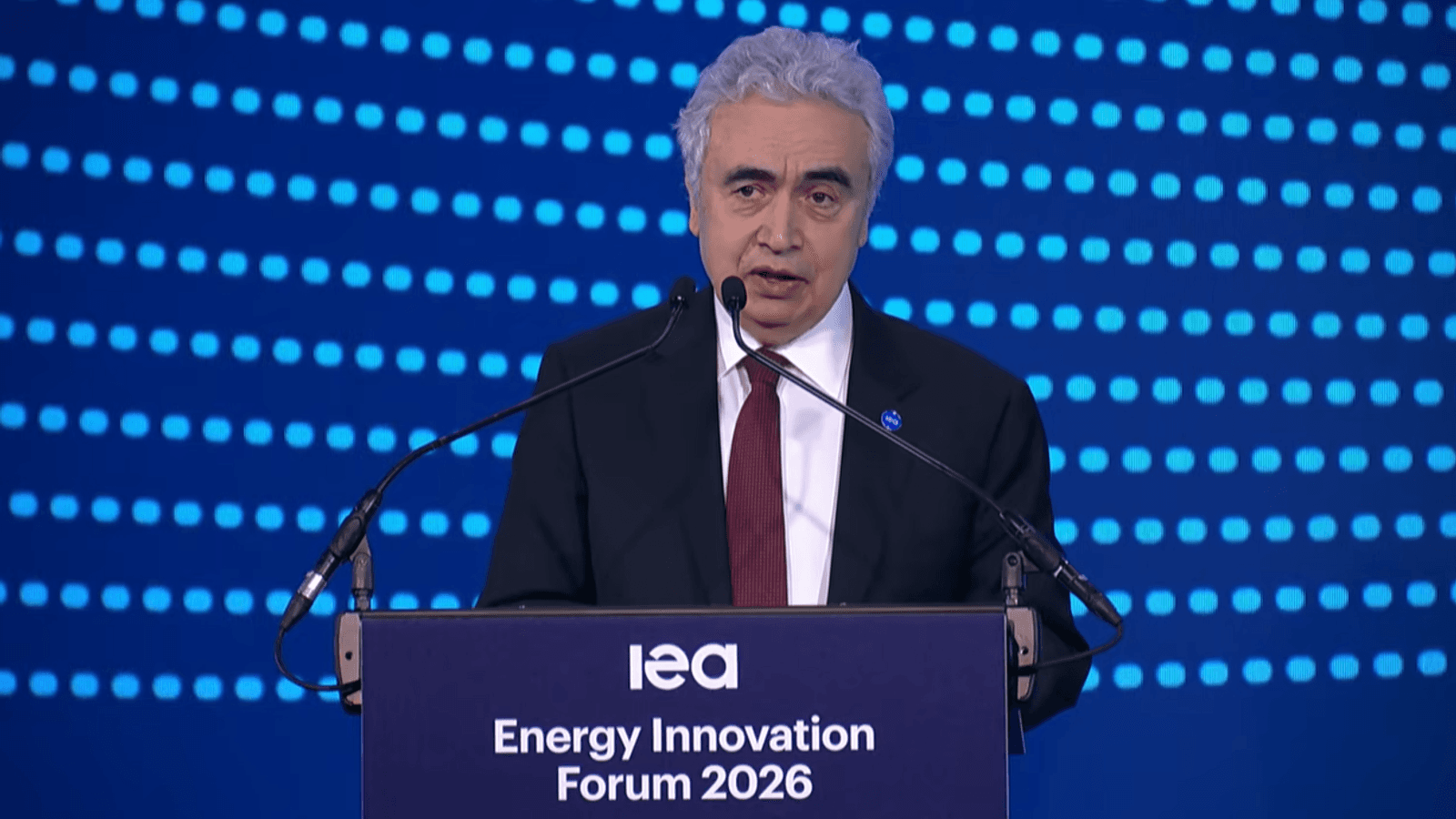
Commenting in a release was IEA Executive Director Fatih Birol: “Energy innovation has become a strategic priority for governments around the world.
“With energy security and industrial competitiveness at the top of the agenda, countries that sustain investment in research, demonstration and early deployment will be best positioned to lead the next generation of energy technologies.”
The IEA adds that aligning energy innovation strategies with broader competitiveness and resilience goals will be essential, particularly where technologies can strengthen domestic supply chains or reduce strategic dependencies.
Ensuring access to funding across all stages of development – especially as private capital becomes more selective – and reinforcing partnerships across research, industry and finance will be key to maintaining momentum.
Additionally, says the report, while priorities may shift, the case for sustained and strategic support for energy innovation remains strong. With energy innovation becoming increasingly foundational to modern economies, evidence shows it can deliver transformative economic and security benefits over decades.
Related tags
Latest content
+3
EU Energy Projects Podcast: How the 2Cool2Waste cluster is turning waste heat into an opportunity
In this episode of the EU Energy Projects Podcast, I had the pleasure of welcoming Mohaddeseh Maktabifard and José Luis Corrales Ciganda, both representing the inspiring 2Cool2Waste cluster; an initiative uniting EU-funded projects that transform waste heat from an overlooked by-product into a practical, clean-energy resource.
- Areti Ntaradimou
- 03/12/2025