Energy transition: From ambition to delivery
Guest/partner contributor
Posted on: 29 April 2026
There is a need for a shared and collaborative approach to energy transition, but this requires collective transition architecture, data sharing and leadership changes, argues Michael Mahon of EY

Europe has made significant progress in decarbonising its economy over the past two decades, with overall emissions falling by about 35%. This has been driven primarily by a nearly two-thirds reduction in the carbon intensity of the electricity sector.
Yet progress has been uneven across the wider economy: emissions from heat and heavy industry have declined only modestly, while transport has remained broadly flat despite strong incentives and rapid advances in technology. Globally, only around 10% of the global deployment required for net zero by 2050 has been achieved, mostly in less challenging use cases
The next phase of the energy transition will be harder as it will engage players and industries looking to integrate their own decarbonisation initiatives within broader system-wide strategies. As the Enlit Survey makes clear, many organisations claim confidence in their resilience, but far fewer feel confident in the broader European energy system with Enlit noting: “Europe’s energy system is a huge system of systems. The larger and more complex the system, the less resilient it becomes. As transition plans overlap and the interdependencies multiply, the collective vulnerabilities grow. The greatest risk to our energy systems lies not within organisations but in the connections between them.
These dynamics point to the need for enhanced coordination, transparency and broader thinking to ensure that Europe’s energy transformation is not only achieved but is inclusive and delivers a robust system able to withstand geopolitical, cybersecurity, weather, and economic shocks.
Energy transition: the coordination deficit
Despite significant advances, Europe’s energy system still suffers from fragmented planning, policy silos and misaligned incentives. Industry participants all compete for grid and gas connections and pursue their own transition plans, often without alignment to broader strategic objectives. This collection of unilateral action risks creating a brittle system where success in one area compromises the efforts of another.
The urgency remains, but the pathways to meet Paris Agreement targets are now more complex and must be grounded in economic and geopolitical realities. Amid rising disruption, energy transition progress remains uneven, necessitating adaptive strategies, targeted investment, and redefined energy security. The WEF’s 2025 Energy Transition Index shows a modest recovery driven by improved access and rising clean energy adoption, yet progress on long-term enablers such as infrastructure, regulation, and investment has slowed, exposing persistent vulnerabilities in system resilience and the capacity for future scaling.
Frameworks for better national and international coordination and transparency are not optional. They are foundational. Decisions across different sectors must reinforce rather than undermine each other, enabling a shift from pockets of success to a complete and ultimately more equitable transformation. To successfully deliver against this ambition, it is critical to create conditions where all energy needs can be met with less compromise and broader inclusivity across the value chain.
Recommendations
Growing cross-country consortia, conferences, and studies through bodies like Enlit reflect the growing consensus on the need for a shared and collaborative transition.
EY propose three focus areas to advance this agenda: a collective transition architecture, leveraging shared data and technology applications, and a shift in leadership & culture.
1. Collective transition architecture
A clear understanding of the existing architectures that support our energy system is critical. This includes not only the processes, rules, markets and platforms, but how they sit across government, regulators, industry, grid operators, prosumers, and bordering stakeholders. A holistic view enables better development of end-to-end systems, the co-design of early-stage transition plans and provides enhanced visibility for individual entities beyond their immediate line of business.
The connection queue crisis illustrates the cost of architectural fragmentation at scale. Renewable power projects totalling approximately 1,700 GW across 16 European countries were stuck in connection queues in 2024. The existing “first-come, first-served” model is no longer fit for purpose, and the European Commission’s December 2025 EU Grids Package proposes a decisive shift to a “first ready, first served” access regime, with connection rights increasingly linked to demonstrable project maturity, including permitting progress and financial readiness. This is a meaningful step, but the underlying logic must extend further: from administrative reform to genuine architectural co-design.
The data centre question exemplifies the potential of this kind of joint-up thinking. While they may put strain on the grid, they also create opportunities: their hunger for energy has created positive tailwinds for solar plus storage and clean firm power, and well-capitalised technology firms may be able to pay premiums for lower carbon electricity. A new data centre could be seen as a constraining connection from one perspective or a flexibility provider and anchor customer for renewable investment from another.
The data centre question exemplifies the potential of this kind of joint-up thinking. While they may put strain on the grid, they also create opportunities...
Currently, the onus of identifying such opportunities too often lies with a single connection applicant, who lacks a system-wide view. A collective transition architecture changes that calculus by creating joint thinking and an alignment of goals to catch edge cases before they become systemic risks.
2. Leveraging shared data and technology needs
New technology and the intelligent use of data are critical enablers of the transformation ahead. Three areas will deliver the most impact: collaboration on technology adoption and delivery, shared data hubs, and the implementation of standards and protocols.
Modern, flexible digital power grids improve interconnections and ensure infrastructure can support current reliability and future scalability, while optimising the returns available for invested capital. Europe has seen significant rollouts of smart metering, a well-known major step forward in digitising the energy system. The next objective must be to fully leverage this investment: to standardise functionality and delivery, and to extend the same logic to software capabilities, including forecasting, modelling, and optimisation that support energy operations at various levels.
System flexibility is not merely desirable; it is becoming structurally essential. The increasing integration of variable renewable energy sources in the EU electricity system necessitates flexibility sources such as dispatchable generation, storage, and demand response to maintain supply-demand balance, and enhanced coordination between transmission and distribution levels is needed. With rapid solar PV and wind expansion, curtailment of these resources is becoming more common and visible in several markets: persistent or widespread curtailment highlights gaps in planning, flexibility, or infrastructure. Reducing curtailment requires a comprehensive strategy involving transmission, distribution, and coordinated system planning.
Shared data hubs, smart meter access legislation and portals, and the publication of grid study results all reduce the risk of system vulnerability arising from assumptions and miscalculations in dependent processes. The more data is accessible and anonymised appropriately, the less brittle the system becomes.
Finally, multiple standards and conventions have emerged within the sector to allow for interoperability between systems, examples include protocols for asset control and telemetry, grid modelling, IoT and cybersecurity. This standardisation drives wider adoption, improves data sharing and reduces system vulnerability at the interface of a highly interconnected system. Vendors, data owners, and regulatory bodies should continue to push for directives that broaden standardisation of data formats, transfers, and reporting.
3. Leadership & culture
The energy transition represents a profound shift not just in terms of logistics and capital, but in the level of trust, collective attitude, professional culture, and shared priorities required to deliver it. In an increasingly volatile world, resilience and adaptability will determine success.
Amid state-armed conflict, extreme weather events, and geoeconomic confrontation - highlighted as top global risks in the WEF’s Global Risks Report 2025 - energy security and industrial competitiveness have become central national priorities. Indeed, the Iranian conflict represents a paradigm shift for the global power industry, transforming geopolitical risk from a theoretical concern to an immediate operational reality.
sustainability has not disappeared from the boardroom agenda but has become more tightly linked to resilience, cost exposure, and security of supply rather than stand‑alone ESG positioning
Countries are increasingly focused on securing and localising clean energy supply chains, safeguarding critical resources, and harnessing a resilient energy transition as a strategic advantage in the face of compounding geopolitical and trade-related challenges. Governments have responded with fiscal support for consumers and businesses, while capital has increasingly been redirected toward defence and security priorities.
Against this backdrop, sustainability has not disappeared from the boardroom agenda but has become more tightly linked to resilience, cost exposure, and security of supply rather than stand‑alone ESG positioning.
This reframing is, in many ways, an opportunity: it broadens the coalition of leaders who have a stake in transition success beyond those with purely climate-motivated mandates. Energy affordability, reliability (including energy security), and emission reduction form a trio of priorities that drive energy decision-making and without affordability and bankability, widespread adoption of new low-carbon technologies will not happen.
Bold and determined leadership will be needed to balance objectives, uphold accountability and deliver on a large, ambitious undertaking – and ultimately navigate tumultuous times with confidence. Europe has demonstrated this capability in the past, and this latest challenge is no exception.
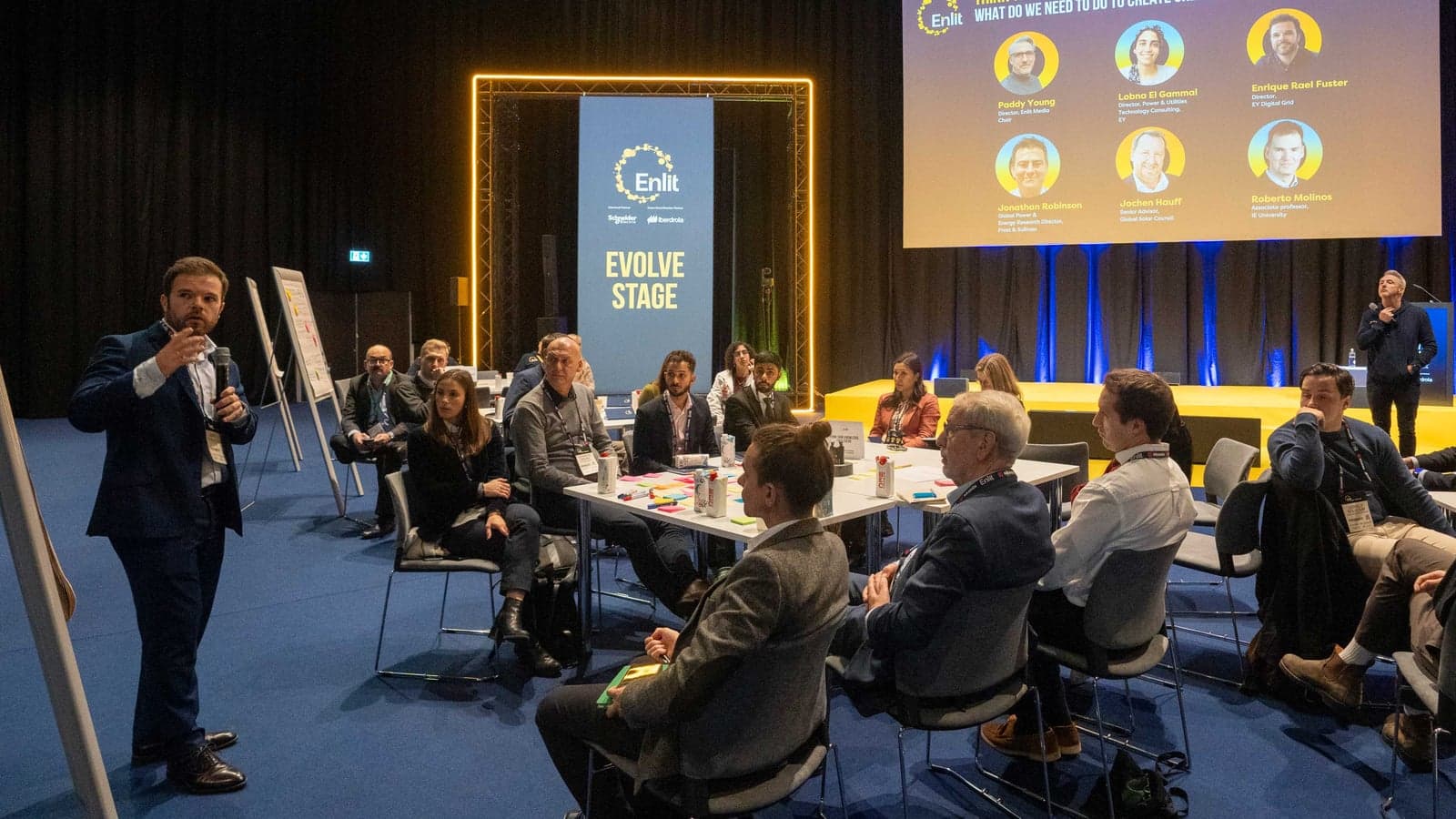
EY supported the Think Tank workshop about resilience at Enlit Europe 2025 as a knowledge facilitator. In Enlit’s 2026 industry report, titled Pathways to resilience: From risk to readiness in energy systems, EY shares more insights on utilities’ response to major events.
Michael Mahon is the Senior Manager for Technology Consulting for Energy Transition at EY.