EU Commission funds net-zero projects and hydrogen production with €4.6bn
Yusuf Latief
Posted on: 4 December 2024
The EU Commission has earmarked €4.6 billion to boost net-zero technologies, EV battery manufacturing and renewable hydrogen production.
In this first week of its new mandate, the European Commission has earmarked €4.6 billion ($4.8 billion) in funds to boost net-zero technologies, EV battery cell manufacturing and renewable hydrogen under the Innovation Fund.
The Commission is launching two new calls for proposals with a budget of €3.4 billion ($3.6 billion) to accelerate the deployment of decarbonisation tech in Europe, including electric vehicle batteries.
It is also launching the second auction of the European Hydrogen Bank to accelerate the production of renewable hydrogen in the European Economic Area (EEA) with a budget of €1.2 billion ($1.3 billion) from EU funds, plus over €700 million ($734.4 million) from three Member States.
Both calls for proposals and the auction are financed by the Innovation Fund, using revenues from the EU Emissions Trading System (ETS).
Boosting net-zero technologies
Under net-zero technologies, a general call is made with €2.4 billion ($2.5 billion) for decarbonistion projects of different scales, as well as projects focusing on component manufacturing for renewable energy, energy storage, heat pumps and hydrogen production.
Projects that apply to this Net-Zero Technologies Call will be assessed based on their potential to reduce greenhouse gas emissions, degree of innovation, project maturity, replicability, and cost efficiency.
For the first time under the Innovation Fund call for proposals, Member States will also have the possibility to complement with national funding schemes, called ‘Grants-as-a-Service'.
Battery manufacturing
The remaining €1 billion ($1.1 billion) of the tech call for proposal will be allocated towards EV battery cell manufacturing, supporting projects that can produce innovative EV battery cells or deploy innovative manufacturing techniques, processes and technologies.
The Commission in a release says that multiple instruments are needed to overcome some of the economic barriers that the battery value chain in Europe, including its gigafactories, has been facing.
Indeed, the call for proposals comes at a turbulent time for the sector, with Norhvolt’s bankruptcy last month signalling troubling waters for the continent’s EV battery supply chains.
In addition to the €1 billion, the Commission and the European Investment Bank (EIB) simultaneously initiated a new partnership to support investments in the EU's battery manufacturing sector.
This partnership will see a €200 million ($209.8 million) top-up (loan guarantee) to the InvestEU programme from the Innovation Fund.
The money will be directed to support innovative projects along the European battery manufacturing value chain to address financing challenges by enabling additional EIB venture debt operations over the next three years.
Also of interest:
Dan Jørgensen takes up role as Europe’s new commissioner for energy
Eurelectric chief: Four ‘I’s for the incoming EU European Commission
Hydrogen production
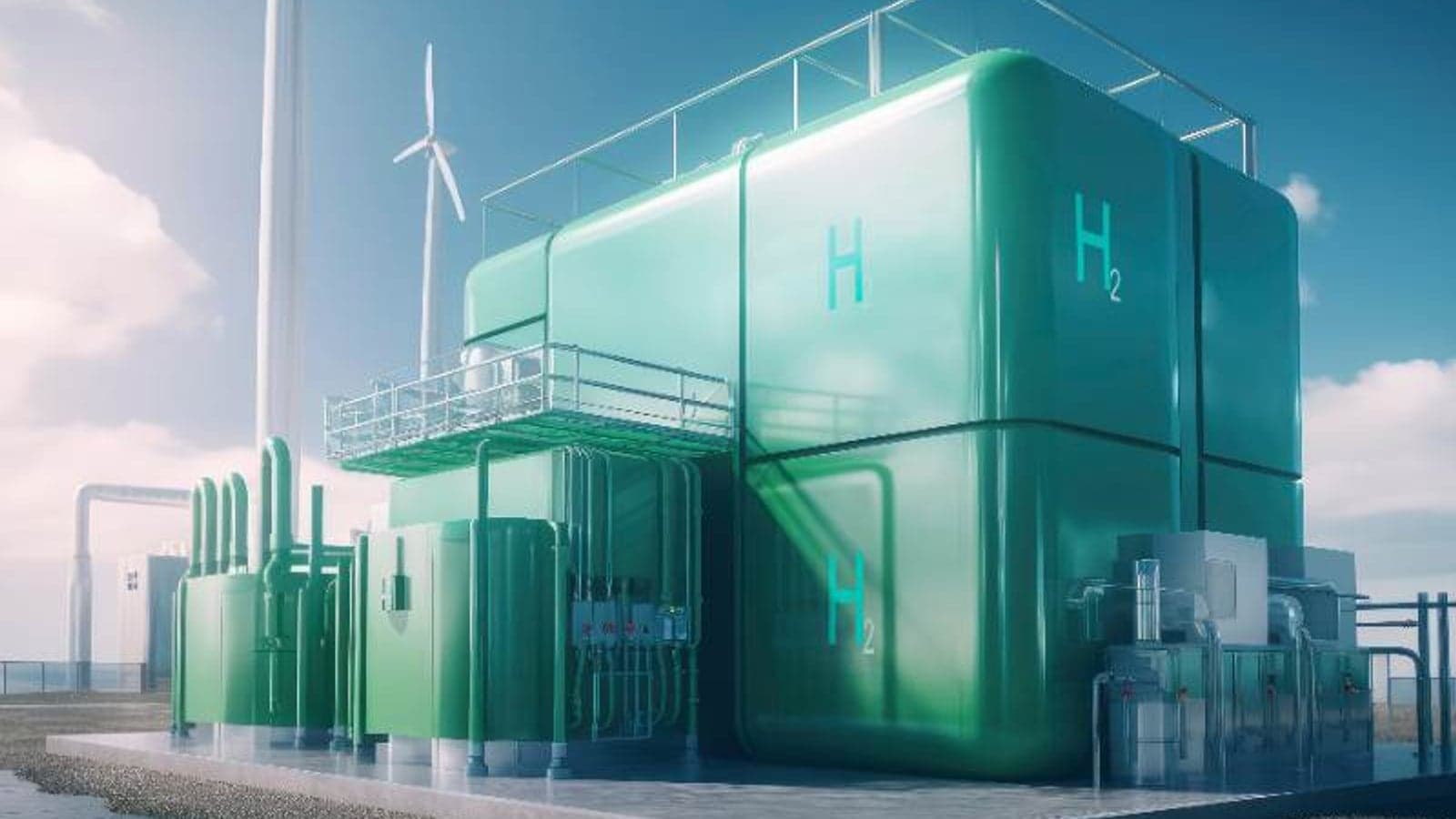
In the realm of renewable hydrogen production, the Commission’s second auction under the European Hydrogen Bank will allocate €1.2 billion ($1.3 billion).
The funds will be allocated from EU Emissions Trading System (ETS) revenues to support producers of hydrogen categorised as Renewable Fuel of Non-Biological Origin (RFNBO), located in the European Economic Area (EEA).
The funds will have an increased budget by €400 million ($419.7 million) compared to the first auction.
A dedicated budget of €1 billion will support projects for renewable hydrogen production regardless of the sector in which it will be consumed. The remaining budget of €200 million will support hydrogen production in projects with off-takers in the maritime sector.
The Commission is also offering an ‘Auctions-as-a-service' mechanism, which allows Member States to finance projects that had bid in the auction but were not selected for Innovation Fund support due to budgetary limitations.
This enables Member States to use national funds to support projects on their territory without the need to run a separate auction at national level, reducing the administrative burden and cost for all parties.
Commenting in a release was Teresa Ribera, Executive Vice-President for Clean, Just and Competitive Transition:
"By investing more than €4.5 billion in clean technologies at the very beginning of the mandate, the Commission is showing its commitment to deliver on its decarbonisation objectives, and to support European industries’ competitiveness in key strategic sectors.
"The new resilience criteria for hydrogen and batteries will boost Europe’s industrial leadership and competitiveness while enhancing the EU’s strategic autonomy.
Added Wopke Hoekstra, Commissioner for Climate, Net Zero and Clean Growth: "As promised, we’re already delivering for European citizens and businesses.
"We are investing €4.6 billion to back cutting-edge European projects in net-zero technologies, electric vehicles batteries and renewable hydrogen. Under the Innovation Fund, we’re putting revenues from the Emission Trading System to work, once again."
Project promoters for the net-zero technologies and battery calls have until 24 April 2025 to apply. Regarding the renewable hydrogen auction, bidders have until 20 February 2025 to apply.
All applications will be through the EU Funding and Tenders Portal.
Related tags
Latest content
+4
The cost of keeping warm: Delivering a just clean heat and cooling transition for European citizens
How the Emissions Trading System 2 (ETS2) raises funds for member states to invest in modernising their energy systems, offering a lifeline to millions of European citizens struggling to pay their energy bills, is explained by Delia Villagrasa, director the Cool Heating Coalition, and Beatriz Yordi, Director Carbon Markets and Clean Mobility, DG CLIMA, European Commission.
- Guest/partner contributor
- 15/07/2025