Home
/
The cost of keeping warm: Delivering a just clean heat and cooling transition for European citizens
The cost of keeping warm: Delivering a just clean heat and cooling transition for European citizens
Guest/partner contributor
Posted on: 15 July 2025
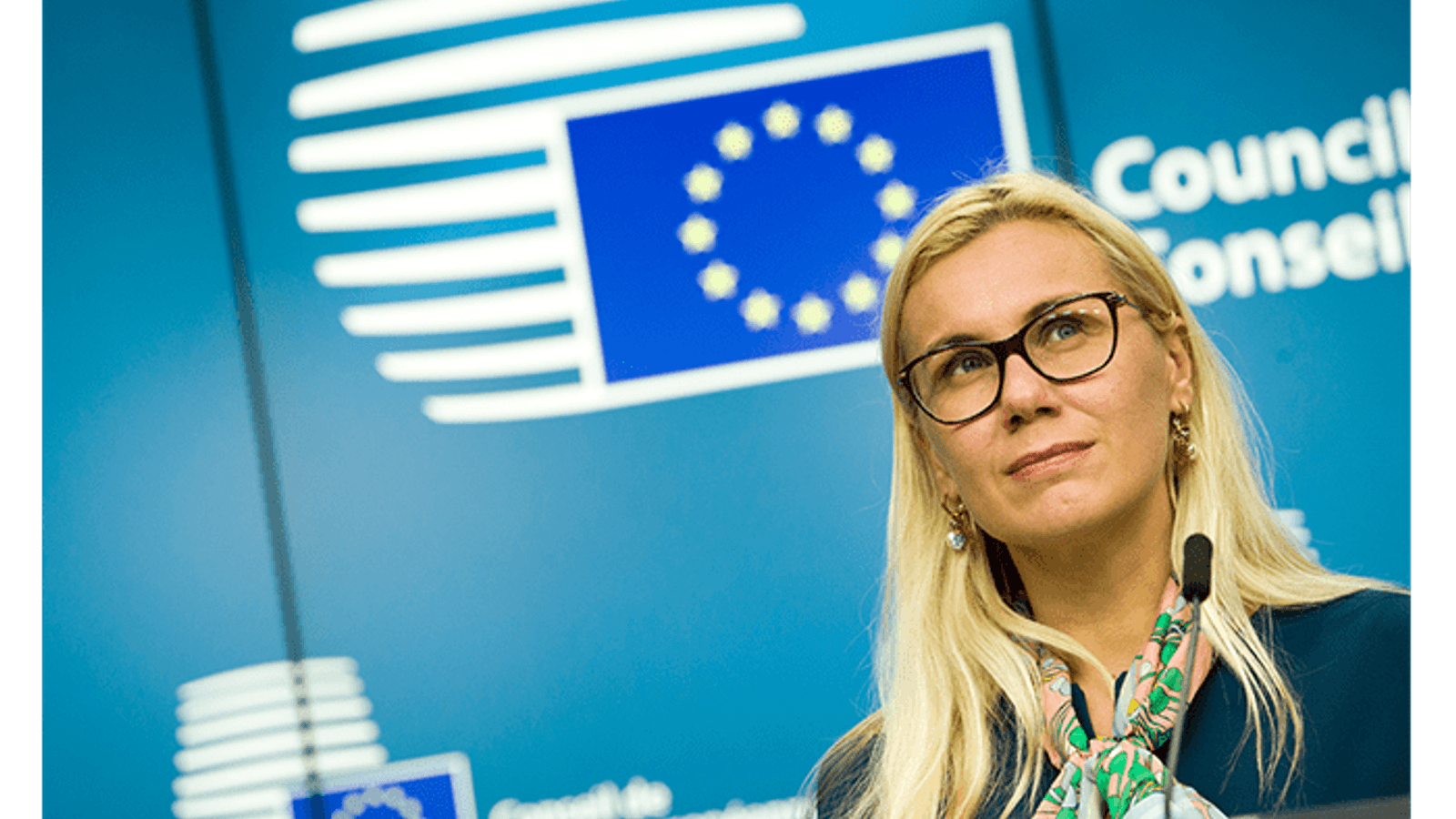
How the Emissions Trading System 2 (ETS2) raises funds for member states to invest in modernising their energy systems, offering a lifeline to millions of European citizens struggling to pay their energy bills, is explained by Delia Villagrasa, director the Cool Heating Coalition, and Beatriz Yordi, Director Carbon Markets and Clean Mobility, DG CLIMA, European Commission.
How the Emissions Trading System 2 (ETS2) raises funds for member states to invest in modernising their energy systems, offering a lifeline to millions of European citizens struggling to pay their energy bills, is explained by Delia Villagrasa, director of the Cool Heating Coalition, and Beatriz Yordi, Director Carbon Markets and Clean Mobility, DG CLIMA, European Commission.
Millions of people already struggle to pay energy bills in Europe. ETS2, which will be launched in 2027 and will put a price on carbon emissions from buildings and transport, risks deepening the energy poverty problem.
However, a significant share of ETS2 revenue will be directed to energy efficiency upgrades and clean heating solutions. Through the Social Climate Fund, vulnerable groups will also receive access to these benefits. With clean heat at its heart, the fund could mark a pivotal step in the EU’s journey to net zero, tackle energy poverty, slash emissions and finance a fair, fossil-free future.
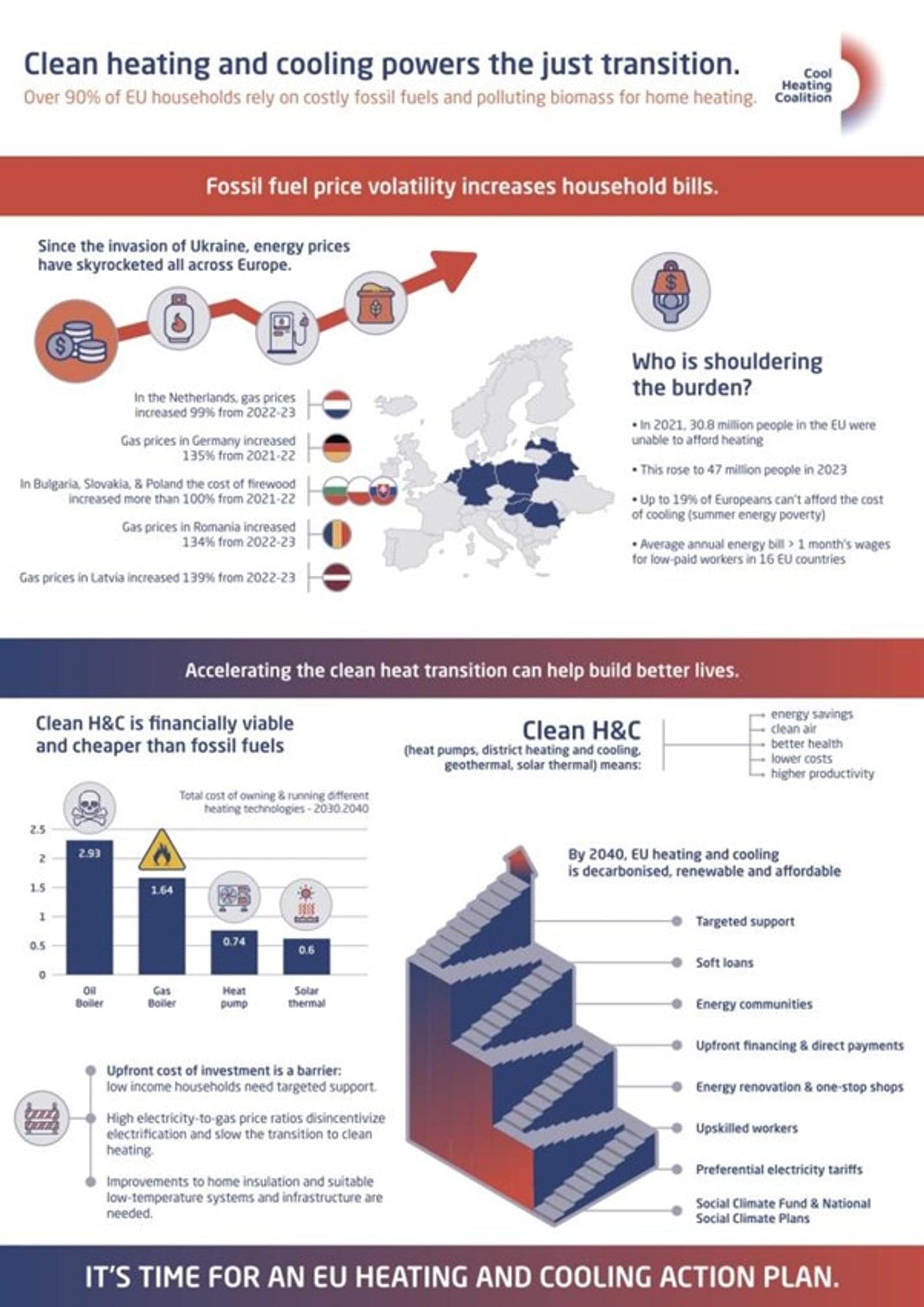
In 2023, 47 million Europeans were unable to afford heating their homes. Europe’s largely inefficient building stock relies heavily on fossil fuels for thermal comfort, subjecting citizens to volatile energy prices.
Amidst high energy bills and other increases in the cost of living, it has never been more important to get the pricing right on fossil fuels.
Clean heat is the key to energy independence
Following the onset of the energy crisis in 2021, gas prices experienced significant volatility, peaking on the Dutch TTF at more than 10 times current gas prices (€340/MWh in late 2022 vs €32/MWh today).
As Russia continued to wage war against Ukraine, citizens have had to shoulder the burden of fossil fuel import costs to the tune of €427 billion in 2024.
As long as Europe remains dependent on fossil fuels, citizens will continue to face soaring energy prices, whether through taxes which fund gas subsidies, or through their rising energy bills. The way forward is through independence from fossil fuels.
Decarbonising heating and cooling, which together account for around half (47%) of the EU’s energy consumption, is a major step towards energy independence. Over 73% of EU household heating comes from fossil fuels.
Households who are able and willing to invest in energy efficiency works and clean heat technologies face multiple barriers. Consumers across Europe are often not able to easily decarbonise their homes as they are battling high upfront costs and face a lack of skills and structural factors that make clean heating and cooling technologies more expensive to use, like a high electricity-to-gas price ratio and fiscalities. Markets are currently misaligned with our ambition for a fossil-free future, and need a clear policy steer towards decarbonisation.
Enabling Europe’s energy transformation
Starting in 2027, the ETS2 will put a price on carbon emissions from fossil fuel use within buildings. The policy incentivises the switch to efficient, low carbon solutions by increasing the costs for fossil fuels. The rollout of ETS2 could cause fossil fuels prices to rise, but it also provides funding opportunities for modern and clean heat technologies.
Instead of directing money from higher energy bills towards paying for Europe’s fossil fuel imports, ETS2 will raise money that member states can use to invest in modernising their energy systems. Member states will collectively raise approximately €270 billion before 2032, generating an unprecedented amount of funds for investment in energy efficiency improvements, renewables and bill assistance.
While pricing out the fossil fuel status quo, which has long been upheld by subsidies, ETS2 will ensure a stream of investments that can transform our energy systems.
Fairness and fossil-free futures
For many consumers, well-designed programmes and investments will mean they have the freedom to choose cleaner modern technologies. However, low income households will likely have more difficulties absorbing the higher costs of fossil fuel use. Though responsible for the lowest amount of emissions, the poorest households are likely to feel the deepest effects of the rise in costs.
To shelter the vulnerable from rising prices, revenues from ETS2 will also provide at least €86.7 billion towards the Social Climate Fund (SCF). This instrument ensures that the distribution of revenues remains fair by earmarking a sizeable amount for direct support of those most in need.
The five countries that will receive the largest amounts from the SCF pot will be Poland, France, Italy, Spain and Romania. Relative to the number of vulnerable households, Greece, Bulgaria, Slovakia and Romania will receive the most resources to provide assistance to those with the lowest income.
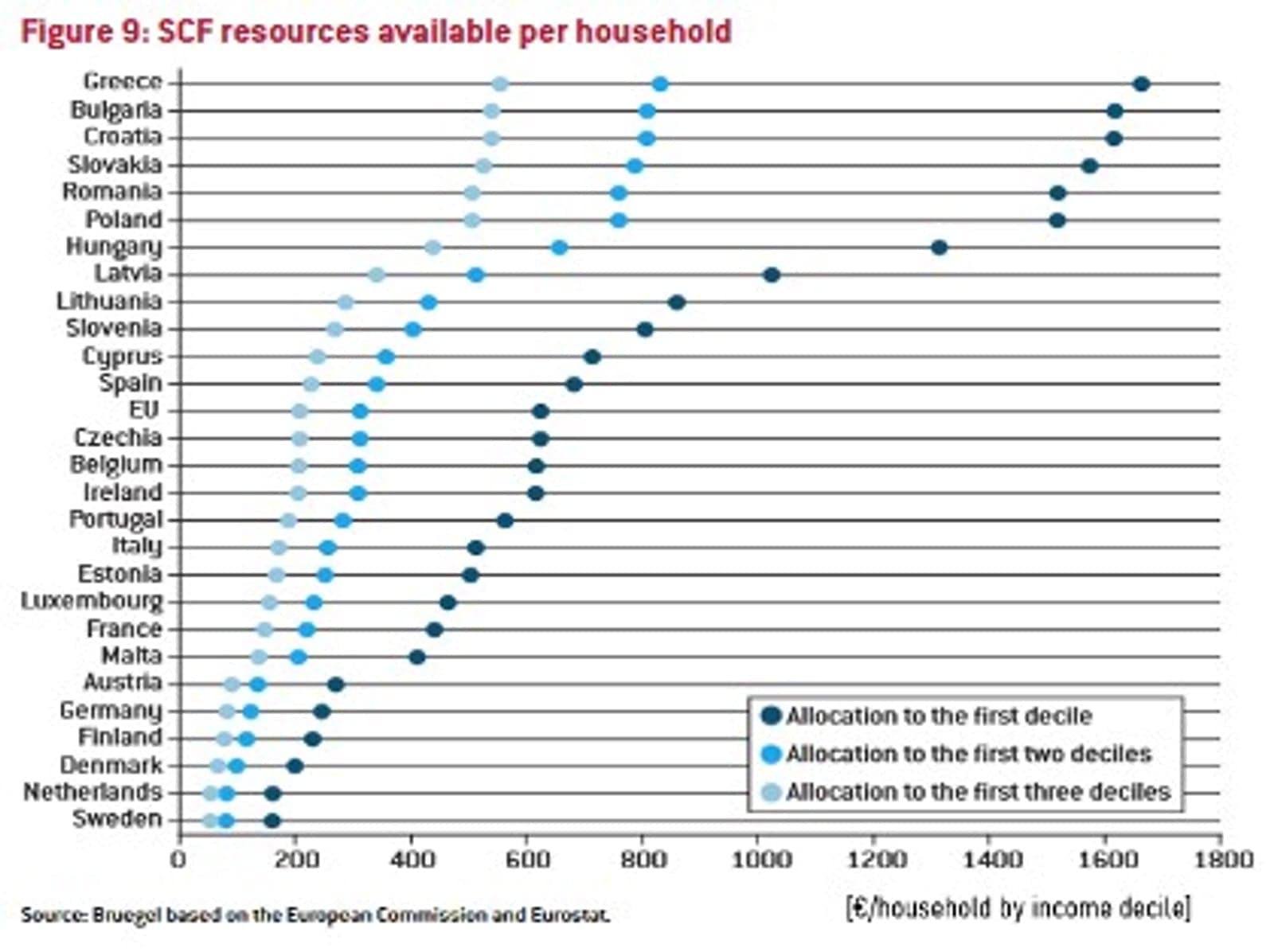
For instance, a quarter of the Romanian population experienced some form of energy poverty in 2021. Romania is also one of the member states with the highest percentage of households struggling with unpaid utility bills. The country stands to receive approximately €6 billion to enact its social climate plan, supporting low income and vulnerable households and SMEs to make green investments.
Beyond a new pricing system, ETS2 is a signal for the buildings and heating markets to decarbonise, a way of raising the capital needed to invest in renewables and energy efficiency, and an opportunity to foster solidarity between member states and in society.
Pricing fossil fuel use aligns global financial flows with our vision of the future: one where energy independence, warm homes and thriving citizens are the norm.
Recommended links
- Clean heating and cooling powers the just transition infographic
- 10 principles for a new strategic action plan on heating and cooling
- Fahrenheit 2040: heating and cooling in the EU
- For insights into Romania’s plans to allocate the SCF, view the online EUSEW 2025 session.
About the authors

Delia Villagrasa is the director of the Cool Heating Coalition, a group of NGOs and think tanks working together for decarbonised, renewable and affordable heating and cooling in the EU. A trained economist by background, she is a Brussels-based expert on European and international environmental policy focused on climate and energy.

Beatriz Yordi is Director in DG Climate Action at the European Commission, responsible for the EU Emissions Trading System and international cooperation on carbon markets. She has been a pillar for the design, conception and implementation of the Fit-for-55 package and also spearheaded negotiations on the creation of a Social Climate Fund.
This opinion editorial is produced in co-operation with the European Sustainable Energy Week (EUSEW) 2025. See ec.europa.eu/eusew for more details. The opinions expressed are those of the author(s) only and should not be considered as representative of the European Commission’s official position.