Fighting for scraps: the challenges of the green steel transition
Guest/partner contributor
Posted on: 12 November 2025
Decarbonising the steel industry requires overcoming fragmented, uneven innovation because of geopolitics and supply chain issues, writes Shinichiro Nakamura.
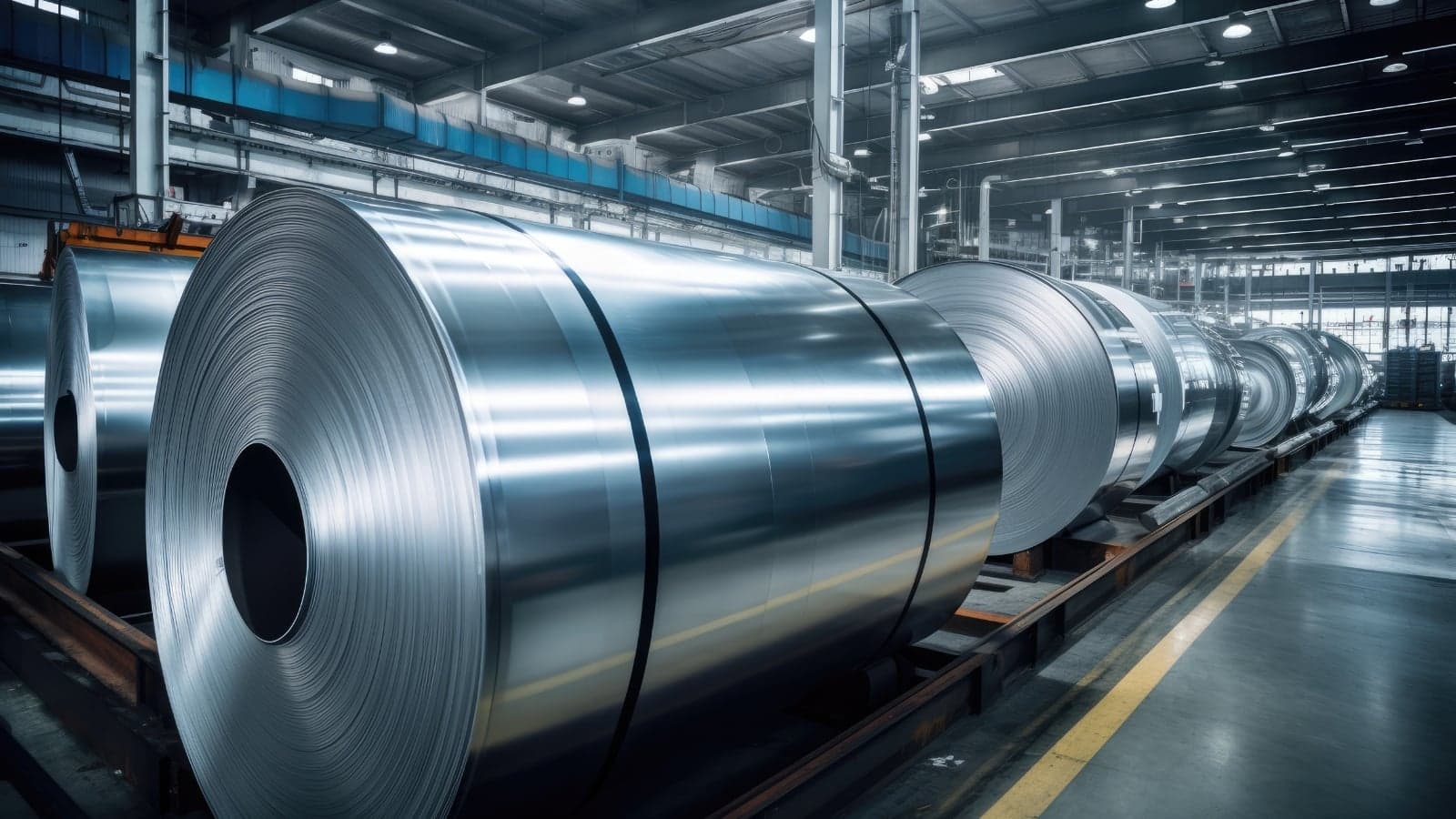
It’s no secret that the world’s steel industry is under increasing pressure to decarbonise. Steel accounts for 7% of global GHG emissions and the steel industry is racing against the clock to tackle this: by 2030, yearly emissions need to be halved.
The World Economic Forum estimates that 85-90% of steel from manufacturing processing waste, infrastructure, equipment, end-of-life buildings, products and vehicles is recovered as steel scrap for producing new steel.
However, here’s the challenge: demand is fast outpacing supply. Sourcing enough scrap steel to meet both sustainability and manufacturing demands may not be feasible.
Material and manufacturing shortages, geographical hurdles, supply chain woes and technological limitations are acting as major constraints on realizing a feasible green steel future.
Importantly, AI and cross-collaboration between industry stakeholders could be at the crux of addressing these constraints.
Global scrap shortage
The recyclability of steel has long been celebrated. In fact, steel is one of the most recyclable materials in the world, but making that a reality is another, far more complex, story.
Scrap steel can only be procured from end-of-life steel. This is where one massive hurdle arises: the average lifespan of steel is 40 years. As a result, the supply of available scrap steel is hugely limited.
According to Boston Consulting Group (BCG), demand is projected to grow by 3.3%, but supply only by 3.0%. While manufacturers and producers are racing against a ticking clock to meet sustainability goals, they’re also constrained by huge wait times for scrap to be available.
Coordinated green hydrogen partnerships from an R&D perspective could be key to solving the scrap steel and decarbonisation puzzle.
There’s also a geographical imbalance in scrap steel supplies. Countries like the US, China, Japan and regions like the EU have the largest amounts of scrap steel. However, not all of these global giants are exporting their scrap supplies to help other countries in need.
Additionally, in the race to decarbonise steel production, there’s an increasing reliance on electric arc furnaces, which are also heavily used for melting down scrap steel: but that’s putting an added strain on scrap steel supply.
Moreover, China’s massive problem of oversupplying steel has led its government to impose strict regulations on preserving scrap steel for domestic circularity and sustainability measures.
This ultimately creates the issue of adding to the burden but not sharing it. Worryingly, this is a far-from-ideal situation for fast-growing economies in Asia and Africa that have ballooning steel demand but a very limited supply of scrap steel.
Have you read?
Volkswagen's Crafter factory is now powered by the sun
Hydrogen delivers power and heat at commercial airport in UK first
Ironically, the US may find itself in a particularly vulnerable position, with the ongoing tariff debacle possibly meaning no new scrap steel imports to the country from the EU. This will undermine the sustainability efforts of the local steel industry and widen the gap between supply and demand of scrap steel.
Looking at the geopolitical angle, there’s regional fragmentation in certain parts of the world. The ASEAN member states are only just starting to take a more collaborative, rather than competitive and private, approach to steel.
In regions like Europe, many blast furnaces are nearing the end of their lifecycles, so they can look towards newer, greener technology. Asian countries tend to have younger fleets and more limited access to scrap steel, meaning switching gears is more of an uphill battle.
The situation is tumultuous at best and catastrophic at worst. The competition for scrap steel – and its continuing relative scarcity – could pose serious threats to disadvantaged countries and regions.
Quality assurance question
Even if scrap steel is readily available, there’s also the matter of ensuring that it’s of suitable quality for use in manufacturing.
For example, copper contamination is an ongoing barrier, and electric arc furnaces aren’t able to resolve this issue because they cannot ensure high enough temperatures for removing the copper from the iron.
This is proving a significant threat to sustainability initiatives that adopt EAFs for scrap manufacturing, since they produce only a third of GHG emissions.
For industry-specific uses, like the automotive industry and infrastructure needs, the requirements for precise chemical consistency are extremely strict. Scrap steel that may have mixed composites won’t meet these, causing more hurdles to using it in vertical use cases.
Grappling with green tech
Technology has a major role to play in addressing these challenges. It’s time to innovate how steel, including scrap steel, is manufactured, in a scalable and sustainable manner.
In hydrogen-based steelmaking, carbon is replaced with hydrogen, meaning a greener manufacturing process. However, hydrogen-based steelmaking is extremely costly. One EU report indicates that it could drive up the price of a tonne of steel by a third.
The industry also needs to rethink technology’s involvement with AI-driven solutions. The clock is ticking, and closer collaboration is key.
There are also infrastructure challenges to contend with. Hydrogen-based steelmaking requires a huge amount of renewable energy, and not every country is able to provide that. Renewable energy can be expensive as well, which will be off-putting to companies based in countries like China.
That’s not to mention that coal-powered electricity defeats all carbon-reduction efforts and puts manufacturers at risk of greenwashing. It’s a massive risk that organisations can’t ignore, especially in places like the EU, which has strict regulations around this.
A greener future
Collaboration and shared innovation are key to creating a more even playing field across the world and ensuring sustainability goals are met as soon as possible.
Battling these barriers alone won’t ensure solutions, and a unified front is a much stronger approach. Many of these issues are better addressed through an all-hands-on-deck strategy that hinges on close inter-regional and cross-industry collaboration.
It’s vital to acknowledge that different countries have different strengths to bring to the table. For example, the Japanese government is heavily investing in R&D in hydrogen-based steelmaking and refining. Germany is also making significant efforts towards similar areas of focus for truly greener steel production and output.
Knowledge sharing between industry pioneers and countries could be incremental to navigating barriers to a greener steel industry.
Knowledge is power, and communicating key findings in a collaborative approach could accelerate innovations for not just one country from an R&D perspective could be key to solving the scrap steel and decarbonisation puzzle.
Also of interest: Electrification sparks revolution in cement and steel industries
Next, countries and companies alike need to cast their nets wider in terms of technology. Transformation won’t just happen with more electric arc furnaces or new furnaces: technologies like AI have a role to play as well.
For example, computer vision and LLMs are powerful tools in monitoring ESG insights in real-time. Predictive analytics can empower steel producers to maximize carbon-reduction strategies and understand where their weaknesses lie, and address these accordingly.
Automated analytics can also empower manufacturers to align production schedules and projections with predicted scrap availability as part of material flow management. AI can therefore help create a more proactive rather than reactive response to scrap steel pressures.
Decarbonising the steel industry requires overcoming challenges like fragmented, uneven innovation because of geopolitics and supply chain issues.
The industry also needs to rethink technology’s involvement with AI-driven solutions. The clock is ticking, and closer collaboration is key.