Google acquires energy company to advance data centre development
Jonathan Spencer Jones
Posted on: 5 January 2026
Google company Alphabet has agreed to acquire data centre and energy infrastructure solution provider Intersect.
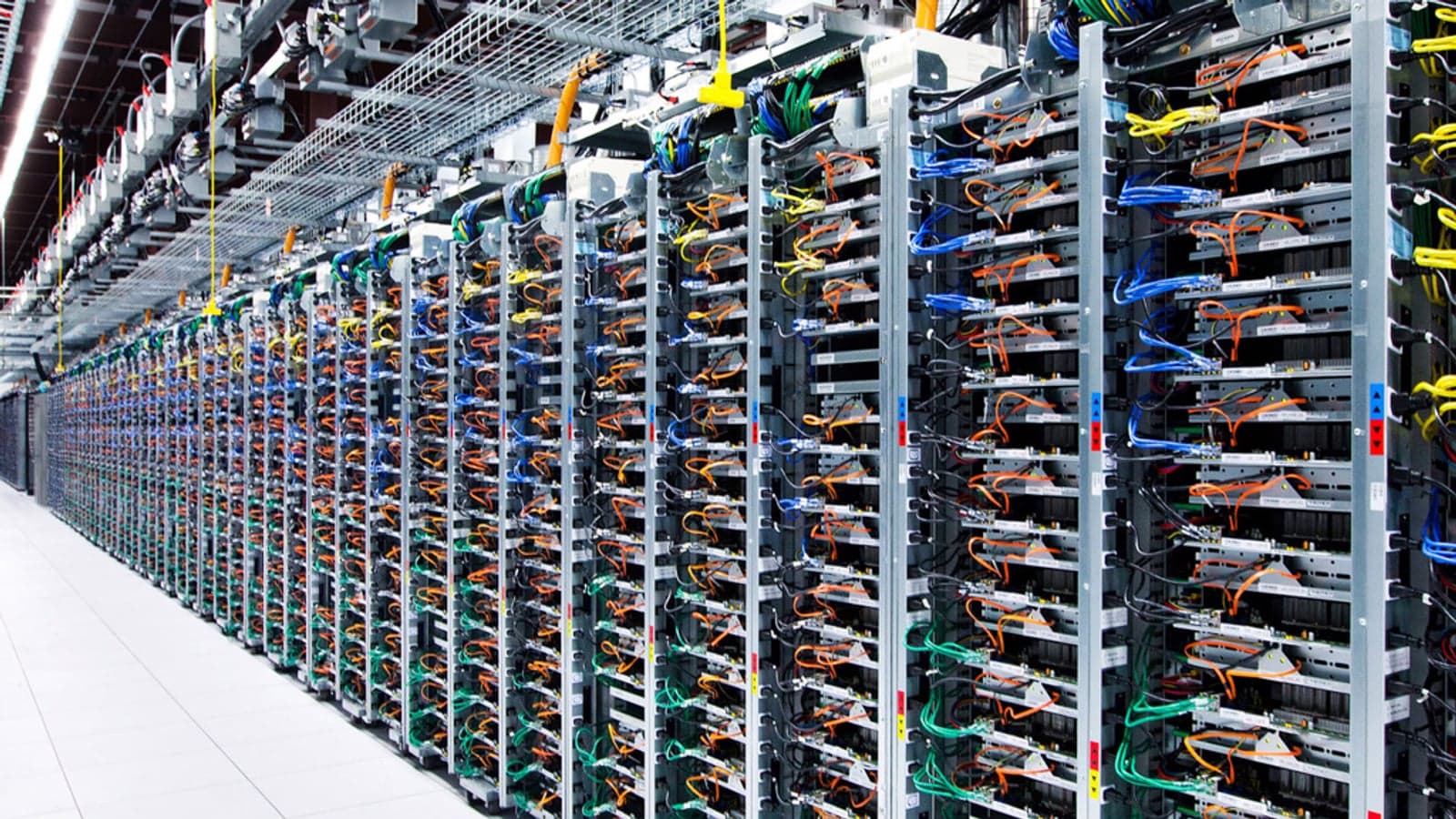
The acquisition, for $4.75 billion in cash, is planned to enable more data centre and generation capacity to come online faster in the United States amid the accelerating demand for AI from businesses and consumers alike.
Included in the transaction are Intersect’s team and multiple gigawatts of energy and data centre projects in various stages of development from an existing partnership with Google, which was established in December 2024 with the aim to collocate data centres with clean energy resources – the first of which is currently under construction in Haskell County, Texas.
Intersect, whose operations will remain separate from Alphabet and Google, is also planned to explore emerging technologies to increase and diversify energy supply, while supporting Google’s US data centre investments to meet its customers’ demand.
Also of interest
Top 10 data centre developments from 2025
“Intersect will help us expand capacity, operate more nimbly in building new power generation in lockstep with new data centre load, and reimagine energy solutions to drive US innovation and leadership,” promised Sundar Pichai, CEO of Google and Alphabet, in a statement.
The statement adds that the acquisition, expected to close subject to customary conditions in the first half of 2026, will augment Alphabet and Google’s ongoing commitment to partnering with utilities and energy developers across the sector to unlock abundant, reliable, affordable energy supply that enables the buildout of data centre infrastructure without passing on costs to grid customers.
Excluded from the acquisition are Intersect operating assets in Texas and California, including several battery energy storage assets, which are being bought out by existing investors and to be run as a separate company.
Data centres in space
While Google and others are fast pursuing data centre developments across the globe, they also are eyeing space as the next frontier for their advance.
Google recently launched the Suncatcher project to explore equipping solar powered satellite constellations with its AI workload optimised cloud tensor processing units and connected by free space optical links.
The company suggests that with the ability to harness solar power nearly continuously in space, it may be the best place to scale AI compute, while minimising the impact on terrestrial resources.
Google states its analysis indicates that delivering a performance comparable to terrestrial data centres with links between satellites supporting tens of terabits per second should be possible with multi-channel dense wavelength division multiplexing transceivers and spatial multiplexing.
The satellites also would need to be flown in very close formation of kilometres or less to achieve the required power levels.
Based on launch cost projections, Google estimates that by the mid-2030s the cost of launching and operating a space-based data centre could become roughly comparable to the reported energy costs of an equivalent terrestrial data centre on a per-kilowatt/year basis.
However, while the core concepts of space-based machine learning compute are not precluded by fundamental physics or insurmountable economic barriers, significant engineering challenges remain, such as thermal management, high bandwidth ground communications and on-orbit system reliability.
To begin addressing these challenges and to validate the modelling and technology, the next milestone is a mission in partnership with satellite company Planet, slated to launch two prototype satellites by early 2027.
Latest content
Partner content
+6
Italy deepens engagement in Iberia amid major shifts towards clean energy
Spain’s accelerating renewable energy drive is creating new opportunities for Italian technology and expertise, prompting the Italian Trade Agency to increase its regional involvement.
- Jonathan Spencer Jones
- 17/12/2025
+6
EU Energy Projects Podcast: How the EU plans to support AI in the energy sector
The strategic roadmap for digitalisation and AI in Europe’s energy sector is one of the key documents due from the European Commission in 2026. DG Energy's Stavros Stamatoukos explains the inner workings.
- Jonathan Spencer Jones
- 21/01/2026
Latest in Digitalisation
All articlesPartner content
+1
Digital water management: Empowering utilities with scientific decision-making
As urban water distribution networks continue to expand and water resource management becomes increasingly complex, water utilities are facing growing operational challenges.
- Guest/partner contributor
- 03/07/2026