EU Energy Projects Podcast: How the EU plans to support AI in the energy sector
Jonathan Spencer Jones
Posted on: 21 January 2026
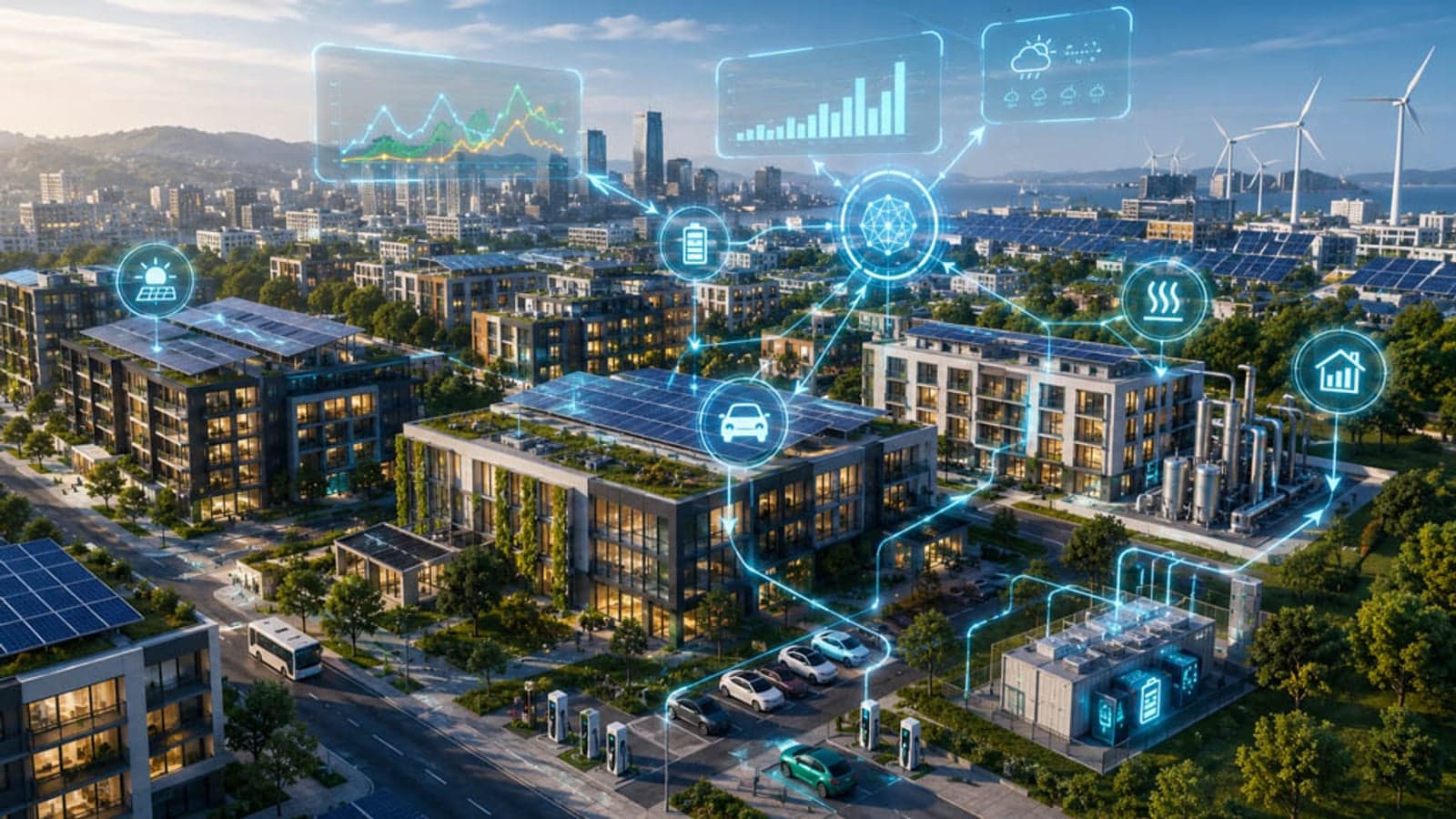
The strategic roadmap for digitalisation and AI in Europe’s energy sector is one of the key documents due from the European Commission in 2026. DG Energy's Stavros Stamatoukos explains the inner workings.
The roadmap, one of a growing collection of policy and legislative actions from the EU on digitalisation and AI in Europe, is aimed at guiding and harmonising their development and advancement in the energy sector across the region.
“We have two basic objectives,” said Stavros Stamatoukos, Policy Officer for Digitalisation and AI in DG Energy, in a live EU Energy Projects podcast conversation at Enlit Europe 2025.
“One is to facilitate the development of trusted AI applications for the energy sector and their deployment securely into the energy system and the other is to manage the risks, conscious that AI is a technology that moves very fast and that we can easily lose sight and forget our main objective with the sector, which is to keep the keep the system on and running safely.”
Key input to the strategic roadmap is based on a public consultation launched in August 2025, which drew a large number of responses from stakeholders across the energy and digital sectors – “something very positive, as the strategy brings both sectors together,” as Stavros described it.
In that vein, he highlighted data sharing as one of the points that has stood out in the analysis of responses: “Currently in Europe data is siloed behind either commercial systems or at member state level and not standardised, and access is extremely difficult for companies who want to develop smart energy applications and AI tools and deploy them.”
In this connection, the common European energy data space, which is in development, should be a key enabler.
Another topical issue for the strategic roadmap is the growth of data centres and their escalating energy consumption, and with that also their grid connection, with the prospect of a tripling of the current data centre capacity over the next five to seven years.
“A data centre can be built in two to three years, while new grid infrastructure might take eight to 10 years. So the challenge is huge but the European Commission has started a proactive dialogue, bringing together the energy sector and data centre sector to identify the bottlenecks,” said Stavros.
Commenting that the intent is to focus not on the problem of data centres but on their opportunity: “Data centres have immense potential for flexibility, quantified by the IEA at 50-60GW over the next five years. If we can tap into a fraction of that, this will be really beneficial for the energy sector.”
Other topics being analysed include energy reporting, energy rating and minimum performance standards for data centres.
For sector participants, an important issue is the funding available for project support and Stavros promised that significant funding is being made available in the next Horizon Europe call – for example, more than €80 million for smart control rooms for transmission and distribution management and more than €50 million for development of AI tools.
“We are also looking to the future and have proposed a five-fold increase for Horizon Europe and hope we will see more smart grids and smart system projects funded.”
For more insights on these and other topical issues from Stavros Stamatoukos, view the video or listen to the podcast.
LISTEN NOW
Listen to previous episodes:
EU Energy Projects Podcast: How space data is advancing the energy sector
EU Energy Projects Podcast: Port of Bilbao reveals €115m decarbonisation plan
More on AI:
Why utilities must partner with hyperscalers to power AI
AI growth vs power availability: a perfect storm in 2026