Green hydrogen projects blazing a trail in South Africa
Pamela Largue
Posted on: 17 May 2023
South Africa| often a country associated with the burning of fossil fuels| has a unique combination of factors that make it ideal for the production of green hydrogen.
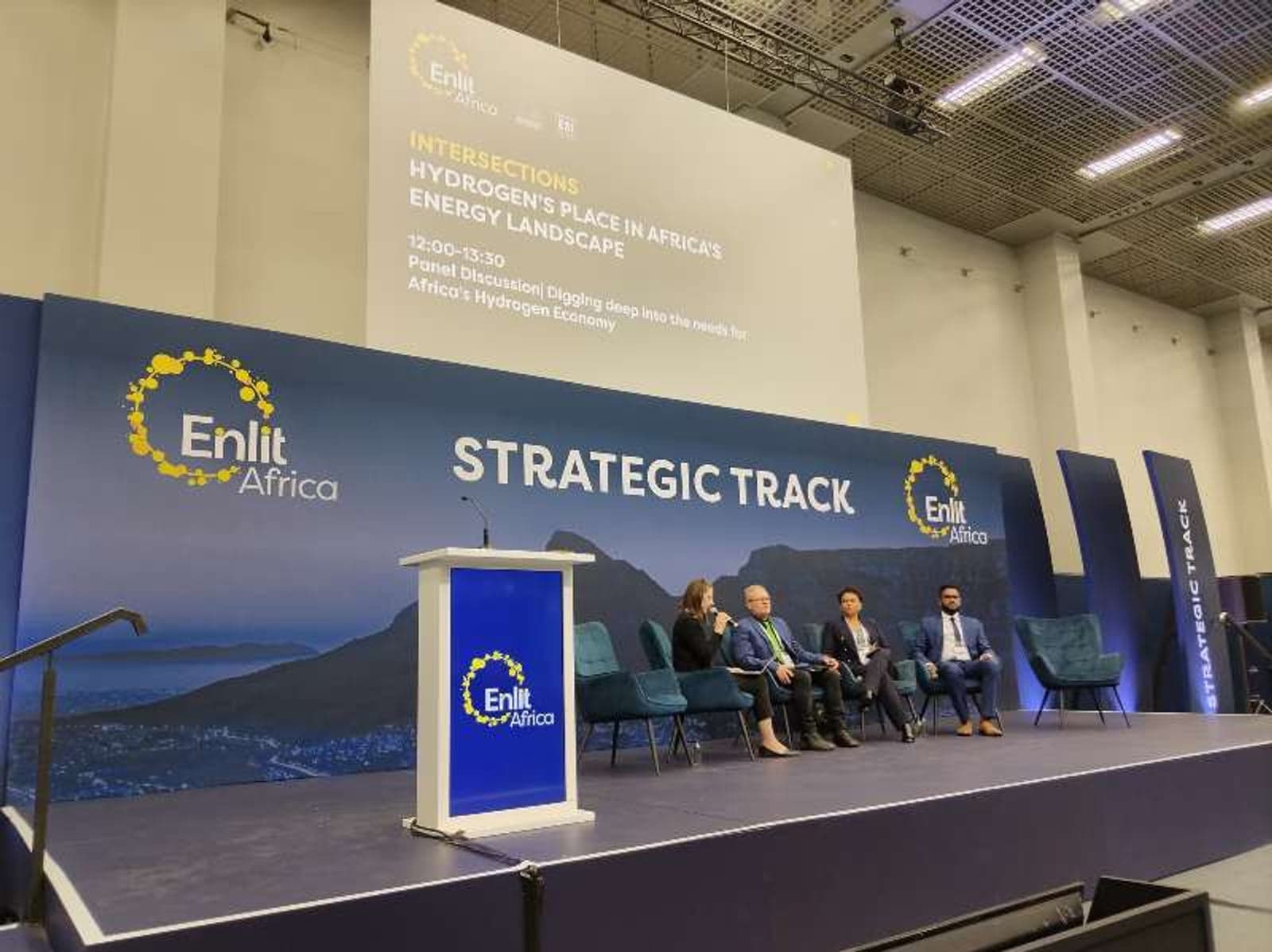
South Africa, often a country associated with the burning of fossil fuels, has a unique combination of factors that make it ideal for the production of green hydrogen.
The factors include vast, open landscapes to accommodate wind and solar development, the availability of critical minerals used in the production of electroylsers, and coastal desalination projects to ensure the pure water needed for producing hydrogen.
There are three projects in particular that are tapping into these resources to blaize the country's decarbonisation trail, and these projects were explored in more detail at the Enlit Africa conference in Cape Town.
1. Boegoebaai hydrogen cluster
This 40GW flagship project is planned for the Boegoebaai Port and includes investors such as Sasol and Transnet.
Boegoebaai is situated approximately 60km north of Port Nolloth on the Northwestern coast of South Africa and is located close to rich mining and agriculture sectors compared to other existing ports.
The hydrogen cluster aims to deliver the first 5GW of hydrogen by 2035. The project will require 450,000 hectares of land to generate the 100GW of grid-connected renewables needed.
2. Freeport Saldanha Industrial Development Zone, Vanderbijlpark
It's a recent partnership established between chemical giant Sasol and steel company ArcelorMittal.
The partners plan to develop carbon capture technology to produce sustainable fuels and chemicals, and green steel production through green hydrogen.
The companies have conducted studies into two potential projects:
- the Saldanha green hydrogen and derivatives study which will explore the region’s potential as an export hub for green hydrogen and green steel production;
- the Vaal carbon capture and utilisation (CCU) study to use renewable electricity and green hydrogen to convert captured carbon from ArcelorMittal South Africa’s Vanderbijlpark’s steel plant into sustainable fuels and chemicals.
3. Coega hydrogen development
The Coega project is located in Nelson Mandela Bay on the East Coast of South Africa. The project will generate large amounts of green ammonia for the clean fuel and maritime industry in Asia and Europe, as well as include clusters of solar and wind assets.
The parcels of land for green energy production are integrated with the Deep-water Port of Ngqura within the Coega complex to facilitate the export of ammonia. The land parcels have already been zoned to speed up project development.
The project includes a planned desalination plant and wastewater recycling to ensure that there are water resources to support hydrogen production.
The Coega project will drive the development of multi-use liquid bulk storage facilities, ammonia and hydrogen bunkering and an export hub at Ngqura Port.
According to UK-based project developer Hive Energy, the four phases of the project will generate over R300 billion ($16 billion) of foreign direct investment and direct tax revenues of over R216 billion ($12 billion).
Holding back hydrogen
According to Hendrik Louw, CEO of the Northern Cape Investment Agency, despite the existence of these projects, there are several pertinent factors hindering the development of a hydrogen economy in South Africa.
It's a mammoth task of transformation, explained Louw. "Keep in mind the transition of skills, infrastructure, industry, and our primary activities."
"We need to create the bulk export volume...we need to transform our haulage, shipping, aviation, road and rail and industry feedstock."
Louw went on to emphasise that within the context of transformation, the country's population also needs to be converted to adapt to and adopt the technology.
Louw also explained that within the South African context, the regulatory framework and governmental structures can cause delays in getting projects over the line. One decision can impact several ministries, which can lead to a great deal of red tape.
Stimulating hydrogen growth
To overcome the hurdle of red tape, Louw recommends easy-to-navigate regulations in the policy framework. This needs to be coupled with stimulus from the treasury and regulation into the industry.
Furthermore, secure financial support from international donors who have a stake in South Africa's transition will be critical, as well as a toolkit to facilitate interaction between project developers, local municipalities and the community.
South Africa is clearly on the path to using existing technology and experience gained from producing grey hydrogen to tap into the growing green hydrogen market. As Louw concluded, hydrogen is not new to the country, it's just the colour we are trying to change."