Grid resilience lessons from the frontline of climate change
Yusuf Latief
Posted on: 5 December 2023
As climate change batters power reliability, Yusuf Latief looks into case studies where the power grid has displayed significant resilience.
As extreme climate events continue to demonstrate devastation on power grids across the globe, Yusuf Latief looks into case studies where the power grid has displayed significant resilience.
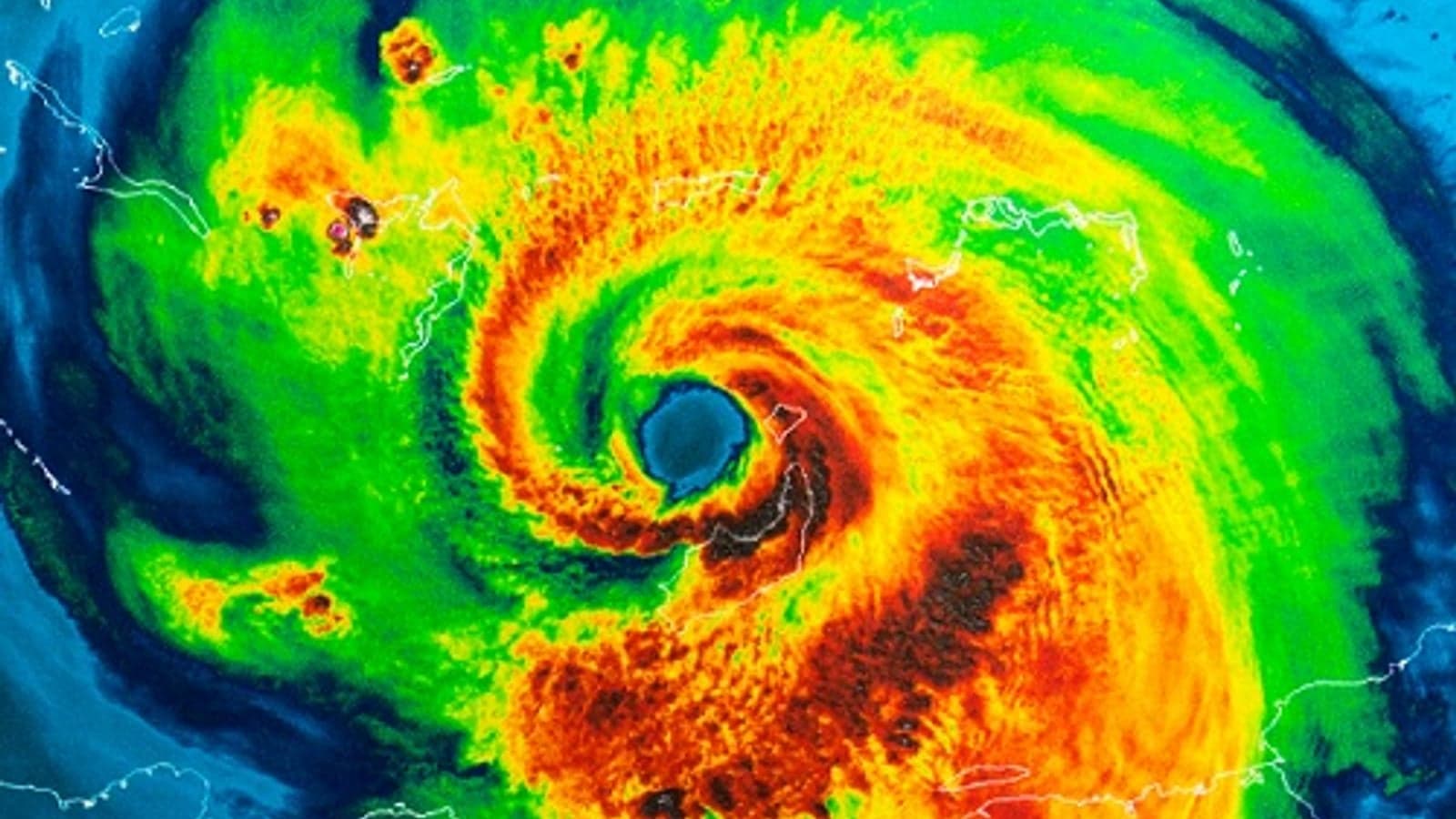
The year of 2023 has arguably been one of the most dramatic in painting the grim image of climate change consequences for power systems.
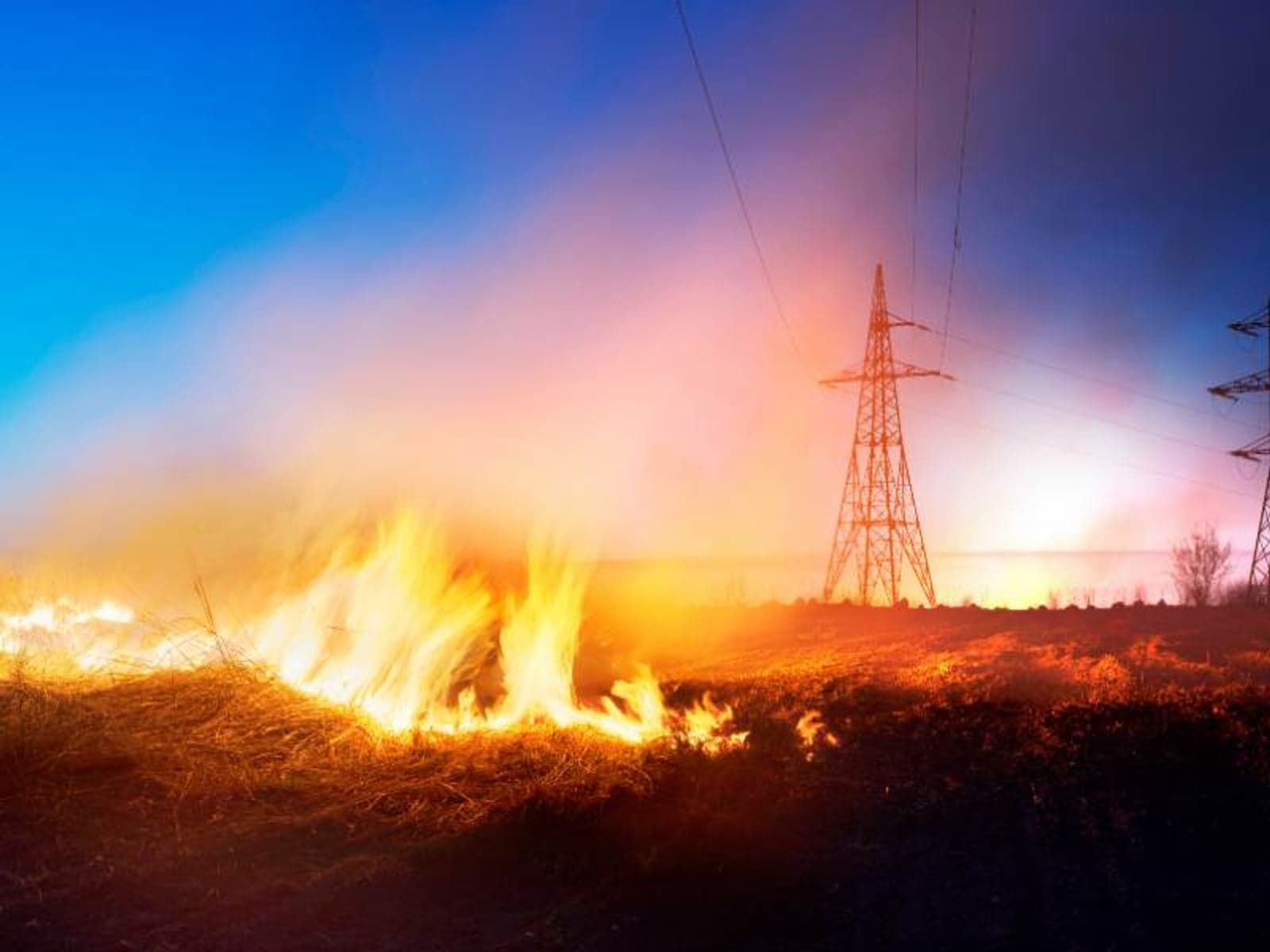
Wildfires have ravaged cities across the globe, causing power outages for hundreds of thousands of consumers.
Heat spells strained power systems to the point of fault — one such so heavy in Europe that it was named Cerberus after the Greek mythical three-headed dog guardian of the underworld.
These climate disasters score new records annually and demonstrate that work is needed on our infrastructure and, our power grids.
However, that isn’t to say that nothing is being done. On the contrary, utilities have been working on solutions.
REN: Simulating fire propagation
“We’re moving on from looking at the ability of infrastructure to just withstand catastrophes, such as wildfires, towards the ability of the grid to withstand, recover from, reduce risk of and respond to catastrophic events.”
So says Liam Innis, Renewables Grid Initiative’s Energy Ecosystem Manager during the webinar 'Fire Watch: How can the grid help prevent wildfires'.
A case study presented during the webinar was project Replant, the result of a collaboration between Portuguese transmission system operator (TSO) REN, software company whereness, and the Universidade de Coimbra in Portugal.
According to REN’s José Moreira, Senior Expert of Asset Management, through the project, eight infrastructure monitoring systems have been installed in three demonstration zones, which make up different types of natural territories, although each is subject to wildfires.
REN makes use of a system with cameras to detect smoke columns, hot spots and nearby events as well as a weather station to monitor conditions. Additionally, AI enables the cameras to make autonomous decisions after detecting columns of smoke.
Rui Roda, Business Coordinator at whereness, explained how, every time there is a fire alarm, the first thing the system does is show whether the fire is within 10km of electrical infrastructure.
Have you read:
The role of a TSO in the energy transition: RTE in Hauts-de-France
Navigating energy management in an evolving landscape
“If not, the alarm is discarded; if it is, a call is made to the service, which then simulates fire spread for between 30 minutes to five hours, says Roda.
Key for the project is this simulation. And key to the simulation, states Carlos Viegas, Assistant Professor at the Universidade Coimbra, is the role of AI.
“We can have the most accurate models possible, but we can always have errors in our simulation if we do not have the correct input data. This is a very critical aspect.
“Because of this we are using a process fuelled by Artificial Intelligence in which we take advantage of the fact that we have cameras that are not only detecting the emissions, but also monitoring the occurrence as it is happening.
“Here we create a closed loop where we feed the current fire parameter to our simulator and it compares the perimeter of the fire with the simulated one.”
Thus, using a genetic algorithm to fine tune the simulation, states Viegas, “we can then achieve a 40% increase in simulation accuracy.”
Terna: Asset digitalisation
However, fire has not been the only thing to affecting the power grid.
Other events like severe storms, flooding, cold spells, ice and frost tag along this bandwagon blazing its mark on the electricity grid.
According to Eurelectric’s report The coming storm: Building electricity resilience to extreme weather – Policy Recommendations, these circumstances each have their own effect on the grid, whether landslides weakening infrastructure due to flooding or conductors being broken by icing or snow sleeves.
In Italy for example, TSO Terna’s Head of Digital Solutions, Maurizio Marini, attributes the shape of the country — its demarcation outlining that of a boot — as enabling diverse risk: “Depending on the geography, the power lines are affected by different kinds of risks, if they are by the mountains or nearby the sea and so on.”
To combat climate extremes and their impact on the system, not only wildfires but also extreme cold, Terna is designing a digital infrastructure for enhanced field assets monitoring.
According to Marini, who also spoke during the webinar, one of the key reasons for starting the work was a brutal 2019 storm “which destroyed an entire forest of several thousands of trees.
“We experienced 61 faults on power lines in three hours. You can imagine the impact on the operation of the grid.” The TSO set up a project in the same year to design and instal a line monitoring system making use of a solar-powered box, the DIGIL, installed on transmission pylons”, says Marini.
Have you read:
How artificial intelligence can enable a secure and decarbonised grid
Why the electrical grid is ‘the backbone of the energy transition’
Integrated with sensors
An IoT initiative, DIGIL collects measurements taken by sensors installed on pylons – “it can be integrated with all new kinds of sensors” – and processes and transmits the data to a control centre.
Vibration, inclination, conductor pull and temperature, weather condition, wildfire detection – these are some of the typical measurements performed by DIGIL and some fruits of its application have already been picked: “During winter [of 2022] we were able to identify several ice sleeves along conductors… and we can see many more events than before.
“The asset management can identify the problem along the line and its damage. We are now also able to see how the ice forms and melts in the morning. In this way we are developing new policies for asset management…”
After proving its value case, the next stage of the project is to scale up. According to Marini, sensor installations are underway in Sardinia as new algorithms and sensors are being developed for salt, fire and conductor temperature among other such factors.
Renewables to the rescue?
According to Eurelectric’s report, and as demonstrated by Italy and Portugal, the grid is a clear area of investment to drive resilience against climate extremes.
Specifically, states the association, the need for investment amounts to some €400 billion ($429.4 billion) by 2030, of which 8% would be for resilience.
However, they add that this resilience would need to be in the entire system; while investment in heightened grid monitoring is one clear path, investment in generation too is a strong resilience strategy.
And this has been highlighted in 2023 by two key events: the wildfires that spread through Greece and the extreme heat wave that pressured the Texan power grid.
However, in both cases reports were made of keeping power flowing despite respective circumstances due to the power of renewable sources.
In July, Greece’s Independent Power Transmission Operator put out a statement of record-breaking electricity demand due to successive heat waves and wildfires.
"We're looking at a new paradigm of resilience."
However, they added that clean energy generation from renewable energy sources and hydroelectric power was able to meet nearly 50% of this demand at an estimated 5,015MW.
In the case of Texas, in June 2023, the country experienced what would become its worst heat wave on record, resulting in skyrocketing demand. The state’s grid operator ERCOT (Electric Reliability Council of Texas) announced that wind and solar generation enabled enough supply to match demand.
At peak hour, wind and solar provided 35% of the power, enabling the grid to stably continue operations.
For the Texan grid, which cannot access energy from other US States, this marks a significant milestone; a notion that rings all the truer when remembering the 2021 blackouts, where millions were left powerless in freezing conditions for days.
These case studies of Texas, Portugal, Greece and Italy show that initiatives are underway to ensure that the power system of tomorrow can withstand extreme weather events and ensure that, come hail or heat, power continues to flow.
As Innis says, “We’re looking at a new paradigm of resilience.”
Related tags
Latest content
+2
How power systems can boost resilience to extreme weather
Philippe Arsonneau, Senior Vice President of Infrastructure Segment, Schneider Electric explores how extreme weather events intensified by climate change are putting unprecedented pressure on power grids across Europe and the US.
- Guest/partner contributor
- 07/08/2025