How etrucks are driving decarbonisation of mining in China
Guest/partner contributor
Posted on: 10 July 2025
In a project spearheaded by Huawei, a fleet of 100 etrucks has entered commercial operation at an open-pit coal mine in China.
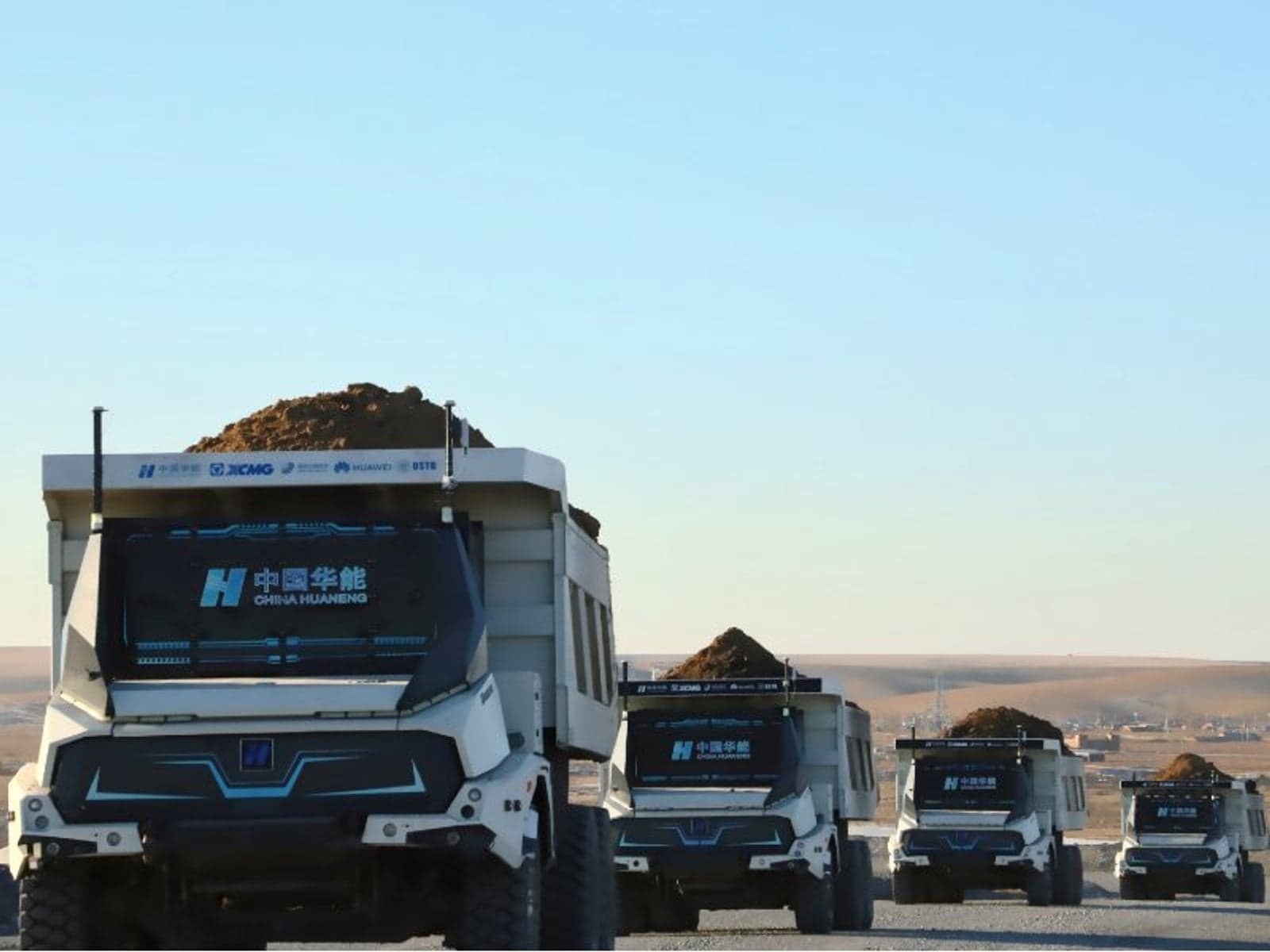
In a project spearheaded by Huawei, a fleet of 100 Huaneng Ruichi autonomous electric trucks has entered commercial operation at the Yimin open-pit coal mine in Hulunbuir in Inner Mongolia, China.
The growing fleet, powered by a combination of advanced technologies and other innovations, including 5G-Advanced (5G-A) communications, is a global first, showcasing the opportunity for the etrucks’ market to support the decarbonisation of energy-intensive industries, such as mining.
Transformation of China’s coal mining
While the concept of autonomous mining trucks isn’t new, dating back to the 1980s and with thousands in use at mines around the world, the introduction of a ‘green’ approach to autonomous driving is deeply rooted in the transformation of coal mining in China.
China is currently the world's largest producer and user of coal, accounting for over half of the global production.
In recent years, the country has introduced a range of policies to prioritise safety and sustainability underpinned by intelligence and is believed to account for almost half of the intelligent coal mining market globally.
In its 2024 policy guide, China’s National Energy Administration outlined objectives and guidelines for the development of intelligent coal mines, proposing that a standard system should be completed by 2030.
Key aspects covered are the business areas of coal mines, including mining processes, technical equipment, data governance and safety assurance, as well as the entire management lifecycle from design to construction and operation.
A set of local standards has also been introduced in Inner Mongolia – a key energy base for China, home to four of the five largest open-pit coal mines in the country – encouraging mining enterprises to promote intelligent transformation by introducing advanced automation and information technologies to improve the safety and efficiency of mine production.
How Yimin is advancing intelligent mining
The Yimin mine is China’s second-largest open-pit coal mine with an annual production capacity of 35Mt.
The conditions there are harsh, with temperatures ranging as low as -48.5 °C. Fog, sand and dust are frequent, reducing visibility, particularly in low light conditions and at night.
The average annual precipitation is 355mm, with the maximum recorded reaching 460mm, resulting in frequent muddy roads.
Mining trucks are huge vehicles, with a typical weight fully loaded of around 90t, leading to significant blind spots and the need for continuing road maintenance within the mine.
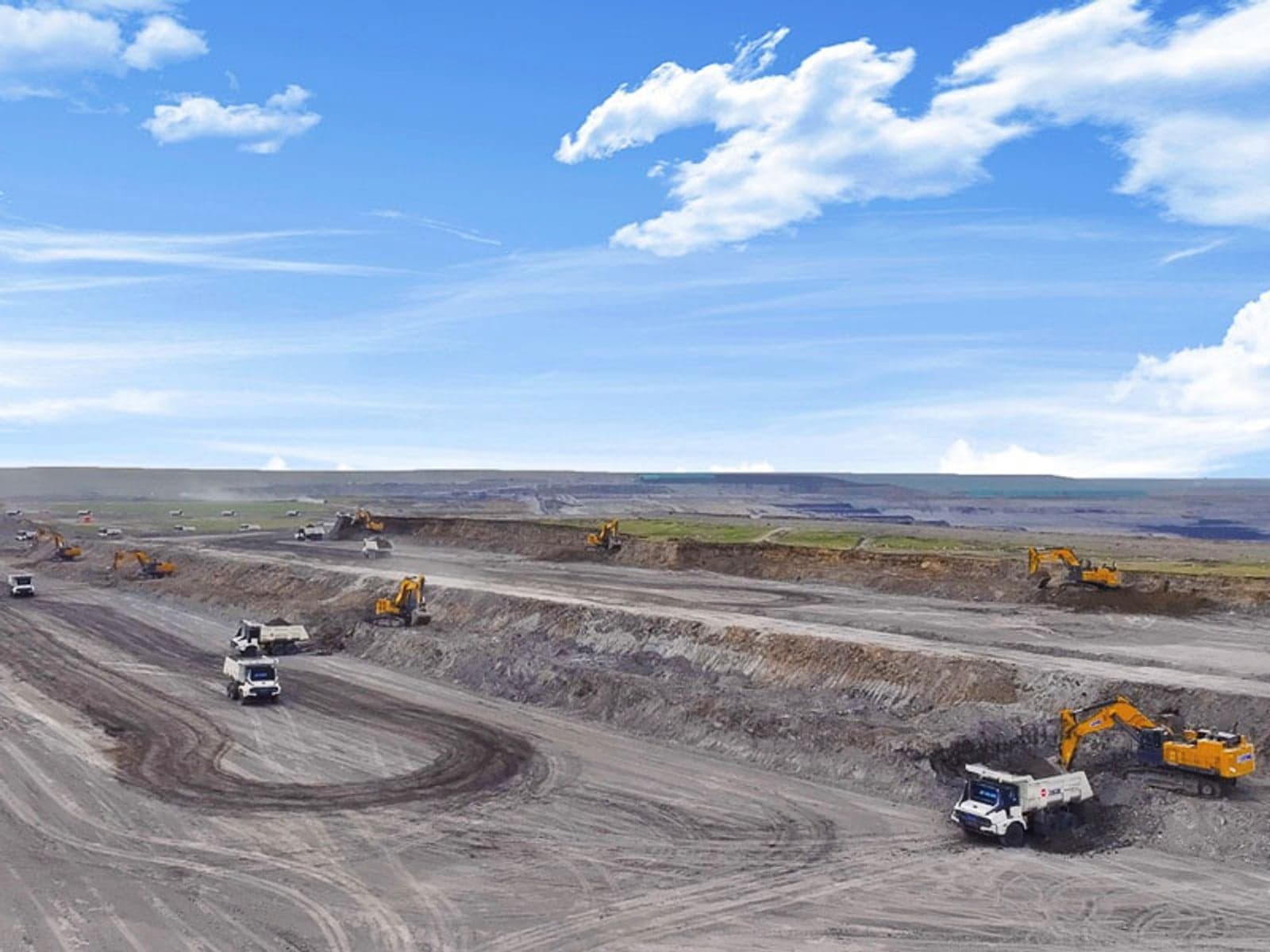
The Huaneng Ruichi autonomous electric mining trucks were introduced in a multi-pronged solution led by Huawei and the Huaneng Inner Mongolia Eastern Energy Company to overcome these challenges, encompassing the trucks themselves, the autonomous drive platform and the 5G-A communications to enable their operation.
The Huaneng Ruichi trucks, which were developed and manufactured by China Huaneng in collaboration with Xuzhou Construction Machinery Group, Huawei Technologies and State Grid Smart Internet of Vehicles, are the first in China without a cabin, completely isolating workers from both the equipment and harsh working environment.
The cabin space is replaced with lithium-iron-phosphate batteries, each with a storage capacity of 568kWh.
Power consumption in operation is no more than 0.2kWh/km, even under prolonged cold conditions, enabling them to operate solely on electric power.
When the charge drops, the trucks go to a station for battery swapping – a practice widely developed and perfected in China, where the process is carried out autonomously in a mere five minutes and enabling them to operate on an almost continuous basis.
The intelligent autonomous driving system was developed by Huawei Cloud Commercial Vehicle Autonomous Driving Cloud Service in collaboration with automotive partners.
The system realises stable perception up to 40m in low light conditions and enables automatic navigation around obstacles such as fallen rocks. It can also perform tasks like trenching, making u-turns in narrow work areas and maintaining steady speeds through turns.
To better adapt to the soft rock that makes up the mine's geology, the trucks are equipped with an anti-sinking and recovery control system, which activates under extreme road conditions to ensure smooth operation on muddy roadways.
Due to the complex terrain, as well as the use of variable routes for the trucks and high network requirements, each truck requires five cameras and stable control and video backhaul for a large fleet, demanding high uplink capacity – optical fibre was not an option.
Instead, Huawei, in collaboration with China Mobile Inner Mongolia, has utilised 5G-A 3CC technology to provide precise network coverage for autonomous driving routes, mining and dumping areas, and battery exchange zones.
Each base station covers an area of 500–600m and ensures stable 500Mbps uplink speeds, latency as low as 20ms and high reliability.
Achieving 24/7/365 mine production
With these advancements, the 100 autonomous mining trucks – and more in the future – can operate 24/7, supporting uninterrupted year-round mine production.
As an example of the potential, over one year of testing of the trucks in autonomous operation in 2023-2024, the efficiency of operation reached 120% that of manual operation in the same environmental conditions.
Zhang Ping'an, Executive Director of Huawei and CEO of Huawei's Cloud Computing BU, says it is a paramount challenge to safeguard personnel and equipment safety while improving productivity in extreme working conditions such as freezing temperatures at high altitudes, and heavy rain, snow and dust.
“Addressing such challenges places high requirements on data processing and system collaboration capabilities.”
Li Shuxue, Chairman of Huaneng Inner Mongolia Eastern Energy, notes that the company is actively working to drive an energy transition in the mining and transportation sectors.
“As a key part of these efforts, we are replacing fuel vehicles with electric ones to build safe, intelligent and green mines.”
Shu Yingqiu, Deputy General Manager of Huaneng Yimin Coal and Electricity Company and Director of the Yimin mine, notes that the Huaneng Ruichi autonomous electric mining trucks are highly durable, safe, and efficient, boasting a robust body structure and strong performance.
“We hope that their large-scale application and promotion will drive further development of autonomous mining trucks and provide a new solution for the intelligent transformation of other open-pit mines.”
Click here for more news and content from Huawei.
Related tags
Latest content
Partner content
+3
Leveraging AI to boost electric power intelligence
As power grids face rising instability and the surge of renewables, David Sun believes AI and intelligent communication networks hold the key to building a more resilient and flexible energy future.
- Guest/partner contributor
- 24/11/2025