How to unlock the UK’s hidden heating opportunities
Guest/partner contributor
Posted on: 16 January 2026
Waste heat from data centres has the potential to power homes for generations, writes Simon Kerr of EnergiRaven.
In the next ten years, the UK will experience a major digital infrastructure shift as installed datacentre capacity is rapidly expanded.
The government’s commitment to datacentres is now taking precedence over other elements of the industrial transition. For example, a planned green hydrogen project in Teesside has been set aside in favour of a large datacentre.
According to government estimates, it is expected that 9.6GW of compute capacity will be installed by 2035, up from 2.4GW today. It's an ambitious target and will require significant investment in the country’s grid if it is going to become a reality. Regardless of how this power demand is met, significant public and private investment will be required to do so.
There is real concern among the public that this rapid capacity expansion will drive up electricity prices, use significant amounts of fresh water and result in ugly warehouse-sized buildings springing up across the country. It is crucial that taxpayers and especially local communities see and feel the benefits of this digital infrastructure.
We need to consider what we are going to do with all the heat that data centres produce and how we will make the most of it.
All the electricity that data centres use for computation ultimately gets converted to heat. This heat must be removed to protect the integrity of the servers by air or water cooling. For data centres in the UK, which currently houses the third most datacentres in the world, this heat is often wasted when it could be put to better use bringing down bills.
We need to consider what we are going to do with all the heat that data centres produce and how we will make the most of it.
Elsewhere around the world, this heat is captured and put to good use.
Have you read?
The future of district heating: A relay race to clean energy
Policymakers must ‘get real’ over untapped potential of CHP
Many places have integrated data centres into heat networks. Heat exchangers transfer the waste heat to district heat networks in large population centres, where each connected dwelling features a boiler-sized heat interface unit (HIU) that transfers the supplied hot water into its space and water heating systems. Some of the best examples of this in action are to be found in the Nordic countries, where every available source of waste heat is utilised to help endue bitter winters.
Google’s Hamina data centre in Finland, for example, provides for 80% of the annual heat demand of the town via the local district heating network.
There’s no reason this can’t work in the UK. Based on a feasibility study that models a similar heat network in Edinburgh, excluding the costs of building the network itself, the cost of heat would be 3-4p/kwh, well below the Ofgem price cap of 5.93p/kWh.
The bigger picture
Data centres aren’t the only source of heat, in fact, heat networks get cheaper and more efficient the more sources of waste heat are connected.
Unlike our polluting and expensive national gas network, large scale heat networks are heat-source agnostic. They can utilise renewable energies, commercial heat pumps (both large-scale and modular), geothermal heat from aquifers, combined heat and power (CHP) and energy from waste (EfW) plants, as well as waste heat from sources such as power stations, wastewater treatment plants, distilleries, abattoirs, and industrial bakeries.
This diversity of heat supply can ensure district heat networks deliver the cheapest and greenest heat available all year round.
The benefits go far beyond just piping heat into homes.
If we continue this path, we will end up with small, private monopolies, rather than national infrastructure that can take advantage of the full scale of waste heat sources around the country
Heat networks enable a form of thermal energy storage; large-scale heat reservoirs can capture excess wind and solar power as heat and hold it until it’s needed. These reservoirs act like giant batteries for the grid, balancing supply and demand by decoupling when energy is generated from when it is used.
This reduces curtailment from intermittent renewables like solar and wind and brings down costs by peak shaving, storing cheap energy to use at peak times rather than buying extra at higher prices.
So, what’s stopping us from capturing this opportunity already?
The barriers
In theory, this should be happening already. In the UK, many cities have already been designated as ‘Heat Network Zones' where heat networks have been already identified as the cheapest low carbon heating source, aiming to accelerate the development of such networks.
In 2026, Ofgem will take over regulation of heat networks, and new technical standards will be introduced for the technology via the Heat Network Technical Assurance Scheme (HNTAS), aiming at boosting consumer and investor confidence.
Also of interest: Inside the world's largest low-temperature district heating system
Momentum is building. Local authorities are preparing for the rollout of heat network zoning, which will mandate low-carbon heating solutions in designated urban areas. Cities like Bristol, Leeds, and London are already developing backbone networks that could evolve into regional transmission grids. Projects are underway to identify waste heat sources, aggregate demand, and map out the pipe routes needed to connect them.
However, this framework of UK policy is nudging us towards a patchwork of small networks that might connect heat from a single source to a single housing development. If we continue this path, we will end up with small, private monopolies, rather than national infrastructure that can take advantage of the full scale of waste heat sources around the country.
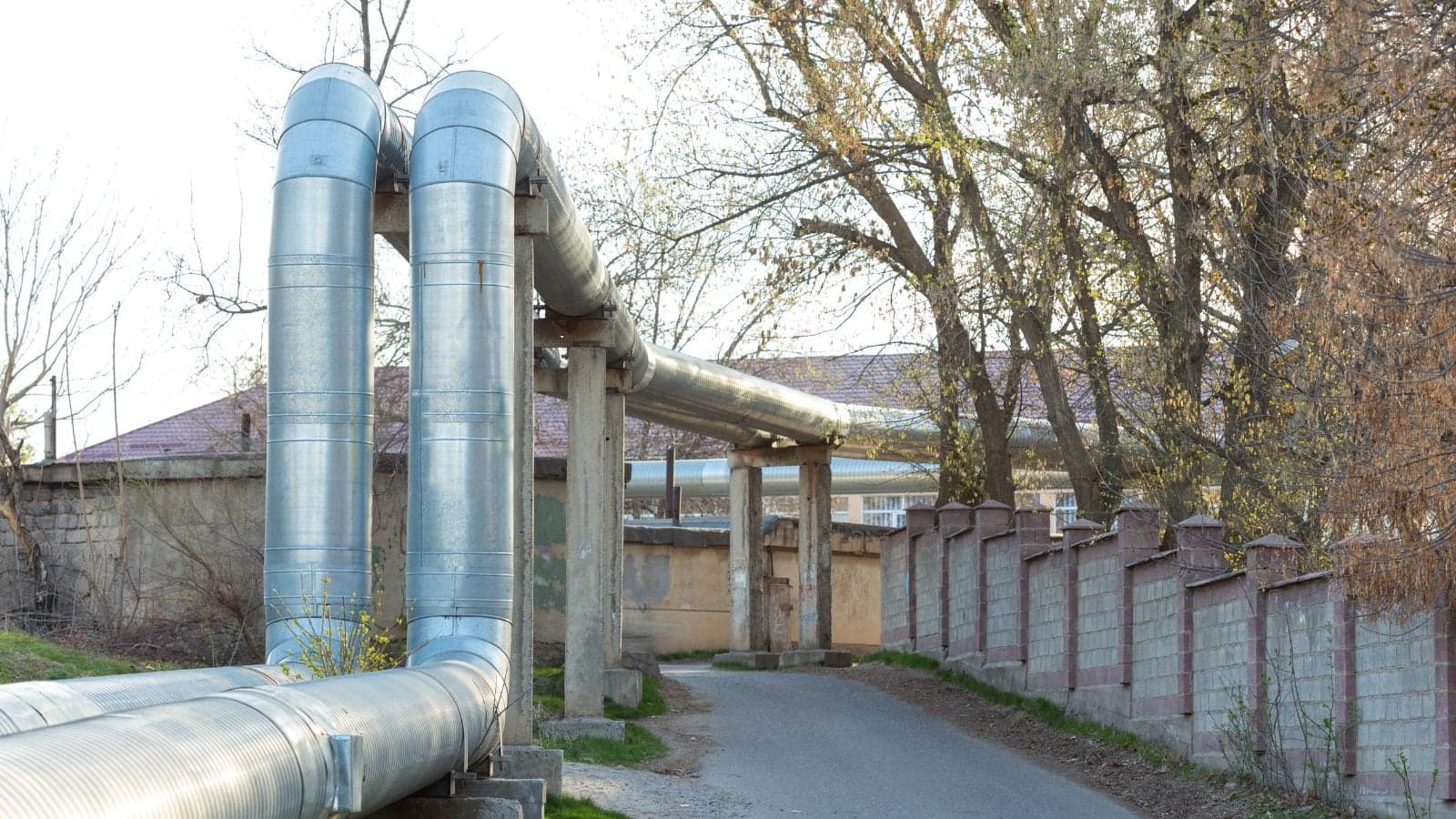
We need to move heat at scale, just like we move electricity or gas. That means investing in regional thermal infrastructure (large, insulated pipes in the ground) that connect low-cost generation with our towns and cities across the country. These ‘heat highways’ would be long-distance, insulated underground piping systems that are fast to build and can operate reliably for generations.
This might seem ambitious, but then so is the idea of over tripling our data centre capacity in under a decade! We are already planning to radically reshape infrastructure in the UK to cater to the needs of data centres, why not work alongside that to make waste heat work for us?
Making this a reality would depend on local and national government first recognising the scale of the opportunity and then organising around it.
At a national level this means taking heat as seriously as we take electricity, with steps such as the following:
- Treat heat as essential national infrastructure, on par with electricity, gas, water and transport.
- Establish a national Heat Infrastructure Strategy, integrating zoning with long-distance heat transmission.
- Support multi-borough and multi-council cooperation, enabling regional and citywide coordination of heat networks.
- Empower regional heat authorities to lead long-term planning alongside local government, industry, and communities.
- Back community ownership and financial municipal models, ensuring fair access, stable prices, and local economic benefit.
At the same time, communities do not have to wait for national infrastructure to arrive. They can start by getting buildings heat network-ready and planning for community-owned systems that reflect local priorities.
A well-designed local heat grid, powered by renewables and supported by thermal storage, can serve as a vital stepping stone. When the time comes, these networks can integrate with wider regional heat highways, ensuring no part of Britain is left behind in the green transition. But community energy must move beyond the siloed energy system we’ve inherited, where power, heat, industry and transport are treated separately.
The potential to decarbonise heating on a national scale and build a more resilient energy systems is here and we’re running out of time to delay. With fuel poverty at crisis levels, energy security at risk, and a net zero target rapidly approaching, our reliance on natural gas is unsustainable in every sense of the word.
If we want to make UK heating clean and affordable, using waste heat from data centres is a necessity. With many new sites in development, prioritising waste heat capture will ensure these power-hungry behemoths deliver tangible community benefits. Through smart investments in heat highways and district heating, the UK’s digital prowess can also drive social and environmental prosperity.
ABOUT THE AUTHOR
Simon Kerr is Head of Heat Networks at EnergiRaven, an organisation promoting the use of waste heat to reduce reliance on fossil fuels and build a resilient, affordable, and future-proof energy system.
Related tags
Latest content
+4
Heineken installs 100MWh solar heat battery in Portuguese brewery
The beer company partnered with Rondo Energy and EDP on this first Heat-as-a-Service agreement in Portugal, combining solar power and thermal storage to decarbonize industrial processes through heat electrification.
- Yusuf Latief
- 05/11/2025