How AI can be a trusted ally in Europe’s energy transition
Guest/partner contributor
Posted on: 5 February 2026
Europe is accelerating its energy transition – and artificial intelligence is at the centre of this transformation, writes Alberto Dognini.
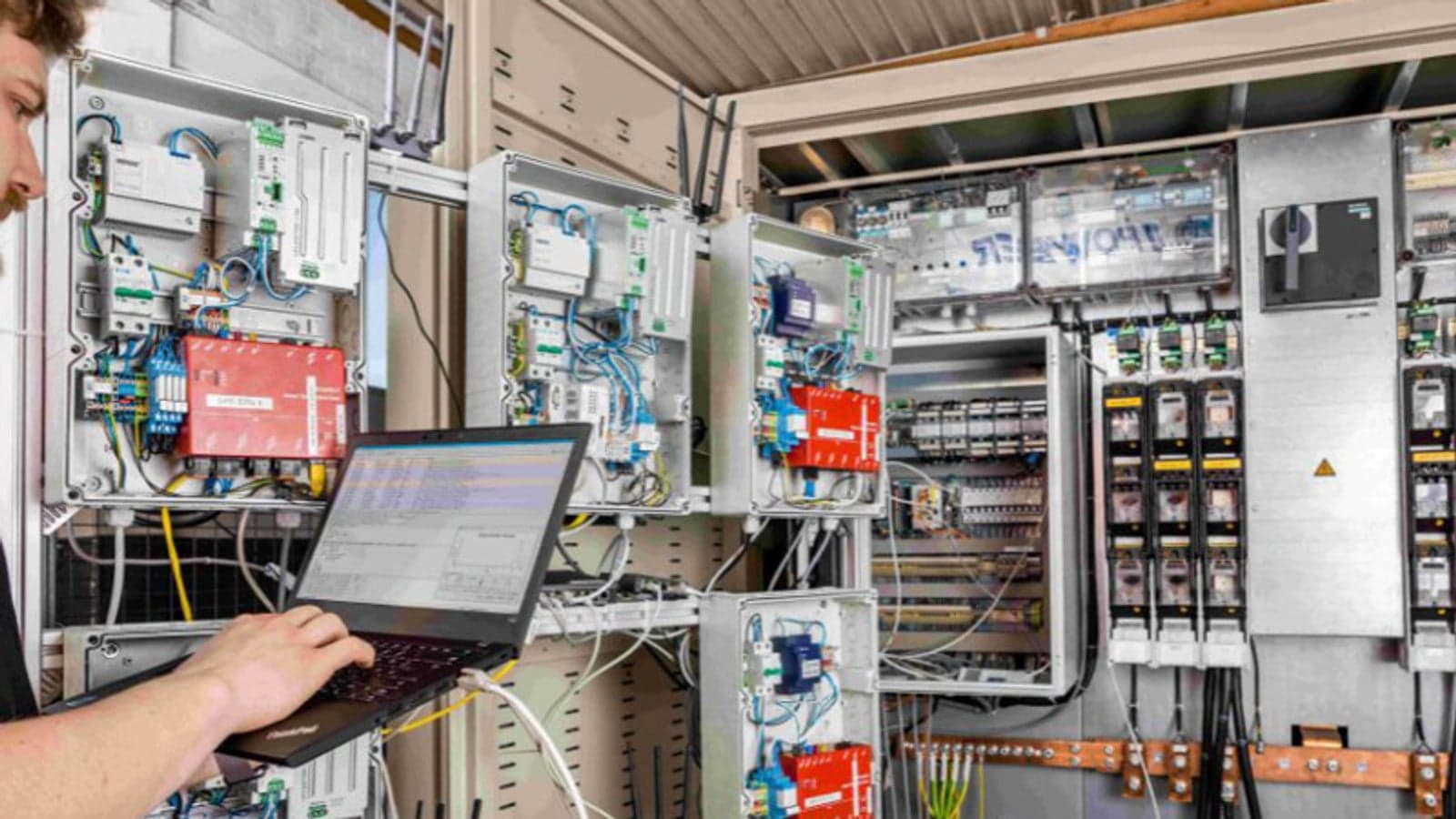
The AI-EFFECT project, funded under Horizon Europe and coordinated by EPRI Europe, is building a European testing and experimentation facility (TEF): a virtual network linking laboratories and computing resources to fast-track trustworthy AI adoption in the energy sector.
At the core of this initiative are four demonstration and validation nodes, hosted by leading research and innovation centres across Europe. These nodes will create controlled, realistic environments to test, validate and assess AI applications against defined performance and compliance criteria before they scale to real-world operations.
Each node addresses a critical area of the energy system:
- Multi-energy and sector coupling for integrating electricity and heating;
- Control room of the future for congestion management;
- Local energy data space for secure, consumer-centric data sharing;
- AI for power distribution systems to optimise grid performance.
With electrification, variable renewables and millions of distributed assets reshaping Europe’s energy landscape, AI offers powerful tools for forecasting, operations and consumer engagement. But adoption depends on trust, safety and proven performance. By delivering standardised testing environments, risk and certification workflows and replicable methodologies, the AI-EFFECT testing facility aims to bridge the gap between research and real-world practice—aligning with EU priorities on privacy, security, ethics and liability to set a benchmark for trustworthy AI in energy.
Multi-energy testbed in Denmark
One node, led by Technical University of Denmark DTU, will focus on multi-energy and sector coupling, demonstrating how AI can coordinate electric power grid operations with district heating systems in two distinct Danish settings: the Triangle area in Jutland and the island of Bornholm in the Baltic Sea.
The programme will span AI-assisted forecasting, plant operations and cross vector optimisation, with a stated objective of approaching near zero emission district heating by synchronising multiple energy vectors to reduce heating system costs, improve operational efficiency and minimise CO₂ emissions.
The Danish node is also tasked with showing how AI-EFFECT’s test facility can test both virtual and real single and multi-energy systems, as well as implement interpretability, explainability, verification and end-to-end validation from laboratory trials through to field operation. This emphasis on transparency and certification ensures AI solutions are not only accurate but also safe, auditable and fit for critical infrastructure.
Dutch extends 'control room of the future'
In the Netherlands, a node anchored at TU Delft will extend the university’s 'control room of the future' with AI testing capabilities geared to congestion management – one of the most pressing operational challenges in grids with rising shares of renewable generation and distributed resources.
The facility will synthesise grid data tailored to AI testing goals and deploy digital twins and carry out simulations with RTDS to create hyper-realistic scenarios, allowing operators and technologists to stress test algorithms under varying conditions without jeopardising live systems. To strengthen real-world relevance, the node collaborates with system operator TenneT, linking laboratory simulations to actual grid conditions.
A complementary verification package with guidelines for using synthesised networks will help standardise evaluation and support human-AI interaction studies for control room decision-making. The node’s remit includes developing comprehensive processes to gauge AI readiness, security, and compliance, ultimately strengthening grid resilience while keeping a 'human-in-the-loop' approach.
Portugal’s local energy data space
The third node tackles the social and market dimensions of AI by enabling secure, consent-based energy data sharing.
Led by INESC TEC, the local energy data space will create a trusted environment where consumers and prosumers can manage data rights and permissions in line with the EU Data Governance Act, while collaborating with AI-driven service providers on co-creation and testing.
This node addresses persistent barriers to behind-the-meter data access such as privacy concerns and connectivity gaps that often hinder innovative business models. By combining real-time and historical datasets with active citizen engagement, it aims to build an ecosystem that unlocks data-centric services like flexibility management, smart appliances and electric mobility.
The expected outcome is an ecosystem that catalyses data-centric services such as flexibility management, smart appliances and electric mobility, delivering value to DSOs and enabling cross-sector innovation, all under robust security and privacy protections to support responsible AI testing and certification.
Benchmarking AI for distribution networks in Germany
The fourth node, led by Fraunhofer, focuses on the distribution grid – developing a near-realistic cyber-physical model to evaluate AI performance in congestion management and distributed energy resource integration against traditional engineering approaches.
Because live networks impose strict safety and reliability constraints, the node uses a reconfigurable laboratory setup as a scalable testbed to emulate real-world conditions, integrate simulators, and generate tailored datasets. This controlled environment enables developers to refine control strategies and optimisation routines, while giving utilities a safe space to verify whether AI tools meet stringent operational requirements before moving to pilots and deployment.
The node works closely with grid operator Enel, ensuring that testing aligns with practical requirements and operational realities. By defining clear testing protocols and comparative benchmarks, the node aims to accelerate learning curves and reduce adoption risks for DSOs.
Going forward
Together, these four nodes form the backbone of AI-EFFECT’s mission to make AI a trusted partner in Europe’s energy transition. By providing controlled, interoperable environments for testing and certification, they bridge the gap between research and real-world deployment ensuring AI solutions are safe, transparent and aligned with EU regulations.
From optimising multi-energy systems to enabling secure data sharing and improving grid resilience, these nodes will accelerate innovation while reducing risk for operators and consumers alike.
Ultimately, their impact extends beyond technology: they set a new standard for collaboration, trust and accountability in building a smarter, more sustainable energy future.
About the author
Alberto Dognini is a Technical Leader at EPRI Europe, where he focuses on the digitalisation of electrical systems and contributes to many EU Horizon projects including AI-EFFECT. He brings extensive experience from previous roles in research and industry across Germany and Italy, including with RWTH Aachen and ABB.
Latest content
+3
EU Energy Projects Podcast: How the 2Cool2Waste cluster is turning waste heat into an opportunity
In this episode of the EU Energy Projects Podcast, I had the pleasure of welcoming Mohaddeseh Maktabifard and José Luis Corrales Ciganda, both representing the inspiring 2Cool2Waste cluster; an initiative uniting EU-funded projects that transform waste heat from an overlooked by-product into a practical, clean-energy resource.
- Areti Ntaradimou
- 03/12/2025