Hydropower making sustainability gains with fish-safe turbines
Guest/partner contributor
Posted on: 16 November 2023
Hydropower can shape standards for prioritising biodiversity alongside power production by embracing fish-safe turbines writes Abe Schneider.
In the race to produce enough clean energy to power the world and limit global temperature rise to 1.5oC, addressing concerns about the environmental impact of renewables is a major challenge.
According to Abe Schneider of Natel Energy, hydropower, which currently accounts for 50% of the world's existing zero-carbon energy, can shape standards for prioritising biodiversity alongside power production by embracing fish-safe turbines.
With the passage of the Inflation Reduction Act in 2022, the Biden administration set the stage for funding a monumental transition away from fossil fuels through the expansion of renewable energy sources.
But the land required to build enough wind and solar farms to fuel the energy transition is 10 times greater per unit of power produced than what is needed for coal- or natural gas-fired power plants.
Wind and solar installations can alter landscapes, disrupt cultural sites, and threaten habitats, which has led to opposition to renewable energy projects from landowners, Native American tribes, and environmental groups in almost every state.
The first hydroelectric power plants were installed over 100 years ago, and hydropower has since experienced periods of growth in different regions around the globe at a rate similar to what wind and solar are seeing today. As hydropower’s footprint has grown, so has its impact on fish and other aquatic life, spurring opposition to further growth — but also, crucially, igniting technological innovation.
Have you read?
DOE announces $38 million to support hydropower
Hydropower sector struggles with gender inequality finds report
Designing for both efficiency and biodiversity
The main objective of any energy technology is to efficiently produce power. But prioritising power production alone can come at the expense of other benefits.
Conventional approaches to hydropower turbine design have prioritised efficiency over safe fish passage, resorting to fine exclusion screens to keep fish from passing through turbines. Unfortunately, fish exclusion is ineffective and often infeasible — and when fish inevitably enter turbines, approximately one in every five are killed.
To facilitate the downstream passage of fish populations impacted by hydropower plants, we can choose to use fish safety as a design constraint alongside efficiency when we engineer hydropower turbines.
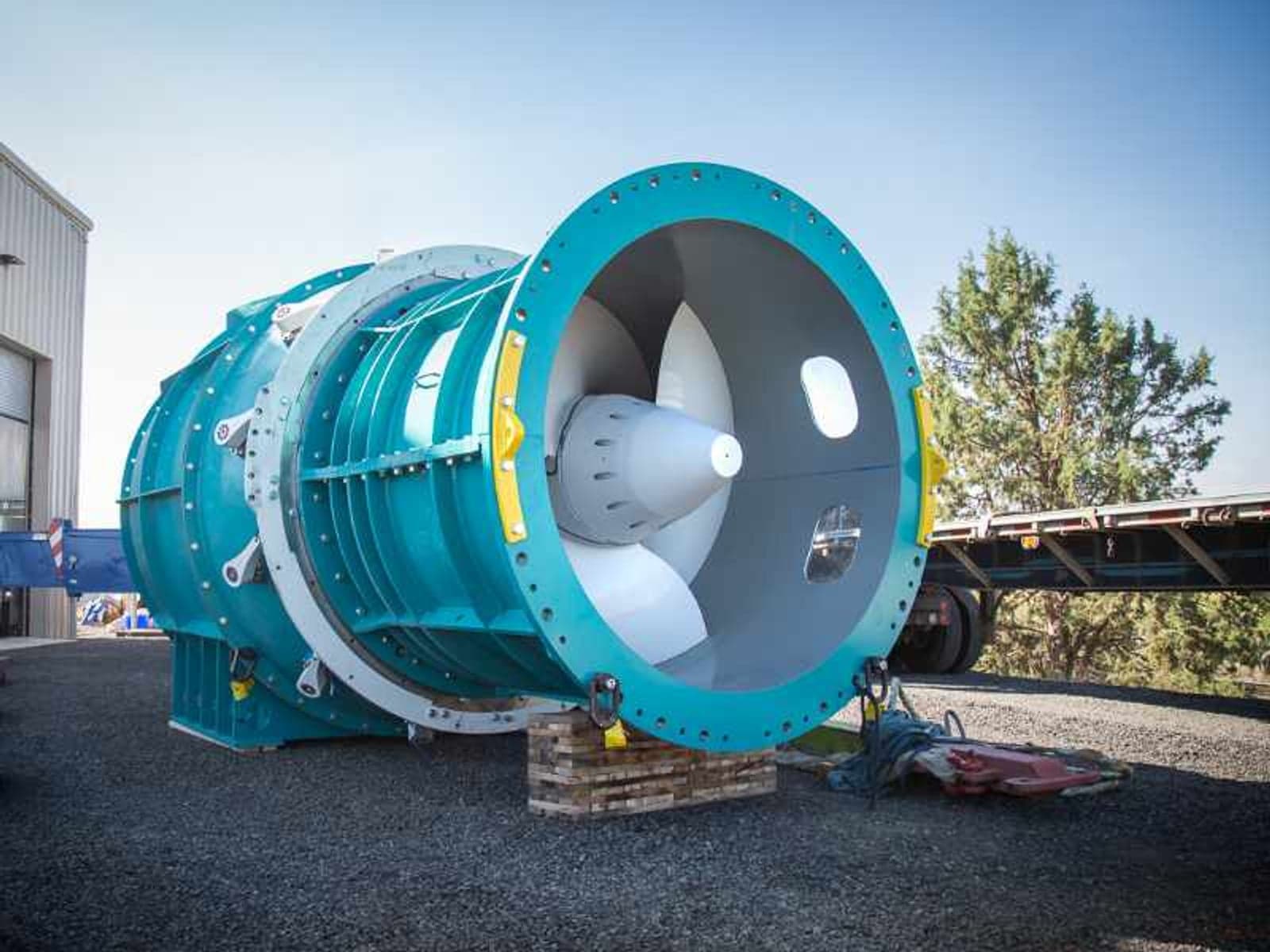
Innovative, high-performance hydro turbines that enable fish to pass directly through can generate renewable energy while preserving biodiversity.
Prioritising fish safety also enables other aquatic organisms to pass freely downstream, supporting healthier river ecosystems and translating to cost savings for plant owners and operators who no longer need to install and maintain fine fish screens and bypass routes, and will not need to implement plant shut downs to enable safe fish passage.
Biologically-driven design
Fish-safe designs are built on an understanding of how fish interact with turbine runner blades.
The ratio of turbine blade thickness to the length of the fish passing through the turbine is one parameter that can be adjusted to improve the fish safety of a blade design.
Studies conducted by Alden Research Laboratory with the US Electric Power Research Institute (EPRI) in 2010 established that a low ratio of fish length to blade thickness (i.e. thicker blades) could dramatically improve a fish’s survival in a strike.
Natel expanded on this research in 2019 with additional studies conducted with Alden, which determined that adding a slant to the blades could reduce the effective velocity of a strike, allowing fish to survive passage through turbines operating at high rotational speeds — a critical component of a runner design capable of working with modern hydropower turbines
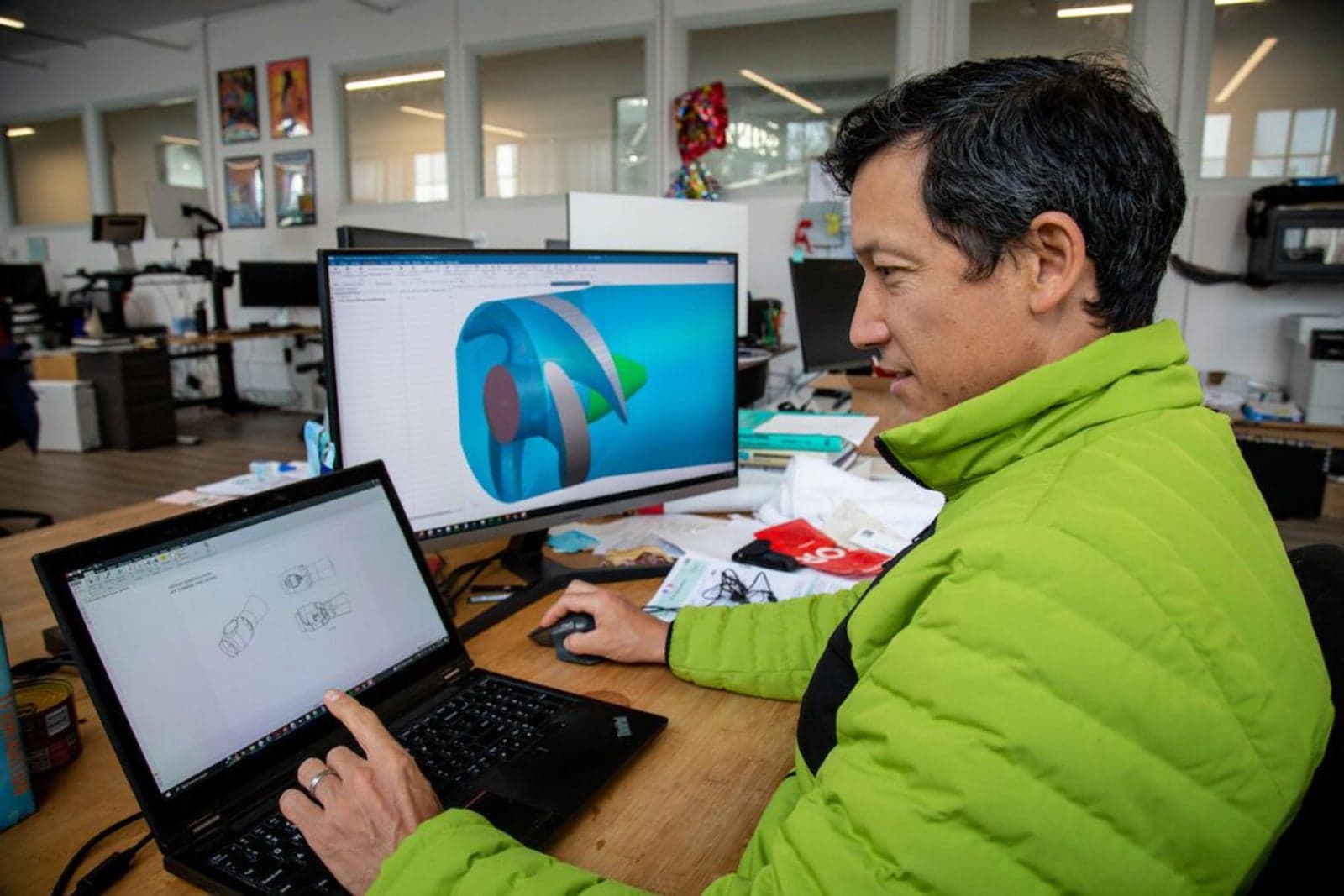
These results, combined with computational techniques for predicting strike survival, led to a new turbine design framework that integrates high performance with fish safety.
Called Restoration Hydro Turbines (RHTs) for the role they can play in supporting the restoration of ecosystems and fish populations, Natel’s turbine designs can be broadly applied to large and small hydropower projects.
Unlike prior fish-friendly turbine designs, the elements that define fish-safe RHT designs can be applied to a wide variety of configurations, at multiple scales and speeds. This flexibility means fish-safe RHTs also make economic sense — enabling a paradigm shift in fish safety in the hydropower industry.
Operational RHT projects in Madras, Oregon, Freedom, Maine, and Großsulz, Austria, have shown 98-100% survival across multiple species and life stages of fish, in designs that can achieve hydraulic efficiency greater than 90% along with good cavitation resistance.
Test results for studies with American eel and alewife (a species of river herring) are published in Transactions of The American Fisheries Society and The North American Journal of Fisheries Management, respectively.
Transforming the hydro fleet with fish-safe turbines
The potential of fish-safe designs to restore downstream fish passage and support biodiversity while generating reliable renewable power is substantial.
Today, the United States, Canada, and Europe host a combined total of over 30GW of existing hydro projects in need of new turbines, up for relicensing in next 10-15 years, and in jurisdictions where fish passage improvements are required.
Fish-safe RHT designs can be incorporated into turbines ranging from small runners less than 1MW to large runners up to 50MW, or greater, in projects with up to 40 meters (130 feet) of hydraulic head. RHTs address the need to upgrade the aging fleet while bringing existing hydro sites into compliance with current regulations for fish survival.
Hydro plant owners can now integrate the necessary cost of repowering with improved environmental performance — increasing capacity while protecting fish and other aquatic life.
Coupling innovation with collaboration
In adopting fish-safe turbine technology, the hydropower industry can lead the way for other energy producers to embrace innovations that center ecological health alongside efficient power production.
Already, the hydro industry has set an example of working collaboratively to maintain renewable energy production while improving environmental outcomes. Since 2020, the Stanford Woods Institute initiative known as the Uncommon Dialogue has convened stakeholders from the hydropower industry, environmental NGOs, and Native American tribes in a series of working groups committed to aligning on best practices and policy recommendations to rehabilitate, retrofit, and remove dams for to achieve shared goals of improving safety, enhancing power production, and restoring rivers.
The effort has resulted in $2.3 billion of funding included in the Bipartisan Infrastructure Law to implement actions proposed by the Uncommon Dialogue and is continuing to bear fruit in the form of multiple bipartisan bills currently moving through the US Congress.
In an example of how other renewable energy sources can take lessons from the hydropower industry’s journey, the solar industry is applying the same blueprint for finding common ground.
Industry, environmental, tribal, and agricultural representatives recently committed to prioritise 3 Cs, climate, conservation, and community, in the development of large-scale solar projects.
The success of these Uncommon Dialogue initiatives makes it clear: innovation and cooperation are both critical to advancing renewable energy while preserving natural ecosystems. Equipped with fish-safe turbines and a commitment to collaboration, the hydro industry can lead the clean energy transition.