Innovating sustainable energy communities with INNO-TREC
Guest/partner contributor
Posted on: 28 July 2026
INNO-TREC was created to to make renewable energy communities easier to set up, easier to operate and easier to scale across Europe, writes Mariana Jiménez.
Energy communities are becoming one of Europe’s most practical routes to a cleaner, fairer energy system.
The idea is simple: neighbours, businesses and local authorities generate renewable electricity locally and share the benefits. This can mean lower bills, stronger local resilience and a human-centred energy infrastructure shape. But in many places, turning enthusiasm into a functioning renewable energy community still takes too long and costs too much.
Communities hit a stack of practical hurdles when it comes to accessing renewable energy. Setting up a renewable energy community can involve legal steps and administrative processes that differ by country. Technical choices such as sizing a shared solar installation, allocating local generation fairly, or monitoring performance can require expertise that is not available. That pushes communities toward external consultants and a patchwork of tools, which increases costs and slows decisions.
INNO-TREC was created to close this gap. Short for INNOvative Transactive Renewable Energy Communities, it is a Horizon Europe project running from January 2026 to June 2029, coordinated by the University of Porto.
As Europe pushes for a more digitalised energy system, INNO-TREC focuses on tools and transaction models that help communities take part with confidence. Its transactive approach is not about adding complexity, but about making the value of locally generated energy clearer and easier to share so communities can gain more from renewables and build viable operating models.
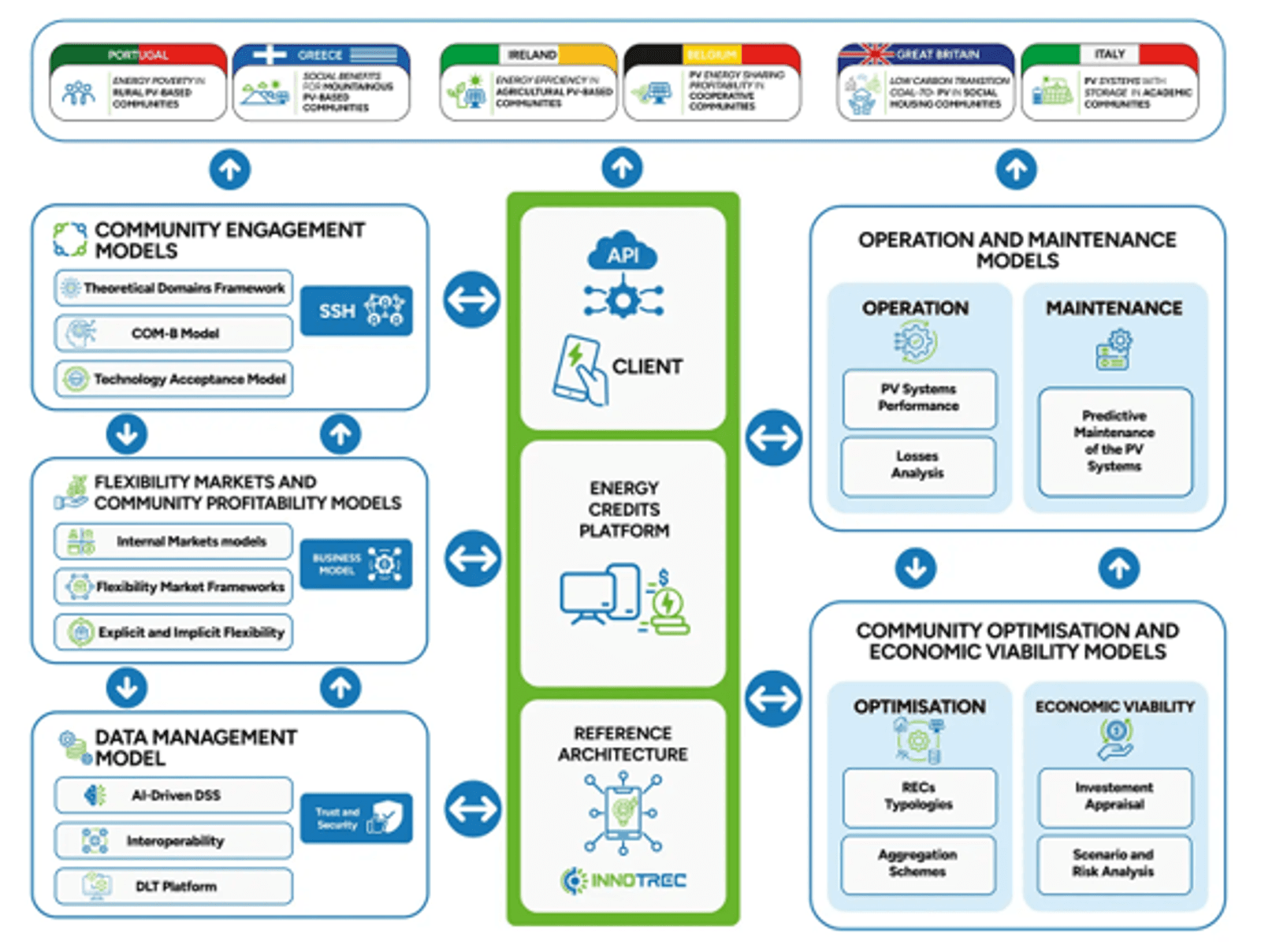
A central part of the approach is digital support designed for everyday users. INNO-TREC is developing a suite of free, web-based tools that can guide communities across the full lifecycle of a project. Communities need help turning ideas into informed choices, including engaging members, comparing design options and sizing photovoltaic systems based on realistic expectations.
Once assets are installed, communities need simple ways to track performance, understand energy flows and spot issues early. Tools for monitoring and predictive maintenance are intended to help communities keep shared assets running well without relying on third parties at every step.
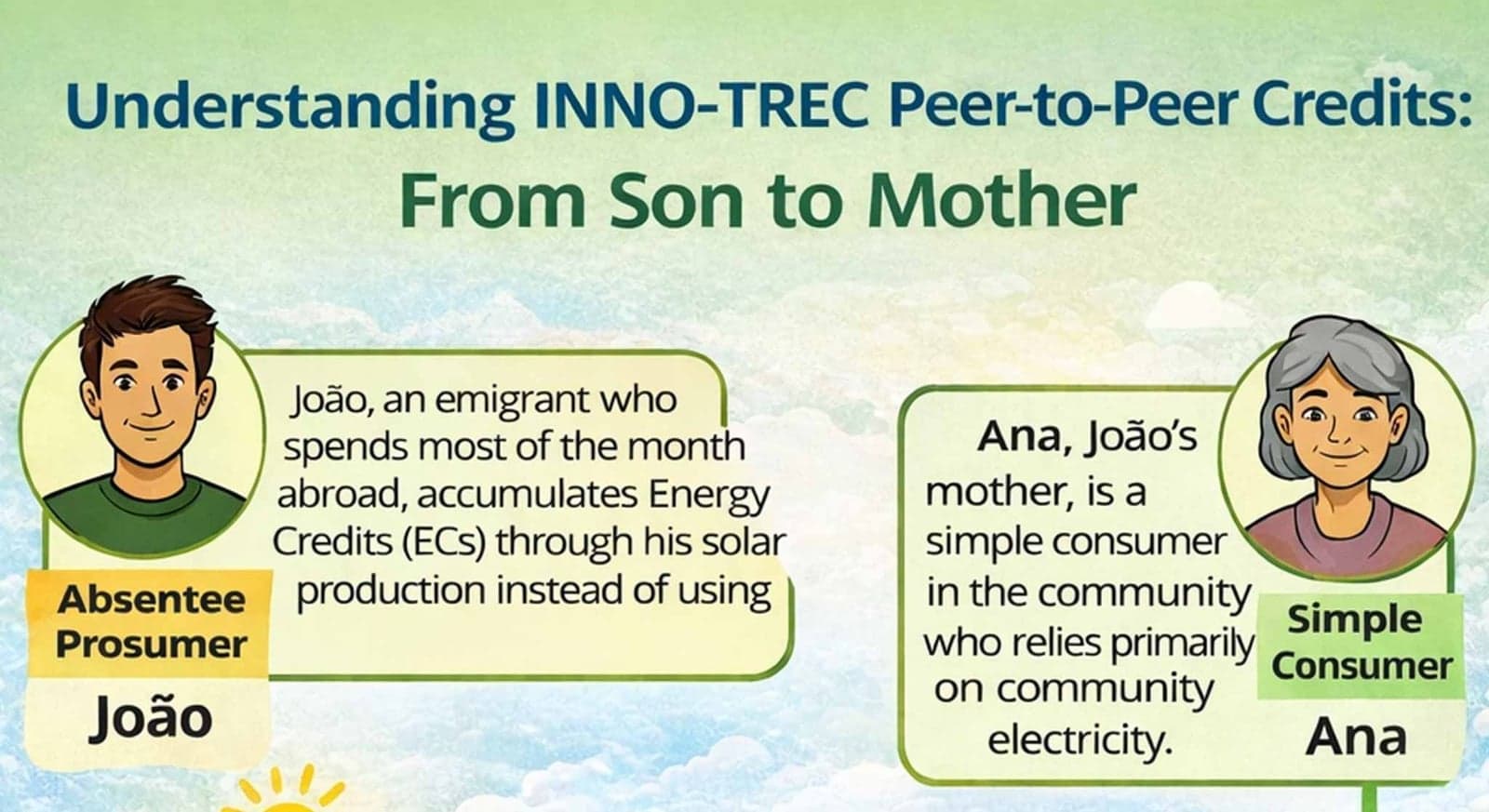
INNO-TREC also introduces an energy credits platform for internal community use. These energy credits work like digital vouchers rather than currency. They support transparent allocation of locally generated electricity and enable community features such as rewarding participation and donating credits to households experiencing energy poverty. This system would allow people like João and Ana to further benefit from community energy assets.
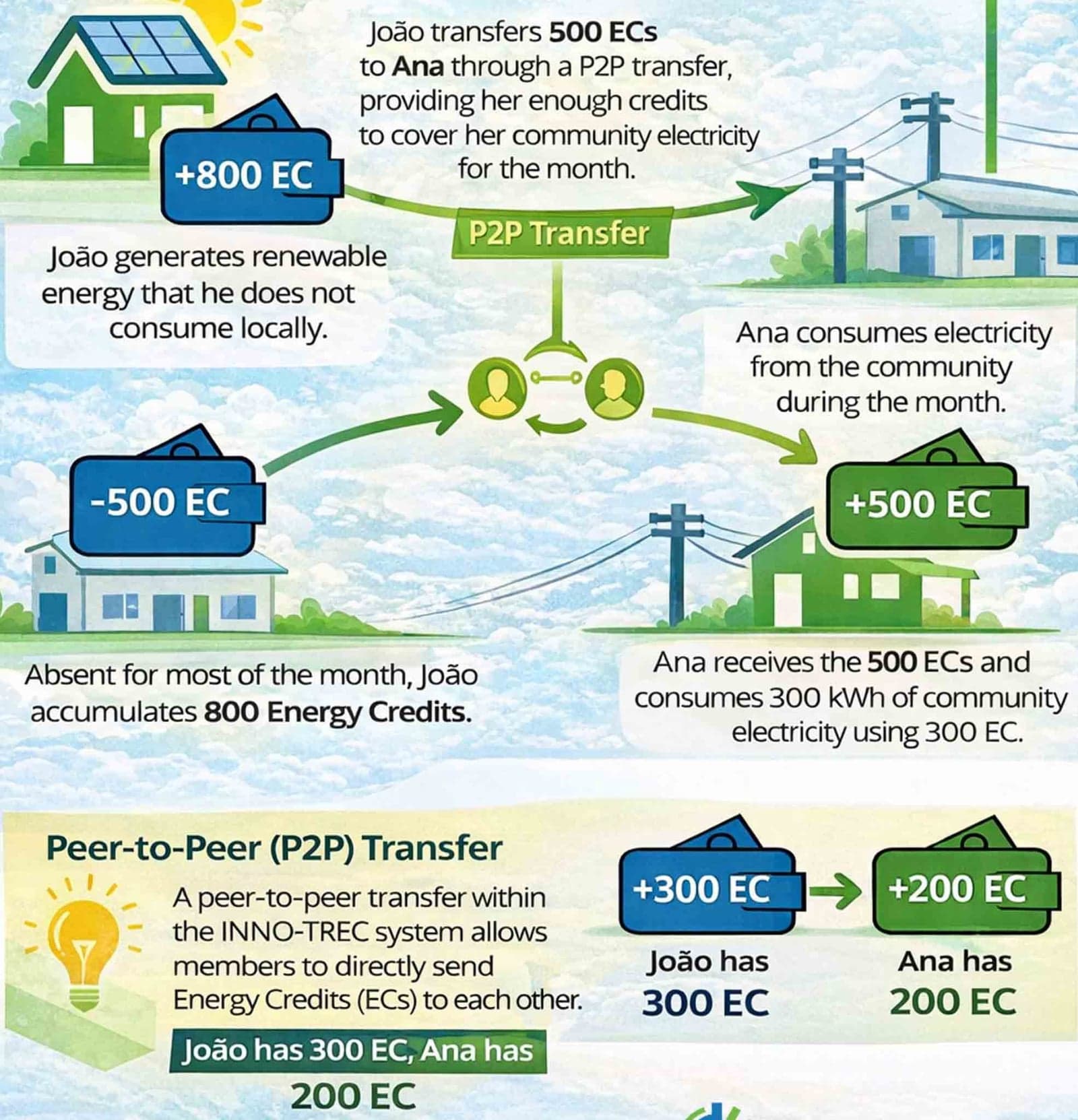
To keep the work grounded in real conditions, INNO-TREC is being demonstrated through six pilots in six countries: Portugal, Greece, Belgium, Ireland, the United Kingdom and Italy. These sites span different regulatory settings, market conditions and community needs. They also reflect a broad set of practical challenges, from supporting households experiencing energy poverty to examining how communities can support grid flexibility.
By testing the approach across varied contexts, the project can identify what can be standardised, what must be adapted locally and what is needed for wider rollout.
Europe will need many more community-led projects to meet climate goals while keeping the energy transition inclusive. That will take practical support to cut complexity, lower costs and build confidence.
INNO-TREC aims to make renewable energy communities easier to plan, run and trust. If communities can share solar more easily and distribute benefits fairly, community energy can become a lasting part of Europe’s energy transition.
About the author
Mariana Jiménez is a Technical Leader at EPRI Europe, contributing to research efforts in EU projects focused on advanced buildings and energy communities and as representative in key European research platforms. Her experience also includes advising regulatory bodies, consulting for multilateral organisations and teaching in sustainable energy bachelor’s and master’s programmes.