Is the UK's BESS market entering its next phase?
Yusuf Latief
Posted on: 15 August 2025
Yusuf Latief discusses the UK’s BESS market, which in the first half of this week became a hotbed of investment activity.
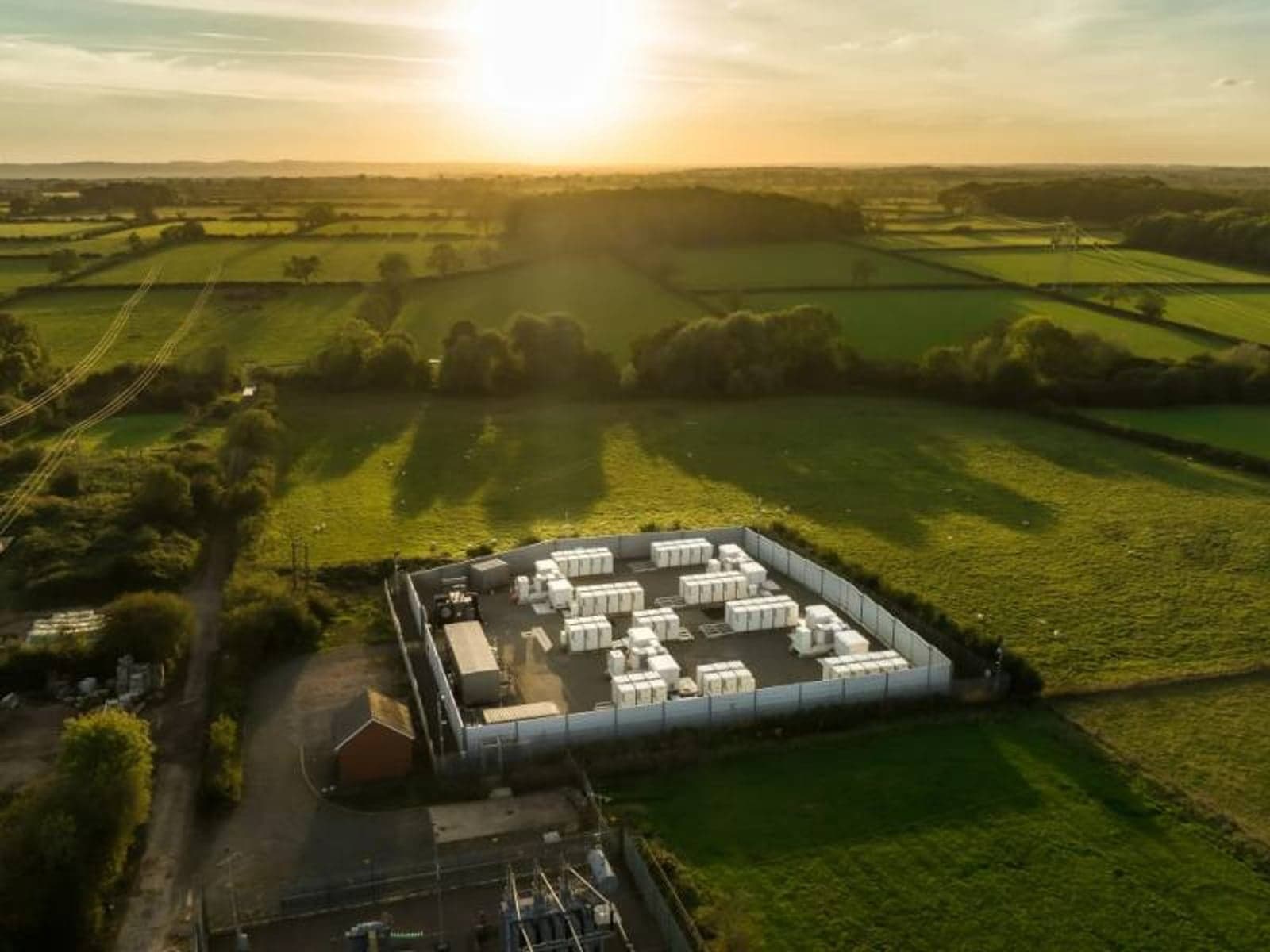
In this week’s Power Playbook: Yusuf Latief discusses the UK’s battery energy storage system (BESS) market, which last week became a hotbed of investment activity, signalling a gear shift into its next phase.
There is little doubt as to the criticality of BESS for the energy transition. The tech has been widely adopted as a source of firm power for the grid, providing balance when needed.
This is especially true in the UK, a leader in the segment, where a number of investment decisions have recently been announced to drive the development of battery projects even further.
So, what are these projects doing and what’s behind the market's success? Let’s dive in.
Three big BESS announcements
Last week, the country’s National Wealth Fund (NWF) announced a £50 million ($67.2 million) equity investment in AMP Clean Energy to support the development of hundreds of Battery Box sites.
These micro-scale batteries are connected directly to the local distribution network and strategically placed near demand centres such as homes, schools, and hospitals to support local energy usage.
Commenting on the investment in a release was Mark Tarry, CEO of AMP Clean Energy: “It will accelerate our ability to build the kind of energy infrastructure the UK needs: practical, low-carbon projects that support both local grid flexibility and industrial decarbonisation.”
A day later, Pulse Clean Energy announced a £220 million ($295.8 million) green finance deal from a consortium of six international banks, marking one of the largest financings in the UK for battery storage infrastructure.
The green debt raise brought together a diverse banking consortium, including Santander, NatWest, ABN AMRO, NORD/LB, Investec, and CIBC.
Through the financing, Pulse will facilitate the construction of six ready-to-build BESS sites, strategically located equating over 700MWh of capacity, including the conversion of existing diesel sites to BESS assets. It will also support the ongoing funding of nine sites already in operation or in late-stage construction. These sites are across the UK in areas including Scotland, Devon, Greater Manchester, and Wales.
During their operational life, these projects will also create over £200 million ($268.9 million) in gas and emissions savings for UK consumers, says Pulse. These savings are in addition to the benefits of enabling greater integration of wind and solar power, as the batteries provide the grid with the flexibility needed to accommodate variable renewable energy sources.
And on the same day, SAE, a developer, owner and operator of energy projects, announced financial close of its AW1 project at the Uskmouth Sustainable Energy Park (USEP).
The project is a 240MWh battery storage project with the ability to increase to 480MWh. SAE refers to it as their flagship project at the USEP, which has the potential to be one of the largest battery storage sites in the UK.
For financing, the SAE Group entered various agreements to secure £67.4 million ($90.6 million) in funding to develop, build, own and operate the project.
Again, NORD/LB – a German bank - had a role in the financing, providing £45.3 million ($60.9 million) of non-recourse project finance on market-standard commercial terms.
Also in the Power Playbook: Cap and floor - LDES watershed or critical battery barrier?
A burgeoning market
These deals demonstrate that the UK's BESS market continues to be one of the most lucrative in Europe.
But why is this?
For one thing, the UK has ambitious policy and bold targets, with its Clean Power 2030 (CP30) action plan setting a target grid capacity of up to 27GW of storage batteries by 2030, a sixfold increase from the 4.5GW currently installed.
Additionally, the country’s National Energy System Operator (NESO) forecasts that the country will need at least 50GW of energy storage power capacity and just under 200GWh of capacity by 2050 – requiring four to five times current capacity by 2030 alone.
Rabobank puts it nicely in a blog post: the island has limited interconnection capacity and a heavy reliance on wind energy, which is why it needs BESS to ensure stability in its electricity system.
This need has created a burgeoning market.
The next phase: Strategic business strategies
The targets are bold, the numbers are big, and it seems as though the money is flowing. Now, the question in the UK is no longer whether battery projects can secure funding, but rather how they structure it.
In a blog post by PexaPark, the Swiss renewable energy pricing data provider says how, just a few years ago, BESS financing was mostly reliant on corporate balance sheets or subsidies.
This has now changed to a variety of mechanisms: non-recourse project finance for portfolios bigger than 600MW, mezzanine debt entering the capital stack, and public banks co-financing with private lenders.
Indeed, as the storage landscape only continues to mature, so too should its financing.
And then there is the matter of the UK's diverse revenue stack.
To go back to Rabobank, the company comments that most UK wholesale markets and ancillary services are accessible to batteries, but the dynamics of each different revenue stream can change significantly over time, making business strategy design complex.
Additionally, they say, on the market side of things, focus has shifted from frequency services to energy arbitrage; the share of frequency services decreased from 80% in 2022 to just 20% in 2024, due to market saturation.
Thus, traditional revenues decline, and the company recommends BESS investors carefully adapt their business models to a new reality.
Take, for example, hybrid structures, detailed by Pexapark, which developers are turning to to hedge at least parts of the BESS revenues. These can combine capacity market contracts, tolling agreements and optimisation contracts with floor payments.
Pexapark cites Eku Energy’s Ocker Hill project in the UK, which secured £45 million (approximately $61 million) on the back of a 10-year tolling deal with a Marubeni-backed aggregator.
Clearly, the UK has been getting a lot right when it comes to its BESS market, now needing refined approaches to business models and, perhaps, serving as an example for others to follow.
What will be interesting to follow is how the market continues to develop as policy progresses, more capacity comes online, and revenue strategies mature.
What do you think? What are some new approaches BESS investors and developers should have in mind for their operations in the sector, and how will the country's market continue to develop?
Reach out and let me know so that I can feature your thoughts in the Power Playbook.
Cheer,
Yusuf Latief
Content Producer
Smart Energy International

Follow me on LinkedIn