JPMorgan Chase backs energy transition skills accelerator
Yunus Kemp
Posted on: 11 May 2026
By 2030, the sector will need 3.5 million additional workers, particularly in technical roles like solar, batteries and grid infrastructure.
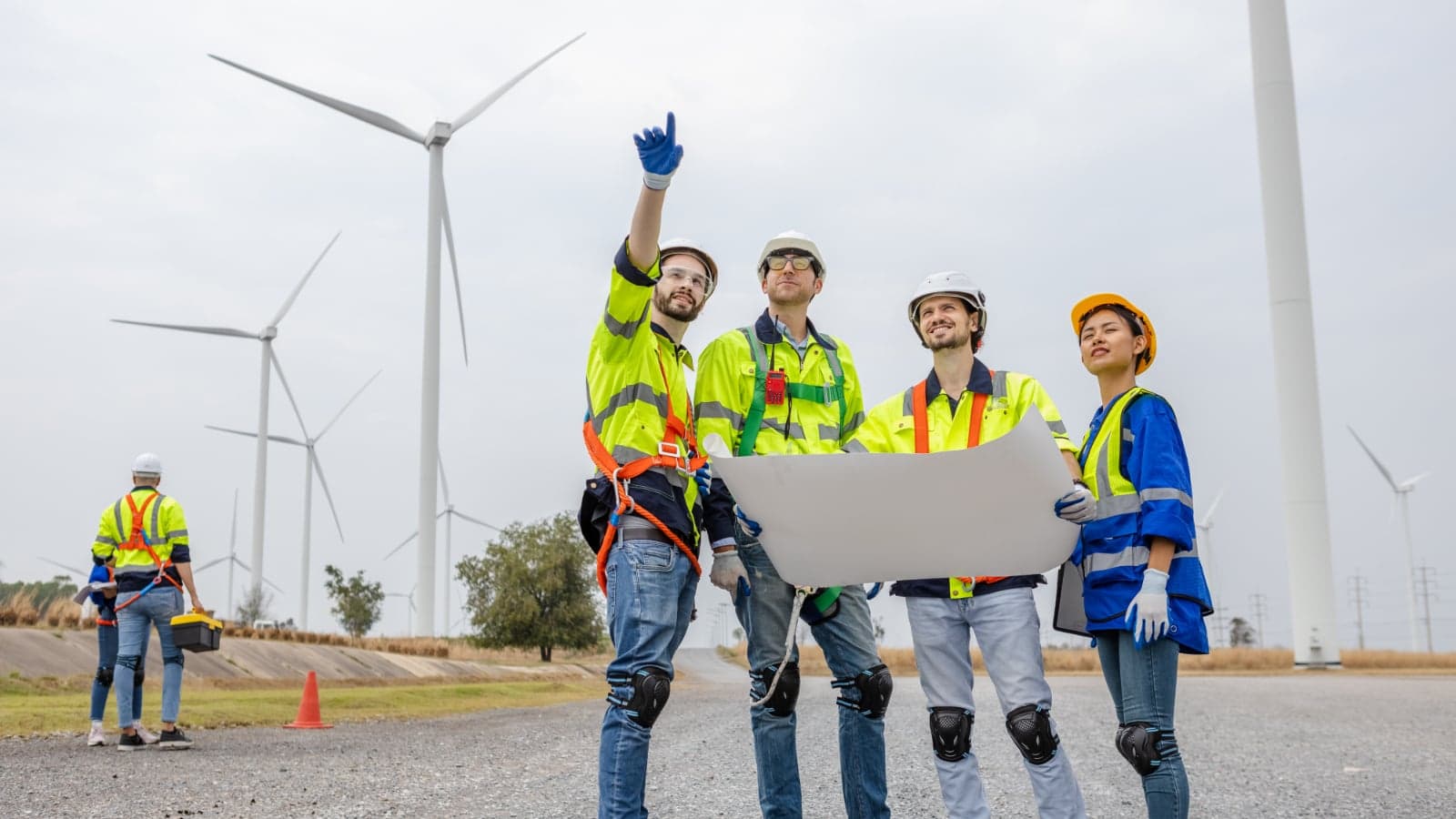
A new programme has been launched that plans to train and connect 1,500 jobseekers in the solar, batteries and grid infrastructure sectors across Germany, France and Spain.
InnoEnergy, a company that invests in early-stage start-ups in Europe and the US has introduced the Energy Transition Talent Accelerator.
Supported by JPMorgan Chase, the project is a “new large-scale programme designed to address one of the most pressing bottlenecks in Europe’s energy transition: the shortage of skilled technical workers.”
A 2025 Industry Report by Enlit - Making it work Tackling the energy transition workforce challenge – points out that between now and 2050 the industry must embark on a massive recruitment, retention and training programme.
“The orthodoxies of business-as-usual recruitment and training programmes will not meet the industry’s rapidly changing workforce needs, both in terms of headcount, as well as in terms of skills. If we keep recruiting just from the same talent pools, we will never get all the staff the transition needs. We need to tear up the rulebook and find innovative ways to address these workforce challenges,” said Enlit Director Paddy Young.
Access the Enlit Report here
Millions of workers needed
InnoEnergy said Europe’s energy transition is hitting a major bottleneck: skills.
“By 2030, the sector will need 3.5 million additional workers, particularly in technical roles like solar, batteries and grid infrastructure while youth unemployment across the EU remains high,” said the company.
“Led by InnoEnergy’s Skills Institute and supported by JPMorgan Chase, the initiative will train and connect 1,500 jobseekers from underserved communities to employment opportunities in the fast-growing energy sector across France, Germany and Spain.”
Europe’s clean energy transition is accelerating, but the workforce required to deliver it is not keeping pace, said the company.
“By 2030, the European energy sector is expected to require 3.5 million additional workers, particularly in technical roles linked to deployment, operations and maintenance.
“At the same time, youth unemployment across the EU remains above 15%, highlighting a clear mismatch between labour demand and available skills.”
Specific roles targeted
The Energy Transition Talent Accelerator directly targets this gap by training people for roles such as:
- Solar PV installers and O&M technicians;
- Battery maintenance and systems technicians;
- Grid connection specialists;
- EV and battery-related technical roles.
InnoEnergy said these are the positions where shortages are most acute across Europe’s energy system.
“The programme is designed as a delivery-driven, employer-aligned model, ensuring that training translates into real job outcomes.
“Participants will complete hybrid training programmes, combining online learning, hands-on technical training and job-readiness support. Training pathways are aligned with recognised European certifications and developed in close collaboration with employers.”
The programme aims to deliver 1,500 learners trained; more than 1,300 certifications; and over 800 job placements across internships, apprenticeships and full-time roles.
Biggest markets across Europe
The initiative focuses on France, Germany and Spain, three markets at the forefront of Europe’s energy transition – and among those most affected by skills shortages.
Across these countries rapid solar deployment and storage expansion are driving demand for technical talent, battery and EV ecosystems are scaling quickly, and regional clusters - such as Battery Valley in France or emerging gigafactory hubs in Germany - are intensifying workforce needs.
At the same time, many jobseekers remain excluded from these opportunities due to lack of access to relevant training.
“Building the net zero economy requires more than capital at the initial phase for clean tech startups. This is why InnoEnergy is the number one in venture capital for energy transition1. Well trained people with skills are also vitally required to deliver the net zero economy.
“InnoEnergy's Masters+ programmes and Skills Institute are how we make sure the human side keeps pace. The partnership between JPMorgan Chase and InnoEnergy's Skills Institute puts that into action for 1,500 young people across three of Europe's key energy markets", said Sébastien Clerc, CEO, InnoEnergy.
Have you read?
Finalists of 2026 European sustainable energy awards revealed
Download: Enlit industry report 2026 on energy system resilience solutions
Matthieu Wiltz, co-chief executive of PMorgan Chase EMEA, said strengthening Europe’s energy sector starts with investment in technology, innovation, and skills.
“By supporting employer-led training and apprenticeships, we’re helping align skills with market demand and enabling more people to access quality careers in the energy sector,” said Wiltz.
As of April 2026, the programme is completing its foundation phase, with training pathways defined and employer partnerships being established. First learner cohorts are expected to begin in Q2 2026.
The initiative is designed as a replicable model, with potential to scale across additional regions and energy sectors in the future, InnoEnergy said.
Highlighting career opportunities
The Enlit Report emphasises that without attracting enough people with the right skills to the sector, the energy transition will lose speed and net zero goals will be at risk.
“To bridge the headcount gap, recruitment needs to become a strategic issue. So far, the industry seems to have underestimated the difficulty recruiting the people needed to accelerate the energy transition and is recruiting with one foot in the past, without analysing its real needs and recruitment data.”
The report recommends that instead of focusing on traditional engineering skills only, the industry should broaden its perspective to also recruit people with transferable skills.
“In general, the industry needs to communicate better about the energy transition’s career opportunities, polish up its narrative and recruitment pitch and inspire the next generation to join the energy workforce.”