Maintaining traditional inertia for critical grid stability
Guest/partner contributor
Posted on: 5 January 2026
Sulzer engineering and turbine specialists discuss how, although investment in renewables continues to accelerate, grid instability remains a challenge in need of critical assets.
According to the European Commission, around €1.2 trillion of grid investment is needed between now and 2040, yet current spending falls short of what is required to ensure sustainable, reliable transmission and distribution.
Although investment in renewables continues to accelerate to meet net zero targets, the lag in infrastructure investment has resulted in long grid connection queues and growing instability.
Data from the European Network of Transmission System Operators for Electricity shows a 1,400% increase in incidents where voltage exceeded European limits between 2020 and 2024. To put that in perspective, while control rooms might have seen around 11 over-voltage alerts per week in 2020, today they face almost one every hour.
The extended blackout on the Iberian Peninsula in April 2025 highlights the significant impact of such instability: millions of people were without power for several hours, hospitals activated emergency plans and telecommunications were disrupted as far away as Greenland and Morocco.
However, this risk is not unique to Spain or Portugal; Across Europe grids are struggling to keep pace with rapid renewable integration and to deliver the inertia previously provided by conventional power plants.
Combatting grid instability
In many countries, large, fossil-fuel based rotating equipment has traditionally acted as a natural source of grid stability, with stored kinetic energy providing resistance against sudden frequency changes. However, as renewable generation has replaced fossil fuels, that inherent source of inertia is in decline. In fact, in the European Union, electricity generated from fossil fuels has fallen by half since 2010.
Batteries, grid-forming inverters and synchronous condensers are emerging solutions for replacing fossil-fuel inertia in a net zero future but typically take several years to construct or require the development of grid stability services.
For countries with ambitious net zero goals, instability may worsen in the near term as more renewable generation is connected to the electricity grid without the grid management capabilities to match.
This makes the role of the remaining gas-fired assets – which still supply around 17% of Europe’s electricity needs – even more critical for managing grid instability challenges.
The impact of changing operational patterns
As gas-fired assets have shifted from baseload to back-up generation, reliability requirements have changed dramatically. Much like a car that performs best at a steady motorway speed rather than in stop-start traffic, these machines were designed for continuous operation, not frequent cycling and low-load conditions.
Yet today, they are increasingly cycled up and down to help stabilise the grid and meet transient output demands. This adds new stresses that were never part of their original design.
When gas turbines are cycled up and down in this way, one of the key issues that can be encountered is thermal movement and thermal stress.
Heat is convected and conducted at different rates, meaning the metal expands unevenly causing thermal stress. Repeated application and removal of thermal stress leads to thermal fatigue and the frequent ramping and cycling required to accommodate a more intermittent grid tends to accelerate this damage. Blade roots, balancing pistons and seal shoulders are particularly vulnerable to thermal fatigue and should be inspected regularly to reduce risk.
Generators face a different set of challenges during cycling operations. Unlike turbines, where thermal movement dominates, low speeds can lead to issues such as blocking moving due to the lack of rotational forces.
For example, the blocks that secure the generator rotor coils can loosen and rub against insulation. This leads to wear which, over time, can lead to performance issues. If unaddressed, it can lead to a catastrophic failure requiring rewinding and extended unplanned outages.
Have you read?
Vital next steps to unlock greater grid stability
Eight ways grid resilience was prioritised in 2025
Why improving power resilience in healthcare is a matter of life and death
Repair or replace
Historically, operators faced long waits for replacement parts, but with advances in repair technologies, many components can now be refurbished and repaired thus reducing downtime, lowering cost, and extending asset life.
Laser welding and additive manufacturing capabilities continue to evolve, enabling whole sections of components to be rebuilt with high precision and improved durability. Where new parts are required, 3D scanning provides accurate measurements of even the most complex geometries, which can be used to design a new part to match original specifications, or as the basis for an improved design.
Innovation is equally critical for generators. One example is the redesign of how rotor end-winding blocks were fixed to allow thermal expansion while preventing movement at low speeds. The generator also underwent a comprehensive evaluation to confirm that it could continue to operate safely and reliably with this innovative repair.
With any repair, the key to success is taking a tailored approach, a clear understanding of the operator’s requirements and the expertise of competent repair specialists.
Revealing insights through data
Using data can provide timely insights on the condition of the asset and be used to improve operation. For example, stress modelling can ensure the safety and reliability of legacy equipment.
This can be especially useful if a piece of equipment is no longer supported by the OEM or is considered on paper as beyond its operational life.
Stress modelling can avoid perfectly operational equipment from being decommissioned without engineering cause. Data can also be used to review start profiles and redesign them to lower the strain on equipment, allowing the asset to continue playing an important grid stability role.
Looking ahead
Over the next 25 years, Europe will require around one trillion euros of new grid infrastructure and reinforcement to support the energy transition. Yet this investment continues to lag behind renewable power generation, placing additional stress on the grid and increasing vulnerability to instability and outages.
Until new solutions are deployed at scale, existing thermal assets - gas and steam turbines and their generators - remain essential providers of much-needed stability and inertia.
As their role in the electricity grid has evolved, so too must inspection, maintenance and repair strategies to ensure they continue to underpin grid reliability.
About the authors
Tom Ison is the Head of Engineering & Innovation for the UK and Nordics with over 15 years of experience working on large electrical generators.
Ben Morrell is a steam turbine specialist with 20 years of experience in the steam turbine and power generation industry.
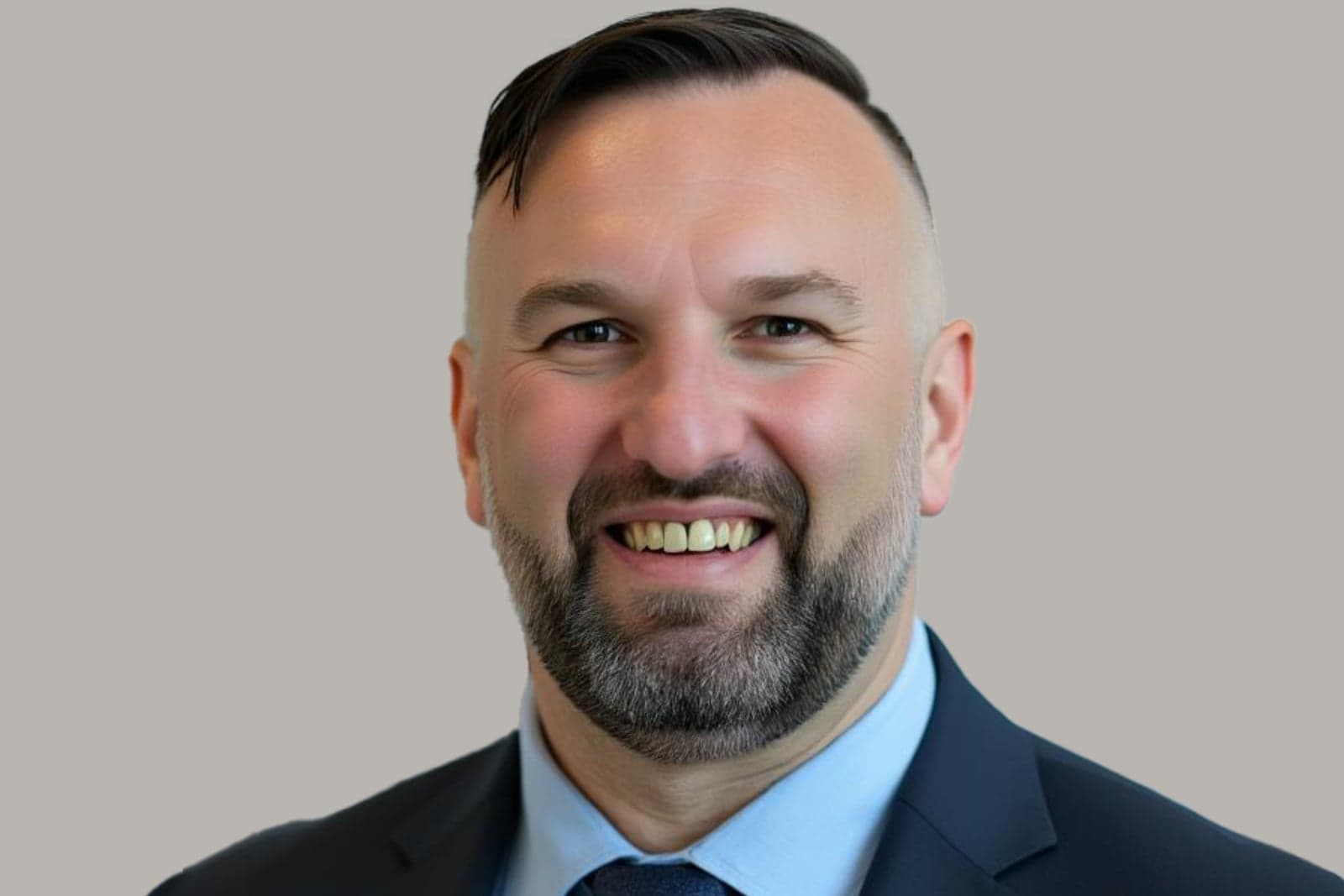
Sander Lamberts is a Repair Engineer at Sulzer Turbo Services in Venlo, with over 18 years of experience in various roles within the company.
Related tags
Latest content
+4
What Spain’s blackout means for the US grid and its energy storage future
EU grids tend to be centrally managed whereas the US runs a patchwork of regional systems. Barrett Bilotta of Agilitas Energy examines what can one learn from the other to counter the threat of cascading blackouts.
- Guest/partner contributor
- 31/10/2025