Lessons from grid bottlenecks in Germany and the Netherlands
Yusuf Latief
Posted on: 20 February 2026
Grid bottlenecks hamper net zero efforts for two of Europe's major economies - how has it gotten this far and how can flexibility help?
Across Europe, the rapid shift to decarbonised energy systems is exposing profound bottlenecks in national electricity grids — especially in the Netherlands and Germany.
While both countries are committed to ambitious climate goals and electrification, congestion in distribution and transmission networks is slowing down progress, delaying connections, and raising urgent questions about flexibility, data, and digital solutions.
The Dutch grid: A congestion crisis
In the Netherlands, grid congestion has become a defining challenge of the energy transition.
Rapid growth in electrification, especially after the closure of the Groningen gas field and a swift move away from natural gas, has rapidly outpaced grid capacity.
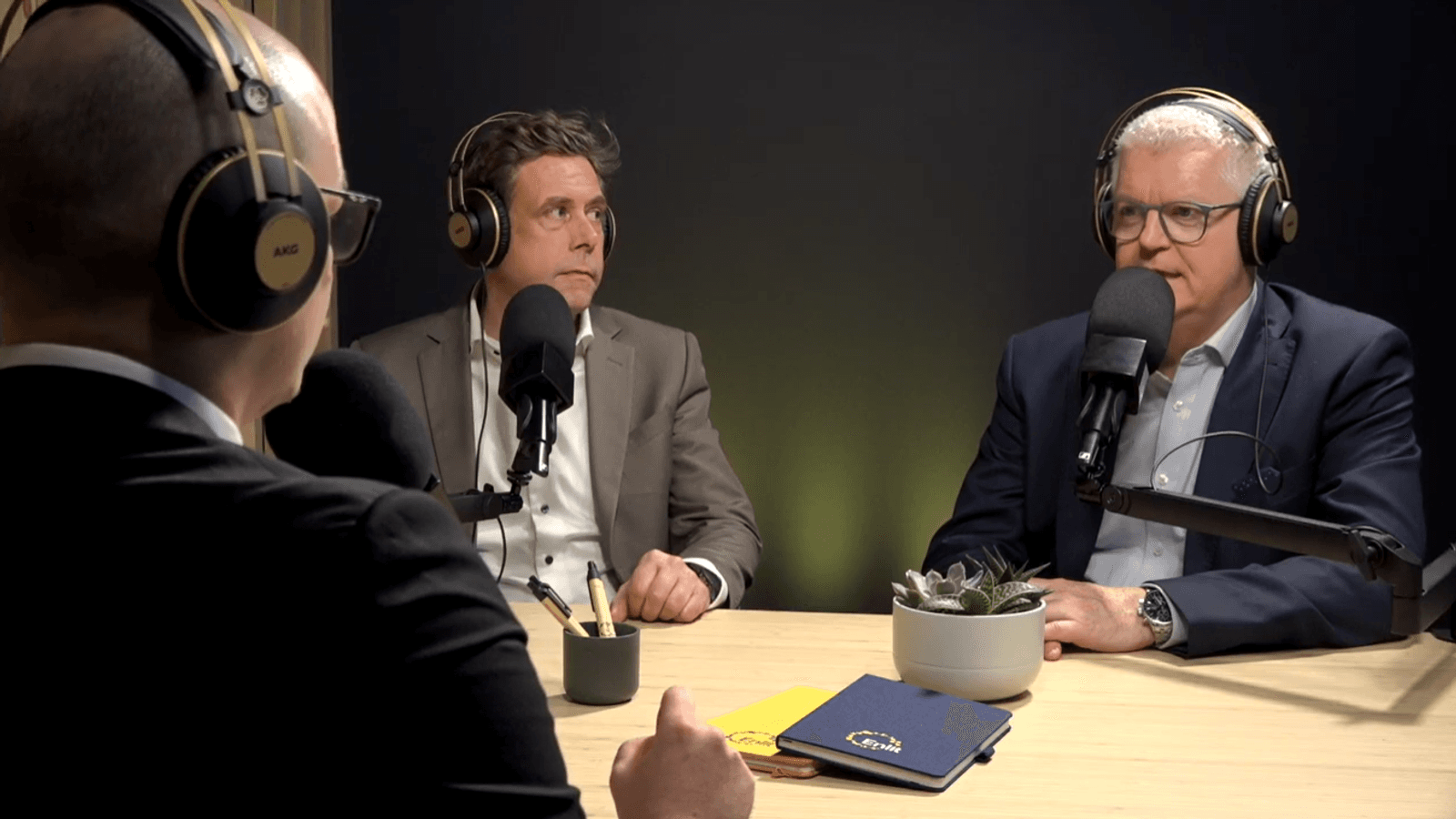
During an episode of the Energy Transition podcast, Alco de Lange, a Strategic Advisor for the energy sector at DSO Stedin, explained that there is not one factor to blame:
“There is a factor in the regulatory framework that is not really stimulating investments. But we are all in this situation, so we all participated in this.
“We accelerated phasing out natural gas from Groningen…and electrified very fast, giving out a lot of subsidies. We had maybe one of the largest surges in Europe in charging points and solar panels.”
Indeed, as reported by the Financial Times, the Netherlands is one of Europe’s fastest countries to electrify, after ending production at the giant Groningen gas field in 2023. More than 2.6 million households in the country have solar panels on their roofs, and companies also accelerated their move away from gas after the 2022 energy price crisis.
Have you read?
The grid – Achilles heel of the energy transition
Designing neutral incentive frameworks for efficient electricity distribution
Enlit Europe 2025: grids trends & takeaways
With more than 11,900 businesses awaiting electricity network connections, an estimated €200 billion ($236 billion) in investment through 2040 will be needed to provide the grid capacity required.
Said de Lange: “At the moment, there are a lot of businesses in certain areas in the Netherlands on the waiting list. They cannot connect. They have to really adapt to a new reality.”
This structural capacity shortage also creates a backlog of projects that cannot be completed until capacity expands. De Lange described certain regulatory responses, such as loosening first-come-first-serve frameworks and prioritising “congestion solvers” — projects that can ease bottlenecks once connected, for example, energy storage.
“If we see that they can solve congestion, but they are placed at number 10 in the queue, for example, it would be a waste to keep them there because if they connect, you might also connect maybe seven others who would have to wait if number 10 doesn’t connect to the grid. I think that's a good measure.”
Germany’s grid expansion challenge
Germany’s grid issues take a different shape, but are no less serious.
It reflects issues in the Netherlands in some ways, including congestion management and connection coordination.
Speaking alongside de Lange was Oliver Franz, Vice President of European Regulation for E.ON, who described the complex situation:
“The constraint in Germany is that, luckily enough, we had a first wave of RES (renewable energy sources), especially solar, going on the grid and that created a bit of a reserve. Now we're at a moment in time where at least two or three things happen simultaneously.”
Franz cited how available reserve capacity in the low-voltage network starts to run out because of new households deciding to go on their own energy transition path, which can cause local substations to overload or feeders to experience voltage issues.
This is compounded by the “two new kids on the block that we didn't have in our plans 18 or 24 months ago: data centres and battery storage systems.
“Both of them are entering either high voltage or medium voltage, where you might find a situation to collocate with a wind farm for capacity, but if you look close to large towns for instance … Frankfurt, there is not much you can do."
The reasons for Germany’s bottlenecks also extend to the issues on the high-voltage transmission network, which of course is needed to transport renewable energy from where it’s generated to where it’s used.
Wind power in northern Germany and offshore must travel to industrial demand centres in the south, but new transmission lines are chronically delayed.
According to reportage by DW, a key German bottleneck is the slow expansion of the high-voltage grid: between 2009 and 2024, of 128 construction projects called for by the country’s Federal Network Agency, only 34 were “fully completed”.
We have this coordination function, but we still want to see the market evolving more. We are still looking for more flexibility.
Beyond transmission delays, approval processes and planning procedures slow grid expansion. Long environmental assessments and planning approvals add years before physical construction begins, extending the period during which renewable capacity cannot be fully integrated.
That isn’t to say that nothing is being done to relieve congestion, however.
Said Franz: “Of course, we're looking to flexible connection agreements, we're looking at all kinds of grid enhancing technologies to do what we can." Franz and de Lange agreed, however, that there is an intermittent period where patience is needed.
Flexibility as a partial solution
De Lange and Franz highlighted that structural grid upgrades alone will not be enough; flexibility must also play a central role.
In the Netherlands, the introduction of flex-oriented procedures, such as the Dutch grid operators’ GOPACS platform, which helps alleviate electricity grid congestion by enabling the deployment of flexible capacity, is an example.
Said de Lange: “I think it has a lot of advantages because we, as system operator,s are really in control. We can make sure that if we solve congestion in one area, we are not creating congestion in a nearby area for another DSO, for example.
“We have this coordination function, but we still want to see the market evolving more. We are still looking for more flexibility.”
As for Germany, Franz explained that things on the flexibility front are not yet satisfactory.
“I don't think that we're satisfied. Most resources are actually going to redispatch, where the DSOs have an active role to play. It’s not only that the TSO asks them to help with their tasks and jobs, it’s also about their own merit, which means that they need to build systems and understand what is happening.”
Franz adds an example of how they are pondering the use of AI to prognose the next day’s power grid conditions.
“The target is always to minimise the redispatch so that people can actually deliver the energy to the market that they want. Because, if I had to describe our role in a prosumer world as best as possible, I would suggest that it is our job to provide the consumer with a chance to get the energy that they are making or the flexibility that they're creating to the next best market for that.
“That might be the wholesale, regional or local, but it's not for me to decide. It's rather [our] job to make it happen.”