Medium voltage DC grids to drive industrial appliances in the MW range
Guest/partner contributor
Posted on: 9 September 2025
DC-POWER proposes a local MV direct current distribution bus architecture for the local electricity distribution to power industrial applications in the megawatt level.
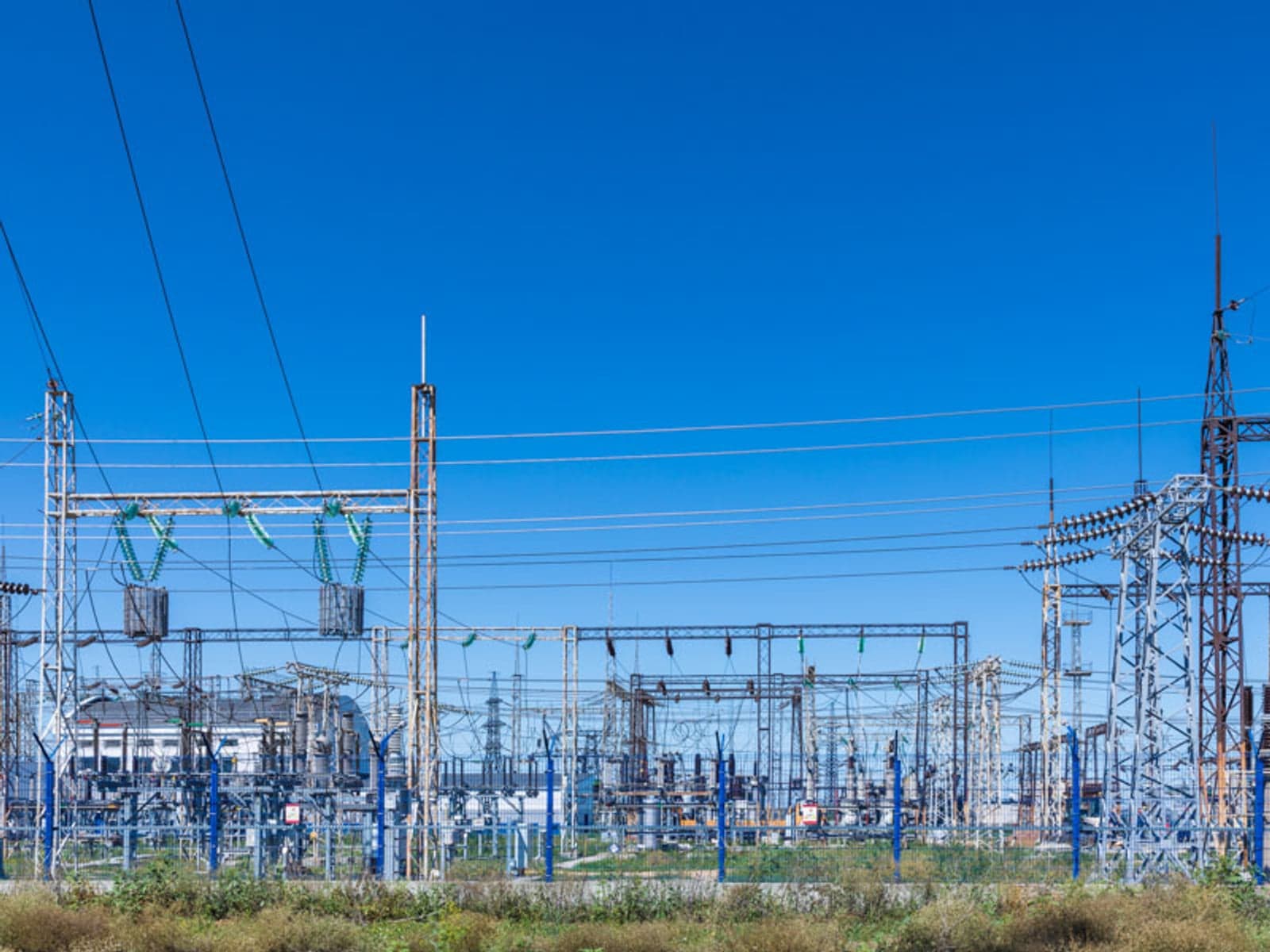
DC-POWER proposes a local MV direct current distribution bus architecture for the local electricity distribution to power industrial applications in the megawatt level.
The architecture of the electricity grid was created in the late 19th century in the United States. At that time, both direct current (DC), promoted by Edison, and alternating current (AC), championed by Tesla, coexisted. AC eventually won because its voltage could be easily stepped up or down using transformers, something that was not possible with DC technology of the time. This made AC ideal for long distance transmission from large, centralised power stations to consumers, and the grid was optimised for a one-way flow of electricity.
Today, however, this design is increasingly outdated. The growth of decentralised renewable energy sources requires flexible, bidirectional power flows. Thanks to semiconductor switches and DC–DC converters, voltage can now be transformed efficiently in DC systems. As a result, the traditional drawbacks of DC can be overcome, opening the door for MVDC grids to support the energy transition.
Objectives of DC-POWER
DC-POWER builds on previous work done on LVDC distribution grids suited for lower power levels and extends this into the MV range. This architecture is envisioned to manage electric power distribution on industrial sites or buildings, powering high power loads while smoothly integrating local energy generation and storage.
The project sets ambitious targets for MVDC distribution systems, aiming for at least:
- 50% reduction in energy losses compared to conventional 400V three-phase AC systems.
- Reduced space requirements for distribution infrastructure.
- 50% reduction in downtime, owing to fewer vulnerable components.
- Lower costs for primary distribution microgrids.
- Reduced energy imports from the main grid.
- Improved power quality across industrial applications.
To demonstrate the D3 bus system concept, DC-POWER will use two pilot sites incorporating large solar PV arrays. These are a hydrogen electrolyser, where efficient and stable DC supply is crucial, and a data centre in Athens, Greece, an environment highly sensitive to reliability and energy efficiency.
Methodology: Key innovations
Developing a robust MVDC grid requires advances at both the system level and the component level. DC-POWER addresses both.
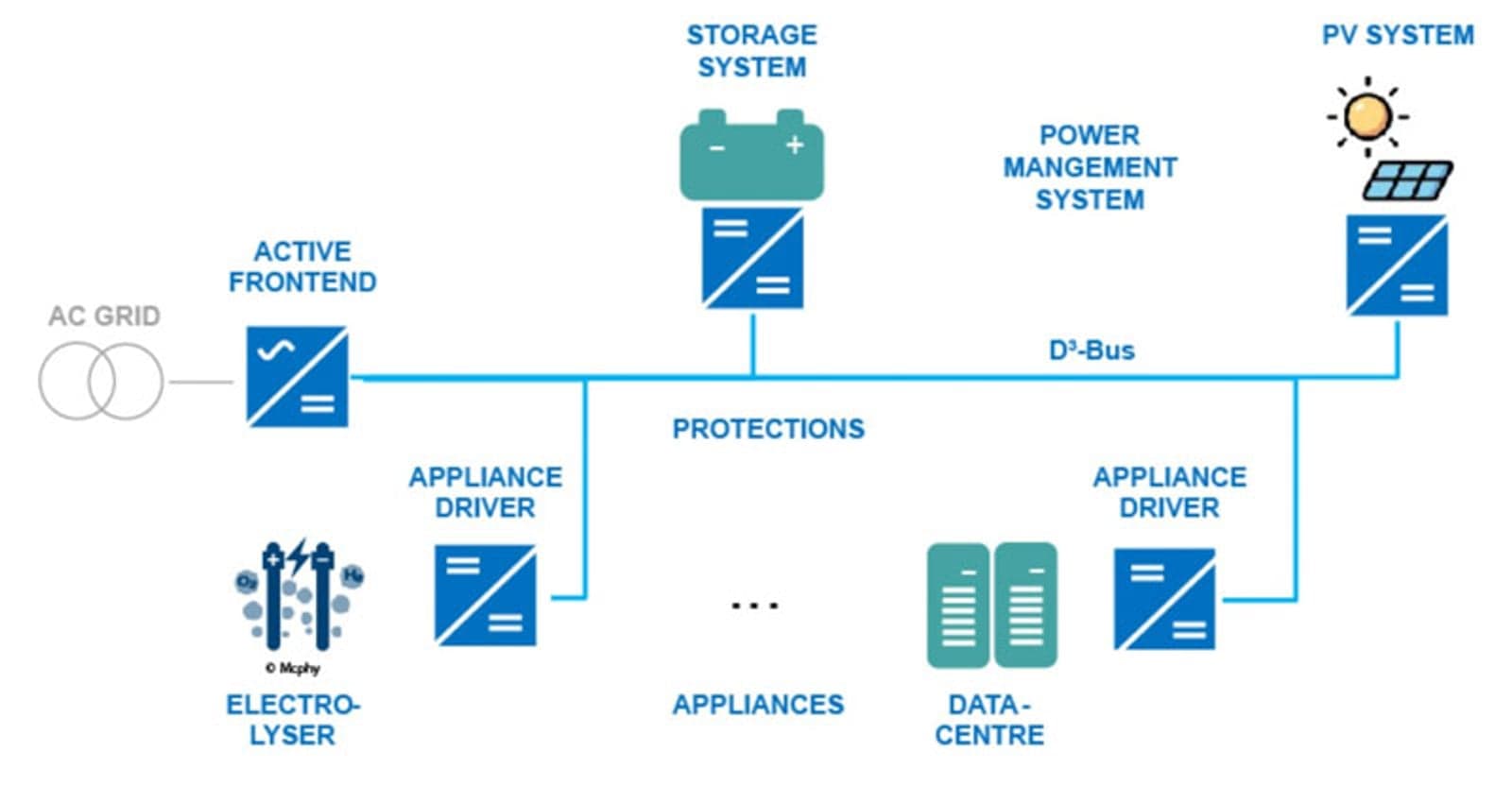
System architecture and management:
• Bipolar MVDC distribution design at ±1.5 kV.
• Protection systems tailored for bipolar 3kV DC, ensuring safe fault handling.
• Power management system that guarantees stability under fluctuating renewable input.
Converter development:
• High-power MVDC appliance drivers for industrial loads.
• Bipolar active front-end converters, ensuring smooth AC–DC integration where needed.
• Specialised PV converters to enable direct injection of solar power into the D3 Bus.
• DC-coupled battery storage systems for stabilisation and peak shaving.
Together, these elements establish a scalable blueprint for MVDC grids in industrial settings.
Results and discussion
A system concept for the MVDC grid has been developed which includes a system control strategy using a droop control technique and safety concepts for the secure operation under medium voltage. The development of the key converters for the MVDC grid is ongoing.
The expected impacts are significant:
• Halving distribution energy losses translates into substantial cost savings and reduced carbon footprint.
• Halving copper use contributes to resource efficiency and supply chain resilience.
• Improved uptime is particularly relevant for sensitive applications like data centres, where downtime directly translates into financial loss.
The two pilot sites will provide valuable real-world data to validate these benefits, supporting the broader case for industrial deployment of MVDC systems across Europe.
Conclusion
DC-POWER is pioneering the next generation of local electricity distribution by bringing DC back to the grid this time at medium voltage. With five industrial partners contributing to the development of system concepts, protection mechanisms, converters and pilots, the project is laying the groundwork for a European industrial ecosystem in MVDC technologies.
Looking ahead, the outcomes of DC-POWER could inform not only industrial power supply but also of data centres, transport hubs and other energy intensive infrastructures. By aligning technical innovation with Europe’s renewable transition, MVDC grids may soon become a cornerstone of resilient and efficient energy systems.
For more information, visit: www.dcpower.tech
About the author

Dr Jens Merten studied in Munich, completed his diploma thesis at École Polytechnique (France) and his PhD at the University of Barcelona. After roles in industrial research, he led the solar systems lab at CEA and was elected director of INES.2S. Today, he is Project and Programme Manager.
Related tags
Most popular
Join the community for freeAnd get access to all content
Related projects
DC-POWER
1 January 2024 - 31 December 2027
View projectLatest content
+4
Digital modelling of power electronic converters in MV DC systems
As part of the Horizon Europe SiC4GRID project, digital models have been developed for dual-active-bridge (DAB) converters applied to solid state transformer (SST) and modular multilevel converters (MMC) in MV solar and wind systems.
- Guest/partner contributor
- 01/09/2025