Meet the rocketman of AI: Accenture's Stuart Brown
Kelvin Ross
Posted on: 13 November 2024
Stuart Brown of Accenture tells Kelvin Ross why generative AI is going to blast the energy sector into a new orbit of learning, skills and possibilities.
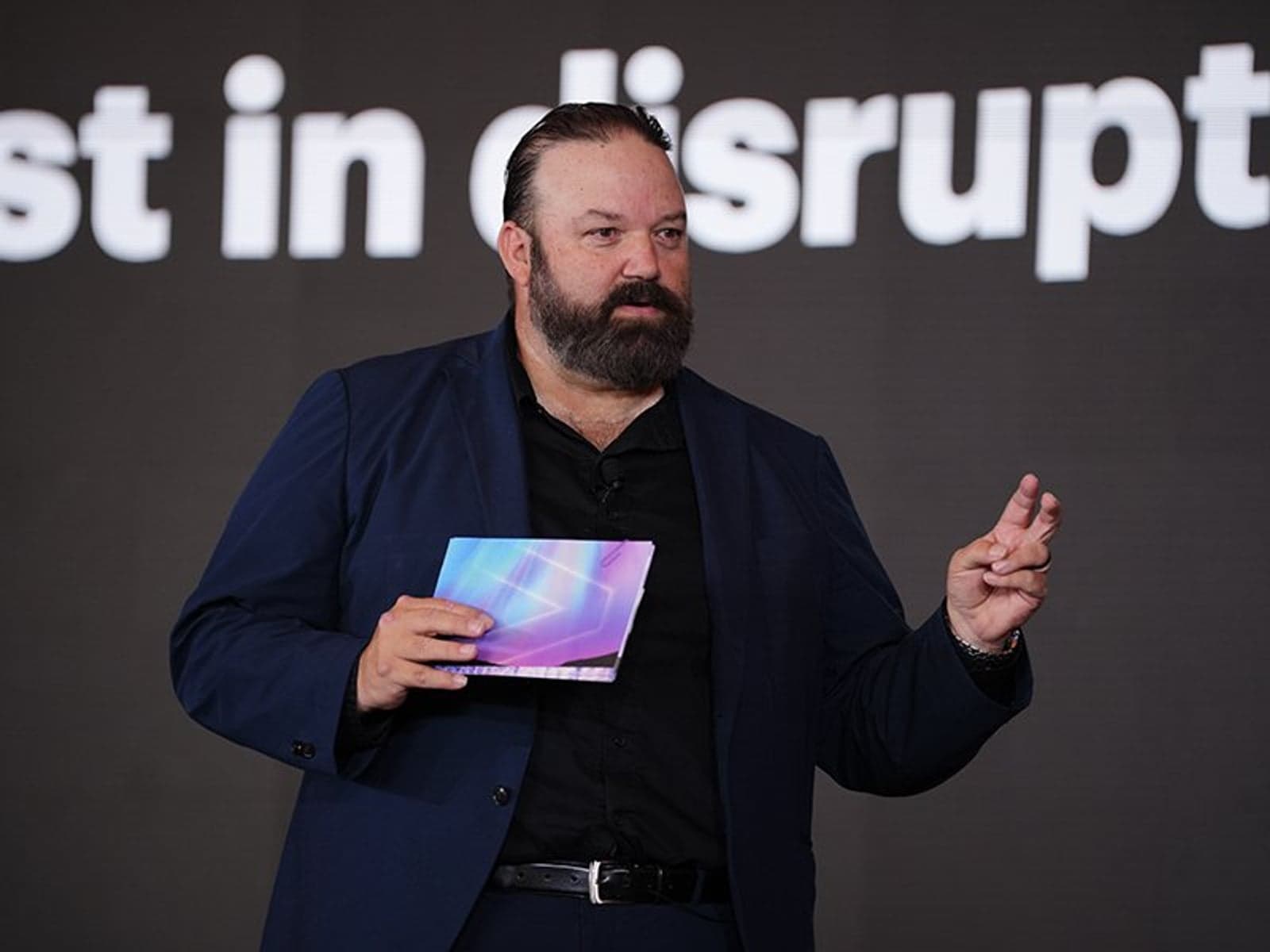
Stuart Brown of Accenture tells Kelvin Ross why generative AI is going to blast the energy sector into a new orbit of learning, skills and possibilities.
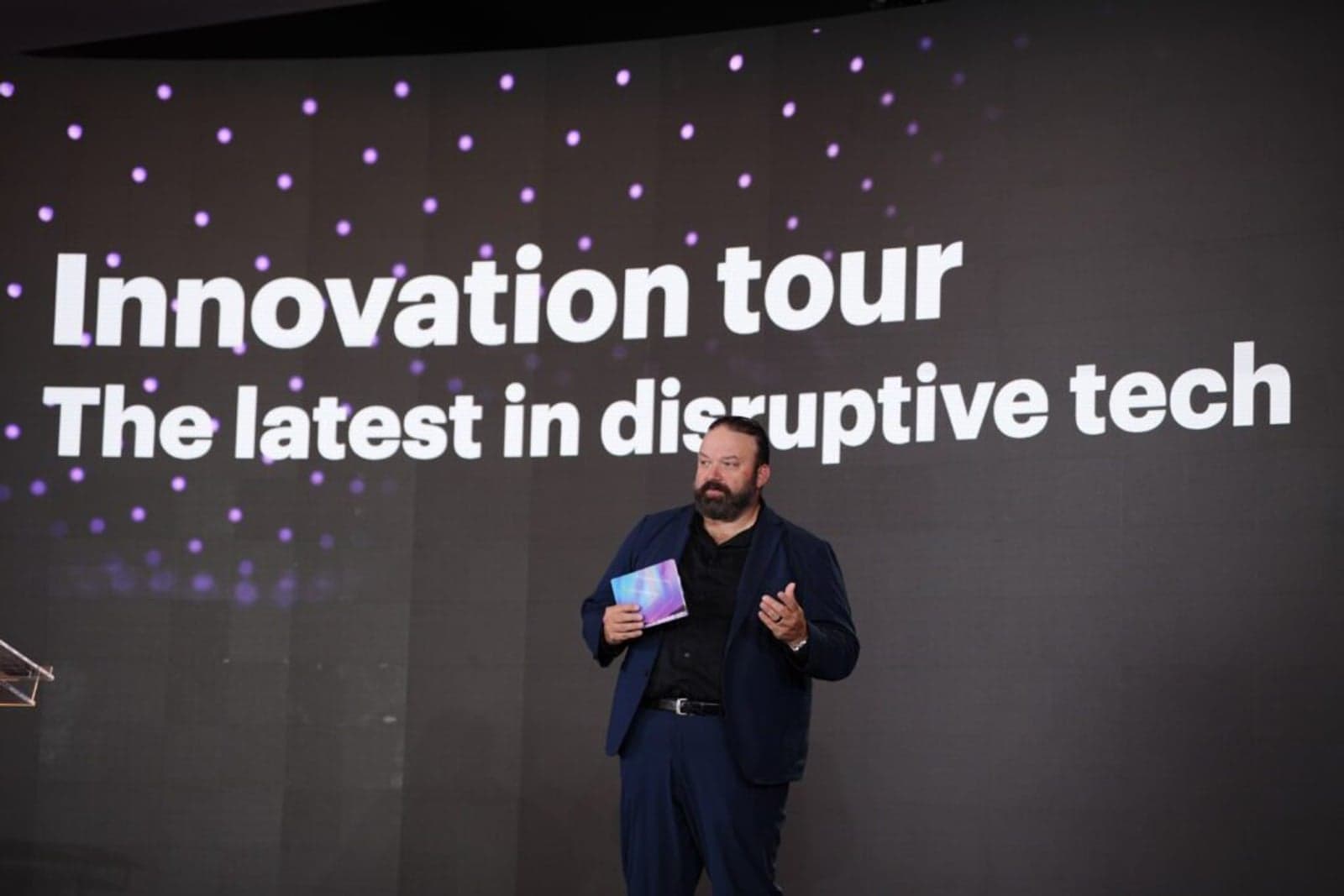
Stuart Brown is a self-confessed “space geek”. He studied engineering at the University of Central Florida, “right next to Cape Canaveral”, and took his kids to a shuttle launch. “When you start realising how many stars are in the universe, you start seeing the scale… and it gets overwhelming,” he says. Except he’s using this example of stars in the sky to illustrate not space travel, but generative artificial intelligence.
Because AI, for Brown, is the new frontier to which we should ‘boldly go’, full of untapped and unimaginable potential. “It’s going to change the way we work, how we educate, how we automate, how we augment – it’s understandable that people are struggling to get their heads around it.
“I mean, I’m in the middle of it, and even I don’t have the full picture over the next five to ten years of how big the change is going to be.”
When he says he is “in the middle of it”, he truly is: based in Tampa, Florida, Brown is the Global Technology Lead for Accenture’s Resources business. He’s been working with artificial intelligence for a long time – “I was exposed to some of the gen-AI products years before the launch of ChatGPT two years ago” – but the potential of generative AI was limited to code back then. Yet the rapid developments of the last few years have him super excited about the way it will transform how we work.
In fact, I get the sense that Brown’s default mode is super excited: he’s a fast talker who machine-guns words at you with an infectious enthusiasm. “In my mind, gen AI is the biggest change that’s going to come to organisations and the way we work since Y2K,” he says.
“The reason I use the example of Y2K is, it’s the last thing that impacted an entire organisation. “I’ve been around enough ‘hype cycles’ to know that generative AI is not one of them.” Other technology waves – the Cloud, blockchain and the Metaverse – were not as ubiquitous across an organisation, he says… unlike his prediction for generative AI.
Generative AI, then, is both a ‘known unknown’ and an ‘unknown unknown’ – which, for historically risk-averse sectors like energy and utilities, is both a challenge and an opportunity. Brown agrees that risk-averse “is a good way” to describe the sector: “It’s not a culture of continuous reinvention. It’s a culture of repeatable, predictable, reliable… and we need to change that a little bit, without compromising safety or resilience.
“All those outcomes should be the same, but the nice thing about generative AI is that the ‘generative’ part is the human.” However, he stresses that the human needs the sanction to express ideas in a way that a process-driven industry may not have previously allowed.
To explain his theory, Brown returns to the orbit of space: “I remember taking my kids when they were very small to the last shuttle launch, thinking: ‘This is the last rocket I’ll ever see take off from the US’. And then the private sector took up the challenge, and they came at it with a different mindset, one without limits.”
"I've been around enough 'hype cycles' to know that generative AI is not one of them"
Brown says this process is based on the principle of “taking the best talent you have, educating them on the art of the possible, and then letting them be the artist… because they’ll come up with amazing stuff.”
Still a bit of a leap, I suggest, for the energy incumbents (less so if you’re the likes of Greg Jackson at Octopus, whose success is built on the fact that he is not an incumbent). Brown seizes on the Octopus example: “The uniqueness of what Octopus did is they put the customer at the centre of the system. Most utility systems have the meter at the centre of the system.
“That’s simple… and yet, not that simple to that industry. Yet it’s now starting to revolutionise the way people look at customer service and utilities.”
Brown says companies need an “organisational change agent who’s going to say, ‘We are going on this journey; we are going to be different’.”
This is interesting for the energy sector because it encourages a creative roadmap that looks to tomorrow, next week and next year, rather than five, ten or 20 years into the future. Yet it is decades-away timelines that preoccupy the industry, which has spent years second-guessing (probably incorrectly) what 2050 will look like.
Have you read?
Accenture boss calls for utilities to ‘reinvent business as usual’
Generative AI has ‘turbocharged the power of the human’ says Octopus Energy founder Greg Jackson
Energy Transitions podcast: Why AI is a non-negotiable for the utility of the future
Brown agrees that the industry must focus on horizons that are already visible. “What’s going to drive the energy sector is going to be the technology sector. “Some [utility] companies are stuck in their ways. They don’t change quickly; they take their time. They’re big monoliths that turn slowly… but now, their biggest ratepayers are demanding they change, because their biggest ratepayers are the large cloud service providers.”
He adds that when 2050 energy transition goals were set, the potential of data centres and data scientists for the energy sector was unclear. “So how are we going to adapt to that?” he asks… and then answers his own question: “AI is going to have to help.
“We’re going to have to use AI in order to adapt our energy system, and utilities are going to have to figure out how to do it effectively.”
He says this is especially true “on the engineering side” for two reasons: firstly, because augmented technology and digital twins “help engineers do their job – that’s going to be huge”.
And secondly, he says bluntly, “because there are not enough engineers out there”. I ask him if the energy transition is going to run out of people. “As it stands, it’s a likelihood. If we have really smart people doing tasks that don’t make sense, then it’s a waste of their potential.” Everyone agrees that the energy transition needs to accelerate.
Trouble is, no one knows exactly how to translate this demand into action. This, says Brown, is where generative AI will play a crucial role. “How do we take process-orientated industries and rethink how they work? How do you break down silos and link parts of the organisation to do things faster and more efficiently?
That’s where using gen-AI comes in, allowing us to efficiently put into practice what would have cost us a lot of time and money in the past. “For me, everything from this point forward is about reinvention: speed of reinvention, speed of innovation, speed of change – and these are things that utilities are not used to doing. “But the talent that’s coming in is not only going to demand it, they’re going to expect it – and if they don’t get it, they’re going to leave.” v
This reinvention of work means a recurring reinvention of skills: I’ve been quoted the statistic that in the not-too distant future, every worker will have to reskill or upskill about every five years. And this, says Brown, is exactly as it should be. “Continuous learning is going to be the fuel that drives the future. It’s always been the fuel that’s driven me.”
He says generative AI should be embraced not just by industry, but by education. “I challenge universities and schools on how to use gen AI for education.
"Continuous learning is going to be the fuel that drives the future. It's always been the fuel that's driven me."
It’s not a cheating tool – it should be used as a training tool. “I want them to use the latest generative AI tools to help students think about how to solve problems. Not simple problems: they should use their brains to learn how to solve a complex problem and go down that rabbit hole. “Because if you can learn how to tap into that power of AI… it’s the most exciting thing.
“I love learning. Gen-AI has been probably the biggest thing in the last decade. That kind of innovation excites me and I get frustrated that I’m not going to be around to see some of this realised, because the technology is going to be fascinating.”
He adds: “The internet revolution was nothing compared to what’s going to happen with the AI revolution. We can’t comprehend yet exactly what this is going to be. But it is going to be fun.”