Partner content
Millions of eyes on the grid: Why digitalisation is key to decarbonisation
Guest/partner contributor
Posted on: 24 February 2026
As global energy demand continues to rise, the question of how to meet this need brings the future energy mix into sharp focus, writes Sergio Martìn Guerrero.
The energy future remains uncertain and the World Energy Outlook reflects this by outlining multiple scenarios rather than a single forecast. Yet two outcomes are common to all of them: electrification and the rapid growth of renewables.
According to projections from major energy outlooks, electricity today accounts for about 21% of global energy consumption and is expected to reach between 30% and 50% by 2050, with Europe leading the way. Renewables, currently providing 40% of global electricity, are forecast to grow to 55–75% by mid-century, with solar driving much of this expansion.
This shift introduces decentralisation, as renewable generation is increasingly deployed through distributed assets closer to consumption rather than in large, centralised plants.
As power systems become more distributed, the grid risks becoming the weak link of the energy transition if not adequately modernised. Utilities face two major challenges. First, generation is outpacing grid expansion: over 1,700GW of renewable capacity is waiting for grid connection, more than twice the new capacity expected in 2025. Second, operational complexity is increasing: the traditional model of unidirectional flows from large, inertial and programmable power plants is giving way to bidirectional flows from numerous distributed resources, many intermittent and non-inertial.
To achieve decarbonisation, the challenge is no longer renewable generation capacity but ensuring that distribution grids are ready, flexible and intelligent enough to integrate it.
Meeting this new paradigm requires innovation, with grid digitalisation at its core. Extending observability, controllability and automation beyond HV networks to MV and LV grids is essential. For an average country, this means scaling from thousands to millions of intelligent data points across these networks – a formidable challenge that Gridspertise addresses through distributed edge intelligence and cloud-ready digital solutions.
Digitalisation an opportunity for resilience
HV networks are already highly digitised, offering real-time visibility, control and automation capabilities. The real challenge lies in the MV and LV grids, where progress is uneven and complexity is growing. This is where Gridspertise concentrates its efforts.
At the MV level, most utilities maintain digital records of grid topology and assets, yet monitoring, control and automation capabilities vary widely across regions. This gap matters because automation is now essential for reliability. Gridspertise is multiplying grid automation capacity through distributed intelligence at the edge. Our solutions for secondary substations enable fault location, isolation and restoration in less than one second through decentralised intelligence at the edge.
This approach dramatically improves service continuity and resilience during extreme events, when traditional communication channels may fail, with significant impact on quality levels.
Regulatory trends add another layer of urgency. Many countries now require renewable plants to provide observability and controllability to grid operators, with thresholds dropping sharply – as in Italy, where the limit has fallen from 1MW to just 100kW. Our edge intelligence and virtualisation technologies support compliance with these requirements while safeguarding system stability.
On top of these operational benefits, the granular data on power flows enables operators to optimise investment decisions, identify stressed assets and prioritise upgrades in a context where demand for new connections outpaces grid expansion. Leveraging MV data intelligence, utilities can simulate scenarios, anticipate bottlenecks and allocate resources more efficiently.
LV: Intelligence where it matters most
The LV layer is where the energy transition meets everyday life and where complexity is greatest. But it is here where the digital maturity of the industry is lower. In many cases, the foundational elements of digital grid management, like topology information, is incomplete. And while smart meters are widely deployed, their operational potential can be significantly expanded. Historically introduced for billing, smart meters can now provide essential insights for grid operations. For example, the 'last gasp' functionality of meters offers immediate outage detection on the LV side.
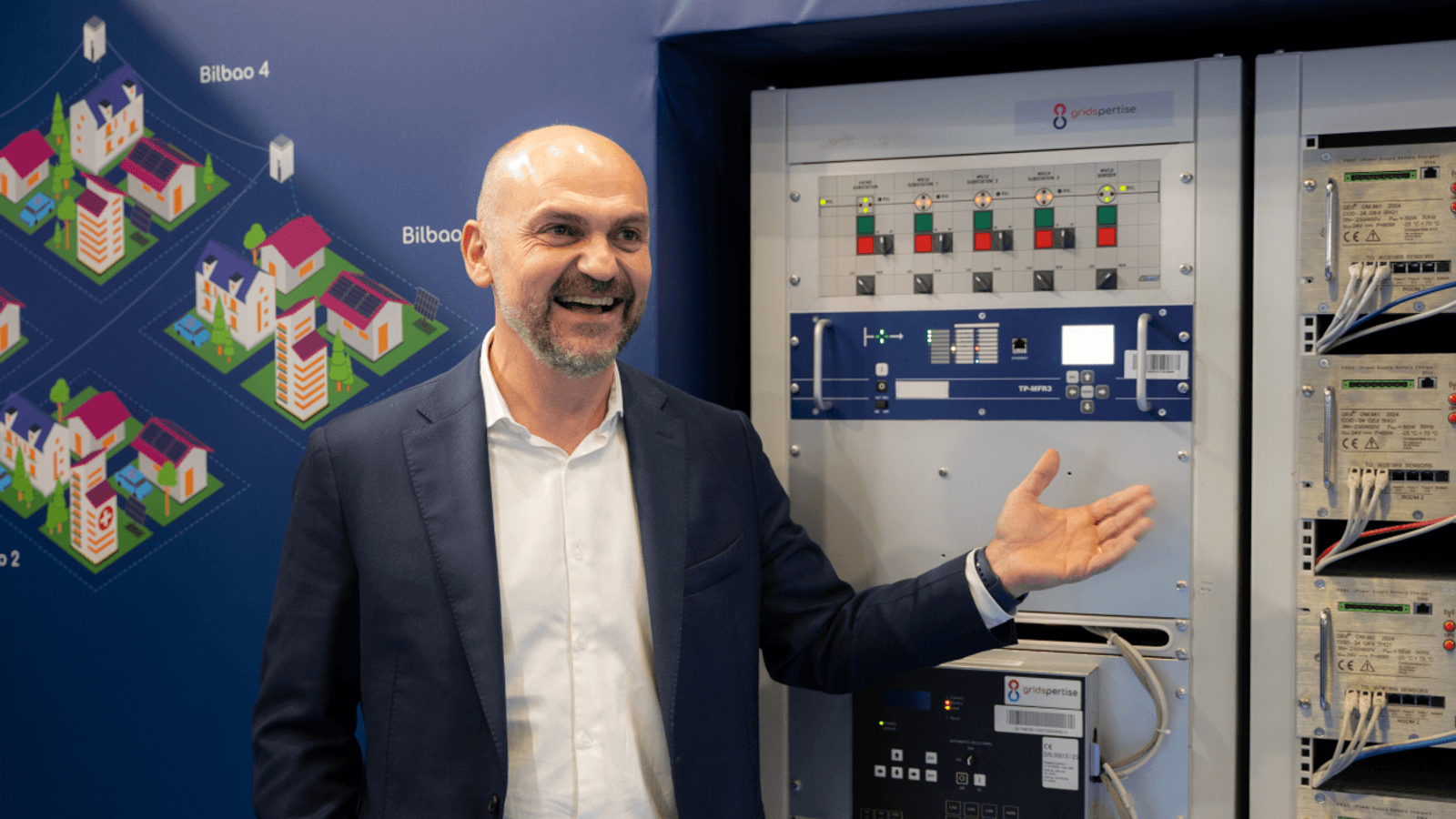
The Gridspertise portfolio – now unified within the ERALIS suite – integrates both metering infrastructure and LV grid management into a single ecosystem that turns metering and sensor data into actionable intelligence.
Monitoring at the LV level is equally important. Even basic monitoring of feeders in secondary substations can reduce technical and commercial losses, improve understanding of load patterns in the era of electric vehicles and rooftop solar and enhance power quality. By extending control capabilities to LV grids, utilities gain the tools to anticipate issues and optimise performance.
Looking ahead, flexibility will depend on active load management. Through our data management platform, we already provide actionable information on consumption patterns and load types. This is the foundation for automated flexibility services that dynamically balance demand and generation.
From vision to action: Case for grid digitalisation
The digitalisation of grids is the main enabler to manage a more electric economy based on distributed renewable sources, contributing to decarbonisation. The business case for extensive grid digitalisation is clear: we need more observability, controllability, automation and intelligence and there is no other way to manage the new scenario. Efficient technologies are available and can be deployed at scale – and by implementing digital solutions, we can optimise investments in physical assets.
Digitalisation is the backbone of a resilient, efficient, and sustainable grid.
To learn how Gridspertise supports this transformation, explore ERALIS Suite, our modular platform designed to enable, run and advance grid intelligence at scale.
You might be interested in:
Speed and scale must underpin energy strategy says Gridspertise boss
About the author
Sergio Martín Guerrero is the Chief Product Officer at Gridspertise. He is an executive with more than 20 years of management experience in the technology and digital industries, joining Gridspertise in 2023 with the ambition to deliver a leading suite of digital and data driven solutions for the energy transition.
About Gridspertise Group
Gridspertise Group is a technology player driving the digital transformation of electricity distribution networks. Established in 2021 as a carve-out from Enel’s expertise, it became independent in 2022 and acquired Aidon in 2023 and Energyworx in 2025. Today, it combines over 20 years’ experience with a global base of 200+ utilities, under Enel and CVC ownership.
Latest content
Partner content
+5
LV network monitoring and creating a future-ready energy network
Europe’s LV network is coming under ever-increasing pressure, with an influx of distributed energy resources increasing the complexity of LV networks continent-wide, writes Michael De Vivo, Head of Europe, EA Technology.
- Guest/partner contributor
- 16/12/2025
Partner content
+4
AI and DERs: Powering the grid’s smarter future
As the global energy landscape undergoes a seismic shift, utilities face a dual challenge: rising demand driven by electrification and digitalisation – especially from AI-powered data centres – and the urgent need to decarbonise.
- Guest/partner contributor
- 09/12/2025