New AI tool could change how nuclear plant workers solve problems
Pamela Largue
Posted on: 1 August 2024
Engineers at the Argonne National Laboratory have presented research that explores using generative AI to enhance decision-making in nuclear power plants.
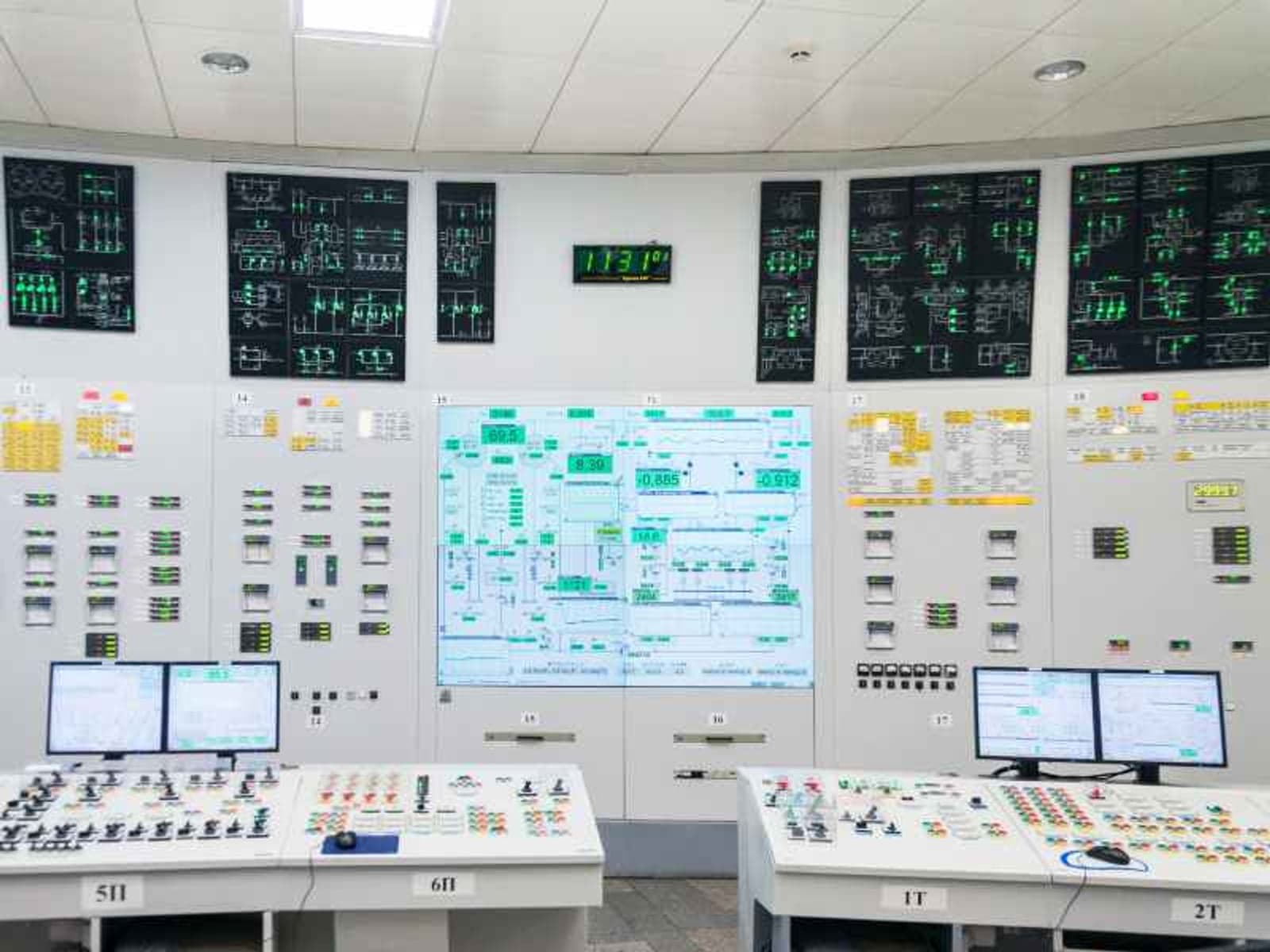
Engineers at the US Department of Energy’s Argonne National Laboratory have presented a new research paper that explores using generative AI to enhance decision-making in nuclear power plants.
The aim of the new research paper is to present diagnostic information in a way that is clear and easy to understand, allowing operators to identify and address problems more quickly and efficiently.
To this end, the Argonne engineers combined three elements: an Argonne diagnostic tool called PRO-AID (Parameter-Free Reasoning Operator for Automated Identification and Diagnosis), a symbolic engine and a Large Language Model (LLM) to achieve this.
As explained in a press release: "The diagnostic tool uses facility data and physics-based models to identify faults. The symbolic engine acts as an intermediary between PRO-AID and the LLM. It creates a structured representation of the fault reasoning process and constrains the output space for the LLM, which acts to eliminate hallucinations. Then, the LLM explains these faults in a straightforward manner for the operators."
Have you read?
Paris Olympics taps AI cloud solution to measure power consumption
Who is your energy transition digital superhero?
Rick Vilim, manager of the Plant Analysis and Control and Sensors department at Argonne suggests that this system will not only streamline operations and maintenance tasks but will be a useful tool in training the nuclear workforce.
Using generative AI to solve problems in nuclear plants
PRO-AID is a software package that performs real-time monitoring and diagnostics for an engineering system using a form of automated reasoning. It uses a digital twin to compare real-time data from the plant to normal plant behaviour simulated by models. When there's a mismatch a fault is indicated.
Once a problem is identified, PRO-AID provides a "probabilistic distribution of faults based on these mismatches".
According to Argonne, a challenge with using LLMs is to ensure they provide accurate information. To mitigate this, the engineers designed a symbolic engine to ensure the information used by the LLM is based only on the data and models.
The LLM is used to explain the results from PRO-AID in language that is easy to understand. The LLM can also be used by operators to answer questions about the system and sensor measurements.
The system was tested at Argonne’s Mechanisms Engineering Test Loop Facility (METL), a test facility where components are tested for use in advanced, sodium-cooled nuclear reactors.
Engineers claimed that the system diagnosed a faulty sensor and explained the issue to the operators, demonstrating it can be trusted to work in complex systems.