New project spotlight – ENTRANCE and S3EM on smartening buildings
Jonathan Spencer Jones
Posted on: 16 May 2025
Decarbonising and smartening Europe's buildings are the focus of the two newly launched projects ENTRANCE and S3EM.

Decarbonising and smartening Europe's buildings are the focus of the two newly launched projects ENTRANCE and S3EM.
The more efficient use of energy and decarbonisation of Europe’s buildings is a major focus in the energy transition, given they account for around 40% of the total energy and over a third of the emissions.
The possibility to easily adopt advanced control strategies and smart management systems offers a cost-effective approach to increasing the energy efficiency and flexibility of buildings, with the opportunity also to improve the comfort, productivity and health of users.
But achieving the building sector energy transition demands an improvement of the interoperability of the buildings with energy carriers and non-energy services, so that they can play an active role in ensuring the reliability, resilience and sustainability of the energy system.
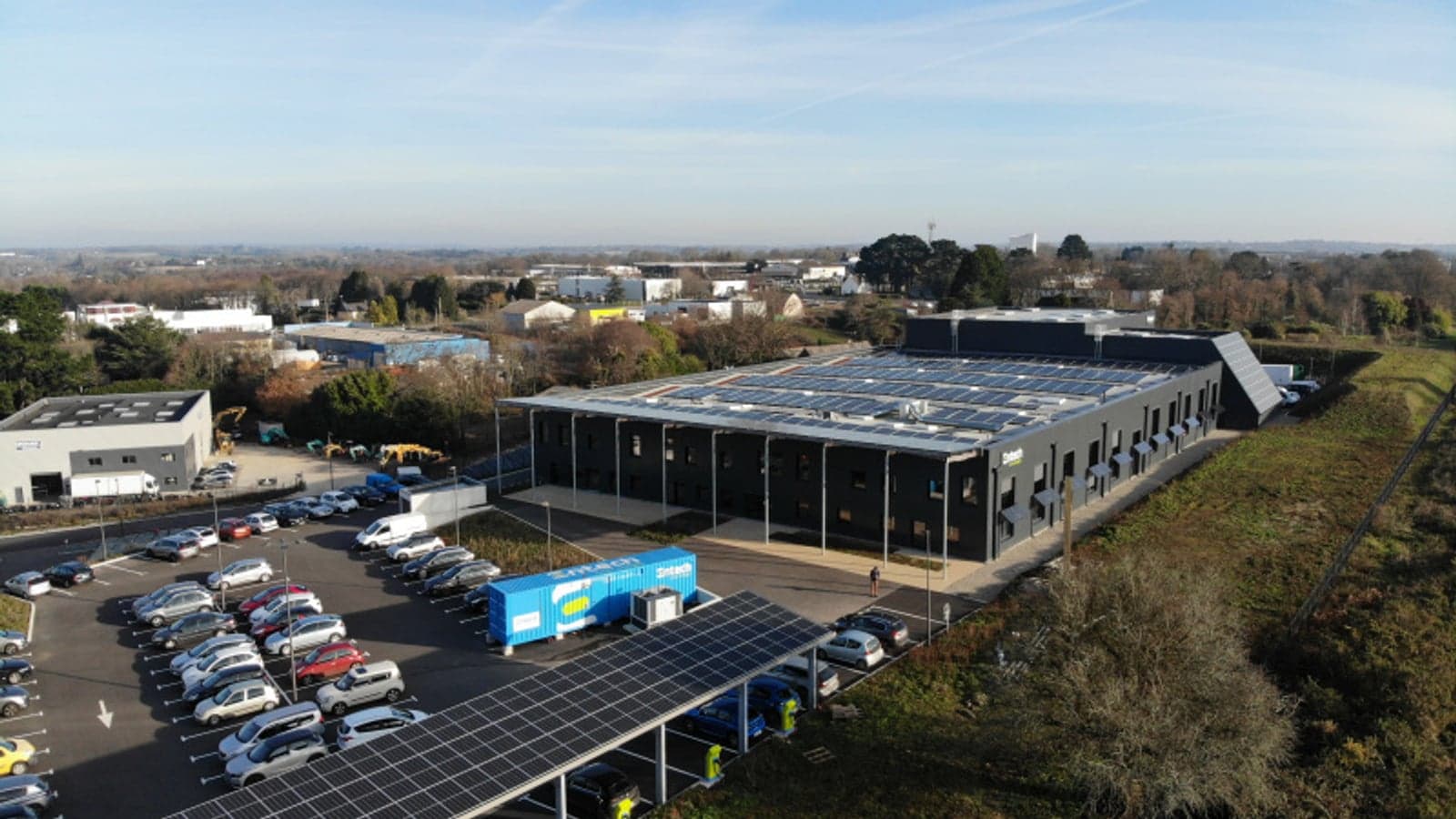
This is where the ENTRANCE project comes in, with the aim to enable smart-grid-ready and decarbonised buildings through the integration of energy efficiency, flexibility, on-site renewables, mobility, empowerment of end-users and interoperability between buildings and district heating and electricity grids.
The ambition is to develop and demonstrate solutions that promote building integration and active participation in the energy system and market through guaranteeing end-users comfort and empowerment while creating value for the economic actors of the energy landscape.
To ensure the solutions are generalised for different geographical regions, they will be demonstrated in six countries around Europe.
ENTRANCE launched on 1 January 2025 and is set to run for 48 months to December 2028.
The coordinator is the Norwegian University of Science and Technology (NTNU) with a total budget of €5.5 million.
S3EM – building integrated PV
While the energy management of buildings is one aspect of their decarbonisation, another is their self generation and for many buildings, particularly apartments and office buildings, there is limited space for rooftop systems.
That’s where building integrated PV comes in, also able to implemented on the facades of buildings where traditional PV is impractical. But it comes with its own challenges, including sensor data heterogeneity, unstable design and layout factors, and the need to integrate it with the other energy systems.
The new S3EM project, which launched on 1 February 2025, is aimed to develop a semantic 3D energy model for building integrated PV systems leveraging multi-modal data to construct accurate 3D representations of solar radiation and electrical potential across building surfaces.
This should enable optimising the design and placement of the technology components and their smooth integration with other energy systems.
In addition the project should enhance scientific skills and innovation, establish research collaborations and expand the research horizons.
S3EM, supported by the Marie Skłodowska-Curie Actions programme, is being undertaken by the Denmark Technical University and runs to January 2027.