Norway greenlights assessment for nuclear SMR project
Pamela Largue
Posted on: 22 February 2026
The small modular reactor power plant is planned for the Taftøy Industrial Park in the Aure and Heim municipalities.
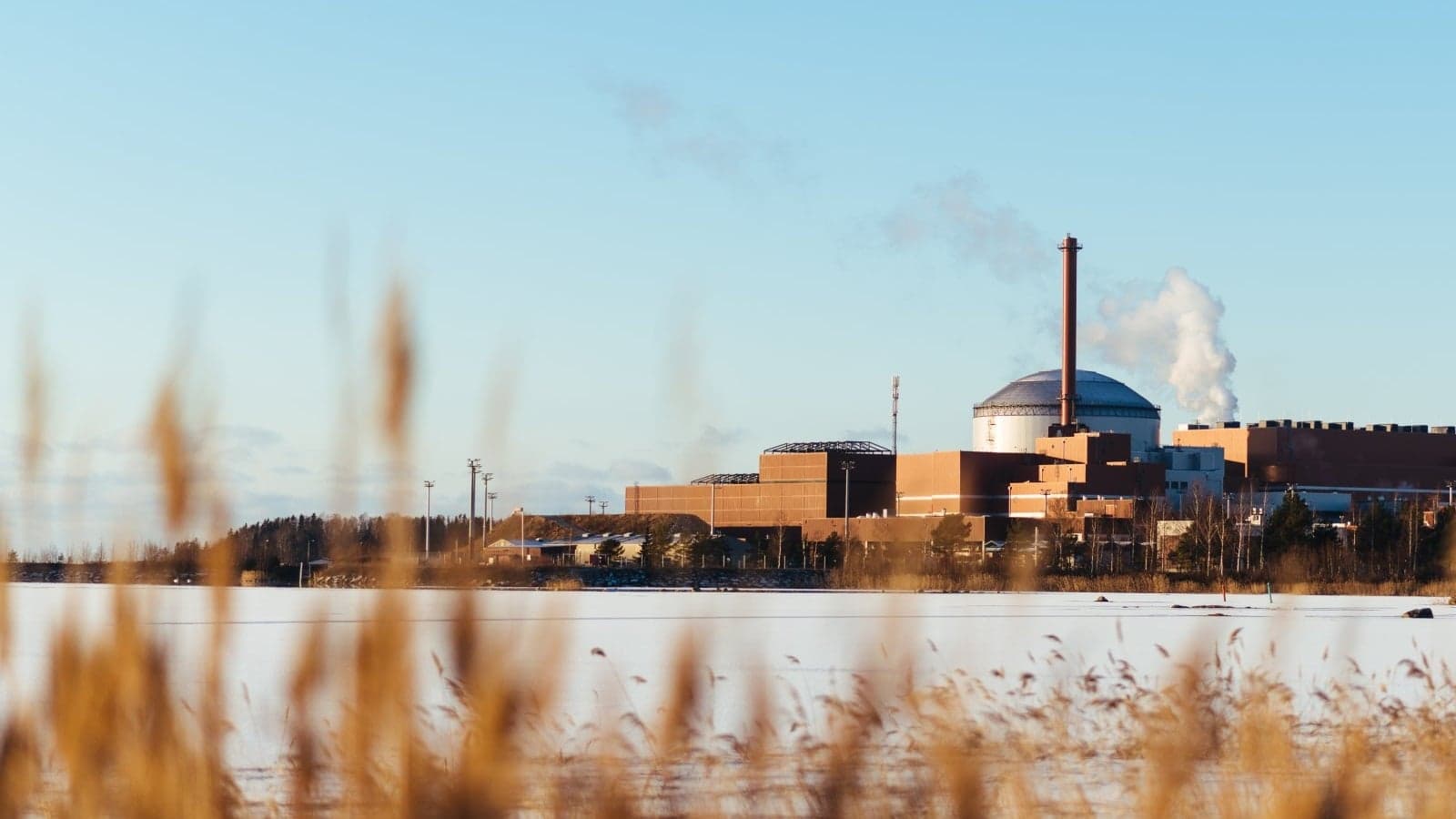
Norway’s ministries of Energy, Health and Care Services, and Climate and Environment have approved an assessment for a small modular reactor nuclear power plant in Taftøy Næringspark in Aure and Heim municipalities.
The process to secure this approval was initiated in November 2023, when energy company Norsk Kjernekraft submitted a proposal.
A national hearing on the report was held in 2024, and in April 2025 the government established a taskforce comprising the Directorate for Radiation Protection and Nuclear Safety, the Directorate for Civil Safety and Emergency Preparedness and the Norwegian Water Resources and Energy Directorate, which were tasked with preparing a proposal for an assessment programme.
Also in April 2025, local energy company NEAS, together with Norsk Kjernekraft and the Aure and Heim municipalities launched Trondheimsleia Kjernekraft, a company founded with the specific goal of developing up to 1,500MW of nuclear power in the municipalities of Aure and Heim.
If realised, this would correspond to almost 10% of all Norwegian power production and would lead to the development of several hundred jobs, as well as a local nuclear supply chain.
According to Minister of Energy Terje Aasland, the establishment of an assessment programme will set the minimum requirements for the scope and content for projects of this nature.
Have you read?
Why Europe’s energy future may depend on SMRs
Olkiluoto nuclear plant gets €90m loan for upgrades just two years after going live
It will also support a predictable and safe process while the country considers the potential role of nuclear power in the energy mix.
However, Aasland specified clearly the country was not committing to nuclear power, stating: “The fact that we have now established this assessment program does not mean that a position will be taken on nuclear power production as a power source in the Norwegian power system.”
Project owners can now opt to carry out studies in accordance with the study programme, although they will be responsible for funding the study.
Norway’s stance on nuclear
Norway currently has no operating nuclear power plants, although it does have an existing framework for licensing the construction and operation of nuclear installations.
With abundant hydropower resources and significant oil and gas reserves, nuclear energy has historically played a limited role in the country’s energy debate. Following the Three Mile Island accident and the Chernobyl disaster, safety concerns further dampened political appetite for nuclear development.
More recently, however, priorities around energy security and industrial decarbonisation have brought renewed attention to the technology.
Advances in SMR designs, which are often promoted for their enhanced safety features and modular design, are also better aligned with Norway’s stringent regulatory standards.
In the meantime, Trondheimsleia Kjernekraft has been engaging with local communities to encourage buy-in and test the waters with locals.
With the April 2025 launch of Trondheimsleia Kjernekraft, Norsk Kjernekraft chief executive Jonny Hesthammer said: "The dialogue with residents, businesses and politicians in Heim and Aure municipalities has been very constructive and good. The municipalities were early in initiating the process for nuclear power, including by notifying the Ministry of Energy of a study program, and are thus very well placed to be among the first plants in Norway.
"By the municipalities now also taking on the ownership role, transparency and public ownership of the plant are ensured. The plant could have a lifespan of up to a hundred years, so this is value creation from a generational perspective. The grandchildren of children born today will actually be able to have their jobs at the plant."
Scandinavian counterparts
Like Norway, Denmark has no operating nuclear power plants. The situation differs in Finland and Sweden. Finland operates five nuclear reactors that provide roughly one-third of its electricity, across two sites at Loviisa and Olkiluoto.
Sweden runs six reactors at three facilities, comprising Forsmark, Oskarshamn and Ringhals, which supply around 30% of national electricity demand.
In June 2023, Sweden replaced its energy target of '100% renewable' electricity by 2040 with '100% fossil-free' electricity allowing the government to push forward with plans for new nuclear plants.
In November 2023 the Swedish government announced plans to construct two large-scale reactors by 2035 and the equivalent of 10 new reactors, including SMRs, by 2045.
In June 2023, Sweden shifted its energy target from “100% renewable” electricity by 2040 to “100% fossil-free”, opening the door for new nuclear development. In November 2023, the government announced plans to construct two large-scale reactors by 2035 and the equivalent of 10 new reactors, including SMRs, by 2045.
Speaking on the Energy Transitions podcast, John Ahlberg, founder of Swedish nuclear scale-up Kärnfull Next, said public and political attitudes toward nuclear power are changing.
“There’s been a big shift in mindset over the past few years. When you can produce a vast amount of dispatchable, clean, firm power from a small plot of land — which is exactly what the world needs — people start to talk about it differently,” he said.
The podcast was recorded shortly after Sweden unveiled a state-backed financing framework designed to de-risk investment in new nuclear projects.
“This turnaround in how Sweden approaches new nuclear has been building for some time,” Ahlberg added. “There is broad political consensus around reaching 300TWh of electricity production by 2045 — more than doubling today’s output. The government has moved quickly to ensure nuclear power has the opportunity to play its role.”
Latest content
+1
POWERGEN workshop moves the needle on addressing nuclear workforce challenges
In the wake of the recent Declaration to Triple Nuclear Energy| the U.S. nuclear industry is facing a daunting challenge to rapidly expand the workforce while also ensuring needed diversity| equity and inclusion.
- Elizabeth Ingram
- 25/01/2024